
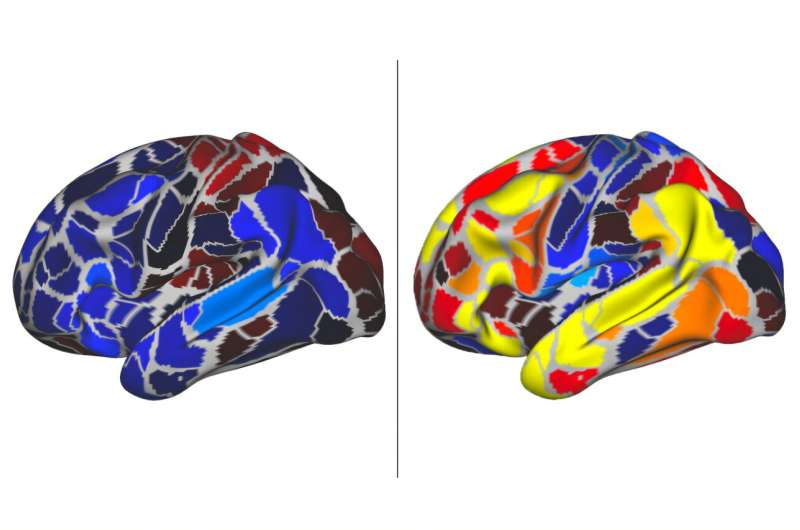
Children with more autistic traits view and experience the world differently than their peers do, and those differences change as the children grow, according to a new study published in the American Journal of Psychiatry.
Insomnia is associated with a 26% higher risk of stroke and 28% higher odds of hospital admission, according to new research in Sleep Medicine Reviews. The researchers say the findings support recognizing insomnia as an important marker of brain, mental and general health.
Adults in their 60s who scored lower on tests of overall thinking ability, memory and how quickly they processed information were more likely to have a stroke years later, according to new research conducted in Sweden.
A well-known brain-healthy diet may help ward off cognitive decline and dementia by protecting arteries, a new study suggests. People who followed the MIND diet had healthier blood vessels in their brains, which was associated with larger brains and better cognitive function, researchers report in the journal Alzheimer’s & Dementia.
Adults with hard-to-treat epilepsy who used cannabis most days had more than twice as many convulsive seizures per year and became resistant to antiseizure medications more quickly than nonusers, according to new research.
A new study reveals that the brain uses shared neural codes for speaking and listening during short verbal exchanges, but relies on distinct timing networks to process longer, overarching ideas. These findings, published in Nature Human Behaviour, help map how the brain navigates the back-and-forth demands of natural social interaction.
Low-dose aspirin was associated with a 70% lower risk of dementia among older people with a particular genetic profile, a new Monash University analysis has found, raising the possibility of a more personalized approach to dementia prevention.
A study published in Science Advances reveals that machine-learning models analysing speech can estimate chronological age and provide insights into brain and biological aging, cognitive health, and dementia. The “speech clock” developed in the study predicts age based on acoustic and linguistic features, with the difference between actual age and predicted age linked to various markers of cognitive and brain health.
Engineers created a smart shoe that analyzes walking patterns, potentially aiding in the monitoring of movement disorders, with the prototype achieving 95.4% accuracy in tracking steps and estimating calories burned.
A new study published in Brain Communications found that a transcranial low-amplitude magnetic field intervention delivered twice weekly into the brain through a noninvasive headset was associated with improvements in several measures of cognitive function and emotional well-being in people experiencing cognitive impairment associated with long COVID.
Researchers have discovered how a metabolite produced by gut bacteria can influence brain damage after stroke. Their paper is published in the journal Cell.

