
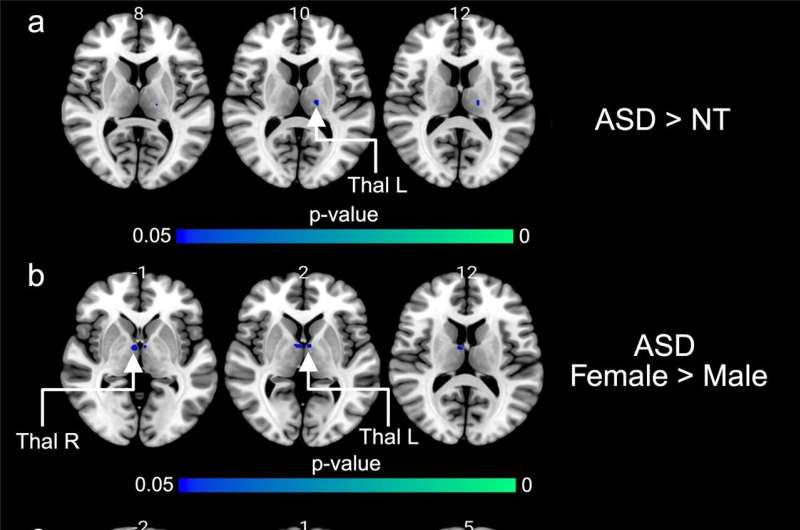
Researchers studied how autism manifests in the brain by examining the dopamine system, energy use, and communication between brain regions in 60 adults, using three advanced brain-scanning techniques. They found a higher number of dopamine D2 receptors in autistic individuals compared to neurotypical individuals, indicating a significant role of the dopamine system in autism.
Deep brain stimulation, or DBS, may help improve speech and swallowing problems caused by traumatic brain injury (TBI), according to a new study published in Nature Communications.
As people age, cognitive functions generally decline, but language skills often remain intact or even improve unless affected by conditions like stroke or dementia. A recent study has found that older adults exhibit similar neural activity in the language-processing network as younger adults during language tasks, although activation patterns in the executive control tasks network differ significantly between the two age groups.
Research from the University of East Anglia shows how our memories change with age and why specific details associated with past events can fade over time.
Scientists have identified a previously unknown aspect of schizophrenia that offers a new way to understand how the disorder affects large-scale brain coordination. In a new study, published in the journal Translational Psychiatry, researchers introduced a method for measuring how brain networks maintain balanced activity and recover when that balance is disrupted.
Findings from a new study suggest that the trickle of neurons created in the adult hippocampus could be instrumental in preventing depression. Most of the brain’s 100 billion neurons are created before birth.
A short workout or a nap can help protect memory after a sleepless night, a recent study has found. Researchers found people who either completed 20 minutes of moderate-to-vigorous exercise or took a 90-minute nap performed about 22% better on memory tests after 30 hours without sleep than those who did neither.
A study published in Neuron has identified the brain mechanisms that help us work out whether the consequences we experience are caused by our own actions or by circumstances beyond our control.
A new study suggests that gut bacteria may send different biological signals in Parkinson’s disease. The findings add to growing evidence that changes in the gut could be linked to Parkinson’s disease and may eventually help researchers identify new underlying mechanisms for the condition.
Scientists have found that a pattern of brain atrophy visible on MRI could help predict how quickly people with early-onset Alzheimer’s disease progress from mild cognitive impairment to dementia.
Some people with epilepsy experience delusions, hallucinations, paranoia and confusion after a seizure. While these episodes usually last only days, a new study led by researchers suggests they may place patients at significantly higher risk of developing psychiatric disorders later.
The brain may “tag” experiences during learning to better consolidate memories of them during sleep, according to a study published in the journal PLOS Biology by Dan Denis from the University of York, United Kingdom, and colleagues.

