
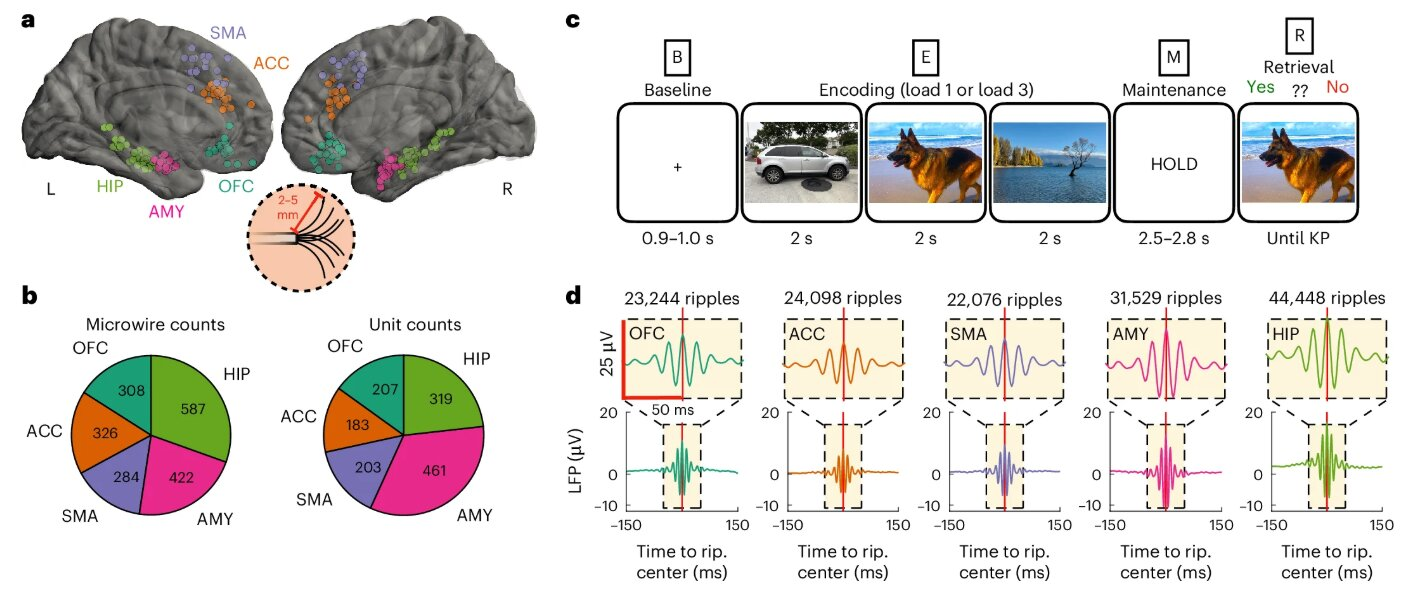
Researchers have discovered that high-frequency brain waves, known as ripples, may facilitate synchronization between distant brain regions during working memory tasks, highlighting their potential role in coordinating neural activity across long distances during cognitive processes.
Having normal blood pressure, no diabetes, and not smoking from age 48 to 68, are associated with nearly 13 additional years on average of dementia-free life, a new study shows.
Childhood epilepsy is linked to significantly poorer exam grades and long-term educational attainment, with the lowest levels of academic achievement among those whose neurological disorder started when they were very young, finds a large, long-term Danish study published online in the Journal of Neurology Neurosurgery & Psychiatry.
In a paper appearing in Nature Communications, researchers show how music produces distinct patterns in the regions of the brain associated with imagination and meaning, similar to those prompted by spoken narratives.
A new study suggests that Alzheimer’s disease may be detected by brain imaging more than seven years earlier than previously assumed. The study suggests that the gold standard for imaging in Alzheimer’s disease (amyloid-PET) has not been sensitive enough to detect early brain processes associated with the disease, such as the accumulation of amyloid plaques in the brain. The researchers found signs of Alzheimer’s at least seven years before plaques became visible.
A person’s sleep patterns could be an early sign of Alzheimer’s disease, a new study says. A greater number of micro-awakenings during sleep is linked to a greater genetic risk for Alzheimer’s, researchers report in the journal Sleep.
People living with severe mental illness face a substantially higher risk of dementia throughout adulthood, as well as a significantly elevated risk of stroke in early and middle adulthood, according to a large new study based on health records from Catalonia, Spain. The findings, published in European Neuropsychopharmacology, suggest that physical health risks linked to severe psychiatric conditions emerge much earlier than many clinicians may expect, underscoring the need for general health care to be more integrated into mental health care.
A new study published in Brain Stimulation shows that the brain’s ongoing activity before stimulation can predict much of this variability, offering a path toward more reliable neuromodulation therapies.
A new AI model analyzes routine sleep study data to reveal patients’ long-term health risks, such as heart disease and cognitive decline. The study indicates that standard medical tests hold more physiologic information than typically recognized, with AI uncovering significant patterns in sleep data that traditional measures miss.
Published in the Journal of Cognitive Enhancement, a new study found six one-minute bouts of stair climbing improved people’s cognitive health.
Researchers have identified a possible biological marker linked to severe suicidal thoughts. The finding, published in The British Journal of Psychiatry, may also help explain why some people recover from these thoughts, opening a new path for research into resilience and suicide prevention.
A research team has demonstrated that transcranial direct current stimulation (tDCS) significantly improves depression and apathy in patients with Parkinson’s disease.
A recent study suggests that a single 20-minute session of noninvasive deep brain stimulation, paired with mindful breathing, may strengthen the brain’s response to reward and reduce anxiety. Changes in reward-related brain activity remained detectable for approximately one week after the session.
Researchers have created an AI-based method to produce detailed maps revealing how different brain areas age and their correlation with cognitive function over a lifetime.
 inside-the-brain.com