
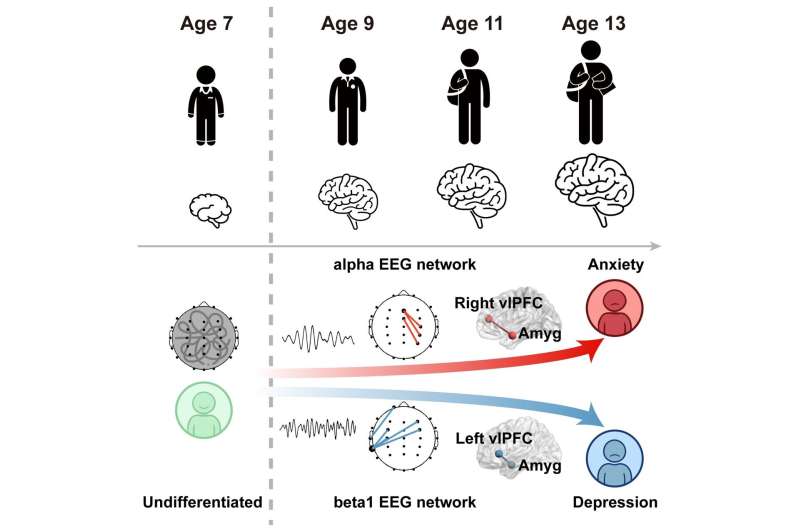
A longitudinal study tracking children over a period of seven years has identified distinct brain-wave patterns emerging from age 9 that can forecast a child’s vulnerability to anxiety or depression by age 13. These predictive markers reveal divergent, hemisphere-specific neurodevelopmental trajectories. Anxiety is linked to activity on the right side of the brain, while depression is tied to the left.
Researchers developed transparent, flexible contact lenses that use electrical stimulation to treat depression, enhancing brain connectivity and increasing serotonin levels by 47%, comparable to top antidepressants.
A Phase 2 clinical trial found that a single 25 mg dose of psilocybin, alongside psychotherapeutic support, significantly reduces symptoms of recurrent depression, with antidepressant effects appearing by day two and 53% of participants reaching remission by six weeks. While well-tolerated, the study identified long-term efficacy issues and the challenge of patient blinding in psychedelic research.
A new study maps the functional remodelling strategies the brain deploys during simulated visual impairment.
Researchers are developing a multi-organ “organ-on-chip” device called the GlucoBrain project to connect human cellular models of the gut, pancreas, and brain in a biochip. This study will investigate the biological mechanisms linking diabetes to cognitive decline and Alzheimer’s by monitoring molecular signaling and cellular responses to glucose and hormone levels.
A healthy brain may help protect thinking and memory skills from the early effects of Alzheimer’s disease, a new study has found.
A major longitudinal cohort study revealed a compelling neuroprotective link between smoking cessation and a lowered risk of developing dementia. While the study does not definitively prove causation, the empirical data shows that individuals who quit smoking experience a 16% reduction in dementia risk compared to those who continue smoking, eventually matching the baseline risk levels of lifelong non-smokers after approximately seven years.
Researchers are investigating whether existing dementia assessment methods may overlook signs of cognitive decline in autistic adults because many screening tools were developed around neurotypical populations.
A multi-site study reveals that combining cannabis and tobacco, a trend known as “co-use”, significantly increases the long-term risk of developing full psychotic disorders like schizophrenia. The study tracked over 1,000 participants from the North American Prodrome Longitudinal Study, specifically focusing on adolescents and young adults already at “clinical high risk” for psychosis.
A new study reveals that long-term exposure to low levels of air pollution is directly linked to worse memory, comprehension, and processing speed.
A milestone pilot randomized controlled clinical trial delivered the first targeted clinical evidence that immunotherapy could serve as a powerful new treatment paradigm for treatment-resistant depression. The study investigated whether tocilizumab, an existing anti-inflammatory drug traditionally used to treat autoimmune conditions like rheumatoid arthritis, could alleviate depressive symptoms by blocking a specific inflammatory pathway.
Migraine with aura is linked to a higher risk of ischemic stroke in middle-aged and older individuals, as per a study in Neurology, while migraine without aura does not show this association; however, the study does not confirm causation.
New research argues that Spinal Cord Injury (SCI) must be reframed from a simple disruption of motor pathways into a fundamental systems-level disorder. The framework posits that SCI permanently fractures communication, desynchronizes physiological states, and halts learning across the entire brain–body–environment loop.
Finally, a new study has created a real-time method to detect alcohol-induced blackouts during drinking, tackling the challenge of identifying blackouts only after harmful incidents occur.

