
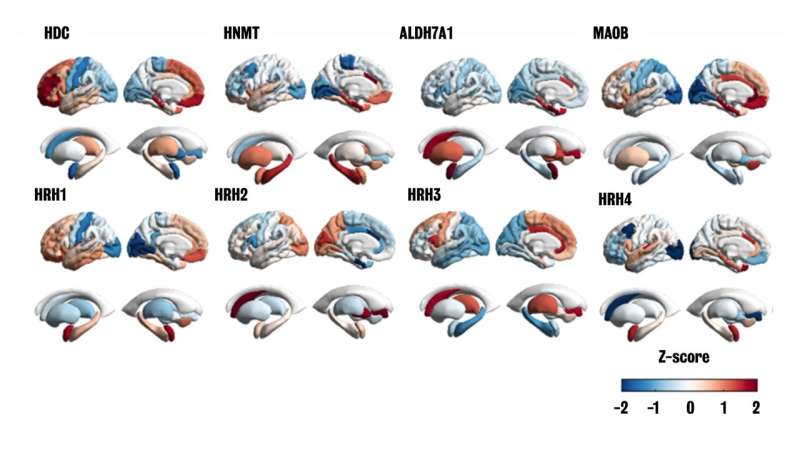
New research has created the first comprehensive map of the histamine system in the brain, highlighting its role beyond allergies and linking it to genetics, behavior, and mental health conditions.
A pilot study suggests that transcranial temporal interference stimulation (TIs), a noninvasive brain stimulation method, may effectively treat motor symptoms in Parkinson’s disease by improving movement significantly in patients compared to a sham treatment, specifically when targeting the subthalamic nucleus.
A comprehensive analysis of biological clocks across the human body reveals that both insufficient and excessive sleep are associated with accelerated aging in nearly every organ system.
Scientists have the first direct evidence from human studies that brain-controlled hearing technology can help people single out a voice in a crowd. These early findings suggest that researchers may one day develop a hearing augmentation device that can, among other feats, overcome the problems that conventional hearing aids have with noisy surroundings.
A new study presents evidence that hormonal changes, from monthly cycles to menopause, significantly alter how the brain processes sound.
Baylor College of Medicine researchers discovered that the human brain can process language while under general anaesthesia, challenging our understanding of consciousness and cognition, and potentially offering new insights into memory, language, and brain-computer interfaces.
Individuals with diabetes face a significantly higher risk of developing dementia, as highlighted in research from the 28th European Congress of Endocrinology in Prague, indicating they are more than twice as likely to develop the disease.
New research shows that as we form online connections, our brains prioritise “social mapping” over “content learning.” This shift is even more dramatic for those with high working memory, who use their digital networks as external storage, resulting in a 40% drop in content recall.
A longitudinal study reveals that the accumulation of visceral fat, the “hidden” fat stored deep within the abdominal cavity, is a primary driver of brain atrophy and cognitive decline in late midlife.
Scientists have discovered new evidence that disputes previous beliefs about the causes of lacunar ischemic stroke, revealing that fatty deposits in arteries may not be the reason for this type of stroke, which constitutes about 25% of ischemic strokes. Instead, researchers identified a different vascular abnormality—enlargement and widening of arteries in the brain—as being strongly linked to lacunar stroke.
New research provides a breakthrough in understanding the biological mechanisms linking Cannabis Use Disorder (CUD) and psychosis.
A new study has found that while “brain fog” predicts a first episode of depression in healthy adults, those with a history of the disorder are actually more likely to relapse if their cognitive scores are high. This “confounding” result suggests that the relationship between how we think and how we feel is far more complex than previously believed.
Finally, multiplexed imaging technology using standard clinical MRI systems can simultaneously map more than 20 biomarkers in high resolution, providing a comprehensive view of the brain with a single scan.

