
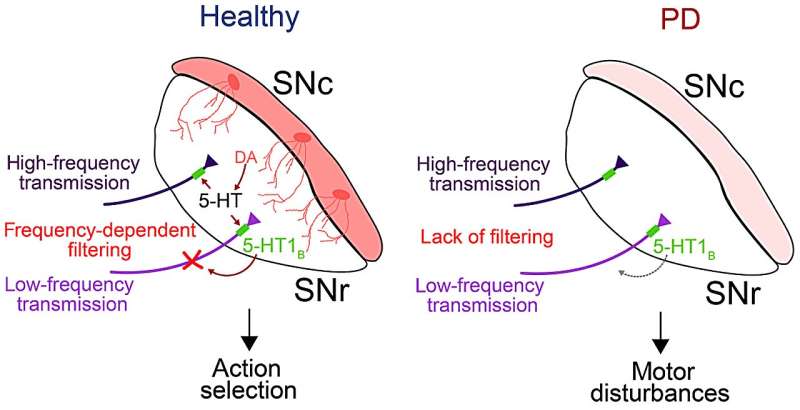
Scientists have uncovered a previously unknown mechanism by which dopamine, a key brain chemical vital for movement and motivation, can affect brain activity indirectly by boosting serotonin.
New brain imaging research shows that structural damage in schizophrenia spectrum disorders may begin in specific “epicenter” regions before spreading across connected brain networks. Individuals with the condition showed widespread reductions in structural similarity between key cognitive and emotional brain regions.
Researchers have uncovered new insights into how brain wiring differs in children and young adults with autism, offering more precise ways to understand the condition.
There is new hope for people who have lost their smell. Scientists have successfully tested a breakthrough device that lets people detect the presence of certain odors. This innovative system helps them “smell” again by translating odors into feelings (like touch) inside the nose.
Lockdown and social distancing measures during the COVID-19 pandemic were associated with increased developmental concerns about young children in Scotland, research suggests.
Researchers have identified two receptors in the brain that control the breakdown of amyloid beta, a substance that accumulates in Alzheimer’s disease. The study could pave the way for future drugs that are both safer and cheaper than current antibody treatments.
Patients with major depressive disorder, including non-responders to first-line antidepressants, may benefit from short-term nitrous oxide treatment.
A new study has achieved a long-standing goal in neuroscience: showing how the brain’s smallest components build the systems that shape thought, emotion and behaviour. The research, published in the journal Nature Communications, could transform how scientists understand cognition and aging, as well as mental health disorders like depression and schizophrenia.
Neuroscientists have identified five “major epochs” of brain structure over the course of a human life, as our brains rewire to support different ways of thinking.
New longitudinal research shows that Alzheimer’s disease blood biomarkers rise up to 95 percent faster in people with obesity than in those without. While baseline tests initially appeared lower due to blood dilution, long-term tracking revealed a significantly accelerated build-up of neurodegeneration and amyloid pathology.
Using in-vehicle driving data may be a new way to identify people who are at risk of cognitive decline, according to a study published on November 26, 2025, in Neurology.
Researchers have developed an AI system that can reconstruct fine hand muscle activity using only standard video footage. Traditionally, this type of measurement required intrusive electrodes attached to the skin, but the new method eliminates that need entirely.
A large population analysis found that older adults who received the shingles vaccine were significantly less likely to develop dementia over the following seven years.
A new review explores how episodic memories are formed, stored, and reshaped over time, revealing why our recollections of past events often change. Rather than functioning like fixed files, memories consist of multiple components that can lie dormant until triggered by environmental cues.
Finally this week, a multi-institutional team of researchers report that extensive musical training can steady the body in space, both with and without guiding sounds, during a blindfolded stepping test.
 inside-the-brain.com