
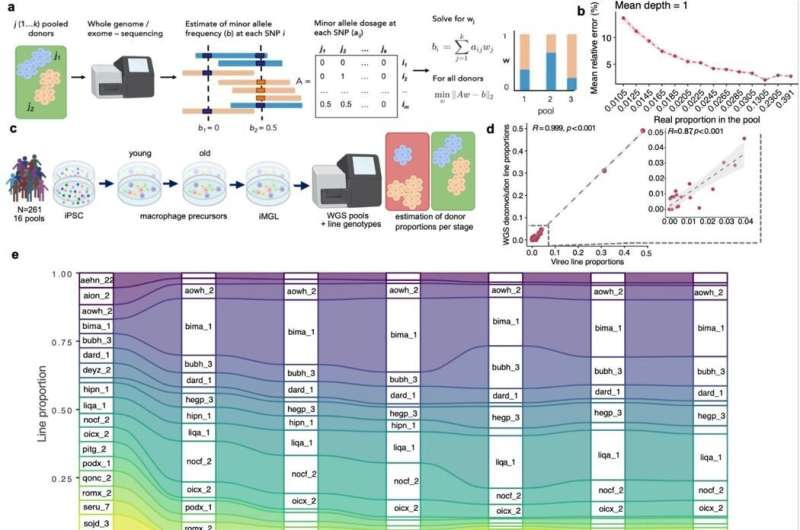
Research has started to bridge the gap between identifying genetic changes that can increase the risk of brain conditions, such as Alzheimer’s, and understanding how they might impact specific cell functions. By using lab-grown human brain cells, scientists were able to show how genetic variants impact cell behaviour. Specifically, they showed how genetic variations lead to differences in the ability of the brain’s immune cells to move and clear away biological debris.
A study that tracked people over the course of 30 years finds that only chronic, persistent loneliness is strongly linked with dementia. The findings are published in the peer-reviewed journal Aging & Mental Health.
Scientists have identified two areas of the brain that show significant signs of Alzheimer’s disease before it reaches the hippocampus, possibly providing new biomarkers that could get people diagnosed and started on treatment before symptoms begin, when interventions may be most effective.
New research challenges the view of aging brains as solely declining, suggesting instead that late-life cognition emphasizes wisdom rather than detailed memory.
Engaging core muscles during movement can regulate blood flow to the brain, as contractions increase pressure in related blood vessels. A new study finds that this pressure leads to quick constrictions of major brain veins, temporarily boosting blood flow. Understanding how the regulation of blood flow in the brain is influenced by movement in the body could help explain the connection between exercise and brain health or why migraines and headaches can become more severe with movement, according to the research team.
Pioneering research shows that the brains of people who are deaf from an early age rewire to see more of what is happening in their visual periphery, new research has revealed.
Research indicates that thinking abilities in young adulthood may correlate with dementia risk later in life, but factors like education and life experiences complicate this connection. A recent study tested children’s reasoning at age 13, revealing that lower cognitive scores in youth are associated with higher risks of cardiovascular disease and diabetes, prompting examination of early reasoning’s direct link to dementia risk, independent of these conditions.
Simple visual tests could be an early indicator of cognitive decline, a precursor to dementia, according to a new study published in the journal Brain Sciences.
In a study published in the journal JAMA Network Open, an irregular pattern and consistently higher levels of the stress hormone cortisol in saliva were associated with cognitive decline later in life. Black participants specifically had lower overall cortisol levels and less change in their levels during the day than white participants, according to newly published research.
People with autism show remarkable variability in brain activity according to new research.
Integrating artificial intelligence (AI) into neuroscience is changing how scientists engage with data, improving our understanding of the brain and leading to better ways of training computational models. The findings will be presented at Neuroscience 2026, the annual meeting of the Society for Neuroscience.
New attention-deficit/hyperactivity disorder (ADHD) research shows the condition influences mental and physical health across the life span. The findings were presented at Neuroscience 2026.
Researchers at UCLA Health have shown in lab-grown human brain cells that boosting the activity of a healthy gene copy can offset the effects of a mutation linked to autism. The findings suggest a new direction for treating autism and related neurodevelopmental conditions, though the work is still at an early stage.
Newly developed biomarkers may enhance clinicians’ ability to detect and treat disorders of the nervous system, including Alzheimer’s disease, mood disorders and neurodevelopmental conditions.
A Virginia Tech eating trial found that young adults ages 18 to 21, but not those ages 22 to 25, showed changes in brain responses to an ultraprocessed milkshake after following a diet high in ultraprocessed food. The findings, which were published in the journal Obesity, complement earlier results from the same trial showing that younger participants ate more after consuming an ultraprocessed diet, even when they were already full.
Being infected with herpes simplex virus type 1 (HSV-1) is associated with a 48% increase in the risk of Alzheimer’s disease or other types of dementia, according to a meta-analysis published in Open Forum Infectious Diseases.
A new discovery challenges the separation of speech comprehension and production, showing that a region in Wernicke’s area helps plan words before they are spoken. This finding could improve brain mapping during surgery and brain-computer interfaces for restoring communication.
A self-adjusting EEG helmet improves brainwave measurement reliability by monitoring and adjusting electrode–scalp contact in real time, reducing variability across users and supporting clinical, rehabilitation and BCI applications.

