
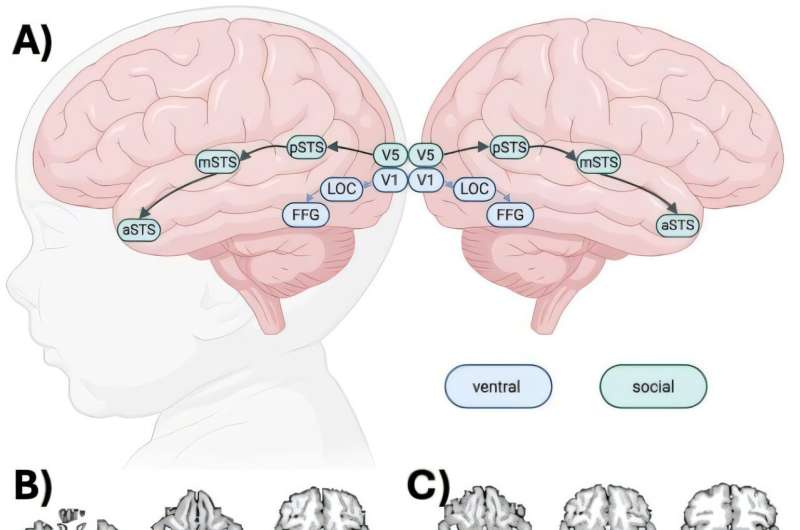
Credit: Imaging Neuroscience (2026).
Newborn babies are naturally drawn to faces, a trait that helps them bond with their mothers and other caregivers. New Yale research has now found that the functional brain network involved in processing dynamic faces in adults can be observed as early as the third trimester of pregnancy.
Researchers have developed an AI model that analyzes a person’s DNA to better identify genetic risk factors for stroke, paving the way for more personalized risk assessments.
A new study published in the American Journal of Psychiatry found that deep brain stimulation (DBS) for treatment-resistant depression led to sustained improvement by stimulating specific brain connections. It is the largest multicohort study on patients receiving subcallosal cingulate DBS. Additionally, findings reported in Imaging Neuroscience indicate that the brain pathway for perceiving socially engaging faces can be detected in the womb, highlighting early brain network development.
Therapy targeting the immune system’s B cells might offer better odds against relapses in the early stages of multiple sclerosis (MS), a new study reports. The findings were published in the journal Neurology Open Access.
Adults who averaged fewer than 5,000 steps a day were later diagnosed with dementia, Parkinson’s disease or stroke at almost twice the rate of those averaging more than 12,000 steps, according to a new study presented at the 151st Annual Meeting of the American Neurological Association (ANA).
Children consuming more ultraprocessed foods exhibit heightened brain responses to appealing food images, which are associated with increased body fat a year later.
Previous studies have suggested that body posture and movement can influence emotions. Now researchers have extended this line of research by showing that when people perform the same “depressed” body movements, their brain responses differ depending on the level of their depressive symptoms.
Clinician-scientists hope to expand the use of blood-based biomarker tests for traumatic brain injury (TBI) to improve identification and escalation of care for patients whose diagnosis otherwise might be missed.
In a recent study, researchers investigated the impact of maintaining physical activity and blood pressure on cognitive abilities over a 14-year period. They tracked participants’ daily step counts and blood pressure, followed by computerized tests assessing attention, focus, and self-control. Results indicated that increased daily steps correlated with improved performance in cognitive tests.
A major review of more than 2 million people has found current smokers face a higher risk of dementia.
Researchers at Karolinska Institutet and their collaborators have identified two previously unknown forms of the protein amyloid-beta that may contribute to the development of Alzheimer’s. The study, published in Nature Communications, also shows that a protein previously discovered by the researchers can counteract the formation of these harmful forms, suggesting a potential new treatment approach.
Scientists have discovered that serotonin, a brain chemical best known for its role in mood and mental health, also helps regulate attention.
Three distinct brain biotypes exist in children who have attention-deficit/hyperactivity disorder, anxiety disorder or both, a new Stanford Medicine–led study has shown. The discovery could help clarify a confusing picture of two of the most common mental health conditions of childhood, which often overlap. Each biotype is characterized by malfunctions in a specific set of brain circuits, according to the study, published in Nature Mental Health.
A naturally occurring molecule that helps the brain clear away damaged blood cells could open the door to new treatments for one of the deadliest forms of stroke, research led by University of Manchester scientists suggests.
A study of more than 1,800 older Australians found that people who had experienced lifetime trauma were more likely to have mild cognitive impairment (MCI) or dementia and performed worse on working memory and executive function tests. However, stressful events experienced in the previous six months were not associated with poorer cognitive outcomes.
A recent review has revealed type 2 diabetes significantly raises the risk of developing Alzheimer’s disease.

