
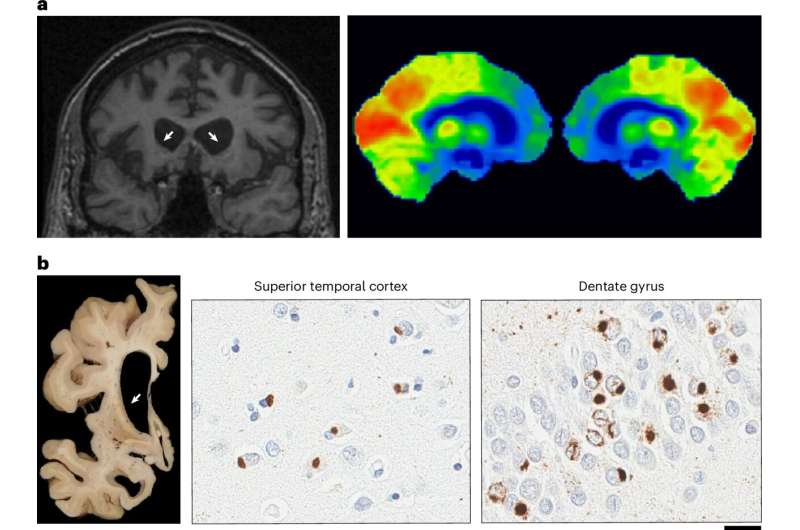
Researchers have identified a major genetic risk factor for a rare form of frontotemporal dementia. The discovery, published in Nature Genetics, provides a biological entry point for a disease subtype that has been difficult to study. It could not only help to improve diagnosis and patient stratification, but also opens up new avenues toward targeted treatments.
A new study suggests that merely engaging in physical activity isn’t sufficient; the structure of workouts, including session spacing and organization, may be more crucial for healthy brain aging than the total activity amount.
MIT neuroscientists have discovered how the brain focuses on a single voice amid many, addressing the “cocktail party problem.” This focus is crucial in crowded settings like cocktail parties, where multiple conversations occur. The brain can follow the voice of the person you’re talking to despite background noise. Using a computational model of the auditory system, the MIT team found that enhancing neural processing units that respond to specific voice features, like pitch, helps bring that voice to the forefront of attention.
Higher maternal physical activity is associated with early child neurodevelopment, according to a recent study.
The stress hormone cortisol disrupts the brain’s navigational system by impairing the function of grid cells essential for spatial orientation. Researchers from Ruhr University Bochum, Germany, verified this in an imaging study with 40 individuals who completed a virtual navigation experiment in an MRI scanner. Subjects who received cortisol prior to the experiment performed worse, with indistinct grid cell activity patterns.
The recreational drugs cannabis, cocaine and amphetamines significantly increase the risk of stroke—including among younger users—Cambridge researchers have concluded after analysing data from more than 100 million people.
Scientists have identified a coordinated “gene expression program” that drives neurotransmission in the living human brain by integrating real-time intracranial recordings from neurosurgical patients with molecular profiling. This study reveals specific genes associated with active signalling, offering new insights into human cognition and psychiatric disorders.
A single session of physical exercise can spawn a boost of neural activity in brain networks that underlie learning and memory, according to a new study.
A team of Spanish researchers investigated whether individuals with high psychopathic traits exhibit brain structure anomalies that prevent feelings of regret and contribute to manipulation and antisocial behaviour by interviewing men convicted of intimate partner violence and a control group, followed by brain scans. The results showed that men with thinner cortex in certain brain regions—particularly fronto-temporo-parietal areas—tended to display higher antisocial tendencies, regardless of their history of violence.
Scientists have identified seven specific types of hyperarousal, creating a new roadmap for treating the underlying tension of mental disorders.
Researchers conducted a study on the link between responses to SSRIs and SNRIs and brain connections. Their findings, published in Molecular Psychiatry, suggest that a specific link between the frontal lobe, a region in the brain’s outer layer involved in decision-making, and the amygdala, which is central to the processing of emotions, differs in patients that respond better to SSRIs and those who find SNRIs more beneficial.
New research reveals that our brain’s internal map of the world is updated by a 94% accurate prediction of our own eye movements.
Alzheimer’s research has faced criticism for its lack of diversity, with a primary focus on participants of European ancestry. A groundbreaking study has revealed significant variations in Alzheimer’s pathology, specifically tau protein tangles and amyloid plaques, among different racial and ethnic groups. This suggests the disease’s biological timeline varies across populations, indicating a need to adjust current diagnostic tools and future treatments for broader effectiveness.
A new study offers a single explanation for two major symptoms of schizophrenia.
New research has found no evidence that the transitional symptoms of menopause such as brain fog and memory problems have a lasting impact on cognitive performance. The research, published in npj Women’s Health, found that while brain fog is a real symptom commonly experienced by peri- and postmenopausal women, there is no evidence that it has an ongoing impact on a person’s cognitive abilities.
The largest-ever Parkinson’s study shows how symptoms differ between men and women.
A recent study published in NeuroImage reveals that neuroticism is linked to altered communication between different brain networks rather than isolated brain activity. Researchers discovered that people with higher levels of this personality trait show increased connectivity between brain regions responsible for processing emotions, regulating memory, and detecting threats. These findings suggest that emotional instability arises from how the brain’s emotional hubs synchronize with other areas.
New research indicates that storytelling may be linked to the evolution of human memory and could enhance everyday retention.
Having type 1 diabetes is linked to a higher risk of dementia, according to a recent study published in Neurology. Type 2 diabetes also carries a higher risk compared to those without diabetes. However, this study shows an association and does not prove that diabetes causes dementia. Type 1 diabetes is rare, representing about 5% of diabetes cases.
Finally, new research shows that harmonically consonant musical chord progressions during face-to-face interactions enhance brain circuits linked to social connection and emotional processing.
 inside-the-brain.com