
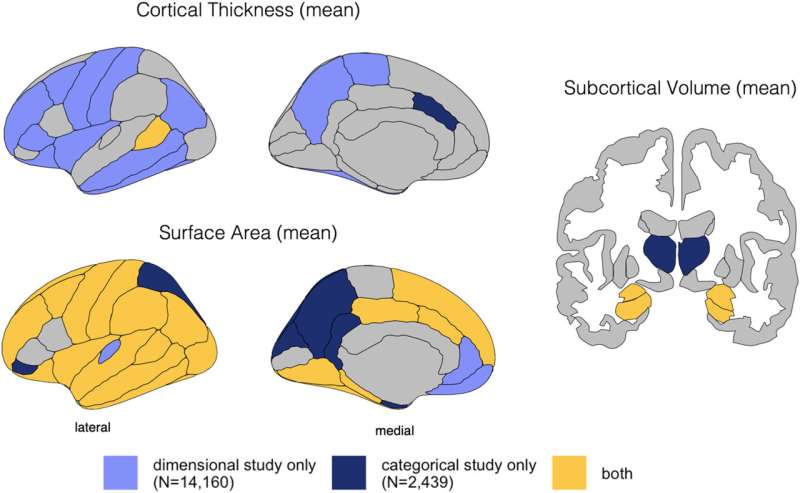
Conduct problems—including persistent rule-breaking, aggression, irritability and difficulty following school rules—are associated with small but widespread differences in brain structure, according to a major international study of more than 14,000 children and adolescents.
New research has discovered subtle but widespread differences in the brain’s communication networks in people with bipolar disorder, offering new insight into how illness severity and treatment may relate to brain wiring.
A recent study has identified hidden pathways through which parental DNA influences a child’s life, presenting a framework that separates direct genetic inheritance from parents’ environmental impacts, known as “genetic nurture.” By analysing data from over 30,000 multigenerational families, researchers found that the domestic environment shaped by parental DNA can affect traits such as height, weight, and academic ability that rival direct inheritance.
A study of 2,044 older Japanese adults revealed that lower vitamin C levels in blood plasma are associated with reduced gray matter volume and connectivity in the brain’s default mode network.
Researchers have discovered unique brain activity patterns in individuals with depression, shedding light on the persistent nature of depressive symptoms. Their study, used advanced neuroimaging and mathematical modelling to analyse brain transitions between states, indicating that depression may involve “brain-state entrapment,” whereby the brain tends to favour certain activity patterns and struggles to shift away from them.
Adolescents who spend at least two hours a day on social media are more likely to experience depressive symptoms and poorer well-being, with the strongest effects in early adolescence, according to new research.
A new study challenges the belief that teenage risk-taking is due to excess dopamine, finding instead that it stems from low baseline dopamine levels. Analysing data from over 800 adolescents, researchers discovered that those with the lowest reward biology use substances like alcohol and cannabis as a way to stimulate their underactive brains. As their dopamine systems mature into adulthood, their experimentation with substances significantly decreases.
New research suggests that reinforcing the body’s natural daily rhythms to improve sleep could help the brain recover after a stroke.

