
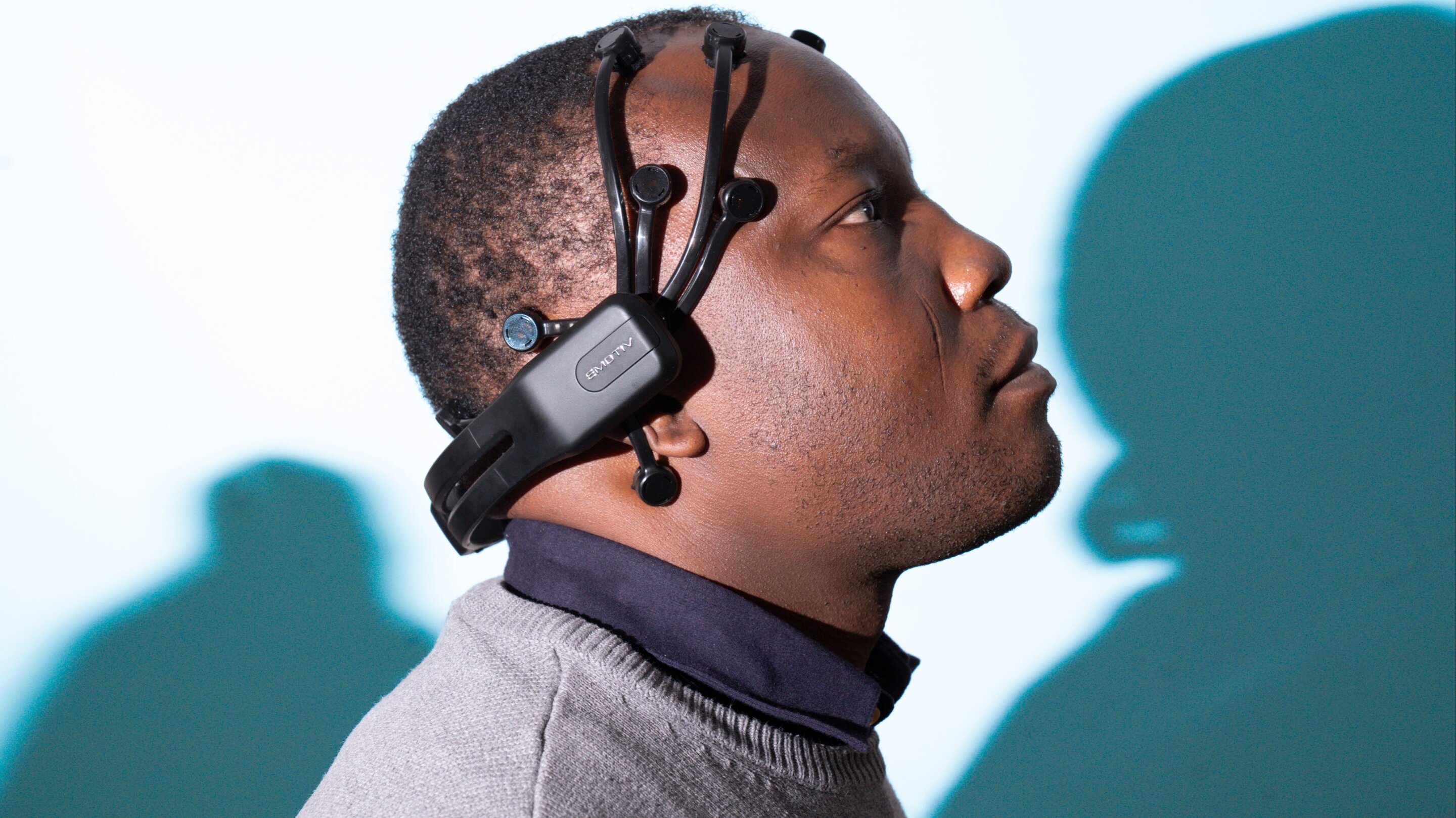
A “unique” AI-powered headset that can predict epileptic seizures minutes before they occur has been developed by scientists
A new study from Karolinska Institutet, published in Nature Communications, reveals how rhythmic brain waves known as alpha oscillations help us distinguish between our own body and the external world. The findings offer new insights into how the brain integrates sensory signals to create a coherent sense of bodily self.
Scientists have discovered that a part of the brain may be behind high blood pressure.
Women are more than twice as likely as men to develop stress-related conditions like PTSD, yet the biological mechanisms behind this risk are not well understood. Recent research provides evidence that the ovarian hormone estradiol influences the brain’s response to perceived threats after trauma.
A new study investigated both gene expression and regulation at single cell levels to reveal disruptions in gene function in three brain regions of patients with sporadic early onset Alzheimer’s disease.
Researchers mapped the brain connectivity of 960 individuals to uncover how fast and slow neural processes support complex behaviour. They found that intrinsic neural timescales—regions’ characteristic processing windows—are shaped by white-matter pathways distributing signals across the brain. Individuals with a closer match between their wiring and regional timescale demands showed more efficient transitions between behaviour-linked brain states.
An international study that pooled brain scans and memory tests from thousands of adults has shed new light on how structural brain changes are tied to memory decline as people age.
A new machine-learning-based approach to mapping real-time tumour metabolism in brain cancer patients could help doctors discover which treatment strategies are most likely to be effective against individual cases of glioma. The team verified the accuracy of the model by comparing it against human patient data and running mouse experiments.
A new international study has developed the first practical, five-year dementia risk prediction tool for stroke survivors—using only information that’s routinely collected in hospitals and clinics.
Clinician-scientists at the University of Pittsburgh School of Medicine have developed an artificial intelligence (AI) tool that significantly improves diagnostic accuracy for functional seizures—a condition often misdiagnosed as epilepsy.
A real world study has shown that higher daytime light exposure positively influences different aspects of cognition.
There are indications that a simple finger-prick blood test could, in the future, detect Alzheimer’s disease long before the first clinical symptoms become apparent. This approach could offer a more accessible and less burdensome alternative to the current, complex diagnostic methods.
Finally this week, a new study suggests that a little-known region deep in the brain could be crucial for preserving physical strength as we age.
 inside-the-brain.com