
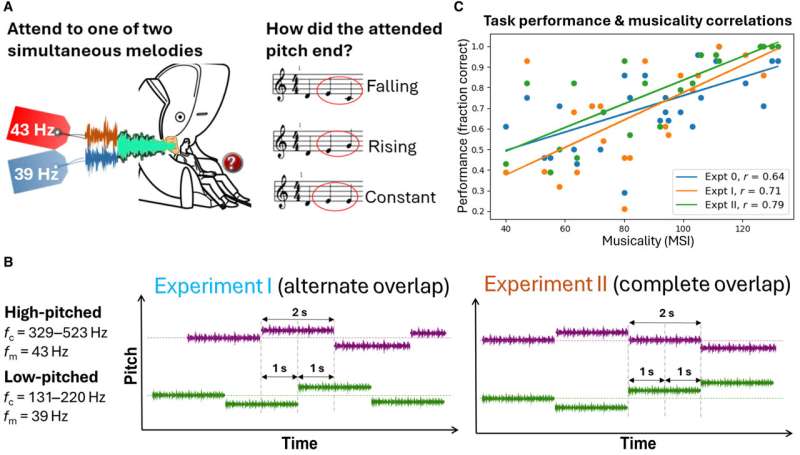
Musical people find it easier to focus their attention on the right sounds in noisy environments. This is shown in a new study from Karolinska Institutet published in the journal Science Advances. The results suggest that music training can be used to sharpen attention and cognition.
A major UK study has revealed that the early warning signs of multiple sclerosis (MS) may appear years before diagnosis and affect all communities in similar ways.
Pea-sized brains grown in a lab have, for the first time, revealed the unique way neurons might misfire due to schizophrenia and bipolar disorder, psychiatric ailments that affect millions of people worldwide but are difficult to diagnose because of the lack of understanding of their molecular basis.
Researchers have developed a minimally invasive method for recording brain activity through blood vessels.
A long-term study tracking 475 children found that autistic children are far more likely to experience persistent gastrointestinal issues than their peers. These symptoms often co-occur, persist throughout childhood, and are strongly related to challenges with sleep, communication, behavior, and sensory processing.
Science and artificial intelligence have combined in a study that could lead to personalized repetitive transcranial magnetic stimulation, or rTMS, for smokers who want to quit.
New research suggests that when people listen to speech at varying speeds, the auditory cortex does not adjust its timing but instead processes sound within a fixed time window. This discovery challenges the long-standing idea that the brain flexibly adapts its processing pace to match speech rhythms.
Neuroscientists are leveraging music’s ability to synchronize brain waves to enhance the effectiveness of transcranial magnetic stimulation (TMS).
Fluctuations in brain activity, also known as neural variability, enable us to be flexible in adjusting our behavior to the current situation. A new study shows that neural variability increases throughout development before stabilizing in adolescence. And deviating from this trajectory is associated with worse executive functioning.
Scientists have identified a previously underexplored population of hypothalamic neurons that plays a pivotal role in regulating energy expenditure.
A new study reveals that our brain’s attention system first prepares broadly, then focuses on specific details within fractions of a second. Using EEG and machine learning, researchers tracked how people focused on either the colour or the movement of dots before they appeared.
The first major data release from the HEALthy Brain and Child Development (HBCD) Study has provided researchers with a groundbreaking resource to study early childhood brain development.
A study published in The Cerebellum provides initial experimental evidence that a single session of cerebellar High-Definition Transcranial Direct Current Stimulation (HD-tDCS) may help to maintain anticipatory and consummatory pleasure and enhance reward sensitivity in healthy individuals.
New research finds that regional fat distribution exerts distinct effects on brain structure, connectivity and cognition, revealing patterns not explained by body mass index (BMI).
A new study reveals that fluoxetine, more commonly known as Prozac, does more than simply increase serotonin—it alters how brain cells utilize energy and form new connections. After two weeks of treatment, parvalbumin interneurons in the prefrontal cortex became less rigid, with mitochondrial energy genes reduced and plasticity genes upregulated.
Depression’s earliest signs can be hard to spot, but a new study shows AI can detect them in subtle facial movements.
A new five-year study explores how dopamine may drive changes in brain myelin during social isolation. Researchers will track how dopamine interacts with oligodendrocytes, the cells responsible for producing myelin and supporting neuron function.
Scientists have revealed a key mechanism in how our brains change when we learn new information or form memories.
Humans excel at adapting to new situations, while machines often stumble. A new interdisciplinary study reveals that the root of the issue lies in how humans and AI approach “generalization,” the process of transferring knowledge to new problems.
Finally this week, according to new research, habit, rather than conscious choice, drives most of our actions.
 inside-the-brain.com