Weekly Neuroscience Update

(A) Brain regions where spectra were measured (yellow box) (B) 1H MR spectrum in the hippocampus: Hippocampal taurine signal shown at 3.4 ppm (arrow). Black line: actual measured spectrum. Red line: LCModel fitting spectrum. Credit: Korea Basic Science Institute (KBSI)

For the first time, a research team in Korea has discovered there is a significant relationship between depression and the taurine concentration in the hippocampus, an area of the brain responsible for memory and learning functions. This discovery provides the opportunity to publicize the role and importance of taurine in future prevention, diagnosis, and treatment of depression.

A recent study reveals that individuals who experienced childhood adversity, such as neglect or abuse, faced higher chances of COVID-19 hospitalization or mortality in adulthood.

Time spent watching television or playing computer games has measurable and long-term effects on children’s brain function, according to a review of 23 years of neuroimaging research, which—while showing negative impacts—also demonstrates some positive effects.

A first-of-its-kind study has identified overactive inflammation and loss of critical protection mechanisms in the brain as potential contributors to suicide risk.

An international team of scientists has uncovered the vital role of microglia, the immune cells in the brain that acts as its dedicated defense team, in early human brain development. By incorporating microglia into lab-grown brain organoids, scientists were able mimic the complex environment within the developing human brain to understand how microglia influence brain cell growth and development.

A novel study finds a link between childhood physical fitness and cerebellar grey matter volume in adolescents.

Mayo Clinic researchers have identified new scoring criteria allowing for the detection of treatable forms of rapidly progressive dementia (RPD) with reasonably high confidence during a patient’s first clinical visit. This scoring criteria may allow physicians to substantially reduce the time it takes to begin treatment. The findings are published in the Annals of Neurology.

A new sudy has identified the top three genes responsible for traumatic brain injury complications.

Researchers have made a discovery that sheds light on how our brain cells manage to efficiently replace older proteins. This process is crucial for maintaining effective neural communication and ensuring optimal cognitive function.

A pair of studies has uncovered novel cellular mechanisms that are involved in two types of genetic amyotrophic lateral sclerosis, or ALS.

In a study published in the Journal of Neuroscience Research, psychological assessments indicated that people who regularly use cannabis, or marijuana, tend to have a greater understanding of the emotions of others. Brain imaging tests also revealed that cannabis users’ anterior cingulate—a region generally affected by cannabis use and related to empathy—had stronger connectivity with brain regions related to sensing the emotional states of others within one’s own body.

Finally this week, researchers have unearthed the genetic connection between the heart and brain related to fainting spells.

Weekly Neuroscience Update

Credit: Nature Mental Health (2023)

Researchers have identified important new methods for accurately identifying possible biomarkers in adolescent brains that can reliably predict cognitive developments and psychiatric issues.

A new study has examined the neural processes underlying odor processing in the human olfactory system and how the brain handles odor information from different nostrils and details the finding that each nostril has its own sense of smell, recording a distinct representation of the odor information it encounters.

A groundbreaking discovery suggests that dendrites could be pivotal in learning processes and may even influence our understanding of brain states and degenerative diseases.

A new study reveals the brain’s swift response to human errors compared to unintended outcomes. The study found that the brain recognizes an error within one second and then engages in a longer process to prevent future errors. This process was absent when the outcome wasn’t a direct result of an action, indicating a specialized error-awareness mechanism in the brain.

Researchers have identified new therapeutic targets for progressive supranuclear palsy (PSP), an incurable brain disorder with symptoms mimicking Parkinson’s and dementia.

A speech prosthetic developed by a collaborative team of neuroscientists, neurosurgeons, and engineers can translate a person’s brain signals into what they’re trying to say. The new technology might one day help people unable to talk due to neurological disorders regain the ability to communicate through a brain-computer interface.

It’s been debated for decades, but now researchers have suggested that left-handedness is not linked to better spatial skills.

A new study sheds light on when adolescents start thinking like adults. Researchers found that executive function, critical for task-switching and focus, typically matures around 18 years old. Drawing from over 10,000 participants and multiple datasets, this large-scale study offers a developmental chart for teen cognitive growth. These findings are invaluable for education, psychiatry, and the judicial system.

Emerging research underscores the profound connection between mental health and heart disease, with depression and anxiety hastening the onset of cardiovascular risk factors.

Researchers have discovered a potential link between the microbe C. perfringens and the progression of multiple sclerosis (MS). The study hints at the prospect of developing a vaccine or alternative treatments in the near future.

In a new study, researchers use a very large dataset to identify predictive brain imaging-based biomarkers of mental illness in adolescents.

Using advanced brain scanning technology, a research team has revealed insights into what happens in the brain during an advanced form of meditation called jhana. By uncovering distinct patterns of activity in different regions of the brain during jhana, the research suggests exciting possibilities for innovative therapies merging ancient meditation practices with modern neuroscience to improve well-being.

Finally this week, new research suggests your biological age, more than the years you’ve lived, may predict your risk of dementia and stroke in the future.

Weekly Neuroscience Update

Credit: PLOS Pathogens (2022). DOI: 10.1371/journal.ppat.1010339

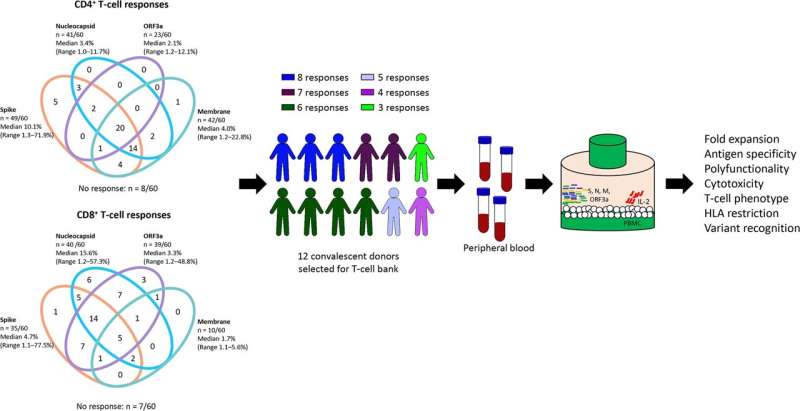
New research is providing hope to immunocompromised people who are vulnerable to COVID-19. Scientists have discovered promising evidence that T cell immunotherapy could help them to fight against multiple strains of the virus.

Treatments integrating music and auditory beat stimulation are effective in reducing state anxiety in some patients, according to a new study published in the open-access journal PLOS ONE.

The underlying molecular mechanisms that promote autoimmune diseases are multilayered and complex. Now, scientists have succeeded in deciphering new details of these processes. Their work supports the notion that excessive consumption of glucose directly promotes the pathogenic functions of certain cells of the immune system and that, conversely, a calorie-reduced diet can have a beneficial effect on immune diseases.

Teens who had an insecure attachment to their mothers as toddlers are more likely to overestimate the trustworthiness of strangers, a new study reports.

A new study reveals that oleic acid produced in the brain is an essential regulator of the process that enables learning and memory and supports proper mood regulation. The finding has paved the path to discovering potential new therapeutic strategies to counteract cognitive and mood decline in patients with neurological disorders.

A small study found people who received lithium, a drug commonly associated with the treatment of bipolar disorder, are less likely to develop dementia.

Scientists have found that people with Parkinson’s disease have a clear “genetic signature” of the disease in their memory T cells. The scientists hope that targeting these genes may open the door to new Parkinson’s treatments and diagnostics.

If you are forgetful or make mistakes when in a hurry, a new study found that meditation could help you to become less error-prone.

Older adults who take statin drugs have a lower risk of developing Parkinson’s disease or parkinsonism symptoms later in life compared to those who do not take statins. Researchers speculate this may be because statins have a neuroprotective effect on arteries in the brain.

Finally this week, researchers have developed a new, fully automated prosthetic arm that learns during normal use and adapts to varying conditions.

Weekly Neuroscience Update

buddhist-1807526_960_720.jpgResearchers have discovered differences in the brain’s emotional networks between those who do not meditate, novice meditators and those who have practiced meditation for a long time.

According to researchers, people find it easier to lie in a foreign language than their native tongue.

A new study could revolutionize understanding of how signal flow can be measured in the brain and could have an impact into the development of new artificial neural networks.

Scientists in the US have announced they’ve developed an Artificial Intelligence (AI) system that can tell how smart a person is just by looking at a scan of their brain.

Researchers have developed a new, non-surgical method to manipulate brain circuitry. The technique uses sound waves in combination with small bubble injections into the bloodstream that temporarily opens the blood-brain barrier.

A new study reports disrupted transportation routes in nerve cells are a significant cause of Parkinson’s disease.

According to researchers, vision and brain circuits perform regular background scans, making neurons available for focus based tasks. The process makes it possible for us to pay, and maintain attention.

Researchers report high density of neurons in the dorsolateral prefrontal cortex play a significant role in resilient dyslexia.

Finally this week, a new study reports children who exhibit excessive self-control and have tendencies toward perfectionism are twice as likely to develop OCD by their teenage years.

Weekly Neuroscience Update

smelling-purple-lilac-3402287_960_720.jpg

In a new study, scientists have discovered why the brain’s olfactory system is so remarkably consistent between individuals, even though the wiring of brain cells in this region differs greatly from person to person.

Scientists have proposed a new communication model to explain how brain networks can be navigated to achieve efficient information transfer.

Researchers have discovered another purpose for the gut-brain axis; relaying information to the hippocampus to store information about our environment and location.

A new study reports speech comprehension can improve as much as 10% when sound is delayed relative to vision.

Parkinson’s disease progresses differently in women than in men. A current study has now furnished the first neurophysiological evidence supporting this finding. “Numerous demographic studies have provided evidence that men contract Parkinson’s disease nearly twice as often as women.

A new study reveals the role the anterior cingulate cortex and basolateral amygdala play in observational learning.

Researchers say schizophrenia should not be considered to be just a disorder of the mind, as schizophrenia can also impact other organs. A new study reveals people with schizophrenia often have an over active immune system and other physical disorders.

Transcranial magnetic stimulation allows researchers to better understand how brain networks interact to make word choice decisions.

A new study reveals, in combination with genetics and environmental factors, placenta health during fetal development may play a role in schizophrenia. Researchers report genes associated with schizophrenia may turn on in the placenta during complicated pregnancies.

Researchers report a simple saliva test that measures cortisol levels at specific times of the day, can identify those at risk of stress and depression.

A new study reveals older adults with greater symptoms of depression have a smaller brain volume and a 55% greater chance of vascular lesions in the brain than those who do not have depression.

New research reveals the prefrontal cortex may play a role in coordinating the level of consciousness through the cholinergic system.

Finally this week, researchers report meditation and yoga are more effective at reducing stress than Chi in soldiers. Additionally, those who meditate showed stronger executive control.

Weekly Neuroscience Update

Parkin-expressing cells (red) are undergoing programmed cell death. Credit Dr. Emilie Hollville and Professor Seamus Martin, Trinity College Dublin.

Parkin-expressing cells (red) are undergoing programmed cell death. Credit Dr. Emilie Hollville and Professor Seamus Martin, Trinity College Dublin.

Scientists at Trinity College Dublin have made an important breakthrough in our understanding of Parkin – a protein that regulates the repair and replacement of nerve cells within the brain. This breakthrough generates a new perspective on how nerve cells die in Parkinson’s disease.

A new study, which may have implications for approaches to education, finds that brain mechanisms engaged when people allow their minds to rest and reflect on things they’ve learned before may boost later learning.

A study in which more than 43,000 children were evaluated for head trauma offers an unprecedented picture of how children most frequently suffer head injuries. For teens, top causes are assaults, sports, car crashes; for younger children, falls lead the list.The findings also indicate how often such incidents result in significant brain injuries, computerized tomography (CT) scans to assess head injuries, and neurosurgery to treat them.

Neighborhoods that motivate walking can stave off cognitive decline in older adults.

People who are depressed often complain that they find it difficult to make decisions. A new study provides an explanation. Researchers tested 29 patients diagnosed with major depression and 27 healthy controls and they found that the people with depression had an impaired ability to go with their gut instincts, or what we might call intuition.

Learning a new language changes your brain network both structurally and functionally, according to Penn State researchers.

Finally this week, being shown pictures of others being loved and cared for reduces the brain’s response to threat, new research from the University of Exeter has found.


Weekly Neuroscience Update

The theory and experimental findings showed that fast Hebbian and slow homeostatic plasticity work together during learning, but only after each has independently assured stability on its own timescale. This image is for illustrative purposes only. Credit Nicolas P. Rougier.

The theory and experimental findings showed that fast Hebbian and slow homeostatic plasticity work together during learning, but only after each has independently assured stability on its own timescale. This image is for illustrative purposes only. Credit Nicolas P. Rougier.

Complex biochemical signals that coordinate fast and slow changes in neuronal networks keep the brain in balance during learning, according to an international team of science researchers.

An imaging study by Stanford University School of Medicine investigators has found distinct differences between the brains of patients with chronic fatigue syndrome and those of healthy people. The findings could lead to more definitive diagnoses of the syndrome and may also point to an underlying mechanism in the disease process.

Breakdown in gut barriers to bacteria may promote inflammation and craving in alcoholics. 

Seizures and migraines have always been considered separate physiological events in the brain, but now a team of engineers and neuroscientists looking at the brain from a physics viewpoint discovered a link between these and related phenomena.

All physical activity benefits the brain. This is the main message of a new study that compared the effects of different kinds of exercise on cognition in older adults.

Finally this week, certain meditation techniques can promote creative thinking, even if you have never meditated before. This is the outcome of a study by cognitive psychologist Lorenza Colzato and Dominique Lippelt at Leiden University, published in Mindfulness.

Like Valium and Oxycontin, without the Side Effects


A Buddhist monk—this one with a doctorate in cell biology—has teamed with two prominent neuroscientists to present the latest findings on what meditation does to the brain and how those changes to neural circuits have some of the trappings of what might be labeled a perfect drug—Prozac-like muting of depression symptoms or prophylaxis against PTSD (just two on the list). In this video Richard Davidson, Ph.D., presents their research at Stanford University in a talk entitled,  The Emergence of Contemplative Neuroscience.