
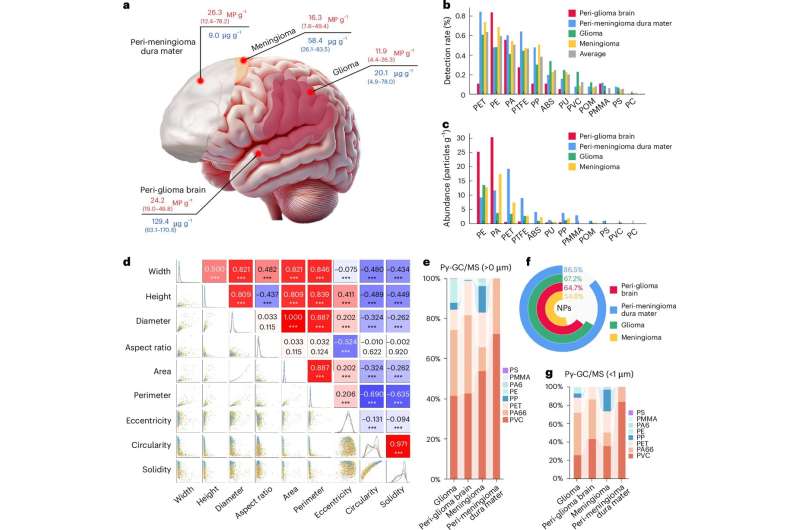
Tiny micro- and nanoplastic fragments seem to be turning up everywhere, including one of the most well-protected parts of the human body—the brain. In a recent study conducted by Chinese researchers, they found microplastics and nanoplastics (MNPs) in nearly all the brain samples they tested, both healthy and diseased human brains.
Researchers have identified four distinct mental states that occur regardless of whether we are asleep or awake, revealing a “neural fingerprint” for bizarre, dream-like thoughts that can surface even in the middle of the day.
Scientists have mapped a functional gradient in the rostral prefrontal cortex that connects our spontaneous “daydreaming” mind with our “logical” executive control. By studying patients with frontotemporal dementia, researchers discovered that creativity isn’t about how much these networks overlap, but about the functional distance between them. The more distinct and well-connected these two “islands” are, the more creative the individual.
For older adults, deterioration in cognitive function is seen prior to cardiovascular disease (CVD) events, according to a study published online April 20 in JAMA Network Open.
Some brains are resistant to Alzheimer’s despite the disease’s presence, with research from the Netherlands Institute for Neuroscience suggesting that this resistance may relate to how immature neurons respond to damage, aiding understanding of cognitive resilience in ageing.
Researchers propose a new model for how the brain encodes and recalls emotionally meaningful touch, highlighting its role in lifelong mental health.
A new study is the first to show that two of our most sophisticated cognitive functions, using and understanding language and being able to sense how other people feel, have distinct origins in the brain in young children—matching what we know about the adult brain.
Neuroscientists have discovered a secret second network in the brain. AI-mapped astrocyte webs connect distant brain regions, challenging 100 years of neuron-centric theory.
Research indicates that early diagnosis and treatment of epilepsy can enhance outcomes, yet timing for intervention has been unclear. A recent study proposes that treatment could begin as early as 15 weeks gestation to potentially benefit those with certain epilepsy disorders before symptoms manifest.
Finally this week, the World Stroke Organization is warning that climate change poses an escalating threat to brain health, with extreme heat in particular increasing the risk of having a stroke and of patients dying from stroke.

