
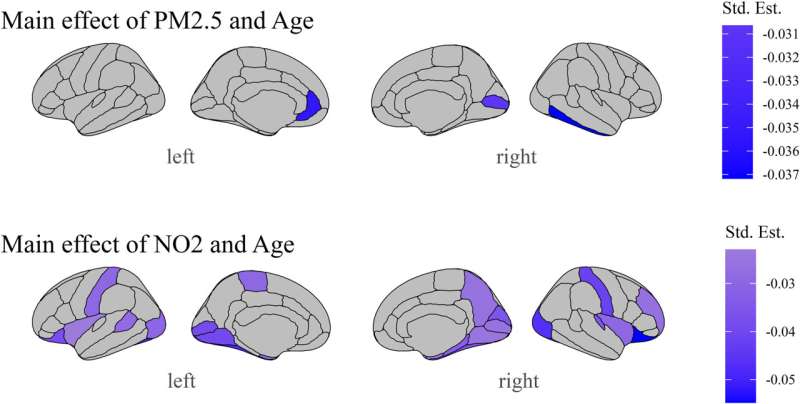
Scientists warn that exposure to air pollution may have serious implications for a child’s developing brain.
A new study shows that merely imagining a positive encounter with someone can make you like them better by engaging brain regions involved with learning and preference. The findings could have implications for psychotherapy, sports performance and more.
For the first time, a team of researchers has reconstructed how the cerebellum establishes its connections with the rest of the brain during the earliest stages of life.
Social isolation directly causes cognitive function to decline more quickly in later life, independent of whether someone feels lonely. By analysing more than 137,000 cognitive tests from over 30,000 older adults, a new study found that reduced social contact consistently predicted faster cognitive decline across all demographic groups.
Researchers have developed an AI-driven brain model that can track fear as it unfolds in real-world situations, offering a major shift from traditional lab-based approaches.
A new study is challenging a popular theory about how dopamine drives movement, a discovery that could shift how scientists think about Parkinson’s disease treatments. Published in Nature Neuroscience, the research found dopamine does not set the speed or force of each movement, as had been thought. Instead, it appears to serve as the underlying support system that enables movement.
Improvising music could help to improve older people’s cognitive skills, such as learning and memory, according to a new study.
Depression and anxiety may heighten cardiovascular disease risk through chronic stress pathways in the brain and body. In a large analysis of more than 85,000 adults, those with depression or anxiety — especially both — were significantly more likely to experience a heart attack, stroke or heart failure.
A new study has found that people who microdose psychedelics feel better on the days they take them—but those boosts don’t seem to last.
A team of researchers has uncovered, for the first time, how genes linked to autism and intellectual disability may influence early brain development. Their work helps clarify how differences in early brain development contribute to neurodevelopmental disorders and could identify more targeted therapies for these conditions.
 inside-the-brain.com