
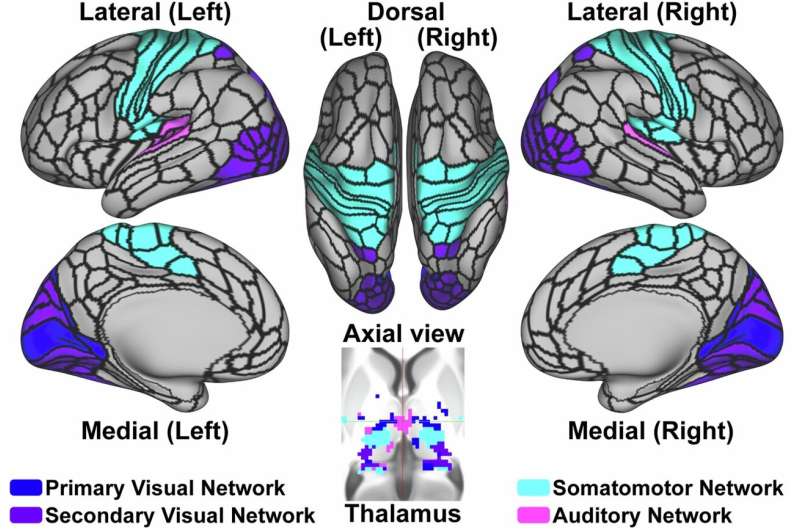
Researchers have uncovered a potential new biomarker for psychosis diagnosis.
A new approach to analyzing brain scans could help researchers better understand psychiatric illness using much smaller groups of patients than previously thought necessary, potentially accelerating the development of more precise mental health treatments.
A new study reveals how specific brain cells called interneurons can act as our in-built traffic controllers. The findings are published in the journal PLOS Biology.
Younger and middle-aged patients seem to be disproportionately affected by neurologic manifestations of post-acute sequelae of severe acute respiratory syndrome coronavirus 2 infection (Neuro-PASC), according to a study published in the Annals of Neurology.
Investigators have defined new biologic and clinical biomarkers for better identifying patients with different stages of Parkinson’s disease and Lewy body dementia.
Researchers have developed the most detailed 3D computational models of key brain regions, including the hippocampus and sensory cortices, to better understand their roles in memory formation and connectivity.
Healing the gut may be the key to improving long-term recovery in stroke patients, scientists at Texas A&M University have found.
New research provides critical insights into the role of sleep in motor learning for individuals recovering from traumatic brain injury (TBI). The study sheds light on how sleep, specifically a short nap, influences brain activity associated with motor skill improvement, with implications for optimizing rehabilitation strategies.
A recent study of high school football players found that concussions affect an often-overlooked but important brain signal.
Researchers have uncovered that stress changes how our brain encodes and retrieves aversive memories, and discovered a promising new way to restore appropriate memory specificity in people with post-traumatic stress disorder (PTSD).
Cognitive neuroscientists at Trinity College Dublin have published new research describing a brand new approach to making habit change achievable and lasting.
A new study uncovers constant communication between the human brain’s social cognitive network, responsible for understanding others’ thoughts, and the amygdala, known for processing fear and emotions. High-resolution brain scans revealed that this connection helps the brain integrate emotional importance into social interactions. This insight could lead to non-invasive treatments like transcranial magnetic stimulation (TMS) for anxiety and depression by targeting these regions. The findings highlight how evolutionary brain expansion enhances social understanding while linking it to ancient emotional processing centers.
Neuroscientists have demonstrated that dopamine and serotonin work in opposition to shape learning.
Researchers have identified a novel role for the brain’s ‘locus coeruleus’ in sleep and its disruptions. This brain region facilitates the transition between NREM and REM sleep states while maintaining an unconscious vigilance toward the external world. Stress disrupts its functions and negatively impacts on sleep quality.
A future treatment for Alzheimer disease may involve a nasal spray.
A new method to profile gene activity in the living human brain has been developed by researchers at FutureNeuro, the Research Ireland Center for Translational Brain Science and RCSI University of Medicine and Health Sciences, in collaboration with international partners. This innovative approach, published in JCI Insight, opens new avenues for understanding and treating neurological conditions such as epilepsy.
A study led by the University of Glasgow has revealed differences in the brains of pediatric and adult patients that might explain the sometimes catastrophic outcomes seen in children following a traumatic brain injury.
Finally this week, new research has examined the relationship of emotion regulation to real-world responses to stress to better understand stress-related increases in suicide risk in depression.
 inside-the-brain.com