Weekly Neuroscience Update

A new study has found that while stereotypic shapes exist for this structure, individuals with a broader hippocampus tend to perform better on various tests that assess memory. The image is for illustrative purposes only. Image credit: Camillo Golgi.

A new study has found that while stereotypic shapes exist for this structure, individuals with a broader hippocampus tend to perform better on various tests that assess memory. The image is for illustrative purposes only. Image credit: Camillo Golgi.

New research challenges the long-held belief that a larger hippocampus is directly linked to improved memory function.

Premature birth can alter the connectivity between key areas of the brain, according to a new study led by King’s College London. The findings should help researchers to better understand why premature birth is linked to a greater risk of neurodevelopmental problems, including autistic spectrum disorders and attention deficit disorders.

Scientists have uncovered mathematical equations behind the way the brain forms – and even loses – memories.

New scanning methods which map the wiring of the brain could provide a valuable new tool to predict people at risk of schizophrenia, according to a new study.

People with depression may be more likely to develop Parkinson’s disease, according to a large study published in Neurology.

Medical researchers have known for several years that there is some sort of link between long-term depression and an increased risk of stroke. But now scientists are finding that even after such depression eases, the risk of stroke can remain high.

A new study from the University of Cambridge has identified one of the oldest fossil brains ever discovered – more than 500 million years old – and used it to help determine how heads first evolved in early animals.

Researchers have succeeded in reconstructing the neuronal networks that interconnect the elementary units of sensory cortex — cortical columns. The scientists say that this study marks a major step forward to advance the understanding of the organizational principles of the neocortex and sets the stage for future studies that will provide extraordinary insight into how sensory information is represented, processed and encoded within the cortical circuitry.

Smokers who are able to quit might actually be hard-wired for success, according to a study from Duke Medicine.

Scientists are attempting to mimic the memory and learning functions of neurons found in the human brain. To do so, they investigated the electronic equivalent of the synapse, the bridge, making it possible for neurons to communicate with each other.

Finally this week, in a study using functional magnetic resonance imaging, scientists found that our inherent risk-taking preferences affect how we view and act on information from other people.
Weekly Neuroscience Update

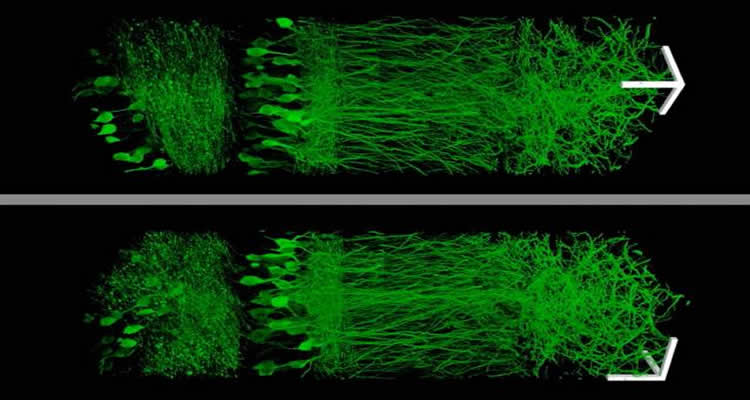
Using a new technique that allows them to enlarge brain tissue, MIT scientists created these images of neurons in the hippocampus. Image credit: Fei Chen and Paul Tillberg

Using a new technique that allows them to enlarge brain tissue, MIT scientists created these images of neurons in the hippocampus. Image credit: Fei Chen and Paul Tillberg

A team of researchers has taken a novel approach to gaining high-resolution images; they have discovered a method that enlarges tissue samples by embedding them in a polymer that swells when water is added. This allows specimens to be physically magnified, and then imaged at a much higher resolution.

Scientists have captured the exact point and time when information is exchanged between brain cells, a breakthrough that could explain how and why neurological conditions like schizophrenia or epilepsy occur. And rather than being a single condition, new research published in the American Journal of Psychiatry suggests that schizophrenia may be a group of eight genetically different diseases – each with their own symptoms.

Research from the Center for Vital Longevity at The University of Texas at Dallas has shed new light on which cognitive processes tend to be preserved with age and which ones decline.

The brains of some Iraq and Afghanistan combat veterans who survived blasts from improvised explosive devices (IEDs) and died later of other causes show a distinctive honeycomb pattern of broken and swollen nerve fibers throughout critical brain regions, including those that control executive function. The pattern is different from brain damage caused by car crashes, drug overdoses or collision sports, and may be the never-before-reported signature of blast injuries suffered by soldiers as far back as World War I.

Our brains can be electrically “tuned” to enable us to find what we’re looking for, even in a crowded and distracting scene, new research indicates.

Finally this week, higher cognitive skills are found in the children of mothers who are consistently able to support the development of their baby’s sense of autonomy, according to a study led by researchers at the University of Montreal.


Weekly Neuroscience Update


brain-white-matter-child-fitness (1)

The team used diffusion tensor imaging (DTI, also called diffusion MRI) to look at five white-matter tracts in the brains of the 24 participants. This method analyzes water diffusion into tissues. For white matter, less water diffusion means the tissue is more fibrous and compact, both desirable traits. This image shows an MRI of white matter in the human brain. The image is for illustrative purposes only, and is not connected to the research. Credit Kubicki et al.

A new study of 9 and 10-year-olds finds that those who are more aerobically fit have more fibrous and compact white-matter tracts in the brain than their peers who are less fit. “White matter” describes the bundles of axons that carry nerve signals from one brain region to another. More compact white matter is associated with faster and more efficient nerve activity. The team reports its findings in the open-access journal Frontiers in Human Neuroscience.

In a new study published in The Journal of Neuroscience, researchers report that the amygdala — a part of the brain associated with decision making, memory and emotion — plays a part in telling us who to trust almost instantly.

The latest research on sports concussions in teens has been the focus of recent study.

Depression is known to be a common symptom of Parkinson’s disease, but remains untreated for many patients, according to a new study.

Following another person’s gaze can reveal a wealth of information critical to social interactions and also to safety. Gaze following typically emerges in infancy, and new research looking at preterm infants suggests that its visual experience, not maturational age, that underlies this critical ability.

fMRI scans reveal brain differences in risk-taking teens

Children and adolescents with autism have a surplus of synapses in the brain, and this excess is due to a slowdown in a normal brain “pruning” process during development, according to a study by neuroscientists at Columbia University Medical Center (CUMC).

While much attention has focused on the link between violent video game playing and aggression among youths, a new study finds significantly increased signs of depression among preteens with high daily exposure to violent video games.

An imaging study of chronic users of codeine-containing cough syrups (CCS) has found deficits in specific regions of brain white matter and associates these changes with increased impulsivity in CCS users.

New treatments for multiple sclerosis (MS) using common anti-psychotic agents have been discovered by Victoria University of Wellington researchers.

People with schizophrenia struggle to turn goals into actions because brain structures governing desire and emotion are less active and fail to pass goal-directed messages to cortical regions affecting human decision-making, new research reveals.

Weekly Neuroscience Update

Granule cells connect with other cells via long projections (dendrites). The actual junctions (synapses) are located on thorn-like protuberances called “spines”. Spines are shown in green in the computer reconstruction Credit DZNE/Michaela Müller.

Granule cells connect with other cells via long projections (dendrites). The actual junctions (synapses) are located on thorn-like protuberances called “spines”. Spines are shown in green in the computer reconstruction Credit DZNE/Michaela Müller.

New findings on the link between nerve cells at the interface to the hippocampus may have an influence on learning and memory.

People choosing between two or more equally positive outcomes experience paradoxical feelings of pleasure and anxiety, feelings associated with activity in different regions of the brain, according to research at the Princeton Neuroscience Institute at Princeton University.

Latest findings on how stress hormones promote the brain’s building of negative memories.

Researchers have studied the changes in the brain that are associated with impulsiveness, a personality trait that causes difficulties in inhibiting a response in the face of a stimulus and leads to unplanned actions without considering the negative consequences. These patterns can serve as an indicator for predicting the risk of behavioural problems.

People taking dopamine for Parkinson’s disease sometimes begin to generate a lot of artwork. New research differentiates their expressiveness from obsessive or impulsive tendencies.

Researchers have uncovered more than 100 genetic markers linked to developing schizophrenia.

A type of immune cell widely believed to exacerbate chronic adult brain diseases, such as Alzheimer’s disease and multiple sclerosis (MS), can actually protect the brain from traumatic brain injury (TBI) and may slow the progression of neurodegenerative diseases, according to research published in the online journal Nature Communications.

Weekly Neuroscience Update

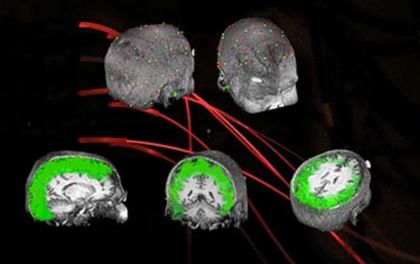
By using a novel technique to test brain waves, researchers are discovering how the brain processes external stimuli that do and don’t reach our awareness. Credit Beckman Institute.

By using a novel technique to test brain waves, researchers are discovering how the brain processes external stimuli that do and don’t reach our awareness. Credit Beckman Institute.

Researchers at the Beckman Institute are using a novel technique to test brain waves to see how the brain processes external stimuli that do and don’t reach our awareness. A group of international scientists has for the first time identified genetic mutations that suggest that schizophrenia and autism share underlying mechanisms. The research could help with future understanding of both conditions and may contribute to the development of treatments. Two psychologists have made a discovery that could revolutionize doctors’ perception and treatment of attention-deficit disorders. A newly identified disorder affecting the human nervous system is caused by a mutation in a gene never before implicated in human disease, according to two studies published in the journal Cell. By performing DNA sequencing of children affected by neurological problems, two research teams independently discovered that a disease marked by reduced brain size, as well as sensory and motor defects, is caused by a mutation in a gene called CLP1. Insights into this rare disorder may have important implications for the treatment of common disorders.

Scientists at the Salk Institute have created a new model of memory that explains how neurons retain select memories a few hours after an event. This new framework provides a more complete picture of how memory works, which can inform research into disorders liked Parkinson’s, Alzheimer’s, post-traumatic stress and learning disabilities.

Stanford scientists have developed faster, more energy-efficient microchips based on the human brain – 9,000 times faster and using significantly less power than a typical PC. This offers greater possibilities for advances in robotics and a new way of understanding the brain. For instance, a chip as fast and efficient as the human brain could drive prosthetic limbs with the speed and complexity of our own actions.

Finally this week, laughter triggers brain waves similar to those associated with meditation, according to a small new studyThe study included 31 people whose brain waves were monitored while they watched humorous, spiritual or distressing video clips. While watching the humorous videos, the volunteers’ brains had high levels of gamma waves, which are the same ones produced during meditation, researchers found.


Weekly Neuroscience Update

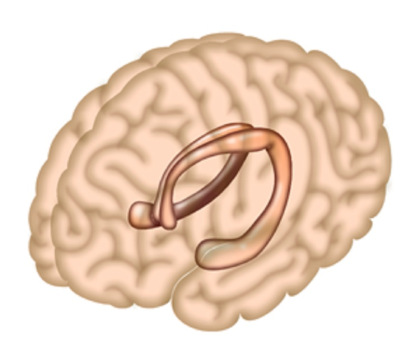
The hippocampus is a region of the brain largely responsible for memory formation. Credit Salk Institute.

The hippocampus is a region of the brain largely responsible for memory formation. Credit Salk Institute.

Scientists have created a new model of memory that explains how neurons retain select memories a few hours after an event. This new framework provides a more complete picture of how memory works, which can inform research into disorders liked Parkinson’s, Alzheimer’s, post-traumatic stress and learning disabilities.

A switch in the brain of people with epilepsy dictates whether their seizures will be relatively mild or lead to a dangerous and debilitating loss of consciousness, Yale researchers have found.

By predicting our eye movements, our brain creates a stable world for us. Researchers used to think that those predictions had so much influence that they could cause us to make errors in estimating the position of objects. Neuroscientists at Radboud University have shown this to be incorrect. The Journal of Neuroscience published their findings – which challenge fundamental knowledge regarding coordination between brain and eyes.

Extreme and traumatic events can change a person — and often, years later, even affect their children. Researchers have now unmasked a piece in the puzzle of how the inheritance of traumas may be mediated.

Artists have structurally different brains compared with non-artists, a study has found. Participants’ brain scans revealed that artists had increased neural matter in areas relating to fine motor movements and visual imagery. The research, published in NeuroImage, suggests that an artist’s talent could be innate. But training and environmental upbringing also play crucial roles in their ability, the authors report.

Certain errors in visual perception in people with schizophrenia are consistent with interference or ‘noise’ in a brain signal known as a corollary discharge, a new study shows.

Finally this week,  a recent study has shown that use of abstract gestures is a powerful tool for helping children understand and generalize mathematical concepts.


Inside The Developing Brain: Clues To Schizophrenia and Autism

Images of the developing fetal brain show connections among brain regions.  Allen Institute for Brain Science and Bruce Fischl, Massachusetts General Hospital

Images of the developing fetal brain show connections among brain regions.
Allen Institute for Brain Science and Bruce Fischl, Massachusetts General Hospital

A high-resolution map of the human brain in utero is providing hints about the origins of brain disorders including schizophrenia and autism.

The map shows where genes are turned on and off throughout the entire brain at about the midpoint of pregnancy, a time when critical structures are taking shape. The human brain is often called the most complex object in the universe. Yet its basic architecture is created in just nine months, when it grows from a single cell to more than 80 billion cells organized in a way that will eventually let us think and feel and remember.

Having a map like this is important because many psychiatric and behavioral problems appear to begin before birth, even though they may not manifest until teenage years or even the early 20s.

The resulting map, which is available to anyone who wants to use it, has already led to at least two important findings. The first is that many genes that are associated with brain disorders are turned on early in development, which suggests that these disorders may have their origin from these very early time points.

And the map tells researchers who study these disorders where in the brain they should be looking for signs of trouble. For example, the map shows that genes associated with autism appear to be acting on a specific type of brain cell in a part of the brain called the neocortex. That suggests we should be looking at this particular type of cell in the neocortex, and furthermore that we should probably be looking very early in the prenatal stages for the origin of autism.

Source: NPR

Patients with schizophrenia have impaired ability to imitate

This is an illustration of the mirror neuron system in the human brain which has been implicated in the impaired ability to imitate experienced by many patients with schizophrenia. Credit: Jan Brascamp

This is an illustration of the mirror neuron system in the human brain which has been implicated in the impaired ability to imitate experienced by many patients with schizophrenia.
Credit: Jan Brascamp

A brain-mapping study of patients with schizophrenia has found that areas associated with the ability to imitate are impaired, providing new support for the theory that deficits in this basic cognitive skill may underlie the profound difficulty with social interactions that characterize the disorder. In a paper published online on Mar. 14 by the American Journal of Psychiatry, the researchers report that when patients with schizophrenia were asked to imitate simple hand movements, their brains exhibited abnormal brain activity in areas associated with the ability to imitate.

The new study is the first to use functional magnetic resonance imaging, which maps levels of brain activity by measuring associated changes in blood flow, to examine the brain activity of schizophrenia patients while performing basic imitation tasks. It was performed on 16 medicated schizophrenia patients and 16 healthy participants. While lying in the scanner, participants watched a computer display that showed either a video of a hand pressing buttons on a button box or an animation of an ‘X’ that moved to different fingers on a still image of a hand. Participants were given three different instructions: push the same button as the hand in the video; push the button under the finger marked with the ‘X;’ or simply observe the display. As a result, the experimenters could look at brain activation associated with imitation (pressing buttons while watching a video of a moving hand) and non-imitative action (pressing buttons while watching the moving ‘X’).

The researchers found that the individuals with schizophrenia showed altered brain activity levels in regions of the brain that prior studies in primates have identified as crucial for imitation. During imitation, the patients had less activation than healthy individuals in brain regions involved in detecting biological movement — the special way in which living things move — and also in regions involved in transforming this visual information into a plan for movement. At the same time, patients with schizophrenia had more activation than the healthy participants in these same regions when they performed non-imitative actions.

The specific areas of the brain that become over-active and under-active are associated with the “mirror neuron” system. Mirror neurons are networks of neurons that fire both when an animal acts and when it observes the same action performed by another. They have been directly observed in the brains of primates. In humans, neuroscientists have located areas using brain-mapping techniques that appear to act in a similar fashion.

Source: Science Daily

Weekly Neuroscience Update

Embed from Getty Images

Johns Hopkins researchers report that people with chronic insomnia show more plasticity and activity than good sleepers in the part of the brain that controls movement.

Researchers at The Scripps Research Institute (TSRI) and Vanderbilt University have created the most detailed 3-D picture yet of a membrane protein that is linked to learning, memory, anxiety, pain and brain disorders such as schizophrenia, Parkinson’s, Alzheimer’s and autism.

New research has revealed the dramatic effect the immune system has on the brain development of young children. The findings suggest new and better ways to prevent developmental impairment in children in developing countries, helping to free them from a cycle of poverty and disease, and to attain their full potential.

Rate of change in the thickness of the brain’s cortex is an important factor associated with a person’s change in IQ, according to a collaborative study by scientists in five countries.

Researchers have found that decision-making accuracy can be improved by postponing the onset of a decision by a mere fraction of a second. The results could further our understanding of neuropsychiatric conditions characterized by abnormalities in cognitive function and lead to new training strategies to improve decision-making in high-stake environments. The study was published in the March 5 online issue of the journal PLoS One.

A study has revealed how the fatal neurodegenerative disease amyotrophic lateral sclerosis (ALS), also known as Lou Gehrig’s disease, is transmitted from cell to cell, and suggests the spread of the disease could be blocked.

Research from Karolinska Institutet in Sweden suggests that the expression of the so called MYC gene is important and necessary for neurogenesis in the spinal cord. The findings are being published in the journal  EMBO Reports .

Our memories are inaccurate, more than we’d like to believe. And now a study demonstrates one reason: we apparently add current experiences onto memories.

Damage to the brain may still occur even if symptoms of traumatic brain injury are not present, scientists suggest.

The brain processes read and heard language differently. This is the key and new finding of a study published in Frontiers in Human Neuroscience.

Weekly Neuroscience Update

Temporo-parietal jonction (TPJ) © Perrine Ruby / Inserm

Temporo-parietal jonction (TPJ) © Perrine Ruby / Inserm

Some people recall a dream every morning, whereas others rarely recall one. A research team has studied the brain activity of these two types of dreamers in order to understand the differences between them. In a study published in the journal Neuropsychopharmacology, the researchers show that the temporo-parietal junction, an information-processing hub in the brain, is more active in high dream recallers. Increased activity in this brain region might facilitate attention orienting toward external stimuli and promote intrasleep wakefulness, thereby facilitating the encoding of dreams in memory.

Many psychiatric disorders are accompanied by memory deficits. Basel scientists have now identified a network of genes that controls fundamental properties of neurons and is important for human brain activity, memory and the development of schizophrenia. 

Researchers have taken a major step toward identifying the specific genes that contribute to bipolar disorder.

A recent study conducted by Johns Hopkins University and the National Institute of Aging found that aging adults with hearing loss are at higher risk for accelerated brain-tissue loss.

Brain cell regeneration has been discovered in a new location in human brains. The finding raises hopes that these cells could be used to help people recover after a stroke, or to treat other brain diseases.

Finally this week, researchers are hoping that the world’s largest simulated brain — known as Spaun — will be used to test new drugs that lead to breakthrough treatments for neurological disorders such as Parkinson’s, Huntington’s, and Alzheimer’s disease.