Weekly Neuroscience Update

iphone-1283665_960_720

Sending text messages on a smartphone can change the rhythm of brain waves, according to a new study published in Epilepsy & Behavior.

An international research team has found that our perception is highly sensitised for absorbing social information. The brain is thus trained to pay a great degree of attention to everyday actions. The results are reported in the journal Consciousness and Cognition.

A new study unravels the mechanisms driving excess brain growth that affects as many as 30 percent of people with autism.

Researchers have developed a new technology that could lead to new therapeutics for traumatic brain injuries. The discovery, published in Nature Communications, provides a means of homing drugs or nanoparticles to injured areas of the brain.

Researchers have coupled machine learning with neuroimaging to detect early forms of dementia.

Neuroscientists have come up with a way to observe brain activity during natural reading. It’s the first time researchers have been able to study the brain while reading actual texts, instead of individual words. The research has potential implications for understanding dyslexia and other reading deficits.

A new study links hippocampal inflammation in multiple sclerosis with an increased risk of developing depression.

In a partnership melding neuroscience and electrical engineering, researchers have developed a new technology that will allow neuroscientists to capture images of the brain almost 10 times larger than previously possible – helping them better understand the behavior of neurons in the brain.

Researchers report acquiring new memories can interfere with old ones, making them more likely to be forgotten.

A European study has shown that the dopamine D2 receptor is linked to the long-term episodic memory, which function often reduces with age and due to dementia. This new insight can contribute to the understanding of why some but not others are affected by memory impairment. The results have been published in the journal PNAS.

Finally this week, a new study shows how new linguistic information is integrated into the same brain areas used for your native language.

Weekly Neuroscience Update

barefoot_running_480_18ec9t1-18ec9t4

Running barefoot is better than running with shoes for your working memory, according to a new study.

A new study from King’s College London offers clues as to why chronic pain can persist, even when the injury that caused it has gone. Although still in its infancy, this research could explain how small and seemingly innocuous injuries leave molecular ‘footprints’ which add up to more lasting damage, and ultimately chronic pain.

New findings demonstrate that a five-minute measurement of resting-state brain activity predicted how quickly adults learned a second language.

Danish research is behind a new epoch-making discovery, which may prove decisive to future brain research. The level of salts in the brain plays a critical role in whether we are asleep or awake. This discovery may be of great importance to research on psychiatric diseases such as schizophrenia and convulsive fits from lack of sleep as well as post-anaesthetization confusion.

Research sheds light the neural structure that controls our sleep, eating habits, hormones and more.

A new study has found that Foreign Accent Syndrome, a condition which results in patients to be perceived as non-native speakers of their mother tongue, may be caused by the impaired connections between the language centres in the front part of the brain and the cerebellum.

Symptoms of depression that steadily increase over time in older age could indicate early signs of dementia, according to new research. 

A newly discovered pathway leading to neurodegeneration in Alzheimer’s disease (AD) may unlock the door to new approaches for treating the disease.

Some adults learn a second language better than others, and their secret may involve the rhythms of activity in their brains.

Finally this week, researchers report they have discovered a backup for memory storage that comes into play when the molecular mechanism for primary long term memory storage fails.

Weekly Neuroscience Update

The research revealed that sounds that came from the left were processed in the right inferior colliculus and thalamus and vice versa. Image is for illustrative purposes only. Credit: AxelBoldt.

The research revealed that sounds that came from the left were processed in the right inferior colliculus and thalamus and vice versa. Image is for illustrative purposes only. Credit: AxelBoldt.

Some parts of our brain that process sound have a subsequent spot for each pitch, just like the keyboard on a piano. One part – the auditory part of the thalamus – even processes each sound on two ‘keyboards’ next to each other. That is one of the discoveries brain researcher Michelle Moerel of Maastricht University made while carrying out measurements into human sound processing at the Center for Magnetic Resonance Research (CMRR) in Minneapolis (USA) with Rubicon funding from NWO Social Sciences.

A new scientific model that incorporates the myriad drivers of depression could lead to more precise treatment for an illness that affects 350 million worldwide.

Targeted magnetic pulses to the brain were shown to reduce craving and substance use in cocaine-addicted patients, report scientists. The results of this pilot study suggest that this may become an effective medical treatment for patients with cocaine addiction, although a larger trial is needed to confirm the initial findings.

A gene which slows the onset of Alzheimer’s disease by 17 years has been discovered by scientists leading to hopes that its effects could be mimicked with drugs to delay the devastating condition.

A new study finds that a component of aspirin binds to an enzyme called GAPDH, which is believed to play a major role in neurodegenerative diseases, including Alzheimer’s, Parkinson’s and Huntington’s diseases.

Learning, memory, and brain repair depend on the ability of our neurons to change with experience. Now, researchers reporting in the Cell Press journal Current Biology on December 7 have evidence from a small study in people that exercise may enhance this essential plasticity of the adult brain.

Concentrating attention on a visual task can render you momentarily ‘deaf’ to sounds at normal levels, reports a new UCL study funded by the Wellcome Trust.

Finally, this week young people with behavioural problems, such as antisocial and aggressive behaviour, show reduced grey matter volume in a number of areas of the brain, according to a new study published in JAMA Psychiatry.


Weekly Neuroscience Update

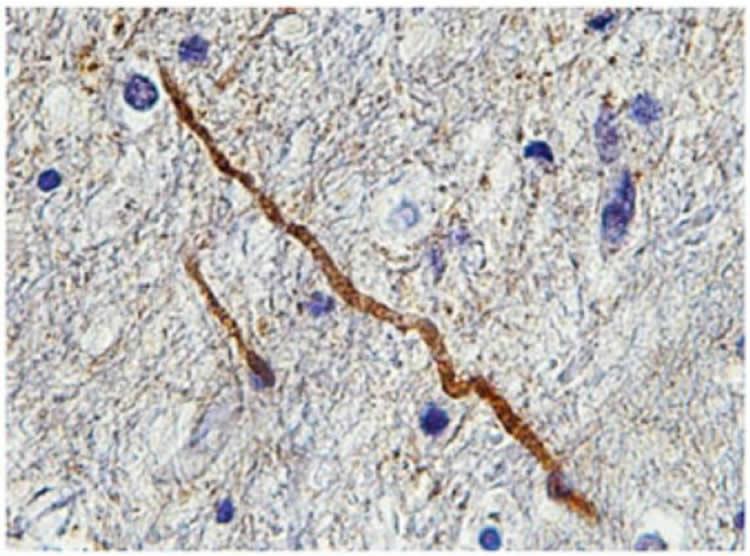
SNTF stained axons (brown) shortly after traumatic brain injury are pictured. The undulating course suggests damage to the internal skeleton, and the SNTF stain shows the high calcium concentration- activated enzymes that destroy the axon from the inside out. Credit: The laboratory of Douglas Smith, MD, Perelman School of Medicine, University of Pennsylvania.

SNTF stained axons (brown) shortly after traumatic brain injury are pictured. The undulating course suggests damage to the internal skeleton, and the SNTF stain shows the high calcium concentration- activated enzymes that destroy the axon from the inside out. Credit: The laboratory of Douglas Smith, MD, Perelman School of Medicine, University of Pennsylvania.

Physicians and others now recognize that seemingly mild, concussion-type head injuries lead to long-term cognitive impairments surprisingly often. A brain protein called SNTF, which rises in the blood after some concussions, signals the type of brain damage that is thought to be the source of these cognitive impairments, according to a new study.

About one third of people with depression have high levels of inflammation markers in their blood. New research indicates that persistent inflammation affects the brain in ways that are connected with stubborn symptoms of depression, such as anhedonia, the inability to experience pleasure.

Scientists have reported measurements of dopamine release with unprecedented temporal precision in the brains of people with Parkinson’s disease. The measurements, collected during brain surgery as the conscious patients played an investment game, demonstrate how rapid dopamine release encodes information crucial for human choice.

Scientists have uncovered a mechanism in the brain that could account for some of the neural degeneration and memory loss in people with Alzheimer’s disease.

Regardless of gender, young adults who have greater aerobic fitness also have greater volume of their entorhinal cortex, an area of the brain responsible for memory. Better aerobic fitness however does not appear to impact hippocampal volume, another area in the brain responsible for memory.

A new scientific model that incorporates the myriad drivers of depression could lead to more precise treatment for an illness that affects 350 million worldwide.

Finally this week, could staying physically active improve quality of life by delaying cognitive decline and prolonging an independent lifestyle? A new study has found that older adults who take more steps either by walking or jogging perform better on memory tasks than those who are more sedentary.


Weekly Neuroscience Update

v

The brain’s immune cells are hyperactive in people who are at risk of developing schizophrenia, as well as during the earliest stages of the disease, according to a new study. The findings suggest that inflammatory processes play an important role in the development of the disease, and raise the possibility that it could be treated with drugs that block or reduce this cellular response.

A new study suggests that receiving rewards as you learn can help cement new facts and skills in your memory, particularly when combined with a daytime nap.

Protein deposits associated with dementia influence brain activity during sleep.

Hearing loss accelerates cognitive decline in elderly adults, but the use of hearing aids counters this acceleration. A new scientific longitudinal study shows that those who use hearing aids have about the same cognitive level as those with no hearing loss.

The brain cells of patients with bipolar disorder, characterized by severe swings between depression and elation, are more sensitive to stimuli than other people’s brain cells, researchers have discovered.

Neuroscientists have determined some of the specific characteristics of electrical stimuli that should be applied to the brain to produce different sensations in an artificial upper limb intended to restore natural motor control and sensation in amputees.

A research study has debunked the widely-held belief that the hippocampus, a crucial part of the brain that consolidates new memories and helps connect emotions to the senses, is larger in females than in males.

In order to retain a piece of information for a short time, working memory is required. The underlying processes are considerably more complex than hitherto assumed, as researchers report in the journal “Cell Reports”. Two brain states must alternate rhythmically in order for a piece of information to be successfully maintained.

A study led by Johns Hopkins Medicine researchers suggests that awakening several times throughout the night is more detrimental to people’s positive moods than getting the same shortened amount of sleep without interruption.

Early life stress is a major risk factor for later episodes of depression. Scientific research into this link has revealed that the increased risk following such childhood adversity is associated with sensitization of the brain circuits involved with processing threat and driving the stress response. More recently, research has begun to demonstrate that in parallel to this stress sensitization, there may also be diminished processing of reward in the brain and associated reductions in a person’s ability to experience positive emotions.


Weekly Neuroscience Update

Findings suggest that physiological reactivity to sad stimuli, assessed using pupillometry, serves as one potential biomarker of depression risk among children of depressed mothers. Image credit: Jonathan Cohen, Binghamton University Photographer.

Findings suggest that physiological reactivity to sad stimuli, assessed using pupillometry, serves as one potential biomarker of depression risk among children of depressed mothers. Image credit: Jonathan Cohen, Binghamton University Photographer.

How much a child’s pupil dilates in response to seeing an emotional image can predict his or her risk of depression over the next two years, according to new research from Binghamton University.

Unwanted, intrusive visual memories are a core feature of stress- and trauma-related clinical disorders such as posttraumatic stress disorder (PTSD), but they can also crop up in everyday life. New research shows that even once intrusive memories have been laid down, playing a visually-demanding computer game after reactivating the memories may reduce their occurrence over time.

Rapid eye movement or REM sleep actively converts waking experiences into lasting memories and abilities in young brains reports a new study.

People who have diabetes and experience high rates of complications are more likely to develop dementia as they age than people who have fewer diabetic complications, according to a new study published in the Endocrine Society’s Journal of Clinical Endocrinology & Metabolism.

New research suggests that when deciding which of several possible actions to perform, the human brain plans multiple actions simultaneously prior to selecting one of them to execute.

In the first study of its kind researchers found that neurons in a specific brain region play a key role in rapidly forming memories about every day events, a finding that may result in a better understanding of memory loss and new methods to fight it in Alzheimer’s and other neurological diseases.

A major epidemiological registry-based study indicates that Parkinson’s disease begins in the gastrointestinal tract; the study is the largest in the field so far.

The activity of the emotion centres in the brain, the amygdala, is influenced by motivation rather than by the emotions themselves. This can be concluded from research carried out at Radboud University into the hormone testosterone. Testosterone increases amygdala activity in a person who is approaching a socially threatening situation and decreases the activity when such a situation is avoided.

An imaging study by Stanford University School of Medicine investigators has found distinct differences between the brains of patients with chronic fatigue syndrome and those of healthy people.

According to a new study, women experiencing difficulty with time management, attention, organization, memory, and problem solving – often referred to as executive functions – related to menopause may find improvement with a drug already being used to treat attention deficit hyperactivity disorder (ADHD

A new staining method could help map the entire brain.

Finally this week, Yale researchers have determined how a key component of the nervous system develops at the embryonic stage. Their work may ultimately offer new approaches to combat major diseases such as diabetes and peripheral artery disease.


Weekly Neuroscience Update

A new study has found that while stereotypic shapes exist for this structure, individuals with a broader hippocampus tend to perform better on various tests that assess memory. The image is for illustrative purposes only. Image credit: Camillo Golgi.

A new study has found that while stereotypic shapes exist for this structure, individuals with a broader hippocampus tend to perform better on various tests that assess memory. The image is for illustrative purposes only. Image credit: Camillo Golgi.

New research challenges the long-held belief that a larger hippocampus is directly linked to improved memory function.

Premature birth can alter the connectivity between key areas of the brain, according to a new study led by King’s College London. The findings should help researchers to better understand why premature birth is linked to a greater risk of neurodevelopmental problems, including autistic spectrum disorders and attention deficit disorders.

Scientists have uncovered mathematical equations behind the way the brain forms – and even loses – memories.

New scanning methods which map the wiring of the brain could provide a valuable new tool to predict people at risk of schizophrenia, according to a new study.

People with depression may be more likely to develop Parkinson’s disease, according to a large study published in Neurology.

Medical researchers have known for several years that there is some sort of link between long-term depression and an increased risk of stroke. But now scientists are finding that even after such depression eases, the risk of stroke can remain high.

A new study from the University of Cambridge has identified one of the oldest fossil brains ever discovered – more than 500 million years old – and used it to help determine how heads first evolved in early animals.

Researchers have succeeded in reconstructing the neuronal networks that interconnect the elementary units of sensory cortex — cortical columns. The scientists say that this study marks a major step forward to advance the understanding of the organizational principles of the neocortex and sets the stage for future studies that will provide extraordinary insight into how sensory information is represented, processed and encoded within the cortical circuitry.

Smokers who are able to quit might actually be hard-wired for success, according to a study from Duke Medicine.

Scientists are attempting to mimic the memory and learning functions of neurons found in the human brain. To do so, they investigated the electronic equivalent of the synapse, the bridge, making it possible for neurons to communicate with each other.

Finally this week, in a study using functional magnetic resonance imaging, scientists found that our inherent risk-taking preferences affect how we view and act on information from other people.

Weekly Neuroscience Update

brain-scan-reveals-out-of-body-illusion-neuroinnovations

Brain regions in which the scientists could successfully decode the participants’ perceived self-location from patterns of neural activity. Credit: Malin Björnsdotter/Arvid Guterstam. Henrik Ehrsson , Arvid Guterstam , Malin Björnsdotter.

In a new study from Sweden’s Karolinska Institutet, neuroscientists created an out-of-body illusion in participants placed inside a brain scanner. They then used the illusion to perceptually ‘teleport’ the participants to different locations in a room and show that the perceived location of the bodily self can be decoded from activity patterns in specific brain regions.

The brains of people with type 1 diabetes show signs of accelerated ageing that correlate with slower information processing, according to new research.

Researchers studying postpartum depression have found that the hormone oxytocin increased activation in a reward-sensitive area of the brain when women viewed images of crying infants, but not when they viewed images of smiling ones. The researchers say oxytocin might spark the motivation to help an upset baby.

New findings reveal how long term cosmic ray exposure causes lasting cognitive impairment in astronauts.

People with depression or bipolar disorder often feel their thinking ability has gotten “fuzzy”, or less sharp than before their symptoms began. Now, researchers have shown in a very large study that effect is indeed real – and rooted in brain activity differences that show up on advanced brain scans.

Researchers have shown for the first time that a common neurotransmitter acts via a single type of neuron to enable the brain to process information more effectively. 

Finally this week, your genes may influence how sensitive you are to emotional information, according to research recently published in the Journal of Neuroscience. The study found that carriers of a certain genetic variation perceived positive and negative images more vividly, and had heightened activity in certain brain regions.


Weekly Neuroscience Update

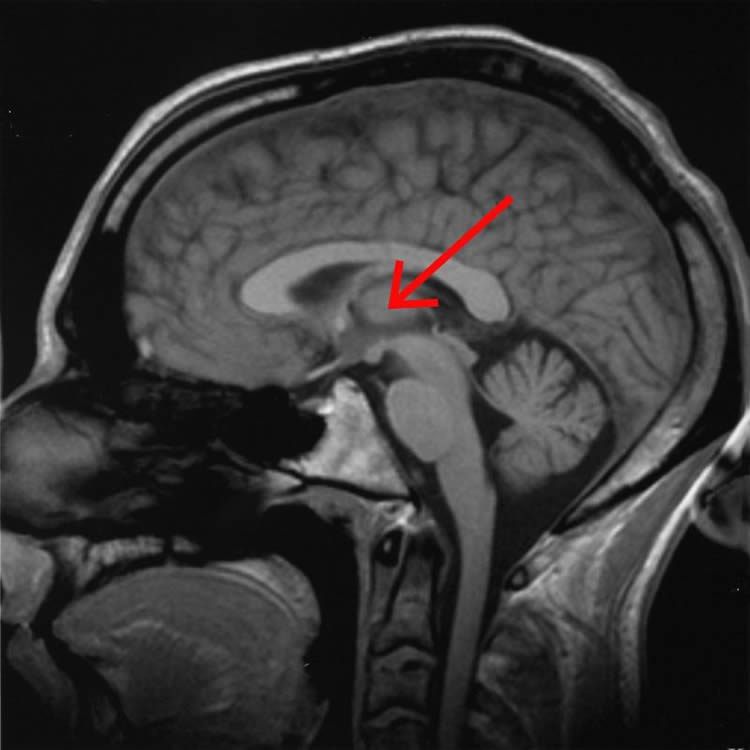
The study revealed that EGFR signaling is suppressed in a subset of glioblastomas. This image is for illustrative purposes only and shows an MRI brain scan of a person with glioblastoma brain cancer. Credit The Armed Forces Institute of Pathology.

The study revealed that EGFR signaling is suppressed in a subset of glioblastomas. This image is for illustrative purposes only and shows an MRI brain scan of a person with glioblastoma brain cancer. Credit The Armed Forces Institute of Pathology.

Researchers have found one of the keys to why certain glioblastomas – the primary form of a deadly brain cancer – are resistant to drug therapy. The answer lies not in the DNA sequence of the tumor, but in its epigenetic signature. These findings have been published online as a priority report in the journal Oncotarget.

It has been proposed that green tea extract may have a beneficial impact on cognitive functioning, suggesting promising clinical implications. However, the neural mechanisms underlying this putative cognitive enhancing effect of green tea extract still remain unknown.

According to researchers at the University of Montreal, the regions of the brain below the cortex play an important role as we train our bodies’ movements and, critically, they interact more effectively after a night of sleep.

Researchers find that the risk of future stroke is 39% higher among patients with cognitive impairment than those with normal cognitive function, according to a new study published in the Canadian Medical Association Journal (CMAJ).

A study is shining new light on a sleep disorder called “sleep drunkenness.” The disorder may be as prevalent as affecting one in every seven people. The research is published in Neurology.

A mindfulness-based therapy for depression has the added benefit of reducing health-care visits among patients who often see their family doctors, according to a new study.

In what may be the largest study of sleep problems among individuals with multiple sclerosis (MS), researchers at UC Davis have found that widely undiagnosed sleep disorders may be at the root of the most common and disabling symptom of the disease: fatigue.

Scientists have provided the first evidence that the lack of a naturally occurring protein is linked to early signs of dementia.