Weekly Neuroscience Update

serotonin-receptor-activation-neuroscieneews.jpg

Serotonin-induced activation of serotonin (3A) receptors. NeuroscienceNews.com image is credited to Case Western Reserve University School of Medicine.

Using cryo-electron microscopy, researchers have successfully imaged serotonin attaching to the receptor and twisting open the channel, allowing sodium molecules to travel through.

Researchers report adults who sleep six hours per night, as opposed to the recommended eight, have higher chances of waking up dehydrated.

A new study reports some genetic factors that increase obesity work to lower metabolic risk. 14 genetic variations, researchers report, are linked to higher BMI but lower diabetes risk.

A new method for studying the mircobiome has allowed researchers to identify a connection between metabolism in gut bacteria and the development of diabetes.

Researchers have discovered how the nature of T cells help protect the brain from viruses. The findings shed light on the role the immune system plays in a number of neurodegenerative disorders.

A new study has identified a brain network that may control the diversion of attention to focus on potential threats. Dopamine, they report, is key to the process.

As the adage goes “neurons that fire together, wire together,” but a new paper published today in Neuron demonstrates that, in addition to response similarity, projection target also constrains local connectivity.

A new study reveals common brain activity patterns associated with depressive moods.

Engaging in regular exercise can help preserve the motor and non-motor function of Parkinson’s disease patients, most likely as a result of an increased release of dopamine in the brain, a small study suggests.

Researchers have identified abnormalities in specific neural networks that may be a biomarker to predict the risk of developing schizophrenia.

Researchers find evidence of cognitive issues and miRNA biomarkers, indicating brain injuries from concussions or head-to-head contact, in college football players. The findings indicated lasting damage caused by sports-related concussions occur earlier than expected.


Weekly Neuroscience Update

mini-retina-eye-brain-neurosciencenews

Axons of retinal ganglion cells (red) derived from human pluripotent stem cells bundle together and navigate their environment using growth cones (green), similar to human development of the optic nerve. NeuroscienceNews.com image is credited to Department of Biology, School of Science at IUPUI

Biologists are growing ‘mini retinas’ in the lab from stem cells to mimic the growth of the human retina. The researchers hope to use the research to restore sight when critical connections between the eye and the brain are damaged. These models also allow the researchers to better understand how cells in the retina develop and are organized. These results are published online in Scientific Reports, a Nature Research journal.

Researchers have discovered how the brain attempts to compensate for poor performance in tasks which require complicated transformation, such as writing your name backwards.

Observing the brain’s response to repeated stimuli has helped KAUST researchers develop a method for modeling connectivity patterns in neural networks. Mapping connectivity patterns will help to better understand brain function, ultimately improving diagnosis and treatment of brain diseases and mental disorders.

A new study reveals unique connections within brain networks in children on the autism spectrum. Researchers say, in ASD, the amygdala shows marked differences in connection with the occipital cortex than in typically developing children.

Researchers have identified key differences between the way males and females with schizophrenia process the emotional states of others than those without the condition. The study reports those with schizophrenia use less complex brain regions than healthy controls to process other people’s emotions.

According to a new study, certain behavioral risk factors strongly predict the likelihood of a person developing depression, and these risk factors change as we age.

Using neuroimaging technology, researchers have identified three different subtypes of depressive disorder, including one that seems to be untreatable by common SSRI antidepressants.

Finally this week, researchers report those who have had appendectomies have a reduced risk of developing Parkinson’s disease. A new study reveals the appendix acts as a reservoir for proteins associated with the neurodegenerative disease.

Weekly Neuroscience Update

speech-pitch-neurosceincneews.jpg

Chang Lab’s research reveals what area of the human brain controls the pitch of our speech.

Researchers have revealed the area of the brain that controls our voice box, allowing us to alter the pitch of our speech. The insight could pave the way for advancing neuroprosthetics to allow people who can’t speak, to express themselves in a naturalistic way.

A new study reports the brain mechanisms responsible for triggering memory are identical, whether a person is awake or asleep.

While the effects of sleep deprivation are well known, researchers discover sleeping too much could have a detrimental effect on your brain. A new study reports sleeping more than eight hours per night can reduce cognitive ability and reasoning skills.

Researchers have discovered the thalamus plays a crucial role in the development of normal sleep and waking states.

A new study reports T cells are activated in the intestines and migrate to the brain, causing an inflammatory cascade that may lead to multiple sclerosis. Researchers say the gut microbiome may play a more significant role in the development and progression of MS than previously believed.

A new study reports an afternoon nap can help us to process unconscious information and enhance cognition.

Utilizing lesion network mapping, a recently developed technique for analyzing how the brain works, researchers have studied free will perception related to movement decisions.

A new study reports a protein made by astrocytes plays a critical role in brain plasticity by assisting with neural maturation and flexibility.

Only a small proportion of cases of dementia are thought to be inherited – the cause of the vast majority is unknown. Now, in a study published today in the journal Nature Communications, a team of scientists led by researchers at the University of Cambridge believe they may have found an explanation: spontaneous errors in our DNA that arise as cells divide and reproduces.

An international team of researchers has demonstrated, with electrophysiological evidence, the existence of grid-like activity in the human brain.

Finally, this week, a new study reports people may be able to avoid depression, even if they have a genetic predisposition to SAD, by maintaining or boosting serotonin levels throughout the year.


Weekly Neuroscience Update

179285_web.jpg

Image Credit: Kolbjørn Skarpnes & Rita Elmkvist Nilsen / NTNU Communication Division & Kavli Institute for Systems Neuroscience

Researchers at the Kavli Institute for Systems Neuroscience in Norway in have discovered a network of brain cells that express our sense of time within experiences and memories.

A new study reports a strong hand grip is correlated with better visual memory and reaction times in people with psychiatric disorders, such as schizophrenia.

Dr Max Ortiz Catalan of Chalmers University of Technology, Sweden, has developed a new theory for the origin of the mysterious condition, ‘phantom limb pain’. Published in the journal Frontiers in Neurology, his hypothesis builds upon his previous work on a revolutionary treatment for the condition, that uses machine learning and augmented reality.

Researchers report ADHD and conduct disorder exhibit similar, overlapping changes in the brain.

A new study in SLEEP, published by Oxford University Press, indicates that delaying school start times results in students getting more sleep, and feeling better, even within societies where trading sleep for academic success is common.

Scientists have identified a group of blood metabolites that could help detect some children with autism spectrum disorder (ASD). 

Researchers report the adverse cognitive effects associated with DBS in Pakinson’s patients are linked to a different neural pathway than the one responsible for the motor effects generated by the treatment.

According to a new study, people who have suffered a stroke are twice as likely to develop dementia.

Researchers have developed a new deep learning neural network that can identify speech patterns indicative of depression from audio data. The algorithm is 77% effective at detecting depression.

Finally this week, a new study reports genetic factors count for about 70% of stable academic achievement throughout schooling.


Weekly Neuroscience Update

piriform-cortex-olfaction-neurosciencneews.jpg

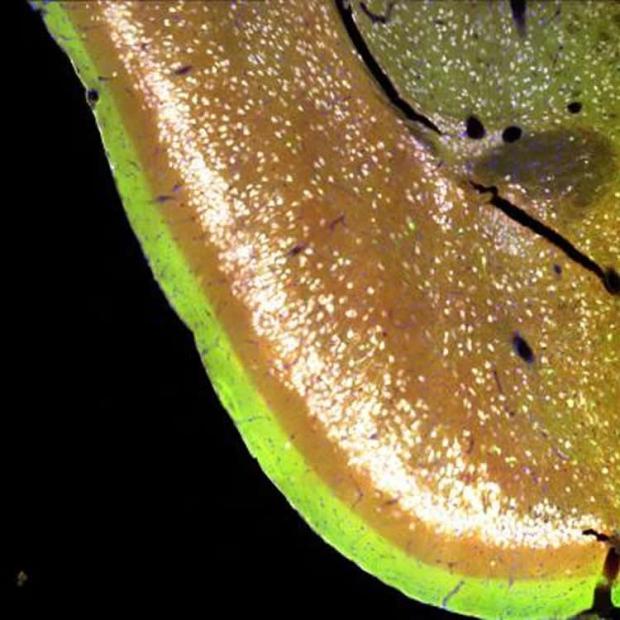
Staining one section of the brain, as shown, reveals layers of the piriform cortex–in green, brownish-red, and white–and other cells of the brain in blue. Image is credited to Salk Institute.

Researchers say the randomness of the piriform cortex plays a critical role when it comes to distinguishing between similar odors.

A new study sheds light into how we recognize facial expressions of emotion. Researchers report our interpretation of emotions expressed facially by others depends upon our pre-conceived understanding of emotion.

Scientists in Israel have developed a breath test that can detect people with early-stage Parkinson’s disease.

A new study, published in the journal PNAS, suggests that a diagnostic blood test for depression may soon be on the horizon. The new research shows that treatment-resistant depression is characterized by reduced blood levels of a specific molecule.

‘Inattentional smell blindness’, or inattentional anosmia, has been proven to exist in a new study.

Yale researchers have tested a new method for directly measuring synaptic loss in individuals with Alzheimer’s disease. The method, which uses PET imaging technology to scan for a specific protein in the brain linked to synapses, has the potential to accelerate research for new Alzheimer’s treatments.

A recent study finds that noninvasive brain stimulation, activated while asleep, improves memory performance the next day.

Finally this week, researchers have identified a neural link between depression and sleep problems. The study reports brain regions associated with short-term memory, self and negative emotions are strongly connected in those with depression, and this may lead to bad sleep quality.

Weekly Neuroscience Update

infant-brain-lips-neurosciencenews.jpg

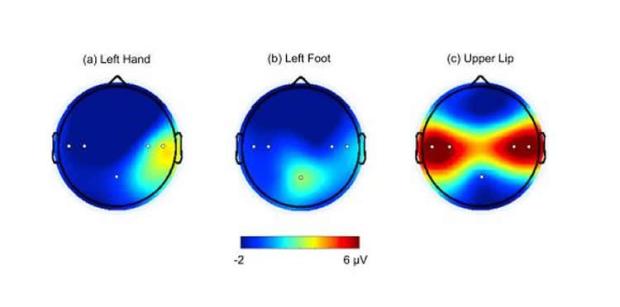
This colored “scalp map” (viewed from the top of a baby’s head with the nose forward), shows the average amount of brain activity measured by EEG sensors in response to touch to the baby’s body. The image shows that hand touch evokes activity on one side, foot touch evokes activity at the middle, and lip touch evokes very strong activity on both sides.  Image Source: UW Institute for Learning & Brain Sciences.

At 60 days old, the infant brain shows greater neurological activity associated with the lips than any other part of the body, a new study reveals.

Researchers report people with higher empathy process music with greater involvement in the brain’s reward system and areas of the brain associated with social information processing.

A new study reveals noradrenaline plays a vital role in early stages of perception. Researchers report later processing of visual information occurs in the cerebral cortex and is affected by noradrenaline to determine if an image will enter our stream of consciousness.

A new study reports a link between higher than average late life systolic blood pressure and higher number of tangles in Alzheimer’s disease.

Scientists have revealed the area of the brain that controls our voice box, allowing us to alter the pitch of our speech. The insight could pave the way for advancing neuroprosthetics to allow people who can’t speak, to express themselves in a naturalistic way

Researchers report brain areas involved in the articulation of language are also implicated in the perception of language.

A new neuroimaging study reveals every person has unique brain anatomy. The uniqueness is a result of a combination of genetic factors and life experiences.

A group of Japanese researchers has discovered that neural inflammation caused by our innate immune system plays an unexpectedly important role in stress-induced depression. This insight could potentially lead to the development of new antidepressants targeting innate immune molecules. The findings were published in the online edition of Neuron.

Contrary to popular belief, Adderall and other ADHD drugs do not improve cognition in healthy college students. Instead, they may impair cognitive function.

Finally this week, a new study reports when certain brain areas react more strongly to food rewards than financial rewards, children are more likely to overeat, even if they are not hungry or overweight.


Weekly Neuroscience Update

ignorance-knowledge-neurosciencnews-public.jpg

Researchers report the brain’s reward network could play an influential role in evaluating the opportunity to gain new information, just as it does to evaluate rewards such as food or financial gain.

Scientists are beginning to understand the neuroscience behind sensory processing disorder and are developing new therapies to help those with it.

A new study shows Alzheimer’s disease does not appear to affect the salience network. Researchers found, when listening to music, the salience network along with other networks, show higher functional connectivity in Alzheimer’s patients.

A new study reveals maternal diet during pregnancy can have implications for fetal brain development and can impact short-term memory in adults.

Scientists have uncovered dozens of genes that increase the risk of depression — a major finding that underscores the complexity of the disease and reveals why antidepressant therapies work well for some people but are utterly ineffective for others.

Researchers report the critical period of language learning may be longer than previously believed. A new study reveals children remain skilled at learning new languages until age 18.

Treatment for the most common mental health problems could be ineffective or even detrimental to about 50 percent of the population, according to a radical new model of emotion in the brain.

Finally this week, researchers report high sugar and fat based diets that lead to obesity, coupled with the normal aging process, may increase the risk of Alzheimer’s disease.


Weekly Neuroscience Update

smelling-purple-lilac-3402287_960_720.jpg

In a new study, scientists have discovered why the brain’s olfactory system is so remarkably consistent between individuals, even though the wiring of brain cells in this region differs greatly from person to person.

Scientists have proposed a new communication model to explain how brain networks can be navigated to achieve efficient information transfer.

Researchers have discovered another purpose for the gut-brain axis; relaying information to the hippocampus to store information about our environment and location.

A new study reports speech comprehension can improve as much as 10% when sound is delayed relative to vision.

Parkinson’s disease progresses differently in women than in men. A current study has now furnished the first neurophysiological evidence supporting this finding. “Numerous demographic studies have provided evidence that men contract Parkinson’s disease nearly twice as often as women.

A new study reveals the role the anterior cingulate cortex and basolateral amygdala play in observational learning.

Researchers say schizophrenia should not be considered to be just a disorder of the mind, as schizophrenia can also impact other organs. A new study reveals people with schizophrenia often have an over active immune system and other physical disorders.

Transcranial magnetic stimulation allows researchers to better understand how brain networks interact to make word choice decisions.

A new study reveals, in combination with genetics and environmental factors, placenta health during fetal development may play a role in schizophrenia. Researchers report genes associated with schizophrenia may turn on in the placenta during complicated pregnancies.

Researchers report a simple saliva test that measures cortisol levels at specific times of the day, can identify those at risk of stress and depression.

A new study reveals older adults with greater symptoms of depression have a smaller brain volume and a 55% greater chance of vascular lesions in the brain than those who do not have depression.

New research reveals the prefrontal cortex may play a role in coordinating the level of consciousness through the cholinergic system.

Finally this week, researchers report meditation and yoga are more effective at reducing stress than Chi in soldiers. Additionally, those who meditate showed stronger executive control.

Weekly Neuroscience Update

brain-waves-memory-neurosciencenews.jpgAlpha and theta oscillations move rhythmically across the brain, reflecting neural activity propagating across the cortex to help form working memory, a new study reports.

Researchers have developed a new computational model of major depressive disorder. The model reveals older memories, as well as short term memories, are affected by major depressive disorder. Researchers say how long the memory deficits go back depends on how long the depressive episode lasts.

A new brain cancer atlas maps out comprehensive, visually rich information about the anatomical and genetic bases of glioblastoma, researchers report.

A new study reports people who have a family history of alcohol use disorder release more dopamine in the ventral striatum as a response to the expectation of receiving an alcoholic drink than those without a family history of alcoholism.

A drug that blocks the alpha7 nicotinic acetylcholine receptor may provide a new method for combating drug addiction relapse, researchers report.

A groundbreaking study reveals human immune cells in the blood can be transformed into functional neurons within 3 weeks by adding four proteins. The discovery could be used to generate neurons to study specific psychological and neurological disorders, researchers say.

Researchers report transcranial magnetic stimulation predisposes neural connections in the visual cortex for reorganization.

Researchers have created a new model that may help explain how the brain stores memories of tangible events. The new model explains how neural activity in the hippocampus can help map space, time and context in episodic memories.

A new study reveals people respond to stimuli in another person’s peripersonal space as they could their own.

Research has shown that a developing child’s brain structure and function can be adversely affected when the child is raised in an environment lacking adequate education, nutrition and access to health care.

Finally this week, researchers report intuition is the result of information processing in the brain that results in prediction based on previous experience.


Weekly Neuroscience Update

cochlear-stereo-hearing-neurosciencenews.jpg

Image credited to Ruth Litovsky (via NeuroscienceNews.com)

A new technique synchronizes cochlear signals in those with implants, stimulating the brain in a way that is similar to hearing people. This can allow those with cochlear implants to hear in stereo.

According to a new study, melatonin works by suppressing neurons that keep you awake and alert. The findings could pave the way for new treatments for insomnia.

When viewing OCD related images, those with the disorder had increased distress and higher levels of activity in emotion-related brain regions than their siblings who did not suffer from OCD, researchers report.

Magnetic resonance imaging can be used to detect the development of psychosis in the brains of high-risk patients at an early stage, according to a new study. 

Researchers have identified the mechanisms behind how noise-induced hearing loss occurs and have shown a simple injection to the middle ear may help to preserve hearing following exposure to loud blast noises.

A new article looks at theories of consciousness and novel research aimed at providing a better understanding of the roots of consciousness.

Sleep is known to be important for creative thinking, but exactly how it helps and what role each sleep stage–REM and non-REM–plays remains unclear. A team of researchers has now developed a hypothesis to explain how the interleaving of REM and non-REM sleep might facilitate creative problem-solving in different but complementary ways.

A study of Parkinson’s patients reveals neural activity alternates between the right and left sides of the brain as we walk.

A new study has linked the APOE4 gene to mental health issues some people face following TBI. Researchers report people with the APOE4 gene had significantly higher scores for depression, PTSD and anxiety following TBI than those without the genetic variant.

Finally this week, a group of researchers has uncovered a new way of telling how well people are learning English: tracking their eyes.

A new study reports people who have a family history of alcohol use disorder release more dopamine in the ventral striatum as a response to the expectation of receiving an alcoholic drink than those without a family history of alcoholism

A new study reveals children who are either overweight or obese during the first two years of life may have problems with memory and learning at the age of 5. Researchers say IQ scored may be lower for higher weight children.

A new study reveals older adults with greater symptoms of depression have a smaller brain volume and a 55% greater chance of vascular lesions in the brain than those who do not have depression.

Researchers report the critical period of language learning may be longer than previously believed. A new study reveals children remain skilled at learning new languages until age 18.

Research has shown that a developing child’s brain structure and function can be adversely affected when the child is raised in an environment lacking adequate education, nutrition and access to health care.

Scientists have uncovered dozens of genes that increase the risk of depression — a major finding that underscores the complexity of the disease and reveals why antidepressant therapies work well for some people but are utterly ineffective for others.

A new study reports Alzheimer’s disease does not appear to affect the salience network. Researchers found, when listening to music, the salience network along with other networks, show higher functional connectivity in Alzheimer’s patients.

Neuroscientists at the University of California-Berkeley are developing a technique that could give us the ability to fool our brain into thinking that we’d experienced something that never happened by manipulating electrical activity in the brain.