Weekly Neuroscience Update

molecular-depression-neuroscinews

Brain regions where symptoms of depression and anxiety were associated with decreased opioid receptor availability. Image is credited to Lauri Nummenmaa

New research reveals how the brain’s opioid system is linked to mood changes associated with depression and anxiety. Neuroimaging revealed, in those with depression, there is a decreased number of opioid receptors in specific areas of the brain.

Chandelier cells have an unusual direct method of communication. Unlike other neurons, chandelier cells connect directly to the part of a target neuron that initiates a spike.

Using optogenetics, researchers were able to manipulate oxytocin producing cells in a highly precise manner. They discovered oxytocin can amplify aggression as well as social friendliness.

Some coronavirus patients exhibit clinical and neurochemical signs of brain injury associated with the viral infection. 

When it comes to processing information about motion, neurons in the ventral intraparietal area of the brain are more flexible in switching between reference frames. The findings could be used to develop neural prosthetics designed for motion control.

The suicide rate for people with schizophrenia spectrum disorders (SSD) is 170 times higher than the general population according to a study published in the journal Schizophrenia Research.

Repetitive negative thinking in those aged over 55 is associated with an increased risk of cognitive decline and deposition of proteins associated with Alzheimer’s disease.

Researchers have identified a specific, front-line defense that limits the infection to the olfactory bulb and protects the neurons of the olfactory bulb from damage due to the infection.

A new study offers clues to how neurons can rewire and restore pathways following injury or illness.

Older men who have a weak or irregular circadian rhythm guiding their daily cycles of rest and activity are more likely to later develop Parkinson’s disease, according to a new study.

Finally this week, a team of researchers has created a new technology that enhances scientists’ ability to communicate with neural cells using light.

Weekly Neuroscience Update

recognition-id-neuroscinews

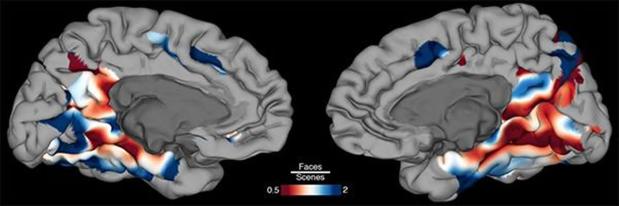
Image showing a map of the brain surface showing regions that preferentially activate during face (blue) and scene (red) identification. Image is credited to Oscar Woolnough, PhD, postdoctoral research fellow in the Department of Neurosurgery at McGovern Medical School at UTHealth in Houston.

A new study reveals areas of brain where recognition and identification occur.

Researchers have identified a hippocampal neural network that activates during stress. Activity in a hippocampal-hypothalamus network predicts greater feelings of stress, while connectivity between the hippocampus and dorsolateral prefrontal cortex predicts less stress.

Researchers have identified27 protein biomarkers that can predict whether a patient with COVID-19 is likely to develop severe coronavirus symptoms.

While the amount of antibodies generated varies widely in patients who have recovered from coronavirus, most people generate at least some antibodies which are intrinsically capable of neutralizing the SARS-CoV-2 virus according to a new study.

Twenty-nine genes have now been identified as being linked to problematic alcohol use. 

Toxic versions of the protein tau are believed to cause death of neurons of the brain in Alzheimer’s disease. A new study published in Nature Communications shows that the spread of toxic tau in the human brain in elderly individuals may occur via connected neurons. The researchers could see that beta-amyloid facilitates the spread of toxic tau.

Certain personality traits could increase the risk of developing mild cognitive impairment, a new study reports.

The anesthetic drug ketamine has been shown, in low doses, to have a rapid effect on difficult-to-treat depression. Researchers at Karolinska Institutet now report that they have identified a key target for the drug: specific serotonin receptors in the brain. Their findings, which are published in Translational Psychiatry, give hope of new, effective antidepressants.

Finally this week, a new study shows some infants can identify differences in musical tones at six months.


Weekly Neuroscience Update

walk-2635038_640 (1)

It’s never too late to lace up your sneakers for brain health, according to a study published in the May 13, 2020, online issue of Neurology. The study suggests older adults, even couch potatoes, may perform better on certain thinking and memory tests after just six months of aerobic exercise.

A new case study reveals a link between COVID-19 and clotting in blood vessels in the brain that results in an increased risk of ischemic stroke.

Rhythm begins in the womb and the heartbeat. And recent findings in neuroscience reveal that for the rest of our lives, rhythm will continue to have a fundamental impact on our ability to walk, talk — and even love.

Researchers studying the structure of the virus that causes COVID-19 have found a unique feature that could explain why it is so transmissible between people.

Recovered coronavirus patients show a wide range of immune responses following the infection, with about half from a current study showing sustained antibodies two weeks later. Results indicate which parts of the virus are most effective at triggering the immune responses.

Neuroscientists have identified memory cells that help us interpret new situations.

The strength of a person’s mental imagery is associated with excitability in the prefrontal cortex and visual cortex. Highly excitable neurons in the visual cortex may reduce a person’s ability to imagine mental images.

Finally this week, after studying global data from the COVID-19 pandemic, researchers have discovered a strong correlation between severe vitamin D deficiency and mortality rates.


Weekly Neuroscience Update

covid-4948866_640

In a new study, researchers identified the most common characteristics of 85 COVID-19 patients who died in Wuhan, China in the early stages of the coronavirus pandemic. The study reports on commonalities of the largest group of coronavirus patient deaths to be studied to date.

Abnormal blood clotting contributes to death in some patients with severe COVID-19 infections.

A newly developed blood test for Alzheimer’s disease measures a specific variant of the tau protein. Early results show the test has a good capacity to distinguish Alzheimer’s disease from other tauopathies.

New findings support the theory that impaired prefrontal control of the dopamine system is a key mechanism for the development of schizophrenia.

Researchers report that in depressed individuals there are increased amounts of an unmodified structural protein, called tubulin, in lipid rafts — fatty sections of a cell membrane — compared with non-depressed individuals.

A new genetics test for COVID-19 has been developed by an international team of researchers. 

Genetic variability in the human immune system may affect susceptibility to, and severity of infection by severe acute respiratory syndrome coronavirus 2 (SARS-CoV-2), the virus responsible for the coronavirus disease (COVID-19).

Researchers have developed a new approach to prevent amyloid plaque formation by engineering a nanodevice that captures the peptides before they can assemble.

A new study puts into question conventional belief that the eyes communicate with the brain exclusively via one signaling pathway. Researchers have identified a subset of retinal neurons that sends inhibitory signals to the brain. This subset of neurons is also involved in the synchronization of circadian rhythms to light/dark cycles and pupil constriction to bright light intensity.

Finally, this week, a new study sheds light on the role brain insulin plays in weight and visceral fat accumulation.

Weekly Neuroscience Update

A holographic image of the human brain. The image is credited to Case Western Reserve.

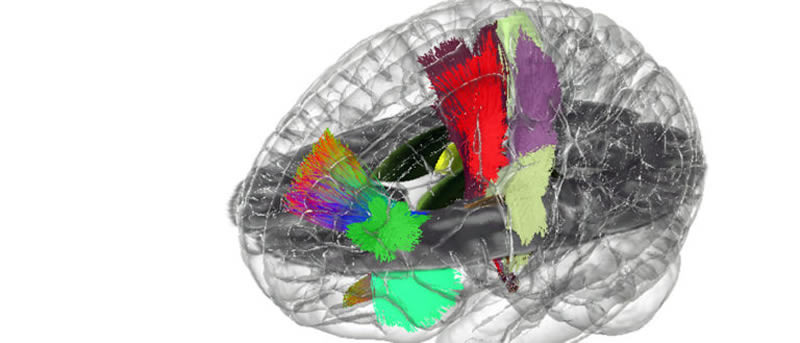
Researchers have used the HoloLense software to create an interactive holographic mapping system for axonal pathways in the human brain.

Does Parkinson’s disease (PD) start in the brain or the gut? In a new contribution published in the Journal of Parkinson’s Disease, scientists hypothesize that PD can be divided into two subtypes: gut-first, originating in the peripheral nervous system (PNS) of the gut and spreading to the brain; and brain-first, originating in the brain, or entering the brain via the olfactory system, and spreading to the brainstem and peripheral nervous system.

In the largest study of its kind, researchers identified similarities in the brain activity of people with major depressive disorder, post-traumatic stress disorder, bipolar disorder, and anxiety disorders.

A new theory, inspired by thermodynamics, takes a high-level perspective of how neural networks in the brain transiently organize to give rise to memories, thought and consciousness.

For the first time, researchers have extracted and isolated amyloid beta (Aβ) fibrils from the brains of three people who had died of Alzheimer’s disease.

A new study has revelled that deep sleep restores the medial prefrontal cortex mechanisms that restore emotion. This lowers emotional and physiological reactivity, preventing the escalation of stress and anxiety.

The largest brain imaging study of its kind may have found the reason why people with anxiety and mood disorders so often feel unable to escape negative thoughts and emotions.

Finally this week, researchers have now developed a novel computational approach to accelerate finding optimal stimuli, by building deep artificial neural networks that can accurately predict the neural responses produced by a biological brain to arbitrary visual stimuli.

Weekly Neuroscience Update

reading-925589_960_720.jpg

A new brain mapping experiment shows that whether you read or listen to a book, the same parts of the brain are stimulated to help you understand and respond to the meaning of the words

Poor oral health has been linked to cognitive decline and increased symptoms of stress.

The brains’ of first degree relatives of those with schizophrenia and bipolar disorder differ from those with no family history of the disorders. Relatives of those with bipolar disorder tend to have larger intracranial volume, while those who had a relative with schizophrenia had smaller brain volume.

Minute-to-minute fluctuations in human brain activity, linked to changing levels of dopamine, impact whether we make risky decisions, finds a new study.

Meditation and yoga practice is associated with smaller right amygdala volume, a brain region involved in emotional processing, according to research published in Brain Imaging and Behavior.

Tiny changes in the microscopic structure of the human brain may affect how patients respond to an emerging therapy for neurological problems.

The brains of people with epilepsy appear to react to music differently from the brains of those who do not have the disorder, a finding that could lead to new therapies to prevent seizures.

Major depressive disorder has been linked to at least 22 distinct diseases, including asthma, coronary heart disease, and an increased risk of E. coli infection.

Researchers have identified a specific area of the brain responsible for auditory verbal hallucinations in people with schizophrenia. The researchers were able to control the hallucinations with the help of transcranial magnetic stimulation.

A new study challenges the existing theory that testosterone levels are linked to reduced cognitive empathy.

Finally this week, new research provides insights into what happens in our brains when curiosity is piqued. The findings could help scientists find ways to enhance overall learning and memory in both healthy individuals and those with neurological conditions.


Weekly Neuroscience Update

ipad-820272_960_720.jpg

An international team of researchers has found the Internet can produce both acute and sustained alterations in specific areas of cognition, which may reflect changes in the brain, affecting our attentional capacities, memory processes, and social interactions.

Memory performance can be enhanced by rhythmic neural stimulation, using both invasive and non-invasive techniques.

A new study has found that infants at high risk for autism were less attuned to differences in speech patterns than low-risk infants. The findings suggest that interventions to improve language skills should begin during infancy for those at high risk for autism.

A new ultrasound method restores dopaminergic pathway in the brain at Parkinson’s early stages.

Neuroimaging reveals a significantly diminished response in the ventromedial prefrontal cortex in children on the autism spectrum. The findings could be used as a biomarker for diagnosing ASD.

A correlative link has been discovered between weak upper and lower body physical performance, and an increase in depression and anxiety during midlife.

Researchers have examined new evidence about how low-grade inflammation could impact a person’s level of motivation. This may also have implications for the treatment of some cases of depression.

Finally this week, new research has suggested that virtual reality may play a crucial role in monitoring Alzheimer’s disease.


Weekly Neuroscience Update

synesthesia-enhanced-learning-neuroscienews.jpg

The image is adapted from the University of Toronto news release.

An experiment led by University of Toronto psychologists has shown for the first time that grapheme-colour synesthesia  –   a condition in which individuals sense colours associated with letters and numbers – provides a clear advantage in statistical learning – an ability to discern patterns – which is a critical aspect of learning a language. The result provides insight into how we learn, and how children and adults may learn differently.

Scientists might have found an early detection method for some forms of dementia.

Neuroimaging helps researchers observe what happens in the brain as a person is rotated. The study, which gives insight into how the brain moves after the head stops moving, also provides critical information for advancing studies of TBI.

Esketamine combined with antidepressants acts rapidly to help alleviate symptoms in those with treatment-resistant depression.

Inflammation appears to reduce reward response in females. Reduced activity in the brain’s reward system is a key component of anhedonia, the loss of enjoyment in activities, a core feature of depression. The findings may explain why depression is more prevalent in women than in men.

A new study has found that a new nerve stimulation therapy to increase blood flow could help patients with the most common type of stroke up to 24 hours after onset.

The results of a new study suggest that virtual reality could make life easier for people with dementia. The authors conclude that virtual reality helped the participants recall memories and contributed to an improvement in patients’ relationships with caregivers.

Researchers have identified average levels of biological and anatomical brain changes with Alzheimer’s disease over 30 years before symptoms appear.

Magnetic stimulation of the brain improves working memory, offering a new potential avenue of therapy for individuals living with Alzheimer’s disease and other forms of dementia, according to new research.

Sleep in teenagers can be improved by just one week of limiting their evening exposure to light-emitting screens on phones, tablets and computers,

Finally this week, using Magnetic Resonance Imaging (MRI), scientists have captured 3D images that show how infants’ brains and skulls change shape as they move through the birth canal just before delivery.


Weekly Neuroscience Update

5ca4c9efcbd6e.jpg

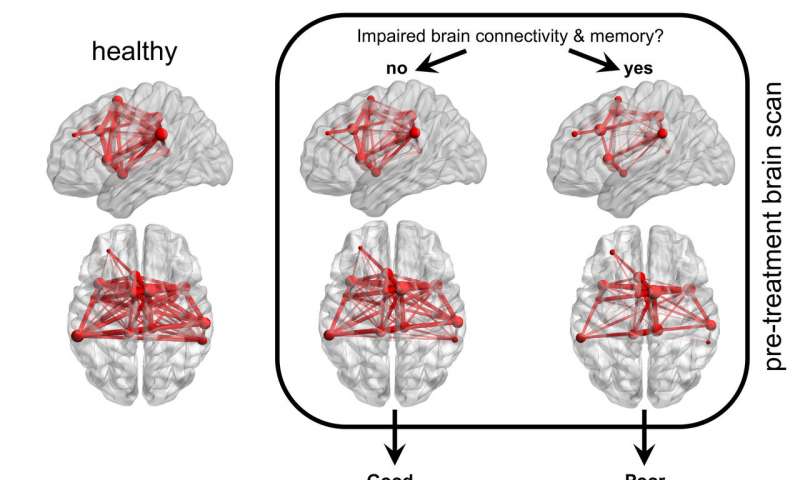
How well-connected a particular brain network is, and how successfully memories are formed, may determine which patients with post-traumatic stress disorder benefit from behavioral therapy, researchers have found.

A new paper discusses the potential of deep brain stimulation in the treatment of Parkinson’s disease, OCD, Tourette syndrome and other disorders.

Reduced blood capillaries in the back of the eye may be a new, noninvasive way to diagnose early cognitive impairment, the precursor to Alzheimer’s disease in which individuals become forgetful, reports a newly published study.

Animal-assisted therapy can foster social competence in patients with brain injuries and increase their emotional involvement during therapy. 

CGRP, a protein associated with migraine pain, appears to act differently between sexes. Researchers say a female-specific mechanism of downstream CGRP receptor activation is likely to contribute to the higher prevalence of migraine in women.

A new model sheds light on the evolutionary origins of empathy and other associated phenomena. 

A team of scientists has shown that when deep-brain stimulation is applied to a specific brain region, it improves patients’ cognitive control over their behavior by increasing the power of a specific low-frequency brain rhythm in their prefrontal cortex.

Researchers have increased understanding of how computing technology could be used to help people with depression remember happy memories.

A study has found that childhood trauma is linked to abnormal connectivity in the brain in adults with major depressive disorder (MDD). The paper, published this week in Proceedings of the National Academy of Sciences (PNAS), is the first data-driven study to show symptom-specific, system-level changes in brain network connectivity in MDD.

Finally this week, the findings of an EEG study on two-month-old babies reveal the impact of maternal stress on early neurodevelopment.

Weekly Neuroscience Update

memory-fades-over-time-neurosciencneews

Much like opaque filters we apply to pictures on social media, the vibrancy of our memories dims and fades over time. The image reflects 12 levels of visual salience, or vibrancy, used to rate how memories fade. The image is credited to Psychological Science.

Low-level visual information fades in memory over time. However, negative emotion increases subjective memory vividness.

Musical training produces lasting improvements to a cognitive mechanism that helps individuals be more attentive and less likely to be distracted by irrelevant stimuli while performing demanding tasks.

Neurobiologists have studied the formation of inhibitory synapses, a complex process that occurs when the brain adapts. 

The synesthesia effect of being able to ‘hear’ silent movements may depend upon disinhibition of signaling between the visual and auditory brain regions. A new study found musicians are more likely to experience the ‘visual ear’ phenomena than those with no musical training.

Using OCT angiography to quantify capillary changes in the back of the eye can help in the detection, and monitor the progression, of Alzheimer’s disease.

Polygenetic risk scores calculated from adults can be used to identify children and adolescents who may be at greater risk of developing depression, even before clinical symptoms have emerged.

An uncommon variant of the PDE11A gene impacts both quality and duration of sleep. 

Scientists have discovered the key brain region for navigating well-known places, helping explain why brain damage seen in early stages of Alzheimer’s disease can cause such severe disorientation.

Finally this week, a team of researchers has found what they describe as a link between the “locus of control” in adolescents and their use of tobacco and alcohol.