Weekly Neuroscience Update

man-798989_960_720.jpg

A new study sheds light on how some older people retain youthful thinking abilities and the brain circuits that support those abilities.

Relying on clinical symptoms of memory loss to diagnose Alzheimer’s disease may miss other forms of dementia caused by Alzheimer’s that don’t initially affect memory, reports a new Northwestern Medicine study.

Bilingual people may have a cognitive advantage when it comes to maintaining attention and focus, a new study reports.

An EU-funded project is getting close to building combined brain and neuromuscular computer models to predict the progression of Parkinson’s and ensure the prescription of the correct medication.

A new study investigates what happens when we multitask and why it’s not such a good idea to drive and use a phone at the same time.

Researchers have found a switch that redirects helper cells in the peripheral nervous system into “repair” mode, a form that restores damaged axons.

A new study offers insight into the neurological processes involved in fear and anxiety.

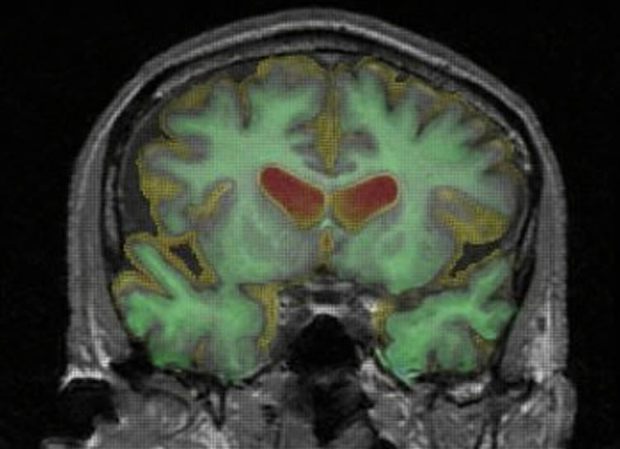
According to researchers, a simple MRI brain scan could help diagnose people with a common cognitive disorder.

A new mathematical model could improve understanding of memory consolidation during deep sleep.

High stress between the ages of  5 and 8 is biologically embedded, posing mental health risks decades later into adult life, suggests US brain scans study.

Finally this week, a new paper reports on how understanding brain function has become more than a brain science.
 

Weekly Neuroscience Update

hearing-loss-frontal-cortex-neurosciencenews

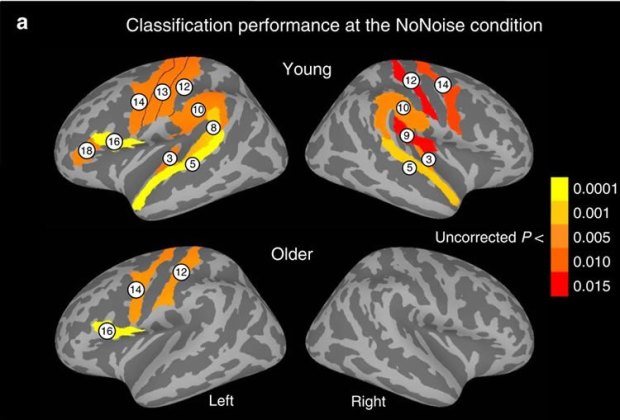
Regions with significant phoneme classification at the NoNoise condition for each group. NeuroscienceNews.com image is credited to the researchers/Nature Communications.

Researchers have pinpointed the specific part of the brain that older adults rely on to differentiate speech sounds in background noise, which could revolutionise the treatment of hearing loss.

New research has identified how cells protect themselves against ‘protein clumps’ known to be the cause of neurodegenerative diseases including Alzheimer’s, Parkinson’s and Huntington’s disease.

Transcranial alternating current stimulation may help to improve memory when targeted to a specific kind of brain activity achieved during sleep.

Researchers in the US and Australia have made a breakthrough discovery in the international quest to discover a new and potentially effective vaccine targeting the pathological proteins associated with Alzheimer’s disease.

A new study identifies different brain regions that become active when a strategy of categorisation is applied.

Researchers have developed a new machine learning system that analyses the entire human genome to predict which genes may cause autism spectrum disorder, raising the number of genes that could be linked to the disorder from 65 to 2,500.

Results from a study published in the online publication Nature Genetics finds 15 genomic regions that are significantly associated with a diagnosis of depression.

According to researchers, age related changes in the organization of neural networks when performing short term memory tasks may help to compensate for other aspects of brain aging.

Researchers report smoking related deficits in dopamine return to normal three months after quitting.

Genetic changes associated with Parkinson’s disease have been found in liver, fat, immune and developmental cells, a new study reports.

Brain imaging, twin studies and transcriptome data reveal genetic relationships between lobes.

Finally this week, a new study suggests regular physical activity may lead to greater hippocampal volume and could stave off dementia, especially in older people.


Weekly Neuroscience Update

protein-alzheimers-study-neurosciencenews

New research, using a Bayesian inference model of audio and visual stimuli, has shown how our perception of time lies mid-way between reality and our expectations.

Researchers have developed a virtual brain that can mimic the brain of a person with epilepsy. The model can help provide a better understanding of the disease.

Resting state brain activity may predict how quickly people are able to pick up a second language, a new study reports.

Researchers report that an odour identification test may prove useful in predicting cognitive decline and detecting early-stage Alzheimer’s disease.

A new study uses cutting-edge technique to image the process of neuronal transmission.

By scanning the brains of subjects while they were hypnotized, researchers were able to see the neural changes associated with hypnosis.

Yale University researchers have developed a way to picture synapses in living brains.

Music can influence how much you like the taste of beer, according to a study published in Frontiers in Psychology.

According to researchers, sleep twitches in babies could be linked to sensorimotor development.

A new study reports anatomical patterning in the brain’s cortex is controlled by genetic factors.

Finally this week, researchers have uncovered what goes on in our brains when we are faced with the decision to take a risk or play it safe.


Weekly Neuroscience Update

sleep

Sleep disturbances and long sleep duration are both associated with an increased risk for inflammation, a new study reports.

Abnormalities in brain regions involved in forming insight may help explain why some people with anorexia nervosa have trouble recognising their dangerous, dysfunctional eating habits.

A new study identifies different brain regions that become active when a strategy of categorisation is applied.

Researchers have identified – and shown that it may be possible to control – the mechanism that leads to the rapid build-up of the disease-causing ‘plaques’ that are characteristic of Alzheimer’s disease.

Using data from the largest ever genetic study of schizophrenia, researchers have shed light on the role of the immune system.

Using data from the Human Connectome Project, researchers have created a multimodal map of the human cortex that combines data from cortical architecture, function, connectivity, and topography. The map, detailed today (July 20) in Nature, identifies 180 brain areas, 97 of which are new to neuroscience.

A new study reports on how sensory neurons work together to transmit itch signals from the skin, via the spinal cord and to the brain.

A combination of transcranial magnetic stimulation and peripheral nerve stimulation may help in the rehabilitation of people with spinal cord injury, according to a new patient study conducted at the BioMag laboratory at the Helsinki University Hospital.

Researchers have discovered an interaction in neurons that contributes to Parkinson’s disease.

In a new study published in JAMA Neurology, researchers find stronger reason to be concerned about the long term effects of head injuries, particularly when it comes to Parkinson’s disease, which recently contributed to the death of Muhammad Ali.

Finally this week, researchers have identified how different parts of the brain interact with each other at different times in order to discover how intellect works.


Weekly Neuroscience News

virtual-partner-emotion-NeuroscienceNews

Researchers have created a ‘virtual partner’ that is able to elicit emotional response from humans in real time.

New research, presented this week at the European Society of Human Genetics conference in Barcelona, Spain, demonstrates that men whose red blood cells lack Y chromosomes are more susceptible to Alzheimer’s disease. The team hopes that, in the future, these findings might help develop an early warning system for Alzheimer’s.

A new study explores the role microtubles play in neurodevelopment.

According to researchers, people with major depressive disorder could have altered purine metabolism.

Researchers report we recognize patterns in music automatically, even with no musical training.

According to a new study, during sensory stimulation, increases of blood flow are not precisely tuned to local neural activity, and this can have implications for fMRI neuroimaging.

New evidence reveals the powerful role of experience in linking language and cognition in infants.

Researchers report microglia may actually protect the brain against Alzheimer’s disease by containing the spread of amyloid plaques.

A new study reports microglia can diminish the adverse changes to neural circuitry bought on by chronic cocaine use.

Researchers report they have solved the puzzle as to how antibodies enter the nervous system to control viral infections.

A new study from the University of Rochester suggests that human intelligence might have evolved in response to the demands of caring for infants.

Researchers have investigated how the human brain implements hierarchical structures in order to design more clever algorithms for machine learning.

new study reports having high blood pressure can raise the risk of developing vascular dementia.

A new study from MIT neuroscientists reveals that a gene mutation associated with autism plays a critical role in the formation and maturation of synapses—the connections that allow neurons to communicate with each other.

Finally this week, a new study reports a number of different areas of childrens’ brains become activated when they hear their mother’s voice. This response predicts a child’s social communication ability.

Weekly Neuroscience Update

barefoot_running_480_18ec9t1-18ec9t4

Running barefoot is better than running with shoes for your working memory, according to a new study.

A new study from King’s College London offers clues as to why chronic pain can persist, even when the injury that caused it has gone. Although still in its infancy, this research could explain how small and seemingly innocuous injuries leave molecular ‘footprints’ which add up to more lasting damage, and ultimately chronic pain.

New findings demonstrate that a five-minute measurement of resting-state brain activity predicted how quickly adults learned a second language.

Danish research is behind a new epoch-making discovery, which may prove decisive to future brain research. The level of salts in the brain plays a critical role in whether we are asleep or awake. This discovery may be of great importance to research on psychiatric diseases such as schizophrenia and convulsive fits from lack of sleep as well as post-anaesthetization confusion.

Research sheds light the neural structure that controls our sleep, eating habits, hormones and more.

A new study has found that Foreign Accent Syndrome, a condition which results in patients to be perceived as non-native speakers of their mother tongue, may be caused by the impaired connections between the language centres in the front part of the brain and the cerebellum.

Symptoms of depression that steadily increase over time in older age could indicate early signs of dementia, according to new research. 

A newly discovered pathway leading to neurodegeneration in Alzheimer’s disease (AD) may unlock the door to new approaches for treating the disease.

Some adults learn a second language better than others, and their secret may involve the rhythms of activity in their brains.

Finally this week, researchers report they have discovered a backup for memory storage that comes into play when the molecular mechanism for primary long term memory storage fails.

Weekly Neuroscience Update

autism-boys-brain-scan

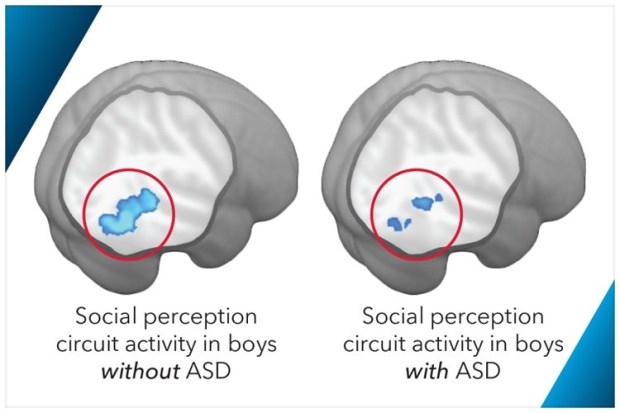
Researchers analyzed a series of 164 images from each of 114 individuals and discovered the brain scans of the social perception circuits indicated ASD only in boys. Credit: The researchers/George Washington University.

Researchers have developed a new method to map and track the function of brain circuits affected by autism spectrum disorder (ASD) in boys using brain imaging, a technique that will provide doctors with a tool that measures the progress of treatments in individual patients.

Scientists have derived a structural model of a transporter at the blood-brain barrier called Mfsd2a. This is the first molecular model of this critical transporter, and could prove important for the development of therapeutic agents that need to be delivered to the brain, across the blood-brain barrier. In future, this could help treat neurological disorders such as glioblastoma.

Research co-led by the University of Glasgow has made a potential breakthrough in the treatment of Alzheimer’s disease.

Frontotemporal dementia (FTD), the second most common cause of dementia in people under 65, may be triggered by a defect in immune cells called microglia that causes them to consume the brain’s synaptic connections, according to new research.

A new study shows that a series of play sessions with music improved 9-month-old babies’ brain processing of both music and new speech sounds.

Researchers at the RIKEN Brain Science Institute (BSI) in Japan have demonstrated that astrocytes help control the strength of connections between neurons. Published in Proceedings of the National Academy of Sciences, the study used cultured cells and brain slices to show that astrocytes in the hippocampus regulate changes in the brain brought on by neural activity.

Finally this week, people with more friends have higher pain tolerance, Oxford University researchers have found.

Weekly Neuroscience Update

consciousness-time-slices

Consciousness seems to work as continuous stream: one image or sound or smell or touch smoothly follows the other, providing us with a continuous image of the world around us. Image adapted from the EPFL press release.


Scientists propose a new way of understanding of how the brain processes unconscious information into our consciousness. According to the model, consciousness arises only in time intervals of up to 400 milliseconds, with gaps of unconsciousness in between.

A new study finds bursts of neural activity as the brain holds information in mind, overturns a long-held model.

Why do we sometimes decide to take risks and other times choose to play it safe? In a new study, researchers explored the neural mechanisms of one possible explanation: a contagion effect.

Using imagery is an effective way to improve memory and decrease certain types of false memories.

Scientists have developed an imaging process that for the first time, they say, can identify and track the progression of Alzheimer’s disease in people’s brains, even when there are no symptoms — a development that could lead to earlier diagnosis and treatment.

People prone to seeking stimulation and acting impulsively may have differences in the structure of their brains according to a study published in the Journal of Neuroscience. What’s more, those differences may predispose them to substance abuse.

In a recent study, researchers found evidence of a compromised dopamine system in heavy users of marijuana. Lower dopamine release was found in the striatum – a region of the brain that is involved in working memory, impulsive behavior, and attention. Previous studies have shown that addiction to other drugs of abuse, such as cocaine and heroin, have similar effects on dopamine release, but such evidence for cannabis was missing until now.

Finally this week an innovative collaboration between neuroscientists and developmental psychologists that investigated how infants’ brains process other people’s action provides the first evidence that directly links neural responses from the motor system to overt social behaviour in infants.


Weekly Neuroscience Update

Early-diagnosis-staging-of-Alzheimers-disease-seen-in-PET-scans

Dr. William Jagust explains how tau and beta amyloid, two proteins associated with Alzheimer’s disease, develop in the aging brain, which his research team has visualized using positron emission tomography, or PET, scans. Photo by Stephen McNally/University of California Berkeley

Researchers have visualized the development of Alzheimer’s disease in the brain in living people using positron emission tomography, or PET scans, which they say will aid with its diagnosis and treatment. 

Researchers have  also identified a drug that targets the first step in the toxic chain reaction leading to the death of brain cells, suggesting that treatments could be developed to protect against Alzheimer’s disease, in a similar way to how statins are able to reduce the risk of developing heart disease.

new study shows that a variety of physical activities from walking to gardening and dancing can improve brain volume and cut the risk of Alzheimer’s disease by 50%.

In another study jointly led by King’s College London and the University of Southampton has found a link between gum disease and greater rates of cognitive decline in people with early stages of Alzheimer’s Disease.

Women may have a better memory for words than men despite evidence of similar levels of shrinkage in areas of the brain that show the earliest signs of Alzheimer’s disease, according to a study published in Neurology.

Refugees face a substantially higher risk of psychotic disorders, including schizophrenia, compared to non-refugee migrants from the same regions of origin, finds a study published in The BMJ

Research on decision-making bias found that interactive training exercises using video games improved participants’ general decision-making abilities when used alongside other traditional training methods.

Reducing a person’s calorie intake can protect against the development of neurodegenerative diseases such as Parkinson’s Disease.  Meanwhile, researchers may be closer to unraveling the underlying causes of Parkinson’s disease, after identifying the point at which alpha-synuclein – a protein believed to play a key role in the condition – becomes toxic to the brain.

Scientists have developed a 3D micro-scaffold technology that promotes reprogramming of stem cells into neurons, and supports growth of neuronal connections capable of transmitting electrical signals.

Finally this week, researchers in Japan have found that repetitive movements in slow-learning stages can alter an area of the brain responsible for movement, and help individuals retain these motor skills.