Weekly Neuroscience Update

This cross-section of the hippocampus shows island cells (green) projecting to the CA1 region of the hippocampus. (Credit: Takashi Kitamura)

This cross-section of the hippocampus shows island cells (green) projecting to the CA1 region of the hippocampus. (Credit: Takashi Kitamura)

Neuroscientists have discovered how two neural circuits in the brain work together to control the formation of time-linked memories. This is a critical ability that helps the brain to determine when it needs to take action to defend against a potential threat.

Survivors of traumatic brain injuries (TBI) are three times more likely to die prematurely, often from suicide or fatal injuries, according to a study from Oxford University.

An international team of researchers has found that the cause of schizophrenia is even more complex than already believed, with rare gene mutations contributing to the disorder. In two studies published in the journal Nature, they show that schizophrenia arises from the combined effects of many genes.

Scientists have found that, to allow us to concentrate, we synchronize different regions of our brains in a process that the researchers describe as “roughly akin to tuning multiple walkie-talkies to the same frequency.”

Researchers have identified a protein in the brain that plays a critical role in the memory loss seen in Alzheimer’s patients, according to a study to be published in the journal Nature Neuroscience.

Using a simple study of eye movements, scientists report evidence that people who are less patient tend to move their eyes with greater speed. The findings, the researchers say, suggest that the weight people give to the passage of time may be a trait consistently used throughout their brains, affecting the speed with which they make movements, as well as the way they make certain decisions.

Researchers have found that epileptic activity can spread through a part of the brain in a new way, suggesting a possible novel target for seizure-blocking medicines.

Inside The Sleeping Brain

Russell Foster, Professor of Circadian Neuroscience, studies sleep and its role in our lives, examining how our perception of light influences our sleep-wake rhythms. The research on light perception hits home as we age — faced with fading vision, we also risk disrupted sleep cycles, which have very serious consequences, including lack of concentration, depression and cognitive decline. The more we learn about how our eyes and bodies create our sleep cycles, the more seriously we can begin to take sleep as a therapy.

Weekly Neuroscience Update

painThe problem with diagnosing and treating pain is that it’s so subjective. But a new paper in Pain says that brain structure may hold some answers.

Adding cognitive-behavioral therapy (CBT) to the treatment of migraines in children and adolescents resulted in greater reductions in headache frequency and migraine-related disability compared with headache education, according to a new study.

Scientists have discovered how salt acts as a key regulator for drugs used to treat a variety of brain diseases including chronic pain, Parkinson’s disease, and depression.

Research focused on the amygdala can help identify children at risk for anxiety disorders and depression.

Whales, bats, and even praying mantises use ultrasound as a sensory guidance system – and now a new study has found that ultrasound can modulate brain activity to heighten sensory perception in humans.

Scientists have shown that there are widespread differences in how genes, the basic building blocks of the human body, are expressed in men and women’s brains.

A new study shows a leftward asymmetry of the choroid plexus in two-thirds of first-trimester human fetuses. This is the earliest brain asymmetry so far identified and may be a precursor to other asymmetries, including that of the temporal planum, which is evident from the 31st week of gestation.

Researchers have discovered the mechanism in the brain responsible for the motor and vocal tics found in Tourette Syndrome.  The study, published in the British Psychological Society’s Journal of Neuropsychology, could at some point lead to new non-drug therapies.

A new study by neuroscientists is the first to directly compare brain responses to faces and objects with responses to colors.

A study begun in Mexico with the collaboration of university students has analysed the effect of weekend alcohol consumption on the lipids comprising cell membrane and its genetic material, i.e. DNA.

Study reveals senses of sight and sound separated in children with autism

Like watching a foreign movie that was badly dubbed, children with autism spectrum disorders (ASD) have trouble integrating simultaneous information from their eyes and their ears, according to a Vanderbilt study. The study, led by Mark Wallace, Ph.D., director of the Vanderbilt Brain Institute, is the first to illustrate the link and strongly suggests that deficits in the sensory building blocks for language and communication can ultimately hamper social and communication skills in children with autism.

To learn more about this research visit:

http://news.vanderbilt.edu/2014/01/senses-of-sight-and-sound-separated-in-children-with-autism/

Understanding how your brain works helps you learn better

Evidence is accumulating that knowledge about the brain empowers learning. This is because understanding how your brain learns and remembers fosters a sense of autonomy (i.e. making your learning independent of someone/something else) and autonomy is recognised as a key factor in effective learning.

This 10 minute video can provide you with insights into how to prime your brain for effective learning and it may help if you are worried about exams and feel that you are not learning optimally.

Comments are welcome.

Inside The Emotional Brain

brain activity emotions

Scientists have found a way to determine what emotions you’re feeling by looking at brain activity measured by imaging technology.

The findings, published in the journal PLOS ONE, are important to emotion research because they bring “a new method with potential to identify emotions without relying on people’s ability to self-report,” study researcher Karim Kassam, an assistant professor of social and decision sciences at Carnegie Mellon University, said in a statement.

“It could be used to assess an individual’s emotional response to almost any kind of stimulus, for example, a flag, a brand name or a political candidate.”

For the study, researchers used a combination of brain imaging — functional magnetic resonance imaging — and machine learning. They recruited 10 actors from the university’s drama school to act out different emotions, such as anger, happiness, pride and shame, while inside an fMRI scanner, for multiple times in random order.

To make sure that researchers were able to measure the actual emotions and not just the acting out of emotions, they had the study participants also look at emotion-eliciting images while undergoing FMRI brain scans.

“Despite manifest differences between people’s psychology, different people tend to neurally encode emotions in remarkably similar ways,” study researcher Amanda Markey, a graduate student in the Department of Social and Decision Sciences at the university, said in a statement.

Source: Huffington Post

Slow brain waves play key role in coordinating complex activity

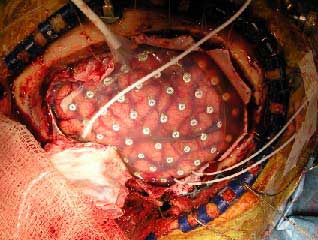
UCSF neurosurgeons place 64-electrode grids on the surface of the brain's temporal and frontal lobes to locate regions where epileptic seizures originate. These grids allowed UC Berkeley neuroscientists to study the interaction of brain waves during simple tasks, such as word recognition or hand movements. (Images courtesy the Knight Lab)

UCSF neurosurgeons place 64-electrode grids on the surface of the brain’s temporal and frontal lobes to locate regions where epileptic seizures originate. These grids allowed UC Berkeley neuroscientists to study the interaction of brain waves during simple tasks, such as word recognition or hand movements. (Images courtesy the Knight Lab)

While it is widely accepted that the output of nerve cells carries information between regions of the brain, it’s a big mystery how widely separated regions of the cortex involving billions of cells are linked together to coordinate complex activity. Now a new study by neuroscientists at the University of California, Berkeley, and neurosurgeons and neurologists at UC San Francisco (UCSF) is beginning to answer that question.

“One of the most important questions in neuroscience is: How do areas of the brain communicate?” said Dr. Robert Knight, professor of psychology, Evan Rauch Professor of Neuroscience and director of the Helen Wills Neuroscience Institute at UC Berkeley. “A simple activity like responding to a question involves areas all over the brain that hear the sound, analyze it, extract the relevant information, formulate a response, and then coordinate your lips and mouth to speak. We have no idea how information moves between these areas.”

By measuring electrical activity in the brains of pre-surgical epilepsy patients, the researchers have found the first evidence that slow brain oscillations, or theta waves, “tune in” the fast brain oscillations called high-gamma waves that signal the transmission of information between different areas of the brain. In this way, the researchers argue, areas like the auditory cortex and frontal cortex, separated by several inches in the cerebral cortex, can coordinate activity.

“If you are reading something, language areas oscillate in theta frequency allowing high-gamma-related neural activity in individual neurons to transmit information,” said Knight. “When you stop reading and begin to type, theta rhythms oscillate in motor structures, allowing you to plan and execute your motor response by way of high gamma. Simple, but effective.”

The findings are reported in the Sept. 15 issue of Science.

Read more at UC Berkeley News

Top ten blog posts of 2013

Top-10-ListThese were the most popular blog posts on Inside the Brain ranked according to most page views in 2013.

Does Addiction Exist?

What is ‘attention’ and where is it in the brain?

Understanding ADHD and Learning Disability

Understanding ADHD and Learning Disability Part V: Diagnosing ADHD

Could there an evolutionary advantage in having ADHD?

What can mirror neurons teach us about consciousness, mental health and well-being?

Inside The Musical Brain

This Is Your Brain On Poetry

Why Parkinson’s Disease Has Robbed Linda Ronstadt Of Her Singing Voice

How Did Tolerance Kill Cory Monteith?