Weekly Neuroscience Update

Conceptual scheme of controlled release of ODN from a hydrogel composed of a CyD-containing molecular network by mechanical compression. (Credit: Image courtesy of National Institute for Materials Science)

A research group has succeeded in developing a gel material which is capable of releasing drugs in response to pressure applied by the patient.

New findings about how the brain functions to suppress pain have been published in the leading journal in the field Pain, by National University of Ireland Galway (NUI Galway) researchers. For the first time, it has been shown that suppression of pain during times of fear involves complex interplay between marijuana-like chemicals and other neurotransmitters in a brain region called the amygdala.

Researchers report that they have found a biological mechanism that appears to play a vital role in learning to read. This finding provides significant clues into the workings behind dyslexia — a collection of impairments unrelated to intelligence, hearing or vision that makes learning to read a struggle.

A new study suggests neural ‘synchrony’ may be key to understanding how the human brain perceives.

Sleep plays an important role in the brain’s ability to consolidate learning when two new potentially competing tasks are learned in the same day, research at the University of Chicago demonstrates.

New research for the first time explains exactly how two brain regions interact to promote emotionally motivated behaviors associated with anxiety and reward. The findings could lead to new mental health therapies for disorders such as addiction, anxiety, and depression.

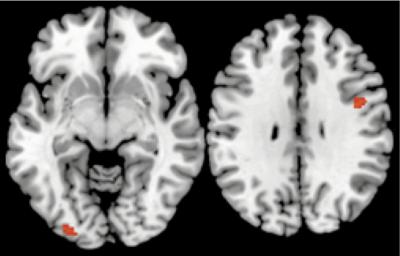
Researchers have designed a decoded functional MRI neurofeedback method that induces a pre-recorded activation pattern in targeted early visual brain areas that could also produce the pattern through regular learning.

A new study conducted by monitoring the brain waves of sleeping adolescents has found that remarkable changes occur in the brain as it prunes away neuronal connections and makes the major transition from childhood to adulthood.

New research suggests that depression, even in children, can increase the risk of heart problems later in life. Teens who were depressed as children are far more likely than their peers to be obese, smoke cigarettes and lead sedentary lives, even if they no longer suffer from depression.

Alcohol consumption affects the brain in multiple ways, ranging from acute changes in behavior to permanent molecular and functional alterations. The general consensus is that in the brain, alcohol targets mainly neurons. However, recent research suggests that other cells of the brain known as astrocytic glial cells or astrocytes are necessary for the rewarding effects of alcohol and the development of alcohol tolerance.

New research published in The Journal of Neuroscience suggests that modifying signals sent by astrocytes, our star-shaped brain cells, may help to limit the spread of damage after an ischemic brain stroke.

The prefrontal cortex is a region of the brain that acts like a filter, keeping any irrelevant thoughts, memories and perceptions from interfering with the task-at-hand. In a new study, researchers have shown that inhibiting this filter can enhance unfiltered, creative thinking.

A new study suggests that depression results from a disturbance in the ability of brain cells to communicate with each other. The study indicates a major shift in our understanding of how depression is caused and how it should be treated.


Weekly Neuroscience Update

UCL Medical staff discussing an image of a human brain

Researchers at University College London have made a breakthrough in the way that drugs could be delivered to the brain, tackling the difficult problem of constructing drugs which are able to pass through the blood-brain barrier – a mechanism which prevents many chemicals in the bloodstream from passing into the brain, including synthetic compounds administered as medication as well as harmful environmental toxins.

For older adults looking to sharpen their mental abilities, it might be time to log on to Facebook. Preliminary research findings from the University of Arizona suggest that men and women older than 65 who learn to use Facebook could see a boost in cognitive function.

A single concussion may cause lasting structural damage to the brain, according to a new study published online in the journal Radiology.

In an effort to better evaluate and prevent concussions and head traumas, researchers at Johns Hopkins University have developed a computer model to identify what types of jarring movements to the body can cause injury to the brain

A team of sleep researchers has confirmed the mechanism that enables the brain to consolidate memory and found that a commonly prescribed sleep aid enhances the process. Those discoveries could lead to new sleep therapies that will improve memory for aging adults and those with dementia, Alzheimer’s and schizophrenia.

How do neurons store information about past events? In the Nencki Institute of Experimental Biology of the Polish Academy of Sciences in Warsaw, a previously unknown mechanism of memory trace formation has been discovered. It appears that at least some events are remembered thanks to geometry.

It is possible to tell who a person is thinking about by analyzing images of his or her brain. Our mental models of people produce unique patterns of brain activation, which can be detected using advanced imaging techniques according to a study by Cornell University neuroscientist Nathan Spreng and his colleagues.

Columbia University Medical Center (CUMC) researchers have found the first evidence that selective activation of the dentate gyrus, a portion of the hippocampus, can reduce anxiety without affecting learning.

Weekly Neuroscience Update

medium_46044113Advice to “sleep on it” before making a big decision may be wise, according to new brain-imaging research.

Scientists from the University of Southampton have identified the molecular system that contributes to the harmful inflammatory reaction in the brain during neurodegenerative diseases.An important aspect of chronic neurodegenerative diseases, such as Alzheimer’s, Parkinson’s, Huntington’s or prion disease, is the generation of an innate within the brain. Results from the study open new avenues for the regulation of the inflammatory reaction and provide new insights into the understanding of the biology of , which play a leading role in the development and maintenance of this reaction.

A study conducted at the University of Granada and the University of York in Toronto, Canada, has revealed that bilingual children develop a better working memory –which holds, processes and updates information over short periods of time– than monolingual children.

Good mental health and clear thinking depend upon our ability to store and manipulate thoughts on a sort of “mental sketch pad.” In a new study, Yale School of Medicine researchers describe the molecular basis of this ability — the hallmark of human cognition — and describe how a breakdown of the system contributes to diseases such as schizophrenia and Alzheimer’s disease.

Your eyes aren’t just advanced visual systems capturing images of what’s around you. New research published in the Journal of Neuroscience shows that when our eyes perceive visual stimuli, it gets encoded in our brains in ways that change our emotional reactions.

In a pair of new papers, researchers at the University of California, San Diego School of Medicine and the Royal Netherlands Academy of Arts and Sciences upend a long-held view about the basic functioning of a key receptor molecule involved in signaling between neurons, and describe how a compound linked to Alzheimer’s disease impacts that receptor and weakens synaptic connections between brain cells.

Fear responses can only be erased when people learn something new while retrieving the fear memory. This is the conclusion of a study conducted by scientists from the University of Amsterdam (UvA) and published in the leading journal Science.

Injuries that result in chronic pain, such as limb injuries, and those unrelated to the brain are associated with epigenetic changes in the brain which persist months after the injury, according to researchers at McGill University.

Montreal researchers find that music lessons before age seven create stronger connections in the brain.

A team of political scientists and neuroscientists has shown that liberals and conservatives use different parts of the brain when they make risky decisions, and these regions can be used to predict which political party a person prefers.

Weekly Neuroscience Update

medium_5030497812

The brains of deaf people reorganize not only to compensate for the loss of hearing, but also to process language from visual stimuli—sign language, according to a study published  in Nature Communications. Despite this reorganization for interpreting visual language, however, language processing is still completed in the same brain region.

Our love of music and appreciation of musical harmony is learnt and not based on natural ability – a new study by University of Melbourne researchers has found.

For many patients with difficult-to-treat neuropathic pain, deep brain stimulation (DBS) can lead to long-term improvement in pain scores and other outcomes, according to a study in the February issue of Neurosurgery.

New brain imaging research from Carnegie Mellon University provides some of the first evidence showing how the brain unconsciously processes decision information in ways that lead to improved decision making. Published in the journal Social Cognitive and Affective Neuroscience, the study found that the brain regions responsible for making decisions continue to be active even when the conscious brain is distracted with a different task.

An interdisciplinary team of researchers has found a new way to influence the vital serotonin signaling system—possibly leading to more effective medications with fewer side effects.

Researchers at the University of Pittsburgh School of Medicine and UPMC describe in PLoS ONE how an electrode array sitting on top of the brain enabled a 30-year-old paralyzed man to control the movement of a character on a computer screen in three dimensions with just his thoughts. It also enabled him to move a robot arm to touch a friend’s hand for the first time in the seven years since he was injured in a motorcycle accident.

Researchers have discovered a molecule that accumulates with age and inhibits the formation of new neurons. The finding might help scientists design therapies to prevent age-related cognitive decline.

Wearing a nerve stimulator for 20 minutes a day may be a new option for migraine sufferers, according to new research published in the February 6, 2013, online issue of Neurology®, the medical journal of the American Academy of Neurology.

photo credit: Hindrik S via photopin cc

Weekly Neuroscience Update

medium_46044113

A research team at Northwestern University are studying the connection between memory and sleep, and the possibilities of boosting memory storage while you snooze.

For the first time, scientists have used a new combination of neural imaging methods to discover how the human brain adapts to injury. The research, published in Cerebral Cortex, shows that when one brain area loses functionality, a “back-up” team of secondary brain areas immediately activates, replacing not only the unavailable area but also its confederates.

New research suggests that testing a portion of a person’s saliva gland may be a way to diagnose Parkinson’s disease. The study was released today and will be presented at the American Academy of Neurology’s 65th Annual Meeting in San Diego, March 16 to 23, 2013.

In a promising finding for epileptic patients suffering from persistent seizures known as status epilepticus, researchers have reported that new medication could help halt these devastating seizures.

Tübingen neuroscientists have shown how decision-making processes are influenced by neurons.

EPFL scientists find evidence that psychological wounds inflicted when young leave lasting biological traces—and a predisposition toward violence later in life

The production of new neurons, known as neurogenesis, was found to be induced in the adult normal cortex by the antidepressant fluoxetine, as reported in a study published online last week in Neuropsychopharmacology. This finding highlights the potential neuroprotective response induced by this antidepressant drug. It also lends further support to the thesis that induction of adult neurogenesis in cortex is a relevant prevention/treatment option for neurodegenerative diseases and psychiatric disorders.

photo credit: Toni Blay via photopin cc

Weekly Neuroscience Update

Antwwaun Molden, Keith Toston, Julian Standord, Antwon Blake, John ChickIn a small study of former NFL players, about one quarter were found to have “mild cognitive impairment,” or problems with thinking and memory, a rate slightly higher than expected in the general population.

Research at the University of Edinburgh tracked electrical signals in the part of the brain linked to spatial awareness. The study could help us understand how, if we know a room, we can go into it with our eyes shut and find our way around. This is closely related to the way we map out how to get from one place to another.

Scientists have long wondered how nerve cell activity in the brain’s hippocampus, the epicenter for learning and memory, is controlled — too much synaptic communication between neurons can trigger a seizure, and too little impairs information processing, promoting neurodegeneration. Researchers at Georgetown University Medical Center say they now have an answer. In the January 10 issue of Neuron, they report that synapses that link two different groups of nerve cells in the hippocampus serve as a kind of “volume control,” keeping neuronal activity throughout that region at a steady, optimal level.

Seniors who have spoken two languages since childhood are faster than single-language speakers at switching from one task to another, according to a study published in the January 9 issue of The Journal of Neuroscience. Compared to their monolingual peers, lifelong bilinguals also show different patterns of brain activity when making the switch, the study found.

Repression of a single protein in ordinary fibroblasts is sufficient to directly convert the cells – abundantly found in connective tissues – into functional neurons. The findings, which could have far-reaching implications for the development of new treatments for neurodegenerative diseases like Huntington’s, Parkinson’s and Alzheimer’s, will be published online in advance of the January 17 issue of the journal Cell.

Weekly Neuroscience Update

medium_520740711

A bird listening to birdsong may experience some of the same emotions as a human listening to music, suggests a new study on white-throated sparrows, published in Frontiers of Evolutionary Neuroscience.

Scientists at University College Cork (UCC) have come up with an innovative strategy to deliver a therapy into the brain to treat the neurogenerative disease, Huntington’s disease (HD). The strategy, which involves using modified sugars to carry gene therapies into the brain, is being hailed as an exciting development which could be applied to many brain disorders, especially those with a genetic basis.

Researchers have used brain imaging technology to show that young people with a known genetic risk of bipolar but no clinical signs of the condition have clear and quantifiable differences in brain activity when compared to controls.

Scientists have identified a previously unknown group of nerve cells in the brain. The nerve cells regulate cardiovascular functions such as heart rhythm and blood pressure. It is hoped that the discovery, which is published in the Journal of Clinical Investigation, will be significant in the long term in the treatment of cardiovascular diseases in humans.

Scientists say they have found a way to distinguish between different types of dementia without the need for invasive tests, like a lumbar puncture.

Scientists at the University of Western Ontario have discovered that perhaps IQ is not the best measure of cognitive performance. Instead, they found that verbal language, short-term memory, and logical reasoning were the most important predictors of cognitive performance.

photo credit: tcd123usa via photopin cc

Weekly Neuroscience Update

this way, that wayWellcome Trust researchers have discovered how the brain assesses confidence in its decisions. The findings explain why some people have better insight into their choices than others.

Meanwhile, a study conducted by researchers at the University of Granada Group of Neuropsychology and Clinical Psychoneuroimmunology has demonstrated that cortisol levels in saliva are associated with a person’s ability to make good decisions in stressful situations.

Your brain has at least four different senses of location – and perhaps as many as 10. And each is different, according to new research from the Kavli Institute for Systems Neuroscience.

A month of daily transcranial magnetic stimulation targeting the supplemental motor area (SMA) results in lasting improvements in symptoms of Tourette syndrome, show study findings.

Researchers have used brain imaging technology to show that young people with a known genetic risk of bipolar but no clinical signs of the condition have clear and quantifiable differences in brain activity when compared to controls.

Researchers have found the first proof that a chemical in the brain called glutamate is linked to suicidal behavior, offering new hope for efforts to prevent people from taking their own lives.

Neurobiologists at the Research Institute of Molecular Pathology (IMP) in Vienna investigated how the brain is able to group external stimuli into stable categories. They found the answer in the discrete dynamics of neuronal circuits. The journal Neuron publishes the results in its current issue.

Photo Credit: photo credit: Lori Greig via photopin cc

Weekly Neuroscience Update

medium_6835040374Two recent pieces of work raise the prospect of being able to predict and even regulate a person’s risk-taking behavior, by first observing activity of the anterior cingulate cortex and then dialing it up or down.

A new study shows that for millions of individuals around the world who suffer from Generalized Anxiety Disorder (GAD), anger is more than an emotion; it’s an agent that exacerbates their illness.

Brain changes persist for months in children who have sustained a mild traumatic brain injury, or concussion, U.S. researchers say.

Chinese researchers have devised a new technique for reprogramming cells from human urine into immature brain cells that can form multiple types of functioning neurons and glial cells. The technique, published in the journal Nature Methods, could prove useful for studying the cellular mechanisms of neurodegenerative conditions such as Alzheimer’s and Parkinson’s and for testing the effects of new drugs that are being developed to treat them.

Researchers have discovered how the brain assesses confidence in its decisions. The findings explain why some people have better insight into their choices than others.

Scientists have combined and translated two kinds of brain wave recordings into music, transforming one recording (EEG) to create the pitch and duration of a note, and the other (fMRI) to control the intensity of the music.

A compassion-based meditation program can significantly improve a person’s ability to read the facial expressions of others, finds a study published by Social Cognitive and Affective Neuroscience. This boost in empathic accuracy was detected through both behavioral testing of the study participants and through functional magnetic resonance imaging (fMRI) scans of their brain activity.

Your brain has at least four different senses of location — and perhaps as many as 10. And each is different, according to new research from the Kavli Institute for Systems Neuroscience, at the Norwegian University of Science and Technology.

photo credit: Amanda Nicole Betley via photopin cc

Weekly Neuroscience Update

medium_3550062627
A new clinical study in the journal Brain and Behavior, has been undertaken to decide whether a non-invasive method, using musical tones to regulate brain activity, can actually reprogram the brain, resulting in insomnia prevention.

Researchers have shown that synchronization emerges between brains when making music together, and even when musicians play different voices.

People are able to detect, within a split second, if a hurtful action they are witnessing is intentional or accidental, new research on the brain at the University of Chicago shows.

Everyone knows that men and women tend to hold different views on certain things. However, new research by scientists from the University of Bristol and published in PLoS ONE indicates that this may literally be the case.

All patients with Alzheimer’s disease (AD) lose brain cells, which leads to a shrinking, or atrophy, of the brain. But the pattern of gray matter loss is significantly different in men and women, according to a study presented recently at the annual meeting of the Radiological Society of North America.