Vital research into the illness of mind and brain

In this short seven-minute video Stephen Gentleman, Professor of Neuropathology at the Hammersmith Hospital in London dissects a recently preserved human brain according to international protocol.The brain sections are then stored in a ‘brain tissue bank’ for further research.

The brains are donated by people who suffered from Parkinson’s disease or multiple sclerosis (both degenerative and incurable diseases of the central nervous system), but sometimes ‘control’ samples of healthy brains (also donated) are required too for accurate comparisons.

While some viewers may find this video unsettling it is important to stress that this type of research is vital in discovering safer and more effective treatments for illnesses of mind and brain. Brain dissections may also be performed in autopsy when the cause of death is unclear.

Weekly Neuroscience Update

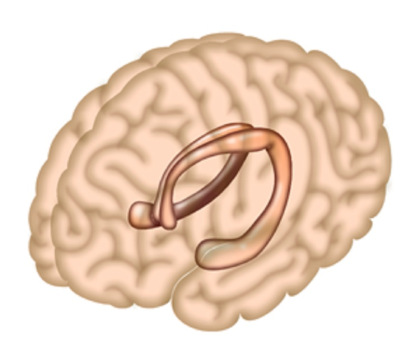
The hippocampus is a region of the brain largely responsible for memory formation. Credit Salk Institute.

The hippocampus is a region of the brain largely responsible for memory formation. Credit Salk Institute.

Scientists have created a new model of memory that explains how neurons retain select memories a few hours after an event. This new framework provides a more complete picture of how memory works, which can inform research into disorders liked Parkinson’s, Alzheimer’s, post-traumatic stress and learning disabilities.

A switch in the brain of people with epilepsy dictates whether their seizures will be relatively mild or lead to a dangerous and debilitating loss of consciousness, Yale researchers have found.

By predicting our eye movements, our brain creates a stable world for us. Researchers used to think that those predictions had so much influence that they could cause us to make errors in estimating the position of objects. Neuroscientists at Radboud University have shown this to be incorrect. The Journal of Neuroscience published their findings – which challenge fundamental knowledge regarding coordination between brain and eyes.

Extreme and traumatic events can change a person — and often, years later, even affect their children. Researchers have now unmasked a piece in the puzzle of how the inheritance of traumas may be mediated.

Artists have structurally different brains compared with non-artists, a study has found. Participants’ brain scans revealed that artists had increased neural matter in areas relating to fine motor movements and visual imagery. The research, published in NeuroImage, suggests that an artist’s talent could be innate. But training and environmental upbringing also play crucial roles in their ability, the authors report.

Certain errors in visual perception in people with schizophrenia are consistent with interference or ‘noise’ in a brain signal known as a corollary discharge, a new study shows.

Finally this week,  a recent study has shown that use of abstract gestures is a powerful tool for helping children understand and generalize mathematical concepts.


Weekly Neuroscience Update

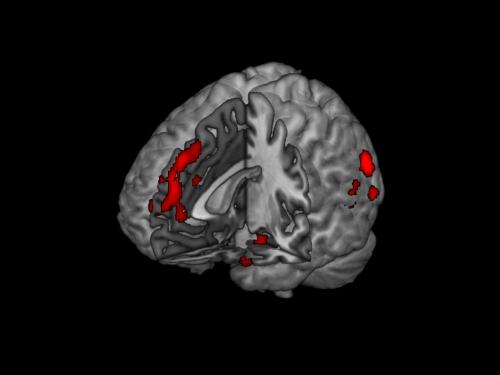
Neuroscience research demonstrates that the brain regions underpinning moral judgment share resources with circuits controlling other capacities such as emotional saliency, mental state understanding and decision-making. Credit: Jean Decety

Neuroscience research demonstrates that the brain regions underpinning moral judgment share resources with circuits controlling other capacities such as emotional saliency, mental state understanding and decision-making. Credit: Jean Decety

People who care about justice are swayed more by reason than emotion, according to new brain scan research from the Department of Psychology and Center for Cognitive and Social Neuroscience. Researchers have discovered a gene that is likely to play a role in the risk of psychosis in bipolar disorders.

A new way to artificially control muscles using light, with the potential to restore function to muscles paralysed by conditions such as motor neuron disease and spinal cord injury, has been developed by scientists at UCL and King’s College London.

Researchers at the University of California, San Diego School of Medicine and the Allen Institute for Brain Science have published a study that gives clear and direct new evidence that autism begins during pregnancy.

A new study is the first documented study that shows cognitive behavioral therapy in a group setting is capable of changing the brain structure in patients with chronic pain.

By examining the sense of touch in stroke patients, a University of Delaware cognitive psychologist has found evidence that the brains of these individuals may be highly plastic even years after being damaged.

A new chemical messenger that is critical in protecting the brain against Parkinson’s disease has been identified by scientists.

Scents and smells can form the basis of some of the most significant memories humans form in their lives, a new study suggests

In the first study of its kind, two researchers have used popular music to help severely brain-injured patients recall personal memories.

Weekly Neuroscience Update

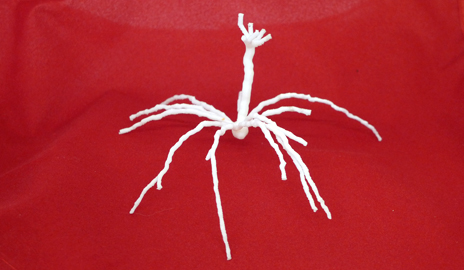
3D-printed model of a neuron (credit: Yale University)

3D-printed model of a neuron (credit: Yale University)

A Yale neuroscientist  has created the first 3D-printed neuron.

Studies released today suggest promising new treatments for nicotine and heroin addiction, and further our understanding of pathological gambling and heroin abuse in those suffering chronic pain. This new knowledge, released at Neuroscience 2013, the annual meeting of the Society for Neuroscience (SFN) and the world’s largest source of emerging news about brain science and health, may one day lead to non-pharmaceutical interventions and therapies to treat addiction. Also presented at SFN, new studies revealing links between social status and specific brain structures and activity, particularly in the context of social stress.

A new study has found that people experiencing a depressive episode process information about themselves differently than people who are not depressed.

To flexibly deal with our ever-changing world, we need to learn from both the negative and positive consequences of our behaviour. In other words, from punishment and reward. Hanneke den Ouden from the Donders Institute in Nijmegen demonstrated that serotonin and dopamine related genes influence how we base our choices on past punishments or rewards. This influence depends on which gene variant you inherited from your parents. These results were published in Neuron on November 20.

Brain scans reveal that people with fibromyalgia are not as able to prepare for pain as healthy people, and they are less likely to respond to the promise of pain relief.

Scientists have used RNA interference (RNAi) technology to reveal dozens of genes which may represent new therapeutic targets for treating Parkinson’s disease. The findings also may be relevant to several diseases caused by damage to mitochondria, the biological power plants found in cells throughout the body.

Playing a fast-paced strategy video games can help the brain to become more agile and improve strategic thinking, according to new research.

While young children sleep, connections between the left and the right hemispheres of their brain strengthen, which may help brain functions mature, according to a new study by the University of Colorado Boulder.  And in another sleep study, a team of sleep researchers  has confirmed the mechanism that enables the brain to consolidate memory and found that a commonly prescribed sleep aid enhances the process. Those discoveries could lead to new sleep therapies that will improve memory for aging adults and those with dementia, Alzheimer’s and schizophrenia.

Weekly Neuroscience Update

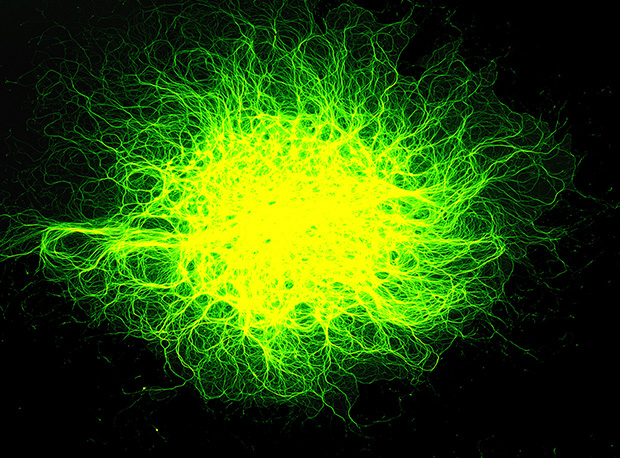
To study how nerve cells respond to injuries in their branches, Washington University researcher Valeria Cavalli grows them in “spots” like the one shown above. Cavalli recently identified a chain reaction that enables repair of these branches when they are cut. Credit Yongcheol Cho/Washington University at St. Louis.

To study how nerve cells respond to injuries in their branches, Washington University researcher Valeria Cavalli grows them in “spots” like the one shown above. Cavalli recently identified a chain reaction that enables repair of these branches when they are cut. Credit Yongcheol Cho/Washington University at St. Louis.

Researchers have identified a chain reaction that triggers the regrowth of some damaged nerve cell branches, a discovery that one day may help improve treatments for nerve injuries that can cause loss of sensation or paralysis.

Groundbreaking research nearly two decades ago linking a mother’s educational background to her children’s literacy and cognitive abilities stands out among decades of social science studies demonstrating the adverse effects of poverty. Now new research has taken that finding in a neuroscientific direction: linking poor processing of auditory information in the adolescent brain to a lower maternal educational background.

A review of new research says there is growing evidence to support the idea that the brain plays a key role in normal glucose regulation and the development of type 2 diabetes.

University of Queensland (UQ) scientists have made a fundamental breakthrough into how the brain decodes the visual world.

Cocaine addicts may become trapped in drug binges not because they are always seeking euphoric highs but rather to avoid emotional lows, says a study in Psychopharmacology.

Researchers have developed a therapeutic at-home gaming program for stroke patients who experience motor weakness affecting 80 percent of survivors.

Learning a musical instrument as a child gives the brain a boost that lasts long into adult life, say scientists.

The birth of new neurons depend upon activation of an important molecular pathway in stem cells, a new Yale School of Medicine study shows.

Researchers have taken a major step towards understanding the causes of Alzheimer’s disease with the largest study yet into the genetics of the disorder.

Light enhances brain activity during a cognitive task even in some people who are totally blind, according to a new study.

Scientists have discovered biological mechanisms that may link Parkinson’s disease to Alzheimer’s disease, according to a study published in the journal Acta Neuropathologica.


Weekly Neuroscience Update

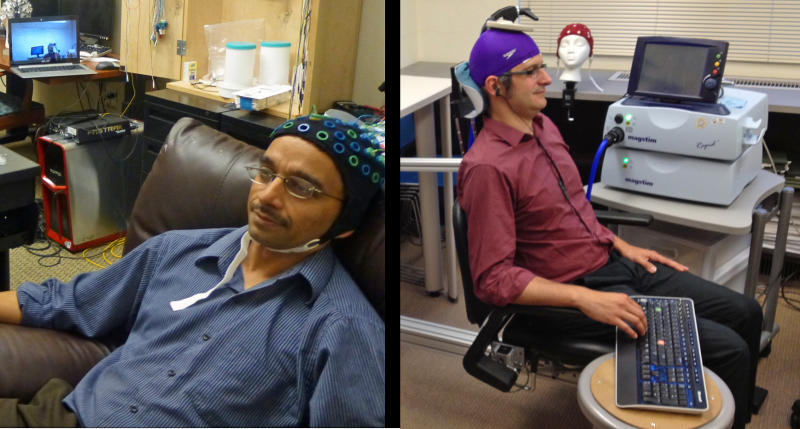
University of Washington University of Washington researcher Rajesh Rao, left, plays a computer game with his mind. Across campus, researcher Andrea Stocco, right, wears a magnetic stimulation coil over the left motor cortex region of his brain. Stocco’s right index finger moved involuntarily to hit the “fire” button as part of the first human brain-to-brain interface demonstration. (Credit: Image courtesy of University of Washington)

University of Washington University of Washington researcher Rajesh Rao, left, plays a computer game with his mind. Across campus, researcher Andrea Stocco, right, wears a magnetic stimulation coil over the left motor cortex region of his brain. Stocco’s right index finger moved involuntarily to hit the “fire” button as part of the first human brain-to-brain interface demonstration. (Credit: Image courtesy of University of Washington)

University of Washington researchers have performed what they believe is the first noninvasive human-to-human brain interface, with one researcher able to send a brain signal via the Internet to control the hand motions of a fellow researcher.

A new study strengthens the link between amyotrophic lateral sclerosis (ALS) and problems in protein production machinery of cells and identifies a possible treatment strategy.

A team of neuroscientists has found a key to the reduction of forgetting. Their findings, which appear in the journal Neuron, show that the better the coordination between two regions of the brain, the less likely we are to forget newly obtained information.

Sleep is well-known to help us better understand what we have learned. But now, researchers believe they have discovered exactly how sleep helps our brains to better learn specific motor tasks, such as typing or playing the piano.

With Magnetic Resonance Imaging (MRI), researchers have identified specific markers in the brain which could help predict whether people with psychosis will respond to antipsychotic medications.

New findings published in the journal Nature show how one component of the brain’s circuitry – inhibitory neurons – behave during critical periods of learning.

Researchers report the first biomarker results reported from the Parkinson’s Progression Markers Initiative (PPMI), showing that a comprehensive test of protein biomarkers in spinal fluid have prognostic and diagnostic value in early stages of Parkinson’s disease. The study is reported in JAMA Neurology.

Why Parkinson’s Disease Has Robbed Linda Ronstadt Of Her Singing Voice

Singer Linda Rondstadt has recently been diagnosed with Parkinson's disease.

Singer Linda Rondstadt has recently been diagnosed with Parkinson’s disease.

The news that Linda Ronstadt has lost her powerful voice after a four-decade singing career as a result of Parkinson’s disease shocked not just the singer, but her many fans.

The 67-year-old Grammy-winning singer revealed last week that she struggled with symptoms of the disease for nearly eight years before getting her diagnosis just months ago. The neurological degenerative condition robs sufferers of their speech, mobility and their cognitive abilities.

During my career, I have spent almost 30 years investigating the effects of Parkinson’s disease on the brain and  I have seen great strides in our understanding and treatment of this illness.

What is Parkinson’s disease?

Over 4 million people worldwide suffer from Parkinson’s disease – a so-called hypokinetic disorder (hypo = lack of; kinetic = movement). Parkinson’s disease can be genetic but it can also be triggered by brain injury – as observed in boxers such as Muhammad Ali – and by environment – e.g. prolonged exposure to chemicals such as insecticides, weed killers and some drugs.  However in most cases Parkinson’s disease arises ‘out of the blue’ – i.e. idiopathic Parkinson’s disease. It is a progressive disease the symptoms start out small and get progressively worse but it is rarely fatal.

Three major symptoms

The disease is associated with three major symptoms (i) akinesia – an inability to start a movement – for instance when starting to brush your teeth, (ii) bradykinesia – an excessive braking or slowing of movement – when the brush strokes become shorter and eventually freeze and (iii) tremor – starting out as a trembling finger movements as if rolling a coin or pill – sometimes called ‘pill-rolling’ – which can progress to the whole body. With Parkinson’s disease one minute you are working away in the garden and the next you are literally stuck to the spot – totally unable to move. In these situations daily life can become a challenge that can be difficult to endure.

History

The disease is named after a British surgeon and political activist James Parkinson (1755-1824) who was born in London’s east end. In October 1794 he was questioned under oath before a council of state in connection with a plot to kill the King. He was exonerated but remained a strong advocate for the under-privileged. In 1817 he published An Essay on the Shaking Palsy reporting 6 cases. Although his publication was later considered the seminal work on the disease, it received little attention until a lot more cases came to light.

Where in the brain does Parkinson’s disease occur?

The Nobel Prize was awarded in 2000 to Professor Arvid Carlsson for his research over the past 50 years which confirmed that the ‘core defect’ in Parkinson’s disease is a loss of a chemical called dopamine in two tiny brain regions  – no bigger than a wart – called the substantia nigra. These two regions deep in the back of the brain – one on the left side and one on the right side – contain nerves that make a lot of dopamine and release it at their tips about 4 inches forward in the basal ganglia – located deep in the center of the brain where it helps to convert the intention/motivation needed to perform a movement into actual movement.

The core defect is a loss of dopamine

Dopamine belongs to a family of neurotransmitters called amines that help nerve cells to stay in touch with each other- sometimes called neurotransmitters. Dopamine acts like hydraulic oil which lubricates the basal ganglia nerve network involved in executing a movement. One only needed to go to watch Linda perform on stage at the height of her career to see dopamine in action as her brain effortlessly converted her thoughts and moods into the mesmerizing tonality, rhythm and range that made her so loved by a generation. In Parkinson’s disease the substantia nigra progressively dies, the supply of dopamine to the basal ganglia dries-up and like a car out of oil the engine seizes-up and movement grinds to a halt.

Trapped and disconnected

We need dopamine to survive. Dopamine allows us to talk, sing, socialize, improvise and take risks. When dopamine flows we don’t see things as being limited by circumstance. We have boundless energy and literally anything is possible!  Without dopamine we feel trapped and disconnected. It is not surprising therefore that mood can become low and depression is often associated with this illness.

Medication is expensive

Over the past 40 years neuroscientists been working hard to develop drugs that can safely raise dopamine levels in the Parkinsonian brain – the so-called antiparkinsonian drugs – and better, more effective treatments come on the market every decade.  Drug treatments are effective in managing symptoms but frequent changes are needed as the disease progresses. In the end many combinations of drugs at higher and higher doses may be needed and unpleasant side-effects may become an issue. Medication costs on average €100,000 per year.  Interestingly, the inexpensive anti-inflammatory drug ibuprofen has recently been shown to help stave off Parkinson’s disease possibly by protecting the substantia nigra but ibuprofen can itself produce unwanted side effects, including stomach bleeding.

Alternatives to drug-treatment?

deep  brain stimulation

Neuroscientists believe that the loss of the dopamine-rich nerves in the substantia nigra results is an over-activity of a ‘brake’ mechanism in the basal ganglia which in turn inappropriately shuts down movement.  Deep brain stimulation (DBS) takes advantage of our knowledge of this brain wiring by applying a small electric current into a target area called the subthalamic nucleus located deep within the basal ganglia to switch off the brake and free-up movement. It is an expensive and risky procedure but it can provide a new lease of life particularly to those patients for whom conventional drug treatment no longer seem to work.

The politics of brain research

Probably the most important lesson to be taken from Linda’s illness is that we need to open up a debate on how we as a society fund research into brain illness and highlight the realization that a deeper understanding of the brain IS the difference between a good and a bad quality of life for the sufferers of brain illnesses such as Parkinson’s disease.

I hope that Linda and her loved ones will take hope from the on-going research into Parkinson’s disease by teams of dedicated scientists worldwide.

Click on the link below to hear Professor Billy O’Connor talk about Parkinson’s disease on Mind Matters – a science programme on RTE radio.

http://www.podcastdirectory.com/episodes/mind-matters-on-parkinson-s-disease-3465171.html
Weekly Neuroscience Update

How Would It Be to Have the Body of a Child Again? Changes in Perception and Behaviors Demonstrated When Embodying a Child Avatar

A research, recently published on the journal Proceedings of the National Academy of Sciences, suggests that a correlate of a body-ownership illusion is that the virtual type of body carries with it a set of temporary changes in perception and behaviours that are appropriate to that type of body.

A new study, published in the New England Journal of Medicine, examined whether or not higher glucose levels without diabetes was a risk factor for dementia.  Diabetes is already a known risk factor for dementia, but this study aimed to determine if the risk factor for diabetes is a risk factor for dementia.  Studying 2,067 participants without dementia, 232 of which already had diabetes, the researchers collected follow-up data after approximately seven years.  They found a significantly higher risk of dementia in individuals with higher than average blood glucose even if they did not have diabetes. Meanwhile, a study by researchers at Umeå University in Sweden suggests nine different factors that can increase the risk of developing dementia before age 65. The results have been published by the journal JAMA Internal Medicine.

Meditating before lectures can lead to better grades according to a new experimental study by George Mason University professor Robert Youmans and University of Illinois doctoral student Jared Ramsburg.

Researchers at Johns Hopkins have uncovered a protein switch that can either increase or decrease memory-building activity in brain cells, depending on the signals it detects. Its dual role means the protein is key to understanding the complex network of signals that shapes our brain’s circuitry, the researchers say.

Different parts of the brain are affected in women with autism than in men with autism, according to a new study.

Ending a 30-year search by scientists, researchers at Boston Children’s Hospital have identified two proteins in the inner ear that are critical for hearing, which, when damaged by genetic mutations, cause a form of delayed, progressive hearing loss.

Researchers have found human brains ‘divide and conquer’ when people learn to navigate around new environments. The research by UQ’s Queensland Brain Institute (QBI) could provide hope for people with spatial memory impairments.

Researchers have discovered how genetic mutations linked to Parkinson’s disease might play a key role in the death of brain cells, potentially paving the way for the development of more effective drug treatments.

The largest genome-wide study of its kind has determined how much five major mental illnesses are traceable to the same common inherited genetic variations. Researchers funded in part by the National Institutes of Health found that the overlap was highest between schizophrenia and bipolar disorder; moderate for bipolar disorder and depression and for ADHD and depression; and low between schizophrenia and autism. Overall, common genetic variation accounted for 17-28 percent of risk for the illnesses.

Weekly Neuroscience Update

sad music

Sad music might actually evoke positive emotions reveals a new study by Japanese researchers. The findings help to explain why people enjoy listening to sad music, say Ai Kawakami and colleagues from Tokyo University of the Arts and the RIKEN Brain Science Institute, Japan.

Extroverts may be more outgoing and cheerful in part because of their brain chemistry, reports a study by Cornell neuroscientists.

Researchers at Neuroscience Research Australia (NeuRA) have discovered that the region of the brain called the orbitofrontal cortex plays a key role in linking emotion and memories. The finding comes from a new study, which demonstrates that patients with frontotemporal dementia (FTD) lose the “emotional content” of their memories.

Researchers in Oxford have demonstrated a significant improvement in the treatment of advanced Parkinson’s disease with deep brain stimulation.

In a study examining how bilingual children learn the two different sound systems of languages they are acquiring simultaneously, researchers have discovered insights that indicate children can learn two native languages as easily as they can learn one.

Scientists have developed a method with which the chances of success of a surgical procedure for temporal lobe epilepsy can be accurately predicted.

Patient Plays Guitar During Brain Surgery To Treat Parkinson’s

Brad Carter Plays Guitar During Brain Surgery To Treat Parkinson’s

To mark Ronald Reagan UCLA Medical Center’s 500th deep brain stimulation operation last Thursday, surgeons performed the world’s first live-Vined brain surgery.

The operation, which lead neurologist Dr. Nader Pouratian described as “textbook” brain pacemaker implant surgery, was documented with Vine, a six-second video medium, and with Instagram photos on the hospital’s Twitter account in real time on patient Brad Carter, an actor diagnosed with the progressive neurological disorder essential tremor in 2006.

“Not everyone gets to experience a surgery, and more specifically an awake brain surgery,” Pouratian said in a phone interview with The Huffington Post. “I thought it was a great opportunity to share with the world.”

Deep brain stimulation is a therapy for people with Parkinson’s disease, that  involves inserting a pacemaker that emits electronic impulses to affected areas of the brain, lessening tremor symptoms. At UCLA, the patient is conscious during the surgery and is asked to perform tests so that doctors can ensure the pacemaker is properly placed.

Carter’s disease made his hands shake and his eyes twitch, affecting his ability to play the guitar. He had asked that he be allowed to strum his guitar during the operation to see if the pacemaker improved his playing ability.
Vine videos from the surgery show Carter’s guitar skills get stronger as physicians located the best place to leave the pacemaker.