Weekly Neuroscience Update

How Would It Be to Have the Body of a Child Again? Changes in Perception and Behaviors Demonstrated When Embodying a Child Avatar

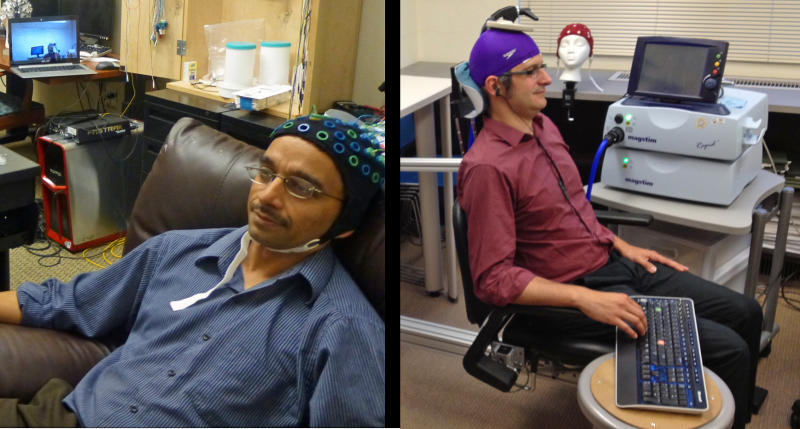
A research, recently published on the journal Proceedings of the National Academy of Sciences, suggests that a correlate of a body-ownership illusion is that the virtual type of body carries with it a set of temporary changes in perception and behaviours that are appropriate to that type of body.

A new study, published in the New England Journal of Medicine, examined whether or not higher glucose levels without diabetes was a risk factor for dementia.  Diabetes is already a known risk factor for dementia, but this study aimed to determine if the risk factor for diabetes is a risk factor for dementia.  Studying 2,067 participants without dementia, 232 of which already had diabetes, the researchers collected follow-up data after approximately seven years.  They found a significantly higher risk of dementia in individuals with higher than average blood glucose even if they did not have diabetes. Meanwhile, a study by researchers at Umeå University in Sweden suggests nine different factors that can increase the risk of developing dementia before age 65. The results have been published by the journal JAMA Internal Medicine.

Meditating before lectures can lead to better grades according to a new experimental study by George Mason University professor Robert Youmans and University of Illinois doctoral student Jared Ramsburg.

Researchers at Johns Hopkins have uncovered a protein switch that can either increase or decrease memory-building activity in brain cells, depending on the signals it detects. Its dual role means the protein is key to understanding the complex network of signals that shapes our brain’s circuitry, the researchers say.

Different parts of the brain are affected in women with autism than in men with autism, according to a new study.

Ending a 30-year search by scientists, researchers at Boston Children’s Hospital have identified two proteins in the inner ear that are critical for hearing, which, when damaged by genetic mutations, cause a form of delayed, progressive hearing loss.

Researchers have found human brains ‘divide and conquer’ when people learn to navigate around new environments. The research by UQ’s Queensland Brain Institute (QBI) could provide hope for people with spatial memory impairments.

Researchers have discovered how genetic mutations linked to Parkinson’s disease might play a key role in the death of brain cells, potentially paving the way for the development of more effective drug treatments.

The largest genome-wide study of its kind has determined how much five major mental illnesses are traceable to the same common inherited genetic variations. Researchers funded in part by the National Institutes of Health found that the overlap was highest between schizophrenia and bipolar disorder; moderate for bipolar disorder and depression and for ADHD and depression; and low between schizophrenia and autism. Overall, common genetic variation accounted for 17-28 percent of risk for the illnesses.

Weekly Neuroscience Update

sad music

Sad music might actually evoke positive emotions reveals a new study by Japanese researchers. The findings help to explain why people enjoy listening to sad music, say Ai Kawakami and colleagues from Tokyo University of the Arts and the RIKEN Brain Science Institute, Japan.

Extroverts may be more outgoing and cheerful in part because of their brain chemistry, reports a study by Cornell neuroscientists.

Researchers at Neuroscience Research Australia (NeuRA) have discovered that the region of the brain called the orbitofrontal cortex plays a key role in linking emotion and memories. The finding comes from a new study, which demonstrates that patients with frontotemporal dementia (FTD) lose the “emotional content” of their memories.

Researchers in Oxford have demonstrated a significant improvement in the treatment of advanced Parkinson’s disease with deep brain stimulation.

In a study examining how bilingual children learn the two different sound systems of languages they are acquiring simultaneously, researchers have discovered insights that indicate children can learn two native languages as easily as they can learn one.

Scientists have developed a method with which the chances of success of a surgical procedure for temporal lobe epilepsy can be accurately predicted.

Patient Plays Guitar During Brain Surgery To Treat Parkinson’s

Brad Carter Plays Guitar During Brain Surgery To Treat Parkinson’s

To mark Ronald Reagan UCLA Medical Center’s 500th deep brain stimulation operation last Thursday, surgeons performed the world’s first live-Vined brain surgery.

The operation, which lead neurologist Dr. Nader Pouratian described as “textbook” brain pacemaker implant surgery, was documented with Vine, a six-second video medium, and with Instagram photos on the hospital’s Twitter account in real time on patient Brad Carter, an actor diagnosed with the progressive neurological disorder essential tremor in 2006.

“Not everyone gets to experience a surgery, and more specifically an awake brain surgery,” Pouratian said in a phone interview with The Huffington Post. “I thought it was a great opportunity to share with the world.”

Deep brain stimulation is a therapy for people with Parkinson’s disease, that  involves inserting a pacemaker that emits electronic impulses to affected areas of the brain, lessening tremor symptoms. At UCLA, the patient is conscious during the surgery and is asked to perform tests so that doctors can ensure the pacemaker is properly placed.

Carter’s disease made his hands shake and his eyes twitch, affecting his ability to play the guitar. He had asked that he be allowed to strum his guitar during the operation to see if the pacemaker improved his playing ability.
Vine videos from the surgery show Carter’s guitar skills get stronger as physicians located the best place to leave the pacemaker.

Weekly Neuroscience Update

medium_46044113

A research team at Northwestern University are studying the connection between memory and sleep, and the possibilities of boosting memory storage while you snooze.

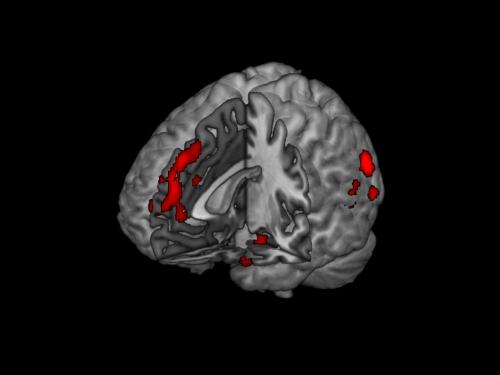
For the first time, scientists have used a new combination of neural imaging methods to discover how the human brain adapts to injury. The research, published in Cerebral Cortex, shows that when one brain area loses functionality, a “back-up” team of secondary brain areas immediately activates, replacing not only the unavailable area but also its confederates.

New research suggests that testing a portion of a person’s saliva gland may be a way to diagnose Parkinson’s disease. The study was released today and will be presented at the American Academy of Neurology’s 65th Annual Meeting in San Diego, March 16 to 23, 2013.

In a promising finding for epileptic patients suffering from persistent seizures known as status epilepticus, researchers have reported that new medication could help halt these devastating seizures.

Tübingen neuroscientists have shown how decision-making processes are influenced by neurons.

EPFL scientists find evidence that psychological wounds inflicted when young leave lasting biological traces—and a predisposition toward violence later in life

The production of new neurons, known as neurogenesis, was found to be induced in the adult normal cortex by the antidepressant fluoxetine, as reported in a study published online last week in Neuropsychopharmacology. This finding highlights the potential neuroprotective response induced by this antidepressant drug. It also lends further support to the thesis that induction of adult neurogenesis in cortex is a relevant prevention/treatment option for neurodegenerative diseases and psychiatric disorders.

photo credit: Toni Blay via photopin cc

Weekly Neuroscience Update

Mind wandering may increase creative thinking, according to a new international study.

Simple mental activity such as reading, writing, playing games and doing puzzles may protect brain health in old age, according to a new study.

Reduced production of myelin, a type of protective nerve fiber that is lost in diseases like multiple sclerosis, may also play a role in the development of mental illness, according to researchers at the Graduate School of Biomedical Sciences at Mount Sinai School of Medicine.

A small molecule known to regulate white blood cells has a surprising second role in protecting brain cells from the deleterious effects of stroke, Johns Hopkins researchers report.

Scientists have revealed the minutely detailed pain map of the hand that is contained within our brains, shedding light on how the brain makes us feel discomfort and potentially increasing our understanding of the processes involved in chronic pain.

People with Parkinson’s disease benefit from exercise programs on stationary bicycles, with the greatest effect for those who pedal faster, according to a study presented at the annual meeting of the Radiological Society of North America (RSNA).

A new method to study widespread networks of neurons responsible for our memory has been discovered by scientists from the Max Planck Institute for Biological Cybernetics.

The first study to estimate rates of traumatic brain injury (TBI), without relying on official figures, suggests the worldwide incidence of TBI could be six times higher than previously estimated.

MRI shows changes in the brains of people with post-concussion syndrome (PCS), according to a new study published online in the journal Radiology. Researchers hope the results point the way to improved detection and treatment for the disorder.

photo credit: pamlau.com via photopin cc

Weekly Neuroscience Update

Image: Pixmac.com

Gym-style exercise may improve not only general health in middle age, but also brain function, according to new research.

Researchers at Oregon Health & Science University have discovered that blocking a certain enzyme in the brain can help repair the brain damage associated with multiple sclerosis and a range of other neurological disorders.

Researchers at the University of Minnesota’s Center for Magnetic Resonance Research (CMRR) have found a small population of neurons that is involved in measuring time.

Two proteins have a unique bond that enables brain receptors essential to learning and memory to not only get and stay where they’re needed, but to be hauled off when they aren’t, researchers say.

Scientists have discovered that the brain circuits we engage when we think about social matters, such as considering other people’s views, or moral issues, inhibit the circuits that we use when we think about inanimate, analytical
things, such as working on a physics problem or making sure the numbers add up when we balance our budget. And they say, the same happens the other way around: the analytic brain network inhibits the social network.

Lund University researchers plan to use optogenetics to stimulate neurons to release more dopamine to combat Parkinson’s disease.

A new finding could lead to strategies for treating speech loss after a stroke and helping children with dyslexia. New research links motor skills and perception, specifically as it relates to a second finding – a new understanding of what the left and right brain hemispheres “hear.”

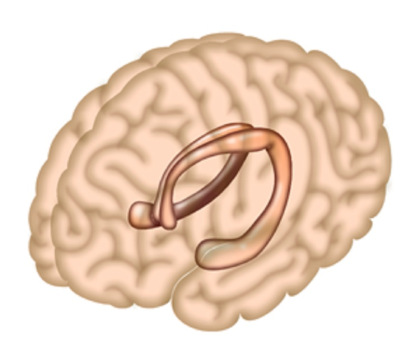
UCLA researchers have for the first time measured the activity of a brain region known to be involved in learning, memory and Alzheimer’s disease during sleep. They discovered that this region, called the entorhinal cortex, behaves as if it’s remembering something, even during anesthesia–induced sleep — a finding that counters conventional theories about sleep-time memory consolidation.