Weekly Neuroscience Update

161206110138_1_540x360.jpg

Neuroscientists at the University of Bristol are a step closer to understanding how the connections in our brain which control our episodic memory work in sync to make some memories stronger than others. The findings, published in Nature Neuroscience, reveal a previously unsuspected division of memory function in the pathways between two areas of the brain, and suggest that certain subnetworks within the brain work separately, to enhance the distinctiveness of memories.

A new study pinpoints the brain area responsible for forming direct links between environmental stimuli and enhanced focus.

Every few seconds, our eyelids automatically shutter and our eyeballs roll back in their sockets. So why doesn’t blinking plunge us into intermittent darkness and light? New research led by the University of California, Berkeley, shows that the brain works extra hard to stabilize our vision despite our fluttering eyes.

Our personality traits are linked to differences in the thickness and volume of various parts of our brains, an international study has suggested.

Researchers have found significant differences in the brains of teens with bipolar disorder that attempt to take their lives over those with the disorder who have never attempted suicide.

Women with lower estrogen levels may be more susceptible to developing PTSD according to new research.

A new study raises the question of whether a genetic mutation associated with neurodegeneration in one environment could act in a positive way in a different setting.

Researchers report early indicators of depression and anxiety may be evident in the brain from birth.

A cutting edge, non-invasive brain stimulation technique could improve cognitive control for people with conditions such as schizophrenia and autism.

A new computerized ‘mirror game’ has been shown to give more accurate diagnosis of schizophrenia than clinical interviews.

A new study reports on how a single instance of extreme stress can lead to long term neurological changes and trauma.

Social difficulties in people with autism are exacerbated by how other people perceive them at first meeting, researchers say.

Finally this week, researchers have revealed regions of the brain implicated in delusional misidentification syndromes.

Weekly Neuroscience Update

adult-1868015_960_720

A new study sheds light on how the brain helps us to learn and make decisions in the real world.

Scientists have shown for the first time that non-invasive brain stimulation can be used like a scalpel, rather than like a hammer, to cause a specific improvement in precise memory.

Neurons in the subiculum appear to encode the current axis of travel, a new study reports.

A new study has shown for the first time that cognitive behaviour therapy (CBT) strengthens specific connections in the brains of people with psychosis, and that these stronger connections are associated with long-term reduction in symptoms and recovery eight years later.

Researchers have discovered a mechanism the brain uses to help compensate when noise obscures speech sounds.

An international team of researchers has found evidence that the specific type of protein clumps in a person’s brain might help identify different ‘types’ of Alzheimer’s disease.

A new technology that allows researchers to examine circulation in the brain could help to identify early signs of neurological problems.

A group of neurons in the forebrain release dopamine when activated by visual or tactile stimuli, a new study reports.

Finally this week, researchers report using neuroimaging to map the brains of preterm babies soon after their born could hold clues as to possible disabilities they may develop.

Weekly Neuroscience Update

perception-reality-neurosciencenews.jpg

This study examined how flowers evolve diluted nectar, even though bats prefer higher concentrations of sugar. It successfully integrated psychophysics and evolutionary biology. NeuroscienceNews.com image adapted from the LSU Health press release.

Perception can cause the evolution of certain traits, a new study reports.

The part of the brain that specializes in recognizing faces becomes denser with tissue over time, new research finds. The study also showed that these changes in brain structure correlated with the ability to recognize faces.

According to researchers, the entorhinal cortex can replay memories of movement without hippocampal input.

A new study led by scientists at The Scripps Research Institute (TSRI) sheds light on how the brain stores memories. The research, published recently in the journal eLife, is the first to demonstrate that the same brain region can both motivate a learned behaviour and suppress that same behaviour.

A collection of studies offers new insight into the role dopamine plays in schizophrenia.

Hormonal fluctuations women undergo make them particularly sensitive, compared to men, to the addictive properties of cocaine, according to scientists.

New research shows that bilingual people are great at saving brain power.

Scientists have identified the physical connection through which the prefrontal cortex inhibits instinctive behaviour.

Researchers have developed a new computational model that could help shed light on the role of inhibitory neurons.

Examining postmortem brains, researchers discover the state of glia remains consistent as we age and could be used to predict a person’s age at death.

A new technology that allows researchers to examine circulation in the brain could help to identify early signs of neurological problems.

A new study reports marijuana users have lower blood flow to the hippocampus, an area of the brain associated with memory and learning.

Understanding how memory can shape our perception of the present could help people with learning disorders to stay on task, researchers believe.

Finally this week, the brain automatically places more value on the opinions of people who appear to be confident, a new study reports.


Weekly Neuroscience Update

band-691224_960_720.jpgIt may be possible to categorise the brain strategies used by professional musicians based on how they prioritise sight vs. sound when learning to play new music, according to a new study.

When we are in a deep sleep our brain’s activity ebbs and flows in big, obvious waves, like watching a tide of human bodies rise up and sit down around a sports stadium. It’s hard to miss. Now, Stanford researchers have found, those same cycles exist in wake as in sleep, but with only small sections sitting and standing in unison rather than the entire stadium. It’s as if tiny portions of the brain are independently falling asleep and waking back up all the time.

Researchers report the hippocampus isn’t just important for remembering past events, it also plays a vital role in future planning.

According to a new study, the brain blocks the ability for creating new memories shortly after waking in order to prevent the disruption of the stabilisation of memory consolidation that occurs during sleep.

Patients with depression can be categorised into four unique sub-types defined by distinct patterns of abnormal connectivity in the brain, according to new research.

The inability to hear subtle changes in pitch, a common and debilitating problem for people with schizophrenia, is due to dysfunctional N-methyl-D-aspartate (NMDA) brain receptors, according to a study by Columbia University Medical Center (CUMC) researchers. The study also shows that this hearing issue can be improved by combining auditory training exercises with a drug that targets NMDA receptors.

Researchers report abnormal activation in areas that respond to normal pain when a person with CRPS witnesses another person experience painful stimuli.

A new study has revealed the way that the brain handles the often noisy environments found on this planet, with the results explaining why animals, including humans, can easily cope with both the still and quiet of early-morning parks to the bustle and hubbub of cafés and streets. The researchers discovered that as auditory neurons become more familiar with a sound environment, they speed up their adaption to the noisiness of that environment.

The human brain is predisposed to learn negative stereotypes, according to research that offers clues as to how prejudice emerges and spreads through society.

Finally this week, researchers have conducted the first study of its kind, using proton magnetic resonance spectroscopy (MRS) to look at brain regions in both adults and children who stutter.


Weekly Neuroscience Update

dog-624951_960_720.jpg

People have a remarkable ability to remember and recall events from the past, even when those events didn’t hold any particular importance at the time they occurred. Now, researchers reporting in the journal Current Biology on November 23 have evidence that dogs have this kind of “episodic memory” too.

PET imaging of new neurons in the brain promises to advance our understanding and treatment of depression.

Research from Mayo Clinic included in the November issue of JAMA Neurology identifies a new biomarker for brain and spinal cord inflammation, allowing for faster diagnosis and treatment of patients.

The amount of GABA in person’s dorsolateral prefrontal cortex is linked the ability to keep several things in mind simultaneously. to new research.

A new study offers important insight into how Alzheimer’s disease begins within the brain. The researchers found a relationship between inflammation, a toxic protein and the onset of the disease. The study also identified a way that doctors can detect early signs of Alzheimer’s by looking at the back of patients’ eyes.

An international research team has found that when the brain “reads” or decodes a sentence in English or Portuguese, its neural activation patterns are the same.

In a cross-domain study, researchers have discovered unexpected cells in the protective membranes that enclose the brain, the so called meninges. These ‘neural progenitors’ – or stem cells that differentiate into different kinds of neurons – are produced during embryonic development. These findings show that the neural progenitors found in the meninges produce new neurons after birth – highlighting the importance of meningeal tissue as well as these cells’ potential in the development of new therapies for brain damage or neurodegeneration. A paper highlighting the results was published in the leading scientific journal Cell Stem Cell.

A new study reports that a single stressful event may cause long term consequences in the brain.

Researchers have identified previously unknown neural circuitry that plays a role in promoting satiety, the feeling of having had enough to eat. The discovery revises the current models for homeostatic control — the mechanisms by which the brain maintains the body’s status quo — of feeding behaviour. Published online today in Nature Neuroscience, the findings offer new insight into the regulation of hunger and satiety and could help researchers find solutions to the ongoing obesity epidemic.

Finally this week, learning by taking practice tests, a strategy known as retrieval practice, can protect memory against the negative effects of stress, according to new research.


Weekly Neuroscience Update

person-802090_960_720.jpg

Researchers explore how memory consolidation occurs during sleep.

Fetal brains use a special amplifier in order to transmit signals, according to research published in the journal eLife.

Scanning ultrasound appears to slow down ageing in healthy brains, a new study reports.

Two interconnected brain areas – the hippocampus and the entorhinal cortex – help us to know where we are and to remember it later. By studying these brain areas, researchers have uncovered new information about how dysfunction of this circuit may contribute to memory loss in Alzheimer’s disease. Their results appear in Cell Reports.

A new tool is allowing researchers to interactively explore the hierarchical processes that happen in the brain when it is resting or performing tasks.

Researchers have identified a set of heat sensing neurons that prompt both nervous system and behavioral changes that help cool the body.

As estrogen levels rise in women, the volume of the hippocampus increases, a new study reports.

A new study reports on how the perceptual mechanisms in a person’s brain adapt in response to images of one’s own or other people’s bodies that have been manipulated to look thinner or fatter than they really are

Researchers have found evidence that challenges the intuitive division between a ‘deciding’ and a ‘responding’ stage in decision making.

Finally this week, a new method for inducing, modelling and measuring visual hallucinations in healthy individuals suggests these complex experiences share a common underlying mechanism with normal visual perception.


Weekly Neuroscience Update

taste.jpg

Researchers report the gustatory cortex relies on all the senses to anticipate taste.

A research group has identified an enzyme whose production is turned off in nerve cells of the frontal lobe when alcohol dependence develops. The deficiency in this enzyme leads to continued use of alcohol despite adverse consequences.

Scientists have identified a brain circuit that’s indispensable to the sleep-wake cycle.

Studying brain electrical activity of volunteers, researchers found that language acquisition enhances brain plasticity and capacity for learning. In particular, they note that early language learning plays a significant role in the rapid formation of memory circuits for coding new information.

A new study reports that relaxing flexed muscles in your foot can reduce the ability of your hands to respond to stimulation.

We all know that we can quickly lose cardiovascular endurance if we stop exercising for a few weeks, but what impact does the cessation of exercise have on our brains? New research examined cerebral blood flow in healthy, physically fit older adults (ages 50-80 years) before and after a 10-day period during which they stopped all exercise. Using MRI brain imaging techniques, they found a significant decrease in blood flow to several brain regions, including the hippocampus, after they stopped their exercise routines.

Brain cells grow faster in children with some forms of autism due to distinct changes in core cell signaling patterns, according to new research.

Researchers have identified a brain mechanism that could be a drug target to help prevent tolerance and addiction to opioid pain medication, such as morphine, according to a study by Georgia State University and Emory University. The findings, published in the Nature journal Neuropsychopharmacology in August, show for the first time that morphine tolerance is due to an inflammatory response produced in the brain. This brain inflammation is caused by the release of cytokines, chemical messengers in the body that trigger an immune response, similar to a viral infection.

A new study reports researchers discover a signaling pathway that enables cells to reach their destinations through repulsion.

To remember events in the order they occur, the brain’s neurons function in a coordinated way that is akin to a symphony, a team of New York University scientists has found. Their findings offer new insights into how we recall information and point to factors that may disrupt certain types of memories.

Researchers have mapped out a serotonin-driven anxiety circuit that may explain the side effects of anxiety and fear experienced by some patients taking SSRIs. 

A new study published in the journal Neuron, delves into the anatomy and function of the striatum by employing cutting-edge strategies to comprehensively map one of the brain’s lesser-known forms of organization.

Finally this week, a new paper looks at why some of us are extreme thrill seekers, and others don’t even enjoy a gentle roller coaster ride.


Weekly Neuroscience Update

hearing-loss-frontal-cortex-neurosciencenews

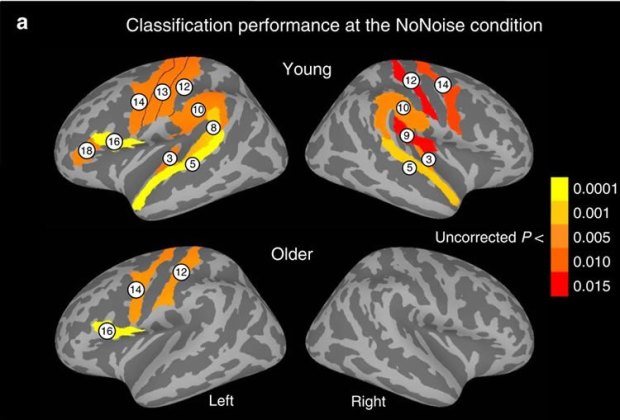
Regions with significant phoneme classification at the NoNoise condition for each group. NeuroscienceNews.com image is credited to the researchers/Nature Communications.

Researchers have pinpointed the specific part of the brain that older adults rely on to differentiate speech sounds in background noise, which could revolutionise the treatment of hearing loss.

New research has identified how cells protect themselves against ‘protein clumps’ known to be the cause of neurodegenerative diseases including Alzheimer’s, Parkinson’s and Huntington’s disease.

Transcranial alternating current stimulation may help to improve memory when targeted to a specific kind of brain activity achieved during sleep.

Researchers in the US and Australia have made a breakthrough discovery in the international quest to discover a new and potentially effective vaccine targeting the pathological proteins associated with Alzheimer’s disease.

A new study identifies different brain regions that become active when a strategy of categorisation is applied.

Researchers have developed a new machine learning system that analyses the entire human genome to predict which genes may cause autism spectrum disorder, raising the number of genes that could be linked to the disorder from 65 to 2,500.

Results from a study published in the online publication Nature Genetics finds 15 genomic regions that are significantly associated with a diagnosis of depression.

According to researchers, age related changes in the organization of neural networks when performing short term memory tasks may help to compensate for other aspects of brain aging.

Researchers report smoking related deficits in dopamine return to normal three months after quitting.

Genetic changes associated with Parkinson’s disease have been found in liver, fat, immune and developmental cells, a new study reports.

Brain imaging, twin studies and transcriptome data reveal genetic relationships between lobes.

Finally this week, a new study suggests regular physical activity may lead to greater hippocampal volume and could stave off dementia, especially in older people.


Weekly Neuroscience Update

iphone-1283665_960_720

Sending text messages on a smartphone can change the rhythm of brain waves, according to a new study published in Epilepsy & Behavior.

An international research team has found that our perception is highly sensitised for absorbing social information. The brain is thus trained to pay a great degree of attention to everyday actions. The results are reported in the journal Consciousness and Cognition.

A new study unravels the mechanisms driving excess brain growth that affects as many as 30 percent of people with autism.

Researchers have developed a new technology that could lead to new therapeutics for traumatic brain injuries. The discovery, published in Nature Communications, provides a means of homing drugs or nanoparticles to injured areas of the brain.

Researchers have coupled machine learning with neuroimaging to detect early forms of dementia.

Neuroscientists have come up with a way to observe brain activity during natural reading. It’s the first time researchers have been able to study the brain while reading actual texts, instead of individual words. The research has potential implications for understanding dyslexia and other reading deficits.

A new study links hippocampal inflammation in multiple sclerosis with an increased risk of developing depression.

In a partnership melding neuroscience and electrical engineering, researchers have developed a new technology that will allow neuroscientists to capture images of the brain almost 10 times larger than previously possible – helping them better understand the behavior of neurons in the brain.

Researchers report acquiring new memories can interfere with old ones, making them more likely to be forgotten.

A European study has shown that the dopamine D2 receptor is linked to the long-term episodic memory, which function often reduces with age and due to dementia. This new insight can contribute to the understanding of why some but not others are affected by memory impairment. The results have been published in the journal PNAS.

Finally this week, a new study shows how new linguistic information is integrated into the same brain areas used for your native language.

Weekly Neuroscience Update

cheese

Cheese contains a chemical found in addictive drugs, scientists have found.

Chronic marijuana use disrupts the brain’s natural reward processes, according to researchers at the Center for BrainHealth at The University of Texas at Dallas.

Understanding the relation of dopamine to network activity could improve schizophrenia treatment.

Using MRI brain scans, researchers have determined there is an association between the extent of disruption to the blood-brain barrier and the severity of bleeding following a stroke.

Researchers have proposed a computational model that could help explain multisensory integration in humans.

Scientists have developed a blood test that could identify which people with depression will respond to treatment so that patients can avoid spending months taking antidepressants that do not help them.

Researchers have discovered a unique pattern of scarring in the brains of those who were exposed to blast brain injuries that differs from those exposed to other types of head injury.

Intensive physical exercise four hours after learning is the key to remembering information learnt, say Dutch researchers.

Scientists have discovered a new cause of Parkinson’s disease – mutations in a gene called TMEM230. This appears to be only the third gene definitively linked to confirmed cases of Parkinson’s disease.

Finally this week, a protein called Scribble appears to orchestrate the intracellular signaling process for forgetting, a new study reports.