The brain is a complex organ responsible for regulating various bodily functions, including movement, sensation, cognition, and emotion. It is divided into different regions, each with its own specific functions and structures. Over the years, scientists have named these parts of the brain based on their location, shape, or function. By understanding the names of these parts, scientists can better understand the role each plays in the overall function of the brain. In this post, we will explore some of the most common names of brain regions and how they got their names.
Hippocampus: A Seahorse in the Brain
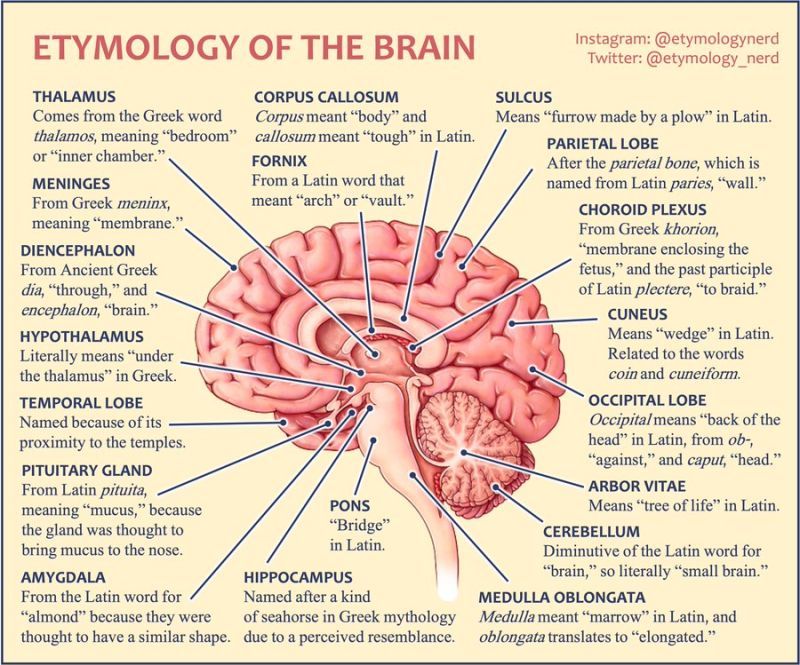
The hippocampus, a crucial structure for memory and learning, derives its name from the ancient Greek word “hippos,” meaning horse, and “kampos,” meaning sea monster. The name is a nod to the structure’s curved shape, resembling that of a seahorse. This term was first coined by the renowned anatomist Julius Caesar Aranzi in the 16th century, who recognized the hippocampus’s distinctive appearance in the brain.
Amygdala: The Almond-Shaped Emotion Center
Nestled deep within the temporal lobe, the amygdala is responsible for processing emotions, particularly fear and pleasure. Its name is derived from the Latin word “amygdala,” which means almond. The term reflects the amygdala’s characteristic almond shape and was popularized by the anatomist Albrecht von Haller in the 18th century.
Thalamus: The Inner Chamber
The thalamus, a central relay station for sensory information, owes its name to the Greek word “thalamus,” meaning inner chamber or bed. This choice of nomenclature emphasizes the thalamus’s role in relaying sensory signals to different areas of the brain, acting as a gateway for information processing.
Cerebellum: The Little Brain
Sitting at the back of the skull, the cerebellum is involved in motor control and coordination. Its name, “cerebellum,” is a Latin diminutive form of “cerebrum,” meaning brain. The term highlights the cerebellum’s smaller size compared to the cerebral hemispheres while underscoring its critical role in fine-tuning motor movements.
Frontal Lobe: The Foremost Part of the Brain
The frontal lobe, responsible for executive functions such as decision-making and personality, gets its name from its location at the front of the cerebral cortex. The term “frontal” is derived from the Latin word “frons,” meaning forehead, emphasizing the anterior position of this brain region.
Occipital Lobe: The Region at the Back of the Head
As the name suggests, the occipital lobe is located at the rear of the cerebral cortex, playing a key role in visual processing. The term “occipital” is derived from the Latin word “occiput,” meaning back of the head. This naming convention reflects the lobe’s anatomical position and its primary function in vision.
From the seahorse-shaped hippocampus to the almond-shaped amygdala, these structures’ names convey their physical characteristics and the curiosity of the scientists who explored the brain throughout history. Exploring the brain’s intricacies remains an ongoing and fascinating journey as our understanding of it advances.







 inside-the-brain.com