Weekly Neuroscience Update

genetics-autism-neurosciencenews.jpg

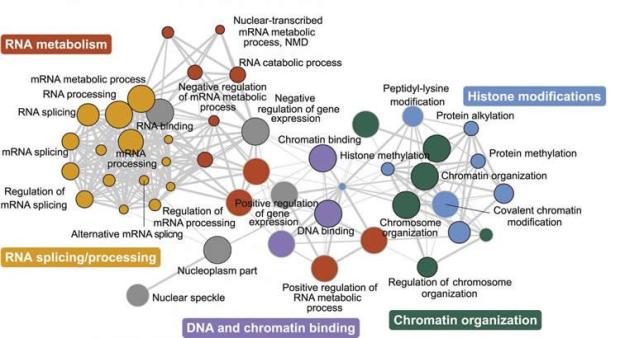
A network of more than 200 genes encoding proteins with diverse cellular roles was revealed in a non-biased CRISPR screen for regulators of microexon splicing. Many of the genes have previously been linked to autism. Image is credited to Thomas Gonatopoulos-Pournatzis.

Using CRISPR techniques, researchers have uncovered a genetic network linked to autism.

Researchers find evidence of cognitive issues and miRNA biomarkers, indicating brain injuries from concussions or head-to-head contact, in college football players. The findings indicated lasting damage caused by sports-related concussions occur earlier than expected.

A new method for studying the mircobiome has allowed researchers to identify a connection between metabolism in gut bacteria and the development of diabetes.

A new study has identified unique functional brain networks associated with characteristic behaviors of autism spectrum disorder (ASD) in 12- and 24-month old children at risk for developing ASD. The study is published in Biological Psychiatry: Cognitive Neuroscience and Neuroimaging.

Researchers have identified a brain network that may control the diversion of attention to focus on potential threats. Dopamine, they report, is key to the process.

New research has found preliminary evidence that high-intensity interval exercise temporarily impairs reward learning mechanisms in the brain. The research, which was published in Physiology & Behavior, indicates that this type of exercise does not improve all aspects of cognitive function.

A new study reports aerobic exercise can have antidepressant effects for patients with major depressive disorder.

Researchers propose a new theory of human thinking, suggesting our brain’s navigation system is key to thinking. This may explain why our knowledge seems to be organized in spatial fashion.

Scientists have solved a 125-year-old mystery of the brain, and, in the process, uncovered a potential treatment for acquired epilepsy.

A new neuroimaging study reveals the brains of teenage girls who self-harm show similar features to adults with borderline personality disorder.

Researchers were able to distinguish between children with or without ASD diagnosis, thanks to a new saliva-based biomarker panel. Researchers report the test can be used in children as young as 18 month, assisting in early diagnosis of autism.

Finally this week, a new study reveals common brain activity patterns associated with depressive moods.


Weekly Neuroscience Update

mini-retina-eye-brain-neurosciencenews

Axons of retinal ganglion cells (red) derived from human pluripotent stem cells bundle together and navigate their environment using growth cones (green), similar to human development of the optic nerve. NeuroscienceNews.com image is credited to Department of Biology, School of Science at IUPUI

Biologists are growing ‘mini retinas’ in the lab from stem cells to mimic the growth of the human retina. The researchers hope to use the research to restore sight when critical connections between the eye and the brain are damaged. These models also allow the researchers to better understand how cells in the retina develop and are organized. These results are published online in Scientific Reports, a Nature Research journal.

Researchers have discovered how the brain attempts to compensate for poor performance in tasks which require complicated transformation, such as writing your name backwards.

Observing the brain’s response to repeated stimuli has helped KAUST researchers develop a method for modeling connectivity patterns in neural networks. Mapping connectivity patterns will help to better understand brain function, ultimately improving diagnosis and treatment of brain diseases and mental disorders.

A new study reveals unique connections within brain networks in children on the autism spectrum. Researchers say, in ASD, the amygdala shows marked differences in connection with the occipital cortex than in typically developing children.

Researchers have identified key differences between the way males and females with schizophrenia process the emotional states of others than those without the condition. The study reports those with schizophrenia use less complex brain regions than healthy controls to process other people’s emotions.

According to a new study, certain behavioral risk factors strongly predict the likelihood of a person developing depression, and these risk factors change as we age.

Using neuroimaging technology, researchers have identified three different subtypes of depressive disorder, including one that seems to be untreatable by common SSRI antidepressants.

Finally this week, researchers report those who have had appendectomies have a reduced risk of developing Parkinson’s disease. A new study reveals the appendix acts as a reservoir for proteins associated with the neurodegenerative disease.

Weekly Neuroscience Update

neuron-diversity-neurosciencenw.jpg

Different gene variants ensure the diversity of neurons by chance. Image from University of Basel, Biozentrum.

A new mathematical model has shown how different gene variants enable random diversity in neurons.

Common genetic variants may underlie autism spectrum disorder and schizophrenia across human populations, according to a study appearing September 11th in the journal Cell Reports.

Researchers report learning rates are enhanced when conditioned stimuli is presented during resting phase of the cardiac cycle.

Cognitive neuroscientists have found out more about how the bilingual brains works, according to a new research paper published in the journal Proceedings of the National Academy of Sciences.

A new study reports environmentally induced epigenetic alterations have a greater impact on intelligence that previously believed.

Researchers have identified the variables that lead the brain to apply specific defensive strategies while under the threat of danger, and implicate a specific pair of neurons in this process.

Using AI technology, researchers provide new insight into how the human brain connects individual episodic memories to help solve problems.

A new study reports binge drinking affects gene expression in both males and females differently. In females who binge drink, genes linked to hormone signaling and immune function become altered, whereas in males, alterations occur to genes associated with nerve signaling.

Researchers report the brain controls speech production in a similar manner to how it controls the production of arm and hand movements. 

Is pain treatment more helpful if it is provided by a person from our own social group, or is the help of a stranger more efficient? A study conducted by researchers from the Universities of Wuerzburg, Amsterdam and Zurich investigated this question and found that people experience a stronger pain relief if they are treated by a person that belongs to a different social group.

A new study unites cognitive science and information theory, reporting our brains are structured to make the best possible decisions given their limited resources.

Finally, this week, using EEG, researchers have identified smaller spikes in the P3 brain wave is associated with aggressive behavior in young children. The findings could help to diagnose toddlers with aggressive tendencies before their behaviors become ingrained, researchers say.


Weekly Neuroscience Update

mood-brain-signals-neurosciencenews.jpg

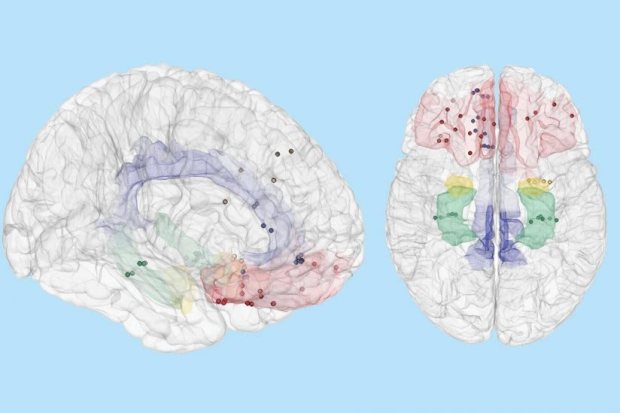
Mood is represented across multiple sites in the brain rather than localized regions, which makes decoding them a computational challenge, according to a USC expert. NeuroscienceNews.com image is credited to Sani et. al., Nature Biotechnology.

Researchers have built a decoder which is able to translate neural signals into mood variations.

How and why human-unique characteristics such as highly social behavior, languages and complex culture have evolved is a long-standing question. A research team led by Tohoku University in Japan has revealed the evolution of a gene related to such human-unique psychiatric traits.

A new study reports mast cells play a key role in determining sex differences in the developing brain.

An inhaled form of a high blood pressure medication has potential to treat certain types of anxiety as well as pain, according to a new study by the Centre for Addiction and Mental Health (CAMH).

Functional connectivity within a specific neural network helps dampen a newborn’s brain activity in response to pain, researchers report.

A new blood test can help identify your body’s precise internal time clock in relation to external time. Researchers say the test could help examine the impact of misaligned circadian clocks in a wide range of diseases.

Researchers report a neural network called the isthmic system helps us to select visual objects that catch our attention.

According to researchers, drumming for an hour a week helps improve learning at school for children on the autism spectrum. The study reports drumming not only improves dexterity, rhythm and timing for those with ASD, it also helps improve concentration and enhances communication with peers.

A new study reports those with ADHD are at an increased risk of developing Parkinson’s disease.

In one of the biggest breakthroughs in schizophrenia research in recent times, Professor Cynthia Shannon Weickert from Neuroscience Research Australia (NeuRA) and UNSW Sydney has identified immune cells in greater amounts in the brains of some people with schizophrenia.

Finally this week, esearchers are looking at what happens in the brain when we make snap decisions under stress.


Weekly Neuroscience Update

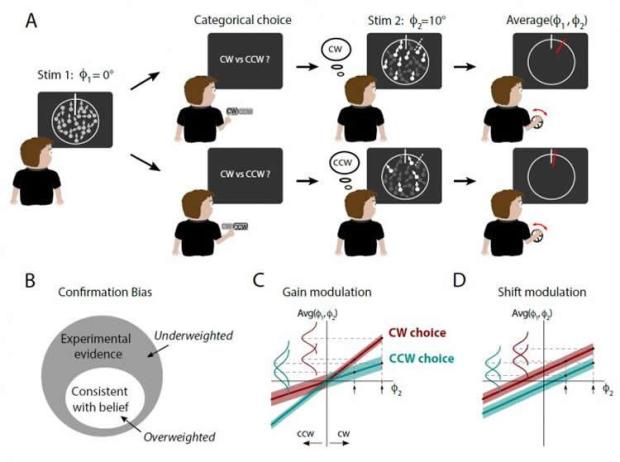
confirmation-bias-dots-neurosciencneews (1).jpg

This visual abstract depicts findings that people show confirmation bias even about which way dots are moving. Image is credited to Prat-Ortega & de la Rocha, Current Biology.

A new study reports people use confirmation bias, even when a decision they make has little to no consequence.

Analysis of data captured during a long-term study of aging adults shows that those who report being very sleepy during the day were nearly three times more likely than those who didn’t to have brain deposits of beta amyloid, a protein that’s a hallmark for Alzheimer’s disease, years later.

Researchers have created a computational model that helps explain how mental images drawn from memory can be explained by the firing of specific neurons.

According to a new study, probiotics may not be as effective as most believe. Researchers report many people’s digestive tracts prevent standard probiotics from successfully colonizing them.

A team of researchers has analysed what happens in the brain when humans want to voluntarily forget something.

Whether an individual develops a neurodevelopmental disorder like autism or ADHD and the severity of that disorder depends on genetic changes beyond a single supposedly disease-causing mutation. A new study led by researchers at Penn State reveals that the total amount of rare mutations — deletions, duplications, or other changes to the DNA sequence — in a person’s genome can explain why individuals with a disease-associated mutation can have vastly different symptoms. A paper describing the study appeared today in the journal Genetics in Medicine.

New research has shed new light on genetic processes that may one day lead to the development of therapies that can slow, or even reverse, how our cells age.

Researchers have identified a new neural mechanism that contributes to long term stress and PTSD. The study reports the mechanism is mediated by brain fluid in areas associated with stress response.

Finally this week, is the popular claim that the brain feels no pain substantiated? A new paper looks at the accuracy of the belief.

Weekly Neuroscience Update

179285_web.jpg

Image Credit: Kolbjørn Skarpnes & Rita Elmkvist Nilsen / NTNU Communication Division & Kavli Institute for Systems Neuroscience

Researchers at the Kavli Institute for Systems Neuroscience in Norway in have discovered a network of brain cells that express our sense of time within experiences and memories.

A new study reports a strong hand grip is correlated with better visual memory and reaction times in people with psychiatric disorders, such as schizophrenia.

Dr Max Ortiz Catalan of Chalmers University of Technology, Sweden, has developed a new theory for the origin of the mysterious condition, ‘phantom limb pain’. Published in the journal Frontiers in Neurology, his hypothesis builds upon his previous work on a revolutionary treatment for the condition, that uses machine learning and augmented reality.

Researchers report ADHD and conduct disorder exhibit similar, overlapping changes in the brain.

A new study in SLEEP, published by Oxford University Press, indicates that delaying school start times results in students getting more sleep, and feeling better, even within societies where trading sleep for academic success is common.

Scientists have identified a group of blood metabolites that could help detect some children with autism spectrum disorder (ASD). 

Researchers report the adverse cognitive effects associated with DBS in Pakinson’s patients are linked to a different neural pathway than the one responsible for the motor effects generated by the treatment.

According to a new study, people who have suffered a stroke are twice as likely to develop dementia.

Researchers have developed a new deep learning neural network that can identify speech patterns indicative of depression from audio data. The algorithm is 77% effective at detecting depression.

Finally this week, a new study reports genetic factors count for about 70% of stable academic achievement throughout schooling.


Weekly Neuroscience Update

eye-1132531_960_720.jpg

Where objects appear in a person’s visual field can affect the ability to determine what the object is, researchers say.

Scientists have identified the brain networks that allow you to think of an object name and then verbalize that thought. The study appeared in the July issue of BRAIN. It represents a significant advance in the understanding of how the brain connects meaning to words and will help with the planning of brain surgeries.

New research suggests that shifts in the bacteria within a child’s mouth could provide objective biomarkers for identifying autism spectrum disorder. 

Researchers studying the functional connections among parts of the brain are finding that the “fingerprint” of these patterns can be used to identify individuals over many years and to distinguish their relatives from strangers.

Breaking with the long-held idea that working memory has fixed limits, a new study suggests that these limits adapt themselves to the task that one is performing. 

Young children who are regularly engaged in conversation by adults may have stronger connections between two developing brain regions critical for language, according to a study of healthy young children that confirms a hypothesis registered with the Open Science Framework.

A new study reports estrogen and other sex hormones may be responsible for the higher prevalence of migraines in women.

New therapies could be on the horizon for people living with epilepsy or anxiety, thanks to a breakthrough discovery by an international team of researchers studying how proteins interact to control the firing of brain cells.

Researchers report the interaction between two regions of the prefrontal cortex may underlie our motivation to cling to a desirable notion about the future.

A new study sheds light on the role the caudate nucleus plays in pessimism. The study reports stimulating this area of the brain generates a negative outlook that clouds decision making.

Exercise can help prevent relapses into cocaine addiction, according to new research.

A new study reveals a short time meditating can help to boost cognitive performance. Researchers report students exposed to a ten-minute meditation tape were able to complete simple cognitive tasks more quickly and accurately than their peers.

Researchers report transcranial alternating current stimulation applied during sleep can help accelerate learning, memory and skill acquisition.

Heavy alcohol drinkers attempt to acquire alcohol despite the threat of a negative consequence more so than light drinkers, a study in Biological Psychiatry: Cognitive Neuroscience and Neuroimaging has found, and this behavior is associated with unique activation of brain circuitry in heavy drinkers.

Finally this week,  new neuroimaging study reveals the dorsolateral prefrontal cortex plays a vital role in suppressing the act of revenge.


Weekly Neuroscience Update

pianist-1149172_960_720.jpgTrained pianists have higher levels of brain wave synchronization when improvising pieces of music, a new study reveals.

A new study in SLEEP, published by Oxford University Press, indicates that delaying school start times results in students getting more sleep, and feeling better, even within societies where trading sleep for academic success is common.

Researchers have created a silicon mesh that can be crafted to help stimulate neurons, limbs and tissue.

Using a new advanced imaging technology, scientists have captured new patterns of molecular organization as connections between neurons strengthen during learning tasks.

A new study reports a strong hand grip is correlated with better visual memory and reaction times in people with psychiatric disorders, such as schizophrenia.

Children and adults diagnosed with brain conditions such as cerebral palsy, multiple sclerosis and dementia may be one step closer to obtaining new treatments that could help to restore normal function. Researchers have identified a molecule in white matter that prevents the brain from repairing itself following injury. By blocking the production of the molecule, researchers say it may allow an effective pathway for neuroregeneration.

A new study reveals both genetics and environment play a role in shaping brain connectivity.

A new mechanism regulating the early development of connections between the two sides of the nervous system has been identified in a paper published in eNeuro. The work demonstrates that neuronal activity is required for this process, a finding that may provide new insight into brain connectivity disorders such as autism.

Finally this week, a new Nature Communications study reveals 80 newly identified genes that may be linked to an increased risk of developing major depressive disorder.

Weekly Neuroscience Update

pianist-1149172_960_720.jpgTrained pianists have higher levels of brain wave synchronization when improvising pieces of music, a new study reveals.

A new study in SLEEP, published by Oxford University Press, indicates that delaying school start times results in students getting more sleep, and feeling better, even within societies where trading sleep for academic success is common.

Researchers have created a silicon mesh that can be crafted to help stimulate neurons, limbs and tissue.

Using a new advanced imaging technology, scientists have captured new patterns of molecular organization as connections between neurons strengthen during learning tasks.

A new study reports a strong hand grip is correlated with better visual memory and reaction times in people with psychiatric disorders, such as schizophrenia.

Children and adults diagnosed with brain conditions such as cerebral palsy, multiple sclerosis and dementia may be one step closer to obtaining new treatments that could help to restore normal function. Researchers have identified a molecule in white matter that prevents the brain from repairing itself following injury. By blocking the production of the molecule, researchers say it may allow an effective pathway for neuroregeneration.

A new study reveals both genetics and environment play a role in shaping brain connectivity.

A new mechanism regulating the early development of connections between the two sides of the nervous system has been identified in a paper published in eNeuro. The work demonstrates that neuronal activity is required for this process, a finding that may provide new insight into brain connectivity disorders such as autism.

Finally this week, a new Nature Communications study reveals 80 newly identified genes that may be linked to an increased risk of developing major depressive disorder.

Weekly Neuroscience Update

acting-memory-neurosciencenews.jpg

University of Chichester psychologists have studied prospective memory to accurately diagnose diseases of cognitive impairment. Image: University of Chichester.

Researchers say acting out scenarios may help to improve prospective memory. Poor prospective memory, researchers report, may be an early indicator of Alzheimer’s disease.

A new study using machine learning has identified brain-based dimensions of mental health disorders, an advance towards much-needed biomarkers to more accurately diagnose and treat patients.

A new report examines the effect stress can have on our bodies and general health.

Structural differences in the cerebellum may be linked to some aspects of autism spectrum disorder, according to a neuroimaging study from Columbia University Irving Medical Center (CUIMC).

A new study reports your body fat could be a predictor of cognitive decline. 

Researchers report blind people need additional timing cues to accurately judge relative locations of sounds, but those without visual impairments who were blindfolded could judge the relative location of sounds independently from timing cues.

 Finally this week, researchers report transcranial alternating current stimulation applied during sleep can help accelerate learning, memory and skill acquisition.