
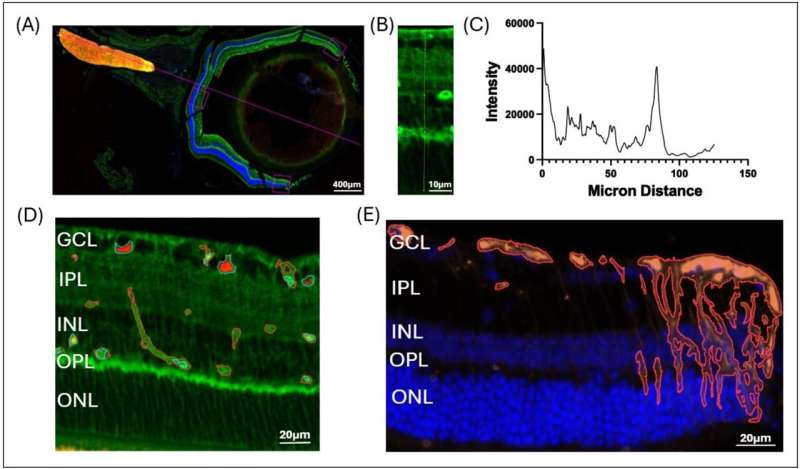
The eyes—specifically, the outer retina—may provide a window into early detection of Alzheimer’s disease long before irreversible brain damage occurs, according to new research from Houston Methodist. This discovery could dramatically change how the disease is diagnosed, monitored and treated.
New research indicates that the brain’s visual system feedback connections are not pre-wired but are shaped by early visual experiences.
Scientists have discovered that, in addition to the neocortex, a component of the human language network is present in the cerebellum, traditionally associated with motor coordination. Analysing brain scans of over 800 individuals, they found four cerebellar areas that activate during language tasks, with one area in the right posterior cerebellum dedicated specifically to language. This finding may alter our understanding of language learning and identify new targets for treating conditions such as aphasia.
A new study has found that a person’s object recognition ability, or the ability to distinguish visually similar objects, can predict who can spot an AI-generated face. The higher the ability, the easier it is for a person to tell the difference.
Researchers have found that “tuning” communication between the frontal and parietal lobes via non-invasive tACS led participants to act more unselfishly. In a study of 44 participants, those whose brain regions synchronised to a shared “gamma” rhythm were more likely to share money, suggesting that altruism is influenced by the coordination of specific brain networks rather than being a fixed trait.
People with greater exposure to air pollution face a higher risk of developing Alzheimer’s disease, according to a study published in the journal PLOS Medicine.
New research reveals that consistent cognitive engagement from childhood through late adulthood is associated with a significantly lower risk of Alzheimer’s disease. The study, which followed nearly 2,000 individuals, found that those with high “lifetime cognitive enrichment”—activities such as reading, learning languages, and visiting museums—delayed the onset of dementia symptoms by up to five years.
A new study finds that the brain learns better from spaced-out, rare events than from constant repetition, challenging 100 years of Pavlovian theory.
Researchers have developed a method to predict when someone is likely to develop symptoms of Alzheimer’s disease using a single blood test. In a study published in Nature Medicine, the researchers demonstrated that their models predicted the onset of Alzheimer’s symptoms within a margin of three to four years.
Finally this week, for the first time, scientists can record the full “electrical dialogue” occurring across an entire lab-grown human organoid.
 inside-the-brain.com