
Weekly Neuroscience Update

The phrase “practice makes perfect” has a neural basis in the brain. Researchers have discovered a set of common changes in the brain upon learning a new skill. They have essentially detected a neural marker for the reorganization the brain undergoes when a person practices and become proficient at a task.

Researchers at the University of East Anglia have made a discovery in neuroscience that could offer a long-lasting solution to eating disorders such as obesity.

A new study conducted by The Mind Research Network , shows that neuroimaging data can predict the likelihood of whether a criminal will reoffend following release from prison.

The ability to communicate in multiple languages not only provides doorways to new cultural and social experiences but also apparently promotes brain growth and staves off the onset of dementia and Alzheimer’s disease.

Researchers have discovered a potential way to decode your dreams, predicting the content of the visual imagery you’ve experienced on the basis of neural activity recorded during sleep.

Brain researchers at Barrow Neurological Institute have discovered that we explore the world with our eyes in a different way than previously thought. Their results advance our understanding of how healthy observers and neurological patients interact and glean critical information from the world around them.

In a study designed to differentiate why some stroke patients recover from aphasia and others do not, investigators have found that a compensatory reorganization of language function to right hemispheric brain regions bodes poorly for language recovery. Patients who recovered from aphasia showed a return to normal left-hemispheric language activation patterns. These results, which may open up new rehabilitation strategies, are available in the current issue of Restorative Neurology and Neuroscience.


Weekly Neuroscience Update

A run of poor sleep can have a potentially profound effect on the internal workings of the human body, say UK researchers.

As a bird sings, some neurons in its brain prepare to make the next sounds while others are synchronized with the current notes—a coordination of physical actions and brain activity that is needed to produce complex movements, new research at the University of Chicago shows. In an article in the current issue of Nature, neuroscientist Daniel Margoliash and colleagues show, for the first time, how the brain is organized to govern skilled performance—a finding that may lead to new ways of understanding human speech production.

Deep brain stimulation has helped people with severe obsessive-compulsive disorder, and new research begins to explain why. A Dutch study appearing in the Feb. 24 online issue of the journal Nature Neuroscience found the procedure essentially restored normal function in a part of the brain called the nucleus accumbens.

Researchers have identified a possible treatment window of several years for plaques in the brain that are thought to cause memory loss in diseases such as Alzheimer’s. The Mayo Clinic study is published in the Feb. 27 online issue of Neurology.

Though it’s most often associated with disorders like diabetes, Harvard researchers have shown how the signaling pathway of insulin and insulin-like peptides plays another critical role in the body – helping to regulate learning and memory.

Researchers in Scotland and Germany have discovered a molecular mechanism that shows promise for developing a cure for Huntington’s Disease (HD).

Some people do not learn from their mistakes because of the way their brain works, according to research led by an academic at Goldsmiths, University of London. The research examined what it is about the brain that defines someone as a ‘good learner’ from those who do not learn from their mistakes.

Scientists from the University of Oxford say they have discovered how the brain protects itself from damage that occurs in stroke.

A team of French researchers has discovered that the human brain is capable of distinguishing between different types of syllables as early as three months prior to full term birth. 

Weekly Neuroscience Update

xbox

When selecting a video game to play, opting to turn on your Wii may provide a different experience than playing your Xbox, according to a study from Mississippi State University.

Excessive alcohol use accounts for 4% of the global burden of disease, and binge drinking particularly is becoming an increasing health issue. A new review article published Cortex highlights the significant changes in brain function and structure that can be caused by alcohol misuse in young people.

Working with patients with electrodes implanted in their brains, researchers have shown for the first time that areas of the brain work together at the same time to recall memories. The unique approach promises new insights into how we remember details of time and place.

Researchers at the University of Glasgow are hoping to help victims of stroke to overcome physical disabilities by helping their brains to ‘rewire’ themselves.

Keeping active can slow down the progression of memory loss in people with Alzheimer’s disease, a study has shown.

Neuroscientists have released the results of a new study that examines how fear responses are learned, controlled, and memorized. They show that a particular class of neurons in a subdivision of the amygdala plays an active role in these processes.

Neuroscience researchers from Tufts University have found that our star-shaped brain cells, called astrocytes, may be responsible for the rapid improvement in mood in depressed patients after acute sleep deprivation. This in vivo study, published in the current issue ofTranslational Psychiatry, identified how astrocytes regulate a neurotransmitter involved in sleep. The researchers report that the findings may help lead to the development of effective and fast-acting drugs to treat depression, particularly in psychiatric emergencies.

UC Berkeley neuroscientists have found that the slow brain waves generated during the deep, restorative sleep we typically experience in youth play a key role in transporting memories from the hippocampus – which provides short-term storage for memories – to the prefrontal cortex’s longer term “hard drive.”

Researchers have found altered connectivity in the brain network for body perception in people with anorexia: The weaker the connection, the greater the misjudgement of body shape.

A group of scientists planning to map all the major connections in the human brain began studying their first test subjects in August. The $30 million Human Connectome Project will trace the main neural pathways that link the roughly 500 major regions in the brain, illuminating how biological circuitry underlies our mental functions. MRI scans of 1,200 people, including 300 pairs of twins, will be used to compile an atlas of communication routes throughout the brain. The resulting blueprint will also reveal how brain connectivity varies from person to person.
Weekly Neuroscience Update

Mind wandering may increase creative thinking, according to a new international study.

Simple mental activity such as reading, writing, playing games and doing puzzles may protect brain health in old age, according to a new study.

Reduced production of myelin, a type of protective nerve fiber that is lost in diseases like multiple sclerosis, may also play a role in the development of mental illness, according to researchers at the Graduate School of Biomedical Sciences at Mount Sinai School of Medicine.

A small molecule known to regulate white blood cells has a surprising second role in protecting brain cells from the deleterious effects of stroke, Johns Hopkins researchers report.

Scientists have revealed the minutely detailed pain map of the hand that is contained within our brains, shedding light on how the brain makes us feel discomfort and potentially increasing our understanding of the processes involved in chronic pain.

People with Parkinson’s disease benefit from exercise programs on stationary bicycles, with the greatest effect for those who pedal faster, according to a study presented at the annual meeting of the Radiological Society of North America (RSNA).

A new method to study widespread networks of neurons responsible for our memory has been discovered by scientists from the Max Planck Institute for Biological Cybernetics.

The first study to estimate rates of traumatic brain injury (TBI), without relying on official figures, suggests the worldwide incidence of TBI could be six times higher than previously estimated.

MRI shows changes in the brains of people with post-concussion syndrome (PCS), according to a new study published online in the journal Radiology. Researchers hope the results point the way to improved detection and treatment for the disorder.

photo credit: pamlau.com via photopin cc

Weekly Neuroscience Update

Image: Pixmac.com

Gym-style exercise may improve not only general health in middle age, but also brain function, according to new research.

Researchers at Oregon Health & Science University have discovered that blocking a certain enzyme in the brain can help repair the brain damage associated with multiple sclerosis and a range of other neurological disorders.

Researchers at the University of Minnesota’s Center for Magnetic Resonance Research (CMRR) have found a small population of neurons that is involved in measuring time.

Two proteins have a unique bond that enables brain receptors essential to learning and memory to not only get and stay where they’re needed, but to be hauled off when they aren’t, researchers say.

Scientists have discovered that the brain circuits we engage when we think about social matters, such as considering other people’s views, or moral issues, inhibit the circuits that we use when we think about inanimate, analytical
things, such as working on a physics problem or making sure the numbers add up when we balance our budget. And they say, the same happens the other way around: the analytic brain network inhibits the social network.

Lund University researchers plan to use optogenetics to stimulate neurons to release more dopamine to combat Parkinson’s disease.

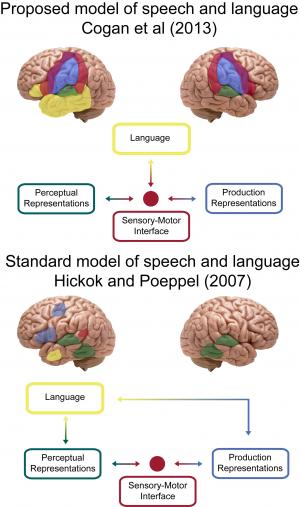
A new finding could lead to strategies for treating speech loss after a stroke and helping children with dyslexia. New research links motor skills and perception, specifically as it relates to a second finding – a new understanding of what the left and right brain hemispheres “hear.”

UCLA researchers have for the first time measured the activity of a brain region known to be involved in learning, memory and Alzheimer’s disease during sleep. They discovered that this region, called the entorhinal cortex, behaves as if it’s remembering something, even during anesthesia–induced sleep — a finding that counters conventional theories about sleep-time memory consolidation.

Weekly Neuroscience Update

Neuroscientists have announced a longitudinal research collaboration to investigate the emotional, social and cognitive effects of musical training on childhood brain development. The five-year research project, Effects of Early Childhood Musical Training on Brain and Cognitive Development, will offer USC researchers an important opportunity to provide new insights and add rigorous data to an emerging discussion about the role of early music engagement in learning and brain function.

UCLA researchers have for the first time measured the activity of a brain region known to be involved in learning, memory and Alzheimer’s disease during sleep. They discovered that this part of the brain behaves as if it’s remembering something, even under anesthesia, a finding that counters conventional theories about memory consolidation during sleep.

New research reveals that stroke may be affecting people at a younger age. The study is published in the October 10, 2012, online issue of Neurology, the medical journal of the American Academy of Neurology.

Scientists studying a rare genetic disorder have identified a molecular pathway that may play a role in schizophrenia, according to new research in the October 10 issue of The Journal of Neuroscience. The findings may one day guide researchers to new treatment options for people with schizophrenia — a devastating disease that affects approximately 1 percent of the world’s population.

Researchers from the University of Exeter Medical School have for the first time identified the mechanism that protects us from developing uncontrollable fear.

Small amounts of the drug ketamine can immediately relieve the symptoms of chronic depression, as well as those of treatment-resistant patients within a few hours, say Yale scientists.

Scientists find that competition between two brain regions influences the ability to make healthy choices.

A compassion-based meditation program can significantly improve a person’s ability to read the facial expressions of others, finds a study published by Social Cognitive and Affective Neuroscience. This boost in empathic accuracy was detected through both behavioral testing of the study participants and through functional magnetic resonance imaging (fMRI) scans of their brain activity.

A study in PLOS ONE shows that whether or not you like the person you’re watching can actually have an effect on brain activity related to motor actions and lead to “differential processing” – for example, thinking the person you dislike is moving more slowly than they actually are.

Weekly Neuroscience Update

New research shows that sleep loss markedly exaggerates the degree to which we anticipate impending emotional events, particularly among highly anxious people, who are especially vulnerable.

Music training has a lifelong good impact on the aging process, says a new study out of Northwestern University.

New research by scientists at the University of University of North Carolina School of Medicine may have pinpointed an underlying cause of the seizures that affect 90 percent of people with Angelman syndrome (AS), a neurodevelopmental disorder.

Scientists have shown that brain levels of serotonin, the ‘happy hormone’ are regulated by the amount of bacteria in the gut during early life.

Two U.S. scientists have updated findings that link a form of Chinese meditation to positive changes in brain structure, suggesting that just 11 hours of practising the technique over a month could help prevent mental illness. In a paper to be released this week in the online version of the Proceedings of the National Academy of Sciences, researchers Yi-Yuan Tang and Michael Posner report that the practice known as integrative body-mind training (IBMT) can have a positive physical affect on the brain, boosting connectivity and efficiency.

Researchers at the University of Missouri have demonstrated the effectiveness of a potential new therapy for stroke patients in an article published in the journal Molecular Neurodegeneration. Created to target a specific enzyme known to affect important brain functions, the new compound being studied at MU is designed to stop the spread of brain bleeds and protect brain cells from further damage in the crucial hours after a stroke.

A receptor recently discovered to control the movement of immune cells across the blood-brain barrier may hold the key to treating multiple sclerosis (MS), a neuroinflammatory disease of the central nervous system.

In a pair of related studies, scientists from the Florida campus of The Scripps Research Institute have identified several proteins that help regulate cells’ response to light—and the development of night blindness, a rare disease that abolishes the ability to see in dim light.

A recent breakthrough in the development of an artificial synapse suggests that assistive devices and other prostheses won’t be limited to just missing joints and failing organs. Researchers in Japan have shown that it’s possible to mimic synaptic function with nanotechnology, a breakthrough that could result in not just artificial neural networks, but fixes for the human brain as well.

Patients vary widely in their response to concussion, but scientists haven’t understood why. Now, using a new technique for analyzing data from brain imaging studies, researchers at Albert Einstein College of Medicine of Yeshiva University and Montefiore Medical Center have found that concussion victims have unique spatial patterns of brain abnormalities that change over time.

Using a new and powerful approach to understand the origins of neurodegenerative disorders such as Alzheimer’s disease, researchers at Mayo Clinic in Florida are building the case that these diseases are primarily caused by genes that are too active or not active enough, rather than by harmful gene mutations.

Weekly Neuroscience Update

Advertisers and public health officials may be able to access hidden wisdom in the brain to more effectively sell their products and promote health and safety, UCLA neuroscientists report in the first study to use brain data to predict how large populations will respond to advertisements.

A team led by psychology professor Ian Spence at the University of Toronto reveals that playing an action videogame, even for a relatively short time, causes differences in brain activity and improvements in visual attention.

A miniature atom-based magnetic sensor developed by the National Institute of Standards and Technology (NIST) has passed an important research milestone by successfully measuring human brain activity. Experiments reported this week inBiomedical Optics Express verify the sensor’s potential for biomedical applications such as studying mental processes and advancing the understanding of neurological diseases.

A key protein, which may be activated to protect nerve cells from damage during heart failure or epileptic seizure, has been found to regulate the transfer of information between nerve cells in the brain. The discovery, made by neuroscientists at the University of Bristol and published in Nature Neuroscience and PNAS, could lead to novel new therapies for stroke and epilepsy.

Practices like physical exercise, certain forms of psychological counseling and meditation can all change brains for the better, and these changes can be measured with the tools of modern neuroscience, according to a review article now online at Nature Neuroscience.

A computer game designed to lift teenagers out of depression is as effective as one-on-one counselling, New Zealand doctors reported on Thursday in the British Medical Journal (BMJ).

Weekly Round-Up

Researchers believe they found a link between the volume of one’s cerebellum and general intelligence. The cerebellum is involved in the coordination of voluntary motor movement, balance and equilibrium and muscle tone. It is located just above the brain stem and toward the back of the brain.

A small but promising study suggests that magnetic stimulation of the brain could aid the recovery of some stroke patients.

Treatment that increases brain levels of an important regulatory enzyme may slow the loss of brain cells that characterizes Huntington’s disease (HD) and other neurodegenerative disorders.

How much do babies remember about the world around them? New research reveals that even though infants can’t remember the details of an object that has been hidden from view, their brains have built-in “pointers” that help them retain the idea that the object still exists even though they can’t see it anymore.

Neuroscience research involving epileptic patients with brain electrodes surgically implanted in their medial temporal lobes shows that patients learned to consciously control individual neurons deep in the brain with thoughts.

Loyola University Medical Center researchers are reporting what could become the first reliable method to predict whether an antidepressant will work on a depressed patient.

How we perceive motion is a significantly more complex process than previously thought, researchers at New York University’s Center for Neural Science, Stanford University and the University of Washington have found. Their results, which appear in the journalCurrent Biology, show that the relationship between the brain and visual perception varies, depending on the type of motion we are viewing.

After birth, the developing brain is largely shaped by experiences in the environment. However, neurobiologists at Yale and elsewhere have also shown that for many functions the successful wiring of neural circuits depends upon spontaneous activity in the brain that arises before birth independent of external influences.

Weekly Round Up

Image Source: The Dana Foundation

Our senses of sight and hearing work closely together, perhaps more than people realize, a new UCLA psychology study shows.

A team of neurobiologists  has shown for the first time that cortex, the largest area of the brain that is typically associated with higher functions such as perception and cognition, is also a prominent site of emotional learning.

Tiny electric currents applied across regions of the brain can improve hand movements in recovering stroke patients for a short period, an Oxford University study has demonstrated.

For the first time, scientists have proven that cannabis harms the brain. But the same study challenges previously-held assumptions about use of the drug, showing that some brain irregularities predate drug use.

How might keeping patients awake during surgery lead to the more successful removal of brain tumours? James Keidel, in his shortlisted entry for the 2011 Wellcome Trust Science Writing Prize, explains.

Researchers from the University of Bristol have discovered that a chemical compound in the brain can weaken the synaptic connections between neurons in a region of the brain important for the formation of long-term memories. The findings, published in the Journal of Neuroscience, may also provide a potential explanation for the loss of memory associated with Alzheimer’s.