Weekly Neuroscience Update

Prefrontal-cortex-by-NIMH

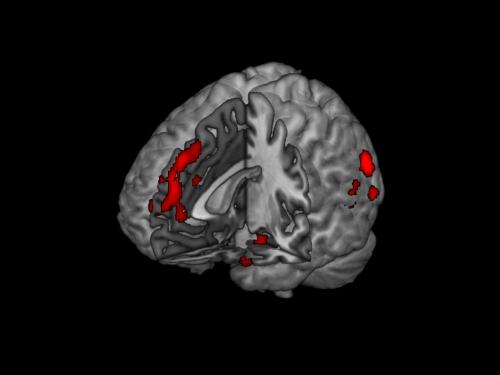
Abnormalities in the prefrontal cortex and related brain areas are observed in adolescents who have attempted suicide, according to a report at the American College of Neuropsychopharmacology annual meeting in Phoenix Arizona. The study suggests that deficits in frontal systems may be associated with risk for suicide attempts in youths with mood disorders.

A new study of twins suggests that insomnia in childhood and adolescence is partially explained by genetic factors.

Smartphones are changing us, at least according to researchers at the Institute of Neuroinformatics of the University of Zurich. It seems that as we moved from phones with buttons – Blackberrys and even feature phones – the parts of our brain associated with the thumbs are changing thanks to increased screen typing activity.

A new study has found that people who have sleep apnea or spend less time in deep sleep may be more likely to have changes in the brain associated with dementia.

The tics seen in Tourette syndrome may be caused by the loss of specific neurons in the brain, a Yale University study has demonstrated.

A study, recently published in the journal Proceedings of the National Academy of Science, confirmed longstanding speculations regarding how painful memories are internally processed in the brain.

Employing a measure rarely used in sleep apnea studies, researchers at the UCLA School of Nursing have uncovered evidence of what may be damaging the brain in people with the sleep disorder — weaker brain blood flow.

Human language draws on a complex set of cognitive skills; some of which are also found in songbirds.

Scientists have identified a time-dependent interplay between two brain regions that contributes to the recovery of motor function after focal brain damage, such as a stroke.

Finally this week, according to a new study some of the ways in which music affects us are the same worldwide, regardless of cultural diversities.

Weekly Neuroscience Update

Reviewing MRI data, researchers found the brain anatomy of people with autism above the age of six was mostly indistinguishable from that of typically developing individuals. This image is for illustrative purposes only. Credit McZusatz.

Reviewing MRI data, researchers found the brain anatomy of people with autism above the age of six was mostly indistinguishable from that of typically developing individuals. This image is for illustrative purposes only. Credit McZusatz.

Brain anatomy in MRI scans of people with autism above age six is mostly indistinguishable from that of typically developing individuals and, therefore, of little clinical or scientific value.

Some types of dementia are actually a result of many tiny, unnoticed strokes damaging the brain over time, researchers at the Krembil Neuroscience Centre in Toronto, Canada, have found. This suggests that this type of dementia could be treatable — probably through lifestyle changes.

Therapists could pick up signs of depression just be listening to how their patients talk, after a study found that unhappy people speak in a different tone.

Why do we remember some things and not others? In a unique imaging study researchers have discovered how neurons in the brain might allow some experiences to be remembered while others are forgotten. It turns out, if you want to remember something about your environment, you better involve your dendrites.

Looking at the brain as a highly interactive network of nodes, rather than a collection of individual areas of activity, could offer a new way to diagnose the memory disorders that tend to affect older people.

An international study has identified genetic markers that may help in identifying individuals who could benefit from the alcoholism treatment drug acamprosate. The findings, published in the journal Translational Psychiatry, show that patients carrying these genetic variants have longer periods of abstinence during the first three months of acamprosate treatment.

New research on how the brain leads us to believe we have sharp vision.

Disturbances in the early stages of brain growth, such as preterm birth – when many of the brain’s structures have not yet fully developed – appears to affect the brain’s neuro-circuitry, which may explain premature babies’ higher risk of neurodevelopmental disorders including ADHD and autism spectrum disorder.

Data from 50 laboratories around the world has found that rare mutations in dozens of genes may be responsible for 30% or more cases of autism.

Researchers have been tracking the traces of implicit and explicit memories of fear in human. The study was published in the journal Neurobiology of Learning and Memory; it describes how, in a context of fear, our brain differently encodes contextual memory of a negative event and the emotional response associated.

A major breakthrough in the development of stem cell-derived brain cells has put researchers on a firm path towards the first ever stem cell transplantations in people with Parkinson’s disease. A new study presents the next generation of transplantable dopamine neurons produced from stem cells. These cells carry the same properties as the dopamine neurons found in the human brain.

The brain’s plasticity and its adaptability to new situations do not function the way researchers previously thought, according to a new study published in the journal Cell.

Finally this week, researchers have shown how a single neuron can perform multiple functions in a model organism, illuminating for the first time this fundamental biological mechanism and shedding light on the human brain.


Weekly Neuroscience Update

Neuroscience research demonstrates that the brain regions underpinning moral judgment share resources with circuits controlling other capacities such as emotional saliency, mental state understanding and decision-making. Credit: Jean Decety

Neuroscience research demonstrates that the brain regions underpinning moral judgment share resources with circuits controlling other capacities such as emotional saliency, mental state understanding and decision-making. Credit: Jean Decety

People who care about justice are swayed more by reason than emotion, according to new brain scan research from the Department of Psychology and Center for Cognitive and Social Neuroscience. Researchers have discovered a gene that is likely to play a role in the risk of psychosis in bipolar disorders.

A new way to artificially control muscles using light, with the potential to restore function to muscles paralysed by conditions such as motor neuron disease and spinal cord injury, has been developed by scientists at UCL and King’s College London.

Researchers at the University of California, San Diego School of Medicine and the Allen Institute for Brain Science have published a study that gives clear and direct new evidence that autism begins during pregnancy.

A new study is the first documented study that shows cognitive behavioral therapy in a group setting is capable of changing the brain structure in patients with chronic pain.

By examining the sense of touch in stroke patients, a University of Delaware cognitive psychologist has found evidence that the brains of these individuals may be highly plastic even years after being damaged.

A new chemical messenger that is critical in protecting the brain against Parkinson’s disease has been identified by scientists.

Scents and smells can form the basis of some of the most significant memories humans form in their lives, a new study suggests

In the first study of its kind, two researchers have used popular music to help severely brain-injured patients recall personal memories.

Weekly Neuroscience Update

Temporo-parietal jonction (TPJ) © Perrine Ruby / Inserm

Temporo-parietal jonction (TPJ) © Perrine Ruby / Inserm

Some people recall a dream every morning, whereas others rarely recall one. A research team has studied the brain activity of these two types of dreamers in order to understand the differences between them. In a study published in the journal Neuropsychopharmacology, the researchers show that the temporo-parietal junction, an information-processing hub in the brain, is more active in high dream recallers. Increased activity in this brain region might facilitate attention orienting toward external stimuli and promote intrasleep wakefulness, thereby facilitating the encoding of dreams in memory.

Many psychiatric disorders are accompanied by memory deficits. Basel scientists have now identified a network of genes that controls fundamental properties of neurons and is important for human brain activity, memory and the development of schizophrenia. 

Researchers have taken a major step toward identifying the specific genes that contribute to bipolar disorder.

A recent study conducted by Johns Hopkins University and the National Institute of Aging found that aging adults with hearing loss are at higher risk for accelerated brain-tissue loss.

Brain cell regeneration has been discovered in a new location in human brains. The finding raises hopes that these cells could be used to help people recover after a stroke, or to treat other brain diseases.

Finally this week, researchers are hoping that the world’s largest simulated brain — known as Spaun — will be used to test new drugs that lead to breakthrough treatments for neurological disorders such as Parkinson’s, Huntington’s, and Alzheimer’s disease.

Speech processing requires both sides of our brain

A new study by Cogan et al proposes that speech processes occur on both sides of the brain and are distinct from language, which occurs on one side, typically on the left. This suggests a revision to the standard model of how speech is linked to language with some processes going through a "bilateral sensory-motor interface". Credit: Greg Cogan and Bijan Pesaran

A new study by Cogan et al proposes that speech processes occur on both sides of the brain and are distinct from language, which occurs on one side, typically on the left. This suggests a revision to the standard model of how speech is linked to language with some processes going through a “bilateral sensory-motor interface”. Credit: Greg Cogan and Bijan Pesaran

A new study has found that we use both sides of our brain for speech, a finding that alters previous conceptions about neurological activity. The results, which appear in the journal Nature, also offer insights into addressing speech-related inhibitions caused by stroke or injury and lay the groundwork for better rehabilitation methods.

The study’s senior author, Bijan Pesaran, an associate professor in New York University’s Center for Neural Science, said:

Our findings upend what has been universally accepted in the scientific community—that we use only one side of our brains for speech. With this greater understanding of the speech process, we can retool rehabilitation methods in ways that isolate speech recovery and that don’t involve language.

Read more: Sensory–motor transformations for speech occur bilaterally


Weekly Neuroscience Update

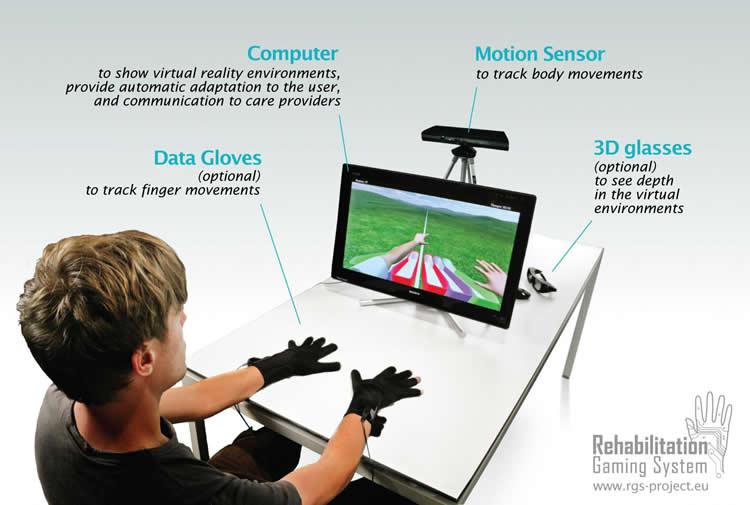
scientists develop video game for stroke

Scientists have developed a therapeutic at-home 3D gaming programme to help stroke patients overcome motor weakness, which affects 80 per cent of survivors.

Using a video game in which people navigate through a virtual town delivering objects to specific locations, a team of neuroscientists has discovered how brain cells that encode spatial information form “geotags” for specific memories and are activated immediately before those memories are recalled.

Establishing links between genes, the brain and human behavior is a central issue in cognitive neuroscience research, but studying how genes influence cognitive abilities and behavior as the brain develops from childhood to adulthood has proven difficult. Now, an international team of scientists has made inroads to understanding how genes influence brain structure and cognitive abilities and how neural circuits produce language.

Stanford University School of Medicine neuroscientists have discovered a new role played by a common but mysterious class of brain cells.

A new study using brain imaging has shown the effect of the chronic pain drug pregalbin on the brain, giving researchers new insight on the treatment of fibromyalgia and other chronic pain disorders.

A study published recently in the Journal of Neuroscience points, for the first time, to the gene trkC as a factor in susceptibility to panic disorder. The researchers define the specific mechanism for the formation of fear memories which will help in the development of new pharmacological and cognitive treatments.

Finally, in the largest study on the topic to date, research shows that speaking a second language may delay the onset of three types of dementias.  The study found that people who spoke two languages developed dementia four and a half years later than people who only spoke one language.


Weekly Neuroscience Update

Childhood poverty impacted how much the two regions of the prefrontal cortex (as shown in orange circles) were engaged during emotion regulation. (Credit: University of Illinois at Chicago College of Medicine)

Childhood poverty impacted how much the two regions of the prefrontal cortex (as shown in orange circles) were engaged during emotion regulation. (Credit: University of Illinois at Chicago College of Medicine)

Childhood poverty and chronic stress may lead to problems regulating emotions as an adult, according to research published online in the Proceedings of the National Academy of Sciences.

New research shows that one of the brain’s fundamental self-protection mechanisms depends on coordinated, finely calibrated teamwork among neurons and non-neural cells knows as glial cells, which until fairly recently were thought to be mere support cells for neurons. The study, which has implications for understanding neurodegenerative diseases, stroke, and other nervous system disorders, adds to a growing body of evidence that glial cells are integral to brain function.

Researchers at higher education institutions have identified six proteins in spinal fluid that can be used as markers for Alzheimer’s disease. And another study suggests that older adults who don’t sleep well have more of the brain plaques that are hallmarks of Alzheimer’s.

Researchers from the Centre for Functional Resonance Imaging of the Brain (FMRIB) at the University of Oxford in the UK, say through monitoring patients’ brain waves while under anesthetic, they were able to pinpoint degrees of consciousness dependent on the doses of anesthetic administered.

Finally, this week, a new study from the UCLA School of Nursing shows that the body’s autonomic responses — the controls that impact such functions as blood pressure, heart rate and sweating — are weaker in people with obstructive sleep apnea but are even more diminished in women.

Weekly Neuroscience Update

Feeling happy or sad? Researchers have measured brain signals to accurately read emotions in individuals. (Credit: Karim S. Kassam et al PLOS ONE 10.1371/journal.pone.0066032)

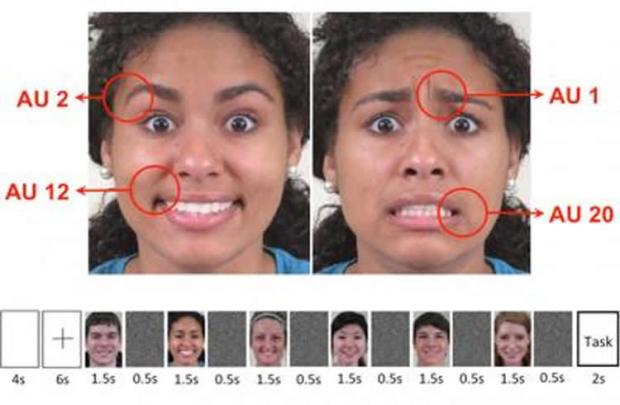
For the first time, scientists at Carnegie Mellon University have identified which emotion a person is experiencing based on brain activity.

Pre-treatment scans of brain activity predicted whether depressed patients would best achieve remission with an antidepressant medication or psychotherapy, in a new study.

People who experience any stroke symptoms—but do not have a stroke—may also be more likely to develop problems with memory and thinking, according to new research published in the June 19, 2013, online issue of Neurology®, the medical journal of the American Academy of Neurology.

And finally this week, a study, led by Royal Holloway University researcher Carolyn McGettigan, has identified the brain regions and interactions involved in impersonations and accents.

Weekly Neuroscience Update

A boxer utilizing the new concussion-detecting test A new tablet-based test is able to detect whether or not someone has sustained a concussion by analyzing their voice.

An international team of neuroscientists has described for the first time in exhaustive detail the underlying neurobiology of an amnesiac who suffered from profound memory loss after damage to key portions of his brain.

A fitness device created by Glasgow academics and designers helps stroke patients during their long road to recovery.

For anyone who has been affected by depression  it is no secret how devastating the disease can be for them and their families. But if the results from a small study published by a group at Germany’s Bonn University Hospital hold up, there could be a radical transformation in the treatment of depression.

An excess of the brain neurotransmitter glutamate may cause a transition to psychosis in people who are at risk for schizophrenia, reports a study from investigators at Columbia University Medical Center (CUMC) published in the current issue of Neuron.

New research finds that prisoners who are psychopaths lack the basic neurophysiological “hardwiring” that enables them to care for others.

The area of the brain that’s activated when people look at numerals such as “7” and “60” has been pinpointed by researchers. This spot is only about one-fifth of an inch across and consists of 1 million to 2 million nerve cells in the inferior temporal gyrus, the researchers said. The inferior temporal gyrus is known to be involved in the processing of visual information.

And finally this week, habitual liars’ brains differ from those of honest people, a study says. A University of Southern California team studied 49 people and found those known to be pathological liars had up to 26% more white matter than others

Weekly Neuroscience Update

Researchers at the University of Southern California (USC) are developing SimSensei, a Kinect-driven avatar system capable of tracking and analyzing telltale signs of psychological distress. The avatar psychologist uses facial recognition technology and a depth-sensing camera to read a person’s facial movements, body movements, posture, linguistic patterns and acoustics to screen for depression.

A new functional magnetic resonance imaging (fMRI) technique may provide neurosurgeons with a non-invasive tool to help in mapping critical areas of the brain before surgery, reports a study in the April issue of Neurosurgery, official journal of the Congress of Neurological Surgeons.

For the first time, scientists have been able to predict how much pain people are feeling by looking at images of their brains, according to a new study led by the University of Colorado Boulder.The findings, published today in the New England Journal of Medicine, may lead to the development of reliable methods doctors can use to objectively quantify a patient’s pain

New research has shown that the way our minds react to and process emotions such as fear can vary according to what is happening in other parts of our bodies.

UCLA researchers have used a brain-imaging tool and stroke risk assessment to identify signs of cognitive decline early on in individuals who don’t yet show symptoms of dementia.

People with mental illnesses are more than seven times more likely to use cannabis weekly compared to people without a mental illness, according to researchers from the Centre for Addiction and Mental Health (CAMH) who studied U.S. data.