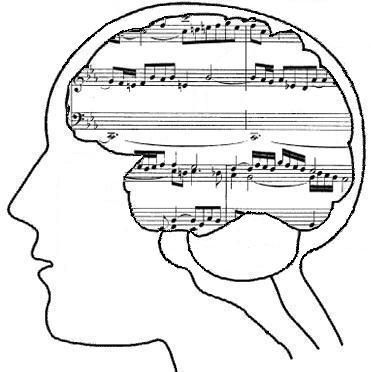
Your Brain On Improv


What happens in the brain during musical improv? Researcher Charles Limb scanned the brains of jazz musicians to find out.

About Charles Limb

Dr. Charles Limb is an Associate Professor in the Johns Hopkins Department of Otolaryngology — Head and Neck Surgery, as well as faculty at the Peabody Conservatory of Music. He combines his two passions to study the way the brain creates and perceives music. He’s a hearing specialist and surgeon at Johns Hopkins who performs cochlear implantations. In his free time, he plays sax, piano and bass.

In search of a better understanding of how the mind processes complex auditory stimuli such as music, Dr. Limb has been working with Dr. Allen Braun to look at the brains of improvising musicians and study what parts of the brain are involved when a musician is really in the groove.

Weekly Neuroscience Update

human-brain-120329

MRIs work by aligning the magnetic spin of the hydrogen molecules in the body. Credit: Image courtesy of MGH-UCLA Human Connectome Project.

Brain scans are now starting to peer down to the molecular level, revealing what brain cells are telling one another, researchers say.

A new study has provided insight into the behavioral damage caused by repeated blows to the head. The research provides a foundation for scientists to better understand and potentially develop new ways to detect and prevent the repetitive sports injuries that can lead to the condition known as chronic traumatic encephalopathy (CTE).

Sufferers of a common sleep-breathing disorder have diminished activity among neurons responsible for keeping heart rate low, reveals a new study published in The Journal of Physiology. The research discovered that in obstructive sleep apnoea (OSA), neurons in the brainstem that control heart rate experience a blunting of their activity. The reduction of neuronal activity likely contributes to the increased heart rate,blood pressure and risk of adverse cardiovascular events that occur in patients with OSA.

A variant of the gene KLOTHO is known for its anti-aging effects in people fortunate enough to carry a copy. Now researchers have found that it also has benefits when it comes to brain function.

Humans who lack the corpus callosum, a bundle of 200 million fibers that connect the left and right hemispheres of the brain, have long fascinated physicians, neuroscientists and other curious minds. Now, a group of researchers puts an end to the Sperry’s paradox, which describes major differences between individuals born with reduced or absent brain connections and those who acquire this condition later in life.

A study has shown that a long-overlooked form of neuron-to-neuron communication called miniature neurotransmission plays an essential role in the development of synapses, the regions where nerve impulses are transmitted and received.

The way that your heart rate increases in response to alertness in the brain has been recently discovered by researchers. Specifically, this study looked at the interactions between neurons that fire upon increased attention and anxiety and neurons that control heart rate to discover the “why,” “how,” and “where to next” behind this phenomenon. The results may have important implications for how certain conditions are treated in the future, such as post-traumatic stress disorder, chronic anxiety, or even stress.

A growing body of evidence suggests nonhuman animals can group living and inanimate things based on less than obvious shared traits, raising questions about how creatures accomplish this task.

Researchers at the University of Liverpool found musical training can increase blood flow in the left hemisphere of the brain, suggesting the area of the brain responsible for music and language share common pathways.

Weekly Neuroscience Update

This image from the study shows changes in degree of connectivity in the feedback group. Increases are shown in red/yellow and decreases in blue/purple. Decreases in connectivity are seen in limbic areas, and increases are seen in prefrontal regions. (Credit: D Scheinost et al./Yale University)

People provided with a real-time readout of activity in specific regions of their brains can learn to control that activity and lessen their anxiety, say Yale researchers.

A new study provides neurobiological evidence for dysfunction in the neural circuitry underlying emotion regulation in people with insomnia, which may have implications for the risk relationship between insomnia and depression.

Different brain areas are activated when we choose for ourselves to suppress an emotion, compared to situations where we are instructed to inhibit an emotion, according to a new study from the UCL Institute of Cognitive Neuroscience and Ghent University.

Migraines and depression can each cause a great deal of suffering, but new research indicates the combination of the two may be linked to something else entirely—a smaller brain.

The epigenetic modifications, which alter the way genes function without changing the underlying DNA sequence, can apparently be detected in the blood of pregnant women during any trimester, potentially providing a simple way to foretell depression in the weeks after giving birth, and an opportunity to intervene before symptoms become debilitating.

A three-year multinational study has tracked and detailed the progression of Huntington’s disease (HD), predicting clinical decline in people carrying the HD gene more than 10 years before the expected onset of symptoms.

Researchers have pinpointed a catalytic trigger for the onset of Alzheimer’s disease – when the fundamental structure of a protein molecule changes to cause a chain reaction that leads to the death of neurons in the brain.

Individuals who learn two languages at an early age seem to switch back and forth between separate “sound systems” for each language, according to new research conducted at the University of Arizona.

Chronic trauma can inflict lasting damage to brain regions associated with fear and anxiety. Previous imaging studies of people with post-traumatic stress disorder, or PTSD, have shown that these brain regions can over-or under-react in response to stressful tasks, such as recalling a traumatic event or reacting to a photo of a threatening face. Now, researchers at NYU School of Medicine have explored for the first time what happens in the brains of combat veterans with PTSD in the absence of external triggers.

And finally this week…

Listening to new music is rewarding for the brain, a study suggests. Using MRI scans, a Canadian team of scientists found that areas in the reward centre of the brain became active when people heard a song for the first time. The more the listener enjoyed what they were hearing, the stronger the connections were in the region of the brain called the nucleus accumbens. The study is published in the journal Science

Weekly Neuroscience Update

Brain scan

The researchers monitored brain activity while playing volunteers new music

Listening to new music is rewarding for the brain, a study suggests. Using MRI scans, a Canadian team of scientists found that areas in the reward centre of the brain became active when people heard a song for the first time. The more the listener enjoyed what they were hearing, the stronger the connections were in the region of the brain called the nucleus accumbens. The study is published in the journal Science.

Meanwhile, an imaging study by Stanford University School of Medicine scientists reveals that the brains of different people listening to the same piece of music actually respond in the same way –  which may in part explain why music plays such a big role in our social existence.

Researchers have identified an important therapeutic target for alleviating the symptoms of Lou Gehrig’s disease, also known as amyotrophic lateral sclerosis (ALS), and other related neurodegenerative disorders such as Alzheimer’s disease, Parkinson’s disease and Huntington’s disease.

In a study published in the online version of Neurobiology of Disease, the team both confirmed the importance of this new target as well as a series of compounds that can be used to attenuate the dysregulation of one of the important cellular processes that lead to and ultimately to .

Neuroscientists have developed a method of analyzing brain activity to detect autism in children. Their findings appear in the online journal PLOS ONE.

Slow oscillations in brain activity, which occur during so-called slow-wave sleep, are critical for retaining memories. Researchers reporting online in the Cell Press journal Neuron have found that playing sounds synchronized to the rhythm of the slow brain oscillations of people who are sleeping enhances these oscillations and boosts their memory. This demonstrates an easy and noninvasive way to influence human brain activity to improve sleep and enhance memory.

Weekly Neuroscience Update

medium_46044113Advice to “sleep on it” before making a big decision may be wise, according to new brain-imaging research.

Scientists from the University of Southampton have identified the molecular system that contributes to the harmful inflammatory reaction in the brain during neurodegenerative diseases.An important aspect of chronic neurodegenerative diseases, such as Alzheimer’s, Parkinson’s, Huntington’s or prion disease, is the generation of an innate within the brain. Results from the study open new avenues for the regulation of the inflammatory reaction and provide new insights into the understanding of the biology of , which play a leading role in the development and maintenance of this reaction.

A study conducted at the University of Granada and the University of York in Toronto, Canada, has revealed that bilingual children develop a better working memory –which holds, processes and updates information over short periods of time– than monolingual children.

Good mental health and clear thinking depend upon our ability to store and manipulate thoughts on a sort of “mental sketch pad.” In a new study, Yale School of Medicine researchers describe the molecular basis of this ability — the hallmark of human cognition — and describe how a breakdown of the system contributes to diseases such as schizophrenia and Alzheimer’s disease.

Your eyes aren’t just advanced visual systems capturing images of what’s around you. New research published in the Journal of Neuroscience shows that when our eyes perceive visual stimuli, it gets encoded in our brains in ways that change our emotional reactions.

In a pair of new papers, researchers at the University of California, San Diego School of Medicine and the Royal Netherlands Academy of Arts and Sciences upend a long-held view about the basic functioning of a key receptor molecule involved in signaling between neurons, and describe how a compound linked to Alzheimer’s disease impacts that receptor and weakens synaptic connections between brain cells.

Fear responses can only be erased when people learn something new while retrieving the fear memory. This is the conclusion of a study conducted by scientists from the University of Amsterdam (UvA) and published in the leading journal Science.

Injuries that result in chronic pain, such as limb injuries, and those unrelated to the brain are associated with epigenetic changes in the brain which persist months after the injury, according to researchers at McGill University.

Montreal researchers find that music lessons before age seven create stronger connections in the brain.

A team of political scientists and neuroscientists has shown that liberals and conservatives use different parts of the brain when they make risky decisions, and these regions can be used to predict which political party a person prefers.

Inside A Musician’s Brain

This fascinating 3-minute music video of British musician Sivu’s single “Better Man Than He “is composed entirely of MRI images of his head, allowing the viewer to watch every movement of his throat and mouth as he sings.

Weekly Neuroscience Update

medium_6835040374Two recent pieces of work raise the prospect of being able to predict and even regulate a person’s risk-taking behavior, by first observing activity of the anterior cingulate cortex and then dialing it up or down.

A new study shows that for millions of individuals around the world who suffer from Generalized Anxiety Disorder (GAD), anger is more than an emotion; it’s an agent that exacerbates their illness.

Brain changes persist for months in children who have sustained a mild traumatic brain injury, or concussion, U.S. researchers say.

Chinese researchers have devised a new technique for reprogramming cells from human urine into immature brain cells that can form multiple types of functioning neurons and glial cells. The technique, published in the journal Nature Methods, could prove useful for studying the cellular mechanisms of neurodegenerative conditions such as Alzheimer’s and Parkinson’s and for testing the effects of new drugs that are being developed to treat them.

Researchers have discovered how the brain assesses confidence in its decisions. The findings explain why some people have better insight into their choices than others.

Scientists have combined and translated two kinds of brain wave recordings into music, transforming one recording (EEG) to create the pitch and duration of a note, and the other (fMRI) to control the intensity of the music.

A compassion-based meditation program can significantly improve a person’s ability to read the facial expressions of others, finds a study published by Social Cognitive and Affective Neuroscience. This boost in empathic accuracy was detected through both behavioral testing of the study participants and through functional magnetic resonance imaging (fMRI) scans of their brain activity.

Your brain has at least four different senses of location — and perhaps as many as 10. And each is different, according to new research from the Kavli Institute for Systems Neuroscience, at the Norwegian University of Science and Technology.

photo credit: Amanda Nicole Betley via photopin cc

Weekly Neuroscience Update

medium_3550062627
A new clinical study in the journal Brain and Behavior, has been undertaken to decide whether a non-invasive method, using musical tones to regulate brain activity, can actually reprogram the brain, resulting in insomnia prevention.

Researchers have shown that synchronization emerges between brains when making music together, and even when musicians play different voices.

People are able to detect, within a split second, if a hurtful action they are witnessing is intentional or accidental, new research on the brain at the University of Chicago shows.

Everyone knows that men and women tend to hold different views on certain things. However, new research by scientists from the University of Bristol and published in PLoS ONE indicates that this may literally be the case.

All patients with Alzheimer’s disease (AD) lose brain cells, which leads to a shrinking, or atrophy, of the brain. But the pattern of gray matter loss is significantly different in men and women, according to a study presented recently at the annual meeting of the Radiological Society of North America.

Weekly Neuroscience Update

Could our neurological soundtrack reveal insights into our mental state? To answer that question scientists in China developed a method for converting two kinds of brain wave recordings into music.

Scientists at The Scripps Research Institute (TSRI) have identified a new pathway that appears to play a major role in information processing in the brain. Their research also offers insight into how imbalances in this pathway could contribute to cognitive abnormalities in humans.

Stanford researchers have designed the fastest, most accurate algorithm yet for brain-implantable prosthetic systems that can help disabled people maneuver computer cursors with their thoughts. The algorithm’s speed, accuracy and natural movement approach those of a real arm, and the system avoids the long-term performance degradations of earlier technologies.

Researchers have designed a light-sensitive molecule that can stimulate a neural response in cells of the retina and brain — a possible first step to overcoming degenerative eye diseases like age-related macular degeneration, or to quieting epileptic seizures.

A new study has found that participating in an 8-week meditation training program can have measurable effects on how the brain functions even when someone is not actively meditating.

Weekly Neuroscience Update

Have you ever wondered why some people find it so much easier to stop smoking than others? New research shows that vulnerability to smoking addiction is shaped by our genes. A study from the Montreal Neurological Institute and Hospital — The Neuro, McGill University shows that people with genetically fast nicotine metabolism have a significantly greater brain response to smoking cues than those with slow nicotine metabolism.

When children learn to play a musical instrument, they strengthen a range of auditory skills. Recent studies suggest that these benefits extend all through life, at least for those who continue to be engaged with music. But a study published last month is the first to show that music lessons in childhood may lead to changes in the brain that persist years after the lessons stop.

A team of Australian researchers, led by University of Melbourne has developed a genetic test that is able to predict the risk of developing autism spectrum disorder (ASD).

Recent findings by an international collaboration including IRCM researchers hold new implications for the pathogenesis of myotonic dystrophy.

Researchers at Newcastle University have revealed the mechanism by which neurons, the nerve cells in the brain and other parts of the body, age. The research opens up new avenues of understanding for conditions where the ageing of neurons are known to be responsible, such as dementia and Parkinson’s disease.
Finally, this week…a new study has shown that it’s possible to predict how well people will remember information by monitoring their brain activity while they study.