Weekly Neuroscience Update

When perceiving rhythm, the brain makes two separate decisions based on grouping and prominence. The groupings mutually inform each other to generate an overall rhythmic perception.

Face pareidolia, a phenomenon where the brain is tricked into seeing human faces in inanimate objects, may occur as a result of the brain processing the perceived facial expression in the same sequential way it perceives a human face. Neuroscientists at the University of Sydney now say how our brains identify and analyse real human faces is conducted by the same cognitive processes that identify illusory faces.

Researchers have identified a novel population of neurons in the temporal pole that links facial perception to long-term memory.

Adults with ADHD are at higher risk of a wide range of physical conditions, including nervous system, respiratory, musculoskeletal, and metabolic diseases, according to a large register-based study from Karolinska Institutet published in The Lancet Psychiatry.

A new study reveals very young infants can perceive objects that older infants, children, and adults can not see due to a phenomenon called visual backward masking.

Infant boys with a gut bacterial composition high in Bacteroidetes were found in a new study to have more advanced cognitive and language skills one year later compared to boys with lower levels of the bacteria. The finding was specific to male children.

Brain cells snap DNA in more places and in more cell types than previously realized in order to express genes for learning and memory.

Researchers have found that a component derived from turmeric essential oil, aromatic turmerone (ar-turmerone), and its derivatives act directly on dopaminergic nerves to create a neuroprotective effect on tissue cultures of a Parkinson’s disease model.

New research shows daydreaming and mind-wandering appear to occur when parts of the brain fall asleep while other areas remain awake.

Finally this week, a diet rich in fermented foods enhances the diversity of gut microbes and decreases molecular signs of inflammation, according to researchers at the Stanford School of Medicine.

Weekly Neuroscience Update

Children who are physically active have higher cognitive function and increased functional connectivity in the brain later in life than those who are less active, a new study reports.

Canadian researchers have built and validated an online calculator that empowers individuals 55 and over to better understand the health of their brain and how they can reduce their risk of being diagnosed with dementia in the next five years. Their process was published today in the Journal of Epidemiology and Community Health, and the calculator is available at projectbiglife.ca.

Researchers studying prions–misfolded proteins that cause lethal incurable diseases–have identified for the first time surface features of human prions responsible for their replication in the brain.

Middle-aged people with depressive symptoms who carry a genetic variation called apolipoprotein (APOE) ε4 may be more at risk to develop tau protein accumulations in the brain’s emotion- and memory-controlling regions, a new study suggests.

Frequent strenuous exercise increases the risk of developing motor neuron disease (MND)/ALS in certain people, new research has found.

Combining brain scans with AI technology, researchers were able to accurately predict the likelihood of a person developing schizophrenia in those with a family history of the psychiatric disorder.

A new study reveals very young infants can perceive objects that older infants, children, and adults can not see due to a phenomenon called visual backward masking.

Subtle changes in fractal motor activity regulation in cognitively healthy women may be a sign of preclinical Alzheimer’s disease, researchers report.

Deep brain stimulation appears to be safe, effective, and provides symptom improvements for at least one year in patients with treatment-resistant schizophrenia.

New research details the interplay between proteins involved in controlling the body’s stress response and points to potential therapeutic targets when this response goes awry.

A new research paper published in the American Journal of Clinical Nutrition last week showed that a low Omega-3 Index is just as powerful in predicting early death as smoking.

Finally this week, a new study sheds light on how migraines may occur and why those who are susceptible to migraines see improvements in symptoms as they age.

Weekly Neuroscience Update

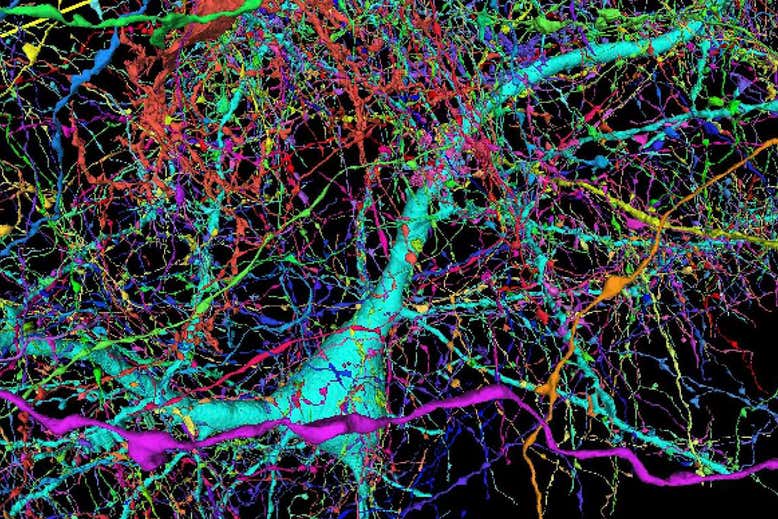
Around 4000 nerve fibres connect to this single neuron
Google/Lichtman Laboratory

Google has helped create the most detailed map yet of the connections within the human brain. It reveals a staggering amount of detail, including patterns of connections between neurons, as well as what may be a new kind of neuron.

Researchers have identified three biomarkers in blood samples that confirm the link between exercise and improved cognitive function in older adults.

A new study reveals what goes on in the brain when a person embarks on a musical collaboration project.

Chronic inflammation in the gut may propel processes in the body that give rise to Parkinson’s disease, according to new research.

The largest study of its kind has unveiled new insights into how genes are regulated in dementia, including discovering 84 new genes linked to the disease.

A new study shows that a deep neural network model can accurately predict the brain age of healthy patients based on electroencephalogram data recorded during an overnight sleep study, and EEG-predicted brain age indices display unique characteristics within populations with different diseases.

Finally this week, scientists have identified an area of the brain that drives cravings for protein-rich food.

Weekly Neuroscience Update


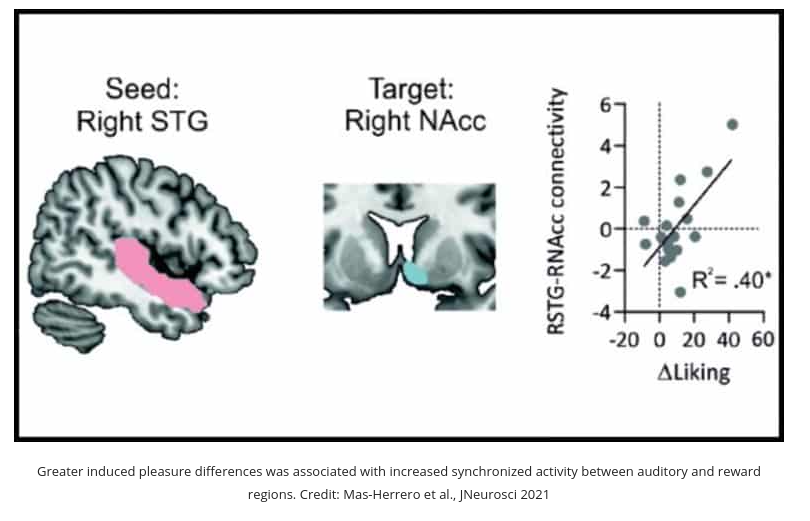
Communication between the brain’s auditory and reward circuits is the reason why humans find music rewarding, according to new research published in Journal of Neuroscience.

Multilingual people have trained their brains to learn languages, making it easier to acquire more new languages after mastering a second or third. In addition to demystifying the seemingly herculean genius of multilinguals, researchers say these results provide some of the first neuroscientific evidence that language skills are additive, a theory known as the cumulative-enhancement model of language acquisition.

A new whole-genome sequencing study has revealed thirteen novel genes associated with Alzheimer’s disease. Researchers also found a new link between Alzheimer’s and synaptic function.

For people with Parkinson’s disease, problems with thinking and memory skills are among the most common nonmotor symptoms of the disease. A new study shows that exercise may help slow cognitive decline for some people with the disease.

Computer scientists have created a ground-breaking model that could improve our understanding of developmental disorders such as autism.

Researchers have succeeded for the first time in measuring brain waves directly via a cochlear implant. These brainwaves indicate in an objective way how good or bad a person’s hearing is. The research results are important for the further development of smart hearing aids.

New research suggests that chronic viral infections have a profound and lasting impact on the human immune system in ways that are similar to those seen during aging.

A study of Japanese university students and recent graduates has revealed that writing on physical paper can lead to more brain activity when remembering the information an hour later. Researchers say that the unique, complex, spatial and tactile information associated with writing by hand on physical paper is likely what leads to improved memory.

Finally this week, a new study confirms that the processing of visual information is altered in depressed people, a phenomenon most likely linked with the processing of information in the cerebral cortex.


Weekly Neuroscience Update

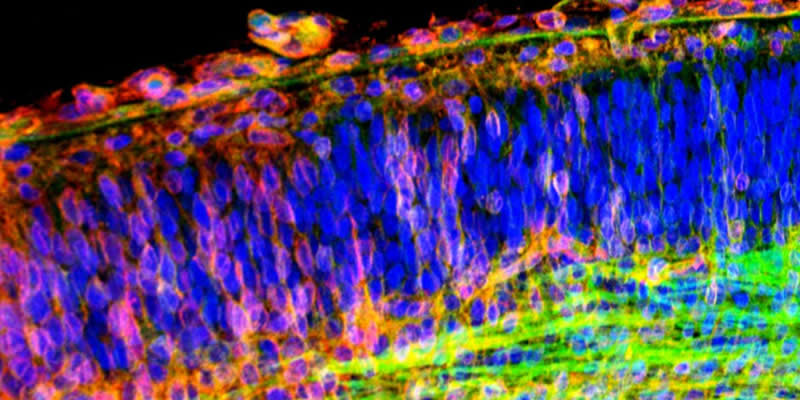
This image shows the developing brain visualized with fluorescence laser scanning microscopy. It illustrates the neurons (blue) and growing axons (red and green). Image INc-UAB.

Researchers have identified a new cell mechanism that connects Alzheimer’s disease and cancers.

The human brain can recognise a familiar song within 100 to 300 milliseconds, highlighting the deep hold favourite tunes have on our memory, a UCL study finds.

A new method allows researchers to detect serotonin at extremely low concentrations in serum.

New research shows for the first time that patients with mood and anxiety disorders share the same abnormalities in regions of the brain involved in emotional and cognitive control. The findings hold promise for the development of new treatments targeting these regions of the brain in patients with major depressive disorder, bipolar disorder, posttraumatic stress disorder, and anxiety disorders.

Artificial intelligence is helping shed light on how people’s brains, bodies, and emotions react to listening to music. 

Researchers have identified a set of neurons, located in a region of the hypothalamus, that may be the switch that turns the brain off, allowing for sleep. The neurons are also tied to body temperature regulation.

According to new research, musical intervention can help to improve mood and decrease agitation in those with dementia.

Performance on two quick tests ― a cognitive screen and an olfactory test ― may rule out future dementia, including Alzheimer disease (AD), for patients with mild memory problems, results of a large follow-up study show.

Features of the functional connectome are present in the fetal brain during the second and third trimesters of pregnancy.

Finally this week, a new study reveals how acetate, a byproduct of alcohol breakdown, travels to the brain’s learning system and alters proteins that regulate DNA function.

Weekly Neuroscience Update

associated-memory-learning-neurosciencenews.jpg

Oxford University researchers have discovered that learned knowledge is stored in different brain circuits depending on how we acquire it.

Neuroscientists say they have identified how people can have a “crash in visual processing” — a bottleneck of feedforward and feedback signals that can cause us not to be consciously aware of stimuli that our brain recognized.

A new study shows that an innovative strategy for treating Parkinson’s disease has proven successful in neurons that derive from people living with the condition.

A new study reveals the gut has a much more direct connection to the brain through a neural circuit that allows it to transmit signals in mere seconds. The findings could lead to new treatments for obesity, eating disorders, and even depression and autism—all of which have been linked to a malfunctioning gut.

New research shows musical improvisation improves cognitive flexibility and increases inhibitory control.

A UCLA-led study has found that MRI scans can help doctors distinguish whether a person’s memory loss is being caused by Alzheimer’s disease or by traumatic brain injury.

A new study suggests a longer duration of estrogen exposure hormone therapy was associated with better cognition in older adult women.

Weekly Neuroscience Update

Neuron_cluster.width-800

TDP-43 inclusions are found in cells in the central nervous system. Image Credit: M. Oktar Guloglu, Wikimedia Commons

A team of researchers is fishing for a new method to treat neurodegenerative disorders. Its tactic? Bait dysfunctional proteins and prevent them from joining together into the kind of toxic globs found in almost every patient with ALS or frontotemporal dementia (FTD).

A ‘hit-and-run’ interaction between two proteins could be an important trigger for cell death, according to new research.

Biomedical engineers at Duke University have developed an automated process that can trace the shapes of active neurons as accurately as human researchers can, but in a fraction of the time.

Zapping the brains of people over 60 with a mild electrical current improved a form of memory enough that they performed like people in their 20s, a new study found.

Laughter really could be the best medicine when it comes to brain surgery. Neuroscientists at Emory University School of Medicine used electrical stimulation to activate a focal pathway in the brain and trigger laughter, which is immediately followed by a sense of calm and contentment. The technique was used while conducting diagnostic monitoring for seizure diagnosis on an epilepsy patient, with the effects later used to successfully undergo awake brain surgery on the same patient.

38 new genes have been implicated in hearing loss. One of the genes, SPNS2, has been linked to childhood deafness.

Increased kynurenic acid production has been implicated in the pathology of schizophrenia. The findings provide a new target for cell-specific treatments that help reduce the production of kynurenic acid and reduce symptoms of schizophrenia.

Scientists have pinpointed a group of cells in the brain whose activity could help explain the ability to share another’s pain.

Imbalanced communication between the hippocampus and amygdala may lead to the inability to distinguish between negative memories that have overlapping features. The findings could provide new treatment options for those with PTSD.

Finally this week, a new study reports that music synchronizes brainwaves across listeners with strong effects of repetition, familiarity and training.

Weekly Neuroscience Update

memory-fades-over-time-neurosciencneews

Much like opaque filters we apply to pictures on social media, the vibrancy of our memories dims and fades over time. The image reflects 12 levels of visual salience, or vibrancy, used to rate how memories fade. The image is credited to Psychological Science.

Low-level visual information fades in memory over time. However, negative emotion increases subjective memory vividness.

Musical training produces lasting improvements to a cognitive mechanism that helps individuals be more attentive and less likely to be distracted by irrelevant stimuli while performing demanding tasks.

Neurobiologists have studied the formation of inhibitory synapses, a complex process that occurs when the brain adapts. 

The synesthesia effect of being able to ‘hear’ silent movements may depend upon disinhibition of signaling between the visual and auditory brain regions. A new study found musicians are more likely to experience the ‘visual ear’ phenomena than those with no musical training.

Using OCT angiography to quantify capillary changes in the back of the eye can help in the detection, and monitor the progression, of Alzheimer’s disease.

Polygenetic risk scores calculated from adults can be used to identify children and adolescents who may be at greater risk of developing depression, even before clinical symptoms have emerged.

An uncommon variant of the PDE11A gene impacts both quality and duration of sleep. 

Scientists have discovered the key brain region for navigating well-known places, helping explain why brain damage seen in early stages of Alzheimer’s disease can cause such severe disorientation.

Finally this week, a team of researchers has found what they describe as a link between the “locus of control” in adolescents and their use of tobacco and alcohol.

Weekly Neuroscience Update

sleep-infection-neuroscinenews (1)

This diagram shows how the effects of Gαs-coupled agonists on T cells can be influenced by sleep or disease. NeuroscienceNews.com image is credited to Dimitrov et al., 2019.

A new study reports sleep can help immune cells attach to targets and help fight infection. The study reveals how sleep assists the body in fighting infections, whereas conditions like chronic stress can make the body more susceptible to illness.

Researchers have demonstrated that physical coordination is more beneficial in larger groups.

Scientists have identified a small set of molecules that can convert glial cells into new neurons. The finding could help develop new treatments for Alzheimer’s disease and brain injuries.

New therapeutic molecules show promise in reversing the memory loss linked to depression and aging.

The first population-level study on the link between gut bacteria and mental health identifies specific gut bacteria linked to depression and provides evidence that a wide range of gut bacteria can produce neuroactive compounds. Jeroen Raes (VIB-KU Leuven) and his team published these results today in the scientific journal Nature Microbiology.

A new study reports unexpected changes in music activates the nucleus accumbens, providing reward and helping us to learn about the music as we listen. 

Researchers reveal the different cognitive styles of creative and analytical thinkers are a result of fundamental differences in neural activity that can be observed when people are not working on a problem.

Finally this week, a new study reports fluvoxamine, an antidepressant used to treat OCD appears to be effective in stopping sepsis.

Weekly Neuroscience Update

runners-635906_960_720.jpg

Researchers report running can help mitigate the impact chronic stress has on the hippocampus.

A small study recently published in Translational Psychiatry showed that people living with schizophrenia could use a video game paired with an MRI scanner to curb verbal hallucinations.

A Neuron study reports brain-machine interface technology may shed light on how mentally running through a routine improves performance.

Neuroscientists have demonstrated the astounding flexibility of the brain by training neurons that normally process input from the eyes to develop new skills, in this case, to control a computer-generated tone.

Researchers report our inner thoughts and interpretations of our experiences have consequences for both physical and mental health.

A new study finds listening to music may help people extend the time they are capable of enduring a cardiac stress test. The study also reports the findings could help healthy people to exercise for longer periods of time.

Concussions and other traumatic brain injuries may increase the risk of developing Alzheimer’s disease earlier in life, according to a study.

Researchers report elevated dopamine levels may make those with schizophrenia rely more on expectations, which results in them experiencing auditory hallucinations.

A new study will examine how the brain learns to make predictions over our lifespan.

Contrary to previous findings, new research has found no evidence Omega-3 fish oil supplements help aid or improve the reading ability or memory function of underperforming school-children.

Finally this week, neuroscientists have produced a collection of computer-generated models that accurately replicate cortical neuron activity.