Weekly Neuroscience Update

brain-waves-sleep-memory-neurosciencenews.jpg

As we age, slow brain waves during non-REM sleep fail to time contact with sleep spindles efficiently, leading to a lessened ability to form new memories correctly, a new study reports.

Researchers report children are more attentive and have improved memory when they exercise at their own pace, rather than embark on exhaustive exercise.

Inflammation in the blood plays a key role in “chemo-brain,” according to a published pilot study that provides evidence for what scientists have long believed.

A new study sheds light on the neurons tasks glial cells perform to insure brain activity is optimized.

According to researchers, children who eat fish at least once a week score four points higher on IQ tests and sleep better than those who consume fish less frequently, or not at all.

A new study looks how it may be possible to help reduce trauma associated with bad memories while we sleep.

Researchers reveal even after one short, ten minute, burst of exercise, cognitive processing and attention improve temporarily.

Finally this week, a new study supports the hypothesis that people with focal epilepsy are more susceptible to mood disorders, such as depression and anxiety.

Weekly Neuroscience Update


smellsensiti.jpg

Credit: Herz et. al./Brown University

new study provides the first direct evidence that within each person, smell sensitivity varies over the course of each day. The pattern, according to the data, tracks with the body’s internal day-night cycle, or circadian rhythm.

Researchers have revealed the neural signatures for explicit and implicit learning.

Neuroscientists have discovered precisely where and how to electrically stimulate the human brain to enhance people’s recollection of distinct memories. People with epilepsy who received low-current electrical pulses showed a significant improvement in their ability to recognize specific faces and ignore similar ones.

Adults likely do not develop ADHD, according to new research.

Researchers propose a new theory of memory formation, reporting memory storage does not rely on the strengthening of connection between memory cells, but on the pattern of connections that form within the first few minutes of an event.

A new Finnish study shows that individual circadian preference is associated with brain activity patterns during the night.

According to researchers, the size, shape and number of dendritic spines in the brain may determine whether a person develops Alzheimer’s disease.

Finally this week, migraine triggers can increase oxidative stress, a new study reports. Targeting oxidative stress may help to prevent migraines.


Weekly Neuroscience Update

gettyimages-176426057_wide-c6d79c47986bd46b88ffe656b1ca09afd3b7e7b3-s800-c85.jpg

Getty Images

People who played action video games that involve first-person shooters experienced shrinkage in a brain region called the hippocampus, according to a study published in Molecular Psychiatry. That part of the brain is associated with spatial navigation, stress regulation and memory. Playing Super Mario games, in which the plumber strives to rescue a princess, had the opposite effect on the hippocampus, causing growth in it.

Researchers have revealed a helpful strategy to help those with cognitive problems to improve their memory.

The part of the brain that helps control emotion may be larger in people who develop post-traumatic stress disorder (PTSD) after brain injury compared to those with a brain injury without PTSD, according to a new study.

A new study reports cognitive abilities mutually assist each other during development. This results in improved cognitive skills and general intelligence over time.

A sleeping brain can form fresh memories, according to a team of neuroscientists. The researchers played complex sounds to people while they were sleeping, and afterward the sleepers could recognize those sounds when they were awake.

Researchers report social norms together with increasing oxytocin can counter xenophobia by enhancing altruistic behaviors.

A new Johns Hopkins University study adds further evidence to the link between serotonin and dementia. According to researchers, lower serotonin levels may play a key role in memory decline and drive the progression of Alzheimer’s.

Researchers have devised a new odor identification test that could help doctors predict those at risk of Alzheimer’s and track the progression of the disease.

Finally this week, a new study reveals a neurobiological reason behind why we feel happy when we are being generous. Researchers discovered the connectivity between the temporal parietal junction and ventral striatum, an area of the brain associated with happiness, was enhanced in people who committed to generosity.


Weekly Neuroscience Update

aging-sharpness-neuroscinencew.jpg

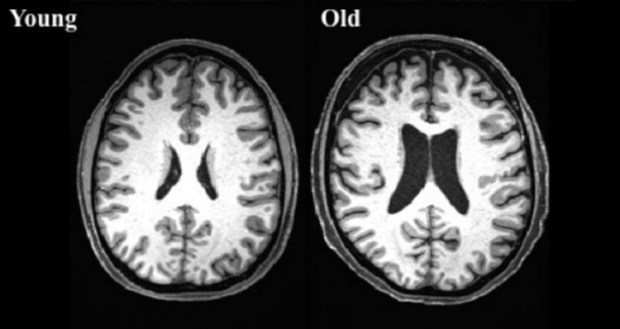
Brain scans from a 38-year-old, left, and a 73-year-old. 

Researchers are embarking on a new study to answer how some people are able to stay sharper than others as they age.

Neurons in the brain that produce the pleasure-signaling neurotransmitter dopamine also directly control the brain’s circadian center, or “body clock” – the area that regulates eating cycles, metabolism and waking/resting cycles – a key link that possibly affects the body’s ability to adapt to jet lag and rotating shift work, a new study has demonstrated.

A molecule produced by insulating glial cells facilitates the functional wiring of brain cells involved in motor coordination.

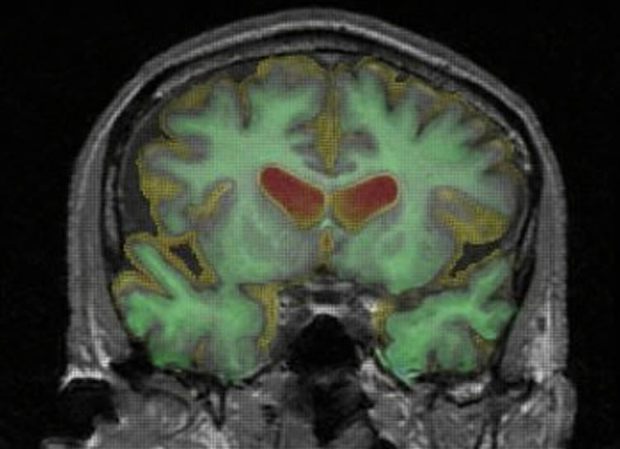
Using the latest MRI scanning procedures, a team of researchers has shown how certain disorders of the hippocampus can initiate a drug resistant epilepsy. The team has discovered biomarkers that – if used for screening – could massively improve treatment options for epilepsy. The researchers have published their results in the online journal eLife.

A new study reveals the role circular RNA plays in brain function, including synaptic transmission and sensorimotor gating.

Depression has been shown to alter the structure of the brain’s white matter, which contains the circuitry that allows brain cells to communicate with each other, and which underpins brain function.

According to a new Nature study, in order for our taste system to work, the connection between neurons and taste bud cells have to rewire correctly each time.

A new optogenetic method called Optobow is helping researchers to discover specific and individual components of functional neural networks in the living brain. A Nature Communications report states this new method can help provide more detailed insights into both brain function and structure.

A neuroimaging study reveals people who report widespread pain have increased gray matter and functional connectivity in sensory and motor areas of the brain.

Finally this week, a large scale SPECT imaging study reveals women’s brains are significantly more active in more regions than males, including the prefronal cortex and limbic areas. Visual and areas associated with coordination were more active in males, researchers noted.

Weekly Neuroscience Update

macine-learning-thought-fmri-neurosciencenews.jpg

This latest research builds on the pioneering use of machine learning algorithms with brain imaging technology to “mind read.” The findings indicate that the mind’s building blocks for constructing complex thoughts are formed by the brain’s various sub-systems and are not word-based.  Image is credited to Carnegie Mellon University.

Researchers report they can use brain activation patterns to identify complex thoughts. Their findings suggest the building blocks for complex human thoughts are not word based, but formed by the brain’s sub systems. The study provides evidence that the neural dimensions of concept representation are universal across people and languages.

A new study considers how echolocation can benefit visually impaired people to navigate safely through the environment.

Neuroscientists have used a classic branch of maths in a totally new way to peer into the structure of our brains. What they’ve discovered is that the brain is full of multi-dimensional geometrical structures operating in as many as 11 dimensions.

People tend to change the pitch of their voice depending on who they are talking to, and how dominant they feel, a new study has found.

Researchers have identified a network of neurons that plays a vital role in learning vocalizations by aiding communication between motor and auditory regions of the brain.

A new study reinforces the idea that serotonin, a molecule associated with mood, directly contributes to the actions of cocaine.

A new report published by the National Academies of Sciences, Engineering, and Medicine shows evidence supporting three interventions for cognitive decline and dementia—cognitive training, blood pressure management for people with hypertension, and increased physical activity, which might slow down cognitive decline and the onset of dementia.

Therapies to change the bacteria in the gut, through diet, pro-and prebiotic supplements, faecal matter transplants or antibiotics, could treat autism.

Finally this week, researchers say a protein usually associated with the immune system could play a role in the development of neurological conditions such as epilepsy and schizophrenia.


Weekly Neuroscience Update

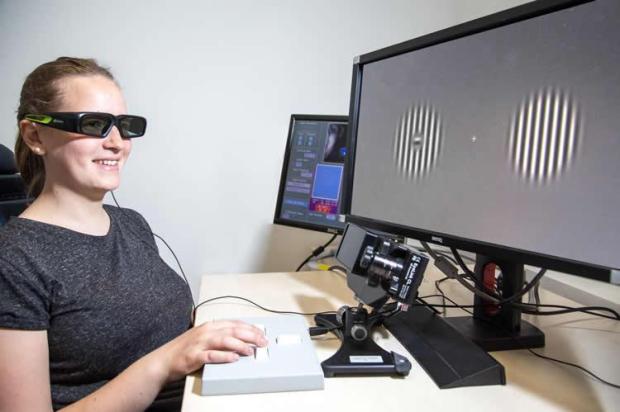
visual-perception-real-inferred-neurosciencenews.jpgHumans treat ‘inferred’ visual objects generated by the brain as more reliable than external images from the real world, according to new research published in eLife.
Scientists have identified Lgl1 as the gene that controls the production of neurons and glia cells in the brain. Previously unknown functions of a neurodevelopment gene clarified.

Findings about the brain-body connection may also have implications for treating those with opioid addiction, researchers believe.

Neuroscientists have for the first time have come up with a way to observe brain activity during “natural reading,” the reading of actual text and not just individual words. The findings are already helping settle some ideas about how we read.

Researchers have discovered the molecular mechanism behind lithium’s effectiveness in treating bipolar disorder.

Scientists have developed a robust, efficient method for deriving microglia, the immune cells of the brain, from human stem cells. Microglia are increasingly implicated in neurological disorders including Alzheimer’s disease, Parkinson’s disease and multiple sclerosis, among many others. However, research into the role of human microglia in these disorders has long been hampered by the inability to obtain them from the human nervous system. This new protocol now enables scientists around the world to generate this critical cell type from individual patients and improve our understanding of the role of microglia neurological malfunction.

A new study describes how advances in technology can help us avoid aging and age related diseases.

Researchers have made an important step in understanding the organisation of nerve cells embedded within the gut that control its function — a discovery that could give insight into the origin of common gastrointestinal diseases, including irritable bowel syndrome and chronic constipation.

New research published in the Journal of Clinical Investigation, has identified a protein that could help patients with epilepsy respond more positively to drug therapies.

Finally this week, a new study on “fear memory” could lead to the development of therapies that reduce the effects of post-traumatic stress disorder (PTSD).

Weekly Neuroscience Update

protein-alzheimers-study-neurosciencenews

New research, using a Bayesian inference model of audio and visual stimuli, has shown how our perception of time lies mid-way between reality and our expectations.

Researchers have developed a virtual brain that can mimic the brain of a person with epilepsy. The model can help provide a better understanding of the disease.

Resting state brain activity may predict how quickly people are able to pick up a second language, a new study reports.

Researchers report that an odour identification test may prove useful in predicting cognitive decline and detecting early-stage Alzheimer’s disease.

A new study uses cutting-edge technique to image the process of neuronal transmission.

By scanning the brains of subjects while they were hypnotized, researchers were able to see the neural changes associated with hypnosis.

Yale University researchers have developed a way to picture synapses in living brains.

Music can influence how much you like the taste of beer, according to a study published in Frontiers in Psychology.

According to researchers, sleep twitches in babies could be linked to sensorimotor development.

A new study reports anatomical patterning in the brain’s cortex is controlled by genetic factors.

Finally this week, researchers have uncovered what goes on in our brains when we are faced with the decision to take a risk or play it safe.


Weekly Neuroscience Update

math-model-memory

Human memory is the result of different mental processes, such as learning, remembering and forgetting. However, these distinct processes cannot be observed directly. Researchers have now succeeded at describing them using computational models. The scientists were thus for the first time able to identify gene sets responsible for steering specific memory processes. Their results have been published in the current issue of the journal PNAS.

A new study has demonstrated how stress can influence regions of the brain involved with self-control.

A groundbreaking new study has found for the first time that emotions are not only the product of the processing of information by the brain, but that they also directly influence processes of learning and memory in the brain.

A new study suggests that your fat tissue can send mixed signals to your brain when stress strikes.

The brains of people with epilepsy appear to react to music differently from the brains of those who do not have the disorder, a finding that could lead to new therapies to prevent seizures, according to research presented at the American Psychological Association’s 123rd Annual Convention.

Researchers have discovered a way to predict human emotions based on brain activity.

Recent research published in the journal Microsystems & Nanoengineering could eventually change the way people living with prosthetics and spinal cord injury lead their lives.

A growing body of research suggests a link between kidney impairment and brain disorders.

A new study may have unlocked understanding of a mysterious part of the brain — with implications for neurodegenerative conditions such as Alzheimer’s. The results, published in Translational Vision Science & Technology (TVST), open up new areas of research in the pursuit of neuroprotective therapies.

Children who suffer an injury to the brain — even a minor one — are more likely to experience attention issues.

New research has identified a novel learning and memory brain network that processes incoming information based on whether it’s something we’ve experienced previously or is deemed to be altogether new and unknown, helping us recognize, for instance, whether the face before us is that of a familiar friend or a complete stranger.

Finally, this week, A new study sheds light on what motivates people to trust. 


Weekly Neuroscience Update

age-brain-related-changes-autism

Researchers at the University of Miami find that large-scale connectivity in autism changes with age.

Although scientists know that depression affects the brain, they don’t know why some people respond to treatment while others do not. Now a team of researchers has shown for the first time in a large cohort of patients that electroconvulsive therapy (ECT), sometimes referred to as shock treatment, change certain areas of the brain that play a role in how people feel, learn and respond to positive and negative environmental factors.

Research by biologists at the University of York has identified new mechanisms potentially driving progression of an aggressive form of dementia.

A new study shows that the act of remembering leads to the subtle forgetting of other memories.

When we look at a known word, our brain sees it like a picture, not a group of letters needing to be processed. That’s the finding from a Georgetown University Medical Center (GUMC) study published in the Journal of Neuroscience, which shows the brain learns words quickly by tuning neurons to respond to a complete word, not parts of it.

Scientists at the University of Bonn have discovered a new cause of temporal lobe epilepsy.

Brown fat tissue, the body’s “good fat,” communicates with the brain through sensory nerves, possibly sharing information that is important for fighting human obesity, such as how much fat we have and how much fat we’ve lost, according to research published in the Journal of Neuroscience.

Finally this week, people who have suffered serious head injuries show changes in brain structure resembling those seen in older people, according to a new study.


Weekly Neuroscience Update

Photo credit: Wellcome Images (Creative Commons)

Photo credit: Wellcome Images (Creative Commons)

UC San Francisco researchers have used brain scans to predict how young children learn to read, giving clinicians a possible tool to spot children with dyslexia and other reading difficulties before they experience reading challenges.

A new study has found, for the first time, evidence of neuroinflammation in key regions of the brains of patients with chronic pain. By showing that levels of an inflammation-linked protein are elevated in regions known to be involved in the transmission of pain, the study published online in the journal Brain paves the way for the exploration of potential new treatment strategies and identifies a possible way around one of the most frustrating limitations in the study and treatment of chronic pain – the lack of an objective way to measure the presence or intensity of pain.

For the first time, scientists have revealed a mechanism underlying the cellular degeneration of upper motor neurons, a small group of neurons in the brain recently shown to play a major role in ALS pathology.

Are women “wired” to be more emotional? Not exactly — but new research provides more evidence that the male and female brain may have very different ways of processing emotion. Previous research has shown that women generally experience higher levels of emotional stimulation than men. Now, a new large-scale study from the University of Basel suggests that gender differences in emotion processing are also linked to sex variation in memory and brain activity.

An international research team has identified a new gene for a progressive form of epilepsy.

According to a new study in the Journal of Neurotrauma, researchers have announced the development of a blood test that could provide a quantifiable way to measure the impact of concussions or the success of a treatment regimen.

Finally, this week, new research could move the medical community one step closer toward effectively detecting concussion and quantifying its severity.