Weekly Neuroscience Update

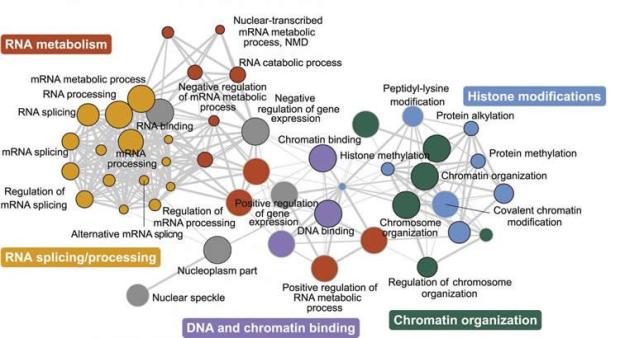
genetics-autism-neurosciencenews.jpg

A network of more than 200 genes encoding proteins with diverse cellular roles was revealed in a non-biased CRISPR screen for regulators of microexon splicing. Many of the genes have previously been linked to autism. Image is credited to Thomas Gonatopoulos-Pournatzis.

Using CRISPR techniques, researchers have uncovered a genetic network linked to autism.

Researchers find evidence of cognitive issues and miRNA biomarkers, indicating brain injuries from concussions or head-to-head contact, in college football players. The findings indicated lasting damage caused by sports-related concussions occur earlier than expected.

A new method for studying the mircobiome has allowed researchers to identify a connection between metabolism in gut bacteria and the development of diabetes.

A new study has identified unique functional brain networks associated with characteristic behaviors of autism spectrum disorder (ASD) in 12- and 24-month old children at risk for developing ASD. The study is published in Biological Psychiatry: Cognitive Neuroscience and Neuroimaging.

Researchers have identified a brain network that may control the diversion of attention to focus on potential threats. Dopamine, they report, is key to the process.

New research has found preliminary evidence that high-intensity interval exercise temporarily impairs reward learning mechanisms in the brain. The research, which was published in Physiology & Behavior, indicates that this type of exercise does not improve all aspects of cognitive function.

A new study reports aerobic exercise can have antidepressant effects for patients with major depressive disorder.

Researchers propose a new theory of human thinking, suggesting our brain’s navigation system is key to thinking. This may explain why our knowledge seems to be organized in spatial fashion.

Scientists have solved a 125-year-old mystery of the brain, and, in the process, uncovered a potential treatment for acquired epilepsy.

A new neuroimaging study reveals the brains of teenage girls who self-harm show similar features to adults with borderline personality disorder.

Researchers were able to distinguish between children with or without ASD diagnosis, thanks to a new saliva-based biomarker panel. Researchers report the test can be used in children as young as 18 month, assisting in early diagnosis of autism.

Finally this week, a new study reveals common brain activity patterns associated with depressive moods.


Weekly Neuroscience Update

brain-waves-memory-neurosciencenews.jpgAlpha and theta oscillations move rhythmically across the brain, reflecting neural activity propagating across the cortex to help form working memory, a new study reports.

Researchers have developed a new computational model of major depressive disorder. The model reveals older memories, as well as short term memories, are affected by major depressive disorder. Researchers say how long the memory deficits go back depends on how long the depressive episode lasts.

A new brain cancer atlas maps out comprehensive, visually rich information about the anatomical and genetic bases of glioblastoma, researchers report.

A new study reports people who have a family history of alcohol use disorder release more dopamine in the ventral striatum as a response to the expectation of receiving an alcoholic drink than those without a family history of alcoholism.

A drug that blocks the alpha7 nicotinic acetylcholine receptor may provide a new method for combating drug addiction relapse, researchers report.

A groundbreaking study reveals human immune cells in the blood can be transformed into functional neurons within 3 weeks by adding four proteins. The discovery could be used to generate neurons to study specific psychological and neurological disorders, researchers say.

Researchers report transcranial magnetic stimulation predisposes neural connections in the visual cortex for reorganization.

Researchers have created a new model that may help explain how the brain stores memories of tangible events. The new model explains how neural activity in the hippocampus can help map space, time and context in episodic memories.

A new study reveals people respond to stimuli in another person’s peripersonal space as they could their own.

Research has shown that a developing child’s brain structure and function can be adversely affected when the child is raised in an environment lacking adequate education, nutrition and access to health care.

Finally this week, researchers report intuition is the result of information processing in the brain that results in prediction based on previous experience.


Weekly Neuroscience Update

auditory-memory-magnets-neurosciencenews.jpg

image is credited to McGill University. Philippe Albouy

A new study reveals people showed improvements in auditory memory when transcranial magnetic stimulation was applied.

The part of the brain that creates mental maps of one’s environment plays a much broader role in memory and learning than was previously thought, according to new research published this week in the journal Nature by researchers at Princeton University.

Researchers have developed new tests to help quantify automatic moral and empathetic judgement.

Neurons in the prefrontal cortex “teach” neurons in the hippocampus to “learn” rules that distinguish memory-based predictions in otherwise identical situations, suggesting that learning in the present helps guide learning in the future, according to research conducted at the Icahn School of Medicine at Mount Sinai and published April 5 in the journal Neuron.

Neuroimaging technology can help determine the success of failure possibilities of cochlear implants for those who lose their hearing during adulthood.

Scientists have known that a lack of sleep can interfere with the ability to learn and make memories. Now, a group of researchers have found how sleep deprivation affects memory-making in the brain.

Reducing stress in those with epilepsy may be a beneficial, low risk preventative treatment for seizures, researchers report.

Using PET scans of the brain, researchers have shown that dopamine falls and fluctuates at different times during a migraine headache.

MRIs show a brain anomaly in nearly 70 percent of babies at high risk of developing the condition who go on to be diagnosed, laying the groundwork for a predictive aid for pediatricians and the search for a potential treatment.

A new study reports the anterior cingulate cortex, an area of the brain associated with empathy, activates very weakly in people with autism.

Scientists at Max Planck Florida Institute for Neuroscience developed a light-sensitive technique to visualize and manipulate neuromodulation with unprecedented spatial and temporal precision.

Finally this weekk, new research indicates that some autobiographical memories are more vulnerable to Alzheimer’s disease and dementia than others.


Weekly Neuroscience Update

standup-comedy-ftr.jpg

A study published in Frontiers in Neuroscience takes a look inside the brains of professional comedians and compares them with less humorous humans. They attempt to home in on the seat of creative humour and ask what it can tell us about creativity.

A new study reports brain cells may preferentially activate a copy of one parent’s genes over the other in offspring.

Music, specifically infant directed song, could have evolved as a means to allow parents to let their children know their needs are being met, while freeing them up to perform other essential tasks, a new study theorizes.

Researchers report a new neuroimaging device can successfully measure brain synchronization during a conversation.

Specialized nerve cells, known as somatostatin-expressing (Sst) interneurons, in the outer part of the mammalian brain (or cerebral cortex) — play a key role in controlling how information flows in the brain when it is awake and alert. This is the finding of a study published online in Science March 2 by a team of neuroscientists at NYU Langone Medical Center and its Neuroscience Institute.

Amygdala reactivity may help predict who will have post-traumatic stress disorder symptoms in the year following a trauma, a recent study from Emory University  finds.

Recent research published in Frontiers in Public Health shows that the effects of vibrations produced by horses during horse-riding lead to the activation of the sympathetic nervous system, which improves learning in children.

A compound called P7C3 provides both protection for neurons following a stroke and improves physical and cognitive outcomes, a new study reports.

MIT researchers have devised a way to measure dopamine in the brain much more precisely than previously possible, which should allow scientists to gain insight into dopamine’s roles in learning, memory, and emotion.

A new study reports the ability to modulate brain activity when it comes to shutting off processes irrelevant to a task may be compromised in older people.

Concrete links between the symptoms of autism and synaesthesia have been discovered and clarified for the first time, according to new research by psychologists at the University of Sussex.

Researchers have identified a potential mechanism for the development of alcoholism.

Finally this week, researchers have discovered a genetic pathway that could lead to people developing anxiety and panic disorders.

Weekly Neuroscience Update

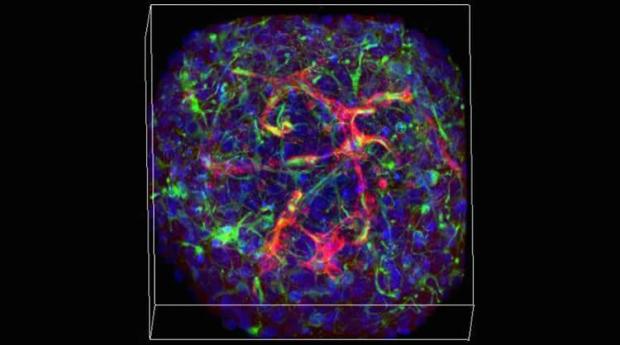
mini-brain-vessicles-neurosciencneews.jpg

Under the microscope, staining highlights a network of vasculature amid the ball of neurons that make up a minibrain. NeuroscienceNews.com image is credited to Hoffman-Kim lab/Brown University

Scientists have recently made a variety of mini-brains — 3-D cultures of neural cells that model basic properties of living brains — but a new finding could add to the field’s growing excitement in an entirely new “vein”: Brown University’s mini-brains now grow blood vessels, too.

A new study reports astrocytes may be a driving force behind a number of neurodegenerative diseases.

While many of us find the sound of a person chewing or breathing heavily annoying, for those with misophonia, such noises are unbearable. Researchers have identified the neural networks and brain changes associated with the disorder.

New research reveals the shape of our brain can provide surprising clues about how we behave and our risk of developing mental health disorders.

A team of investigators have found that exposure to phobic images without conscious awareness is more effective than longer, conscious exposure for reducing fear. The investigators used fMRI to determine that areas of the brain involved in fear processing were much more strongly activated by unconscious exposure. Results of the study will be published in the journal, Human Brain Mapping, on February 6, 2017.

Depression poses a risk for cardiovascular diseases in men that is just as great as that posed by high cholesterol levels and obesity.

In the latest issue of Proceedings of the National Academy of Sciences (PNAS), New York University neuroscientist David Heeger offers a new framework to explain how the brain makes predictions

Researchers have developed new technology that utilises infrared light in order to treat memory loss conditions.

Scientists have discovered a cell in the retina that may cause myopia when it dysfunctions. The dysfunction may be linked to the amount of time a child spends indoors and away from natural light.

A new study pinpoints the brain area responsible for forming direct links between environmental stimuli and enhanced focus.

New sensors that can monitor dopamine secretion in a single neuron could help researchers better understand how dopamine influences brain activity.

Scientists have developed sensor technology for a robotic prosthetic arm that detects signals from nerves in the spinal cord.

People who use sign language have better reaction times in their peripheral vision, a new study from the University of Sheffield has found.

Finally this week, researchers report concussion can accelerate Alzheimer’s symptoms in people with a genetic risk for the disease.


Was dopamine the secret to Muhammad Ali’s greatness?

Ali

I was saddened this week to read of the death of Muhammad Ali. The 74 year old whose outrageous talent in the ring was matched by his political significance and cultural impact, struggled with Parkinson’s disease which began during his boxing career in the late 1970’s. He was hospitalised several times in recent years and died of respiratory problems related to his disease. I have spent over 30 years investigating the effects of Parkinson’s disease on the brain and I am happy to report that during this period I have seen great strides in our understanding and treatment of this illness.

What is Parkinson’s disease?

Over 4 million people worldwide suffer from Parkinson’s disease; a so-called hypokinetic disorder (Greek; hypo = lack of; kinetic = movement). It is a progressive disease – the symptoms start out small and get progressively worse but it is rarely fatal. With Parkinson’s disease one minute you are working away in the garden and the next you are literally stuck to the spot – totally unable to move. In these situations daily life can become a challenge that can be difficult to endure.

Causes of Parkinson’s disease

Parkinson’s disease can be genetic but it can also be triggered by what happens to you as you live your life such as prolonged exposure to chemicals like insecticides, weed killers and some drugs. Significantly in the case of Muhammad Ali, the disease can also be triggered by brain injury. However in most cases Parkinson’s disease arises ‘out of the blue’ as the so-called idiopathic Parkinson’s disease.

The core defect

The ‘core defect’ in Parkinson’s disease is a loss of a chemical in the brain called dopamine. Dopamine acts like hydraulic oil which lubricates those nerve circuits in the brain that are involved in executing a movement. In Parkinson’s disease the supply of dopamine dries-up and, like a car out of oil the engine seizes-up and movement grinds to a halt.

The Muhammad Ali we all remember was dopamine in action

We need dopamine to survive. Dopamine allows us to talk, socialise, be brave, improvise and take risks. When dopamine flows we don’t see things as being limited by circumstance. We have boundless energy and literally anything is possible! One only needed to watch Muhammad Ali’s awesome talent at the height of his career to see dopamine in action as his brain effortlessly converted his thoughts into the mesmerising performances inside and outside the ring that made him so loved by a generation. Ali’s ability to ‘float like a butterfly, sting like a bee’ was all down to the dopamine in his brain.

Superman

As a child in the 1960s I thought this 6’ 3’’ giant was the closest thing to Superman. Later I watched him take on the establishment over the political and cultural discrimination against his African American heritage knowing full-well that they were going to make him pay for it. It was then that I realised that Muhammad Ali was not just a gifted athlete but also a courageous human being – that he was in fact, a real, live Superman. Again, Ali’s deeply-held convictions and his bravery in standing by them was another expression of the dopamine in his brain.

Was boxing to blame?

Since Muhammad Ali’s death some media have reported that it is a pity that his illness had to overshadow what he achieved during his amazing life. Without dopamine Ali must have felt trapped and disconnected at times. While neurologists cannot definitively say whether Ali’s symptoms were a result of his boxing career, what is known for certain is that head trauma increases the risk of getting Parkinson’s disease.

Boxing and brain injury – a potentially lethal mix

Probably the most important lesson to be taken from Ali’s illness is that we need to open up a debate on how we as a society deal with traumatic brain injury and its causes. Even a minor concussion is dangerous because repeat concussions have cumulative effects on the brain, resulting in brain swelling, permanent brain injury, and long-term disability including Parkinson’s disease, personality change, epilepsy or even death.

By its very nature, a concussion is unexpected, so it is difficult to prevent. Here are three common-sense precautions you can take to lessen the possibility of traumatic brain injury.

1. Wear protective head gear. Participation in high-contact, high-risk sports such as all types of boxing, football, hurling and hockey can increase the likelihood of a concussion. Skateboarding, snowboarding, horseback riding, cycling and roller-blading are also a threat to your brain health. Wearing headgear, padding, and mouth and eye guards can help safeguard against traumatic head injuries. Wearing a bike helmet can lower the risk of traumatic head injury by 85%. Ensure that the equipment is properly fitted, well maintained, and worn consistently.

2. Drive smart. Always wear a seatbelt even as a passenger in a back seat, obey posted speed limits, and don’t use drugs or alcohol when driving, because they can impair reaction time.

3. Don’t fight. Concussions are often sustained during a punch-up, and more males than females report traumatic head injuries.

Funding for research into illness of mind and brain

We also need to highlight the realisation that a deeper understanding of the brain IS the difference between a good and a bad quality of life for the sufferers of brain illnesses such as Parkinson’s disease.

I hope that Muhammad Ali’s loved ones will take hope from the on-going research into Parkinson’s disease by teams of dedicated scientists worldwide.

Click on this link to hear Professor Billy O’Connor talk about Parkinson’s disease on Mind Matters – a science program on Irish National radio (RTE).


You might also like to read:

Emotions are habits so pick a good one

World Mental Health Day

Why Parkinson’s Disease robbed Linda Ronstadt of her singing voice


Weekly Neuroscience Update

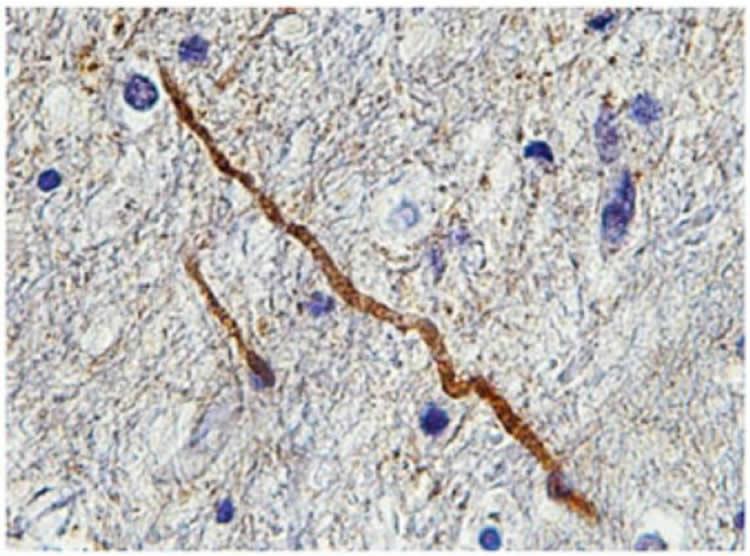
SNTF stained axons (brown) shortly after traumatic brain injury are pictured. The undulating course suggests damage to the internal skeleton, and the SNTF stain shows the high calcium concentration- activated enzymes that destroy the axon from the inside out. Credit: The laboratory of Douglas Smith, MD, Perelman School of Medicine, University of Pennsylvania.

SNTF stained axons (brown) shortly after traumatic brain injury are pictured. The undulating course suggests damage to the internal skeleton, and the SNTF stain shows the high calcium concentration- activated enzymes that destroy the axon from the inside out. Credit: The laboratory of Douglas Smith, MD, Perelman School of Medicine, University of Pennsylvania.

Physicians and others now recognize that seemingly mild, concussion-type head injuries lead to long-term cognitive impairments surprisingly often. A brain protein called SNTF, which rises in the blood after some concussions, signals the type of brain damage that is thought to be the source of these cognitive impairments, according to a new study.

About one third of people with depression have high levels of inflammation markers in their blood. New research indicates that persistent inflammation affects the brain in ways that are connected with stubborn symptoms of depression, such as anhedonia, the inability to experience pleasure.

Scientists have reported measurements of dopamine release with unprecedented temporal precision in the brains of people with Parkinson’s disease. The measurements, collected during brain surgery as the conscious patients played an investment game, demonstrate how rapid dopamine release encodes information crucial for human choice.

Scientists have uncovered a mechanism in the brain that could account for some of the neural degeneration and memory loss in people with Alzheimer’s disease.

Regardless of gender, young adults who have greater aerobic fitness also have greater volume of their entorhinal cortex, an area of the brain responsible for memory. Better aerobic fitness however does not appear to impact hippocampal volume, another area in the brain responsible for memory.

A new scientific model that incorporates the myriad drivers of depression could lead to more precise treatment for an illness that affects 350 million worldwide.

Finally this week, could staying physically active improve quality of life by delaying cognitive decline and prolonging an independent lifestyle? A new study has found that older adults who take more steps either by walking or jogging perform better on memory tasks than those who are more sedentary.


Weekly Neuroscience Update

Granule cells connect with other cells via long projections (dendrites). The actual junctions (synapses) are located on thorn-like protuberances called “spines”. Spines are shown in green in the computer reconstruction Credit DZNE/Michaela Müller.

Granule cells connect with other cells via long projections (dendrites). The actual junctions (synapses) are located on thorn-like protuberances called “spines”. Spines are shown in green in the computer reconstruction Credit DZNE/Michaela Müller.

New findings on the link between nerve cells at the interface to the hippocampus may have an influence on learning and memory.

People choosing between two or more equally positive outcomes experience paradoxical feelings of pleasure and anxiety, feelings associated with activity in different regions of the brain, according to research at the Princeton Neuroscience Institute at Princeton University.

Latest findings on how stress hormones promote the brain’s building of negative memories.

Researchers have studied the changes in the brain that are associated with impulsiveness, a personality trait that causes difficulties in inhibiting a response in the face of a stimulus and leads to unplanned actions without considering the negative consequences. These patterns can serve as an indicator for predicting the risk of behavioural problems.

People taking dopamine for Parkinson’s disease sometimes begin to generate a lot of artwork. New research differentiates their expressiveness from obsessive or impulsive tendencies.

Researchers have uncovered more than 100 genetic markers linked to developing schizophrenia.

A type of immune cell widely believed to exacerbate chronic adult brain diseases, such as Alzheimer’s disease and multiple sclerosis (MS), can actually protect the brain from traumatic brain injury (TBI) and may slow the progression of neurodegenerative diseases, according to research published in the online journal Nature Communications.

Weekly Neuroscience Update

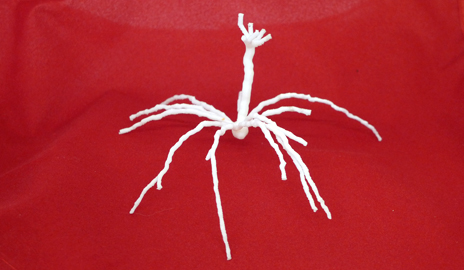
3D-printed model of a neuron (credit: Yale University)

3D-printed model of a neuron (credit: Yale University)

A Yale neuroscientist  has created the first 3D-printed neuron.

Studies released today suggest promising new treatments for nicotine and heroin addiction, and further our understanding of pathological gambling and heroin abuse in those suffering chronic pain. This new knowledge, released at Neuroscience 2013, the annual meeting of the Society for Neuroscience (SFN) and the world’s largest source of emerging news about brain science and health, may one day lead to non-pharmaceutical interventions and therapies to treat addiction. Also presented at SFN, new studies revealing links between social status and specific brain structures and activity, particularly in the context of social stress.

A new study has found that people experiencing a depressive episode process information about themselves differently than people who are not depressed.

To flexibly deal with our ever-changing world, we need to learn from both the negative and positive consequences of our behaviour. In other words, from punishment and reward. Hanneke den Ouden from the Donders Institute in Nijmegen demonstrated that serotonin and dopamine related genes influence how we base our choices on past punishments or rewards. This influence depends on which gene variant you inherited from your parents. These results were published in Neuron on November 20.

Brain scans reveal that people with fibromyalgia are not as able to prepare for pain as healthy people, and they are less likely to respond to the promise of pain relief.

Scientists have used RNA interference (RNAi) technology to reveal dozens of genes which may represent new therapeutic targets for treating Parkinson’s disease. The findings also may be relevant to several diseases caused by damage to mitochondria, the biological power plants found in cells throughout the body.

Playing a fast-paced strategy video games can help the brain to become more agile and improve strategic thinking, according to new research.

While young children sleep, connections between the left and the right hemispheres of their brain strengthen, which may help brain functions mature, according to a new study by the University of Colorado Boulder.  And in another sleep study, a team of sleep researchers  has confirmed the mechanism that enables the brain to consolidate memory and found that a commonly prescribed sleep aid enhances the process. Those discoveries could lead to new sleep therapies that will improve memory for aging adults and those with dementia, Alzheimer’s and schizophrenia.

Why Parkinson’s Disease Has Robbed Linda Ronstadt Of Her Singing Voice

Singer Linda Rondstadt has recently been diagnosed with Parkinson's disease.

Singer Linda Rondstadt has recently been diagnosed with Parkinson’s disease.

The news that Linda Ronstadt has lost her powerful voice after a four-decade singing career as a result of Parkinson’s disease shocked not just the singer, but her many fans.

The 67-year-old Grammy-winning singer revealed last week that she struggled with symptoms of the disease for nearly eight years before getting her diagnosis just months ago. The neurological degenerative condition robs sufferers of their speech, mobility and their cognitive abilities.

During my career, I have spent almost 30 years investigating the effects of Parkinson’s disease on the brain and  I have seen great strides in our understanding and treatment of this illness.

What is Parkinson’s disease?

Over 4 million people worldwide suffer from Parkinson’s disease – a so-called hypokinetic disorder (hypo = lack of; kinetic = movement). Parkinson’s disease can be genetic but it can also be triggered by brain injury – as observed in boxers such as Muhammad Ali – and by environment – e.g. prolonged exposure to chemicals such as insecticides, weed killers and some drugs.  However in most cases Parkinson’s disease arises ‘out of the blue’ – i.e. idiopathic Parkinson’s disease. It is a progressive disease the symptoms start out small and get progressively worse but it is rarely fatal.

Three major symptoms

The disease is associated with three major symptoms (i) akinesia – an inability to start a movement – for instance when starting to brush your teeth, (ii) bradykinesia – an excessive braking or slowing of movement – when the brush strokes become shorter and eventually freeze and (iii) tremor – starting out as a trembling finger movements as if rolling a coin or pill – sometimes called ‘pill-rolling’ – which can progress to the whole body. With Parkinson’s disease one minute you are working away in the garden and the next you are literally stuck to the spot – totally unable to move. In these situations daily life can become a challenge that can be difficult to endure.

History

The disease is named after a British surgeon and political activist James Parkinson (1755-1824) who was born in London’s east end. In October 1794 he was questioned under oath before a council of state in connection with a plot to kill the King. He was exonerated but remained a strong advocate for the under-privileged. In 1817 he published An Essay on the Shaking Palsy reporting 6 cases. Although his publication was later considered the seminal work on the disease, it received little attention until a lot more cases came to light.

Where in the brain does Parkinson’s disease occur?

The Nobel Prize was awarded in 2000 to Professor Arvid Carlsson for his research over the past 50 years which confirmed that the ‘core defect’ in Parkinson’s disease is a loss of a chemical called dopamine in two tiny brain regions  – no bigger than a wart – called the substantia nigra. These two regions deep in the back of the brain – one on the left side and one on the right side – contain nerves that make a lot of dopamine and release it at their tips about 4 inches forward in the basal ganglia – located deep in the center of the brain where it helps to convert the intention/motivation needed to perform a movement into actual movement.

The core defect is a loss of dopamine

Dopamine belongs to a family of neurotransmitters called amines that help nerve cells to stay in touch with each other- sometimes called neurotransmitters. Dopamine acts like hydraulic oil which lubricates the basal ganglia nerve network involved in executing a movement. One only needed to go to watch Linda perform on stage at the height of her career to see dopamine in action as her brain effortlessly converted her thoughts and moods into the mesmerizing tonality, rhythm and range that made her so loved by a generation. In Parkinson’s disease the substantia nigra progressively dies, the supply of dopamine to the basal ganglia dries-up and like a car out of oil the engine seizes-up and movement grinds to a halt.

Trapped and disconnected

We need dopamine to survive. Dopamine allows us to talk, sing, socialize, improvise and take risks. When dopamine flows we don’t see things as being limited by circumstance. We have boundless energy and literally anything is possible!  Without dopamine we feel trapped and disconnected. It is not surprising therefore that mood can become low and depression is often associated with this illness.

Medication is expensive

Over the past 40 years neuroscientists been working hard to develop drugs that can safely raise dopamine levels in the Parkinsonian brain – the so-called antiparkinsonian drugs – and better, more effective treatments come on the market every decade.  Drug treatments are effective in managing symptoms but frequent changes are needed as the disease progresses. In the end many combinations of drugs at higher and higher doses may be needed and unpleasant side-effects may become an issue. Medication costs on average €100,000 per year.  Interestingly, the inexpensive anti-inflammatory drug ibuprofen has recently been shown to help stave off Parkinson’s disease possibly by protecting the substantia nigra but ibuprofen can itself produce unwanted side effects, including stomach bleeding.

Alternatives to drug-treatment?

deep  brain stimulation

Neuroscientists believe that the loss of the dopamine-rich nerves in the substantia nigra results is an over-activity of a ‘brake’ mechanism in the basal ganglia which in turn inappropriately shuts down movement.  Deep brain stimulation (DBS) takes advantage of our knowledge of this brain wiring by applying a small electric current into a target area called the subthalamic nucleus located deep within the basal ganglia to switch off the brake and free-up movement. It is an expensive and risky procedure but it can provide a new lease of life particularly to those patients for whom conventional drug treatment no longer seem to work.

The politics of brain research

Probably the most important lesson to be taken from Linda’s illness is that we need to open up a debate on how we as a society fund research into brain illness and highlight the realization that a deeper understanding of the brain IS the difference between a good and a bad quality of life for the sufferers of brain illnesses such as Parkinson’s disease.

I hope that Linda and her loved ones will take hope from the on-going research into Parkinson’s disease by teams of dedicated scientists worldwide.

Click on the link below to hear Professor Billy O’Connor talk about Parkinson’s disease on Mind Matters – a science programme on RTE radio.

http://www.podcastdirectory.com/episodes/mind-matters-on-parkinson-s-disease-3465171.html