Weekly Neuroscience Update

Scientists used gene chips to help discover new genes that may be involved with Parkinson’s disease. Credit National Human Genome Research Institute.

cientists used gene chips to help discover new genes that may be involved with Parkinson’s disease. Credit National Human Genome Research Institute.

Using data from over 18,000 patients, scientists have identified more than two dozen genetic risk factors involved in Parkinson’s disease, including six that had not been previously reported.

Latest research says depression is a risk factor for dementia.

The happiness of over 18,000 people worldwide has been predicted by a mathematical equation, with results showing that moment-to-moment happiness reflects not just how well things are going, but whether things are going better than expected. And in another study, research suggests the right kind of happiness can change the code that defines our very being: our genes.

New research has mapped out the complex set of genes which interact with the environment to crystalise  reading and math abilities.

Children who have been abused or neglected early in life are at risk for developing both emotional and physical health problems. In a new study, scientists have found that maltreatment affects the way genes are activated, which has implications for children’s long-term development.

Scientists have discovered which brain networks are responsible when frustration leads to rage.

Adolescents who behave aggressively are more likely to drink alcohol and in larger quantities than their peers, according to a recent study completed in Finland. Depression and anxiety, on the other hand, were not linked to increased alcohol use. The study investigated the association between psychosocial problems and alcohol use among 4074 Finnish 13- to 18-year-old adolescents. The results were published in Journal of Adolescence.

New findings suggests that mild concussion may cause cognitive and memory problems.

Finally this week research conducted at the University of Adelaide, suggests that at least one part of the human brain may be able to process information the same way in older age as it does in the prime of life.


Weekly Neuroscience Update

Glioma cells tend to congregate at blood vessel junctions, almost as if camping alongside a stream where it joins a river. The ready supply of nutrients would allow the cell to grow into a larger tumor mass. Credit University of Alabama at Birmingham.

Glioma cells tend to congregate at blood vessel junctions, almost as if camping alongside a stream where it joins a river. The ready supply of nutrients would allow the cell to grow into a larger tumor mass. Credit University of Alabama at Birmingham.

Researchers have shed new light on how cells called gliomas migrate in the brain and cause devastating tumors. The findings, published in Nature Communications, show that gliomas — malignant glial cells — disrupt normal neural connections and hijack control of blood vessels.

New details on the NMDA receptor could aid development of drugs for Alzheimer’s, Parkinson’s, depression, other neurological disorders.

In a new study, scientists took a molecular-level journey into microtubules, the hollow cylinders inside brain cells that act as skeletons and internal highways. They watched how a protein called tubulin acetyltransferase (TAT) labels the inside of microtubules. The results, published in Cell, answer long-standing questions about how TAT tagging works and offer clues as to why it is important for brain health.

Patients with persistent ringing in the ears – a condition known as tinnitus – process emotions differently in the brain from those with normal hearing, researchers report in the journal Brain Research.

Pornography triggers brain activity in people with compulsive sexual behaviour – known commonly as sex addiction – similar to that triggered by drugs in the brains of drug addicts, according to a University of Cambridge study published in the journal PLOS ONE. However, the researchers caution that this does not necessarily mean that pornography itself is addictive.

Around half of the genes that influence how well a child can read also play a role in their mathematics ability, say scientists from UCL, the University of Oxford and King’s College London who led a study into the genetic basis of cognitive traits.

Psychologists at Stony Brook University, NY, suggest that about 20% of the population are genetically predisposed to be more aware and empathic. Now, in a new study, they explore which regions of the brain are implicated in this. They publish their findings in the journal Brain and Behavior.

Learning a second language may help improve brain function regardless of when you start, according to a new study.


Weekly Neuroscience Update

Lesion overlap map illustrating common and distinctive brain regions for Val/Val (blue) and Val/Met (yellow) genotype patients. Overlap between Val/Val and Val/Met genotype patients is illustrated in green. In each axial slice, the right hemisphere is on the reader’s left. Credit Barbey et al./PLOS ONE.

Lesion overlap map illustrating common and distinctive brain regions for Val/Val (blue) and Val/Met (yellow) genotype patients. Overlap between Val/Val and Val/Met genotype patients is illustrated in green. In each axial slice, the right hemisphere is on the reader’s left – this is because the view is from the bottom i.e. as if one were in the neck looking up at the brain. Credit Barbey et al./PLOS ONE.

Researchers report that one tiny variation in the sequence of a gene may cause some people to be more impaired by traumatic brain injury (TBI) than others with comparable wounds.

A recent study conducted by a multicenter-research team led by Cedars-Sinai Medical Center used a new, automated imaging system to identify shrinkage of a mood-regulating brain structure in a large sample of women with multiple sclerosis (MS), who also have a certain type of depression. The research supports earlier studies suggesting that the hippocampus may contribute to the high frequency of depression seen in those who suffer from MS.

Max Ortiz Catalan, researcher at Chalmers University of Technology, has developed a new method for the treatment of phantom limb pain (PLP) after an amputation. 

University of Sydney study is looking into the effectiveness of omega-3 supplements and the antidepressant, sertraline, in reducing depressive symptoms and cognitive decline in older people, in a bid to prevent the onset of depression and dementia in later life.

Certain neurons in the human striatum—a brain region involved in movement and cognition—are renewed throughout life, according to a study published in Cell.

Researchers at the University of Oxford have discovered the molecular switch in the brain that sends us to sleep.

Weekly Neuroscience Update

painThe problem with diagnosing and treating pain is that it’s so subjective. But a new paper in Pain says that brain structure may hold some answers.

Adding cognitive-behavioral therapy (CBT) to the treatment of migraines in children and adolescents resulted in greater reductions in headache frequency and migraine-related disability compared with headache education, according to a new study.

Scientists have discovered how salt acts as a key regulator for drugs used to treat a variety of brain diseases including chronic pain, Parkinson’s disease, and depression.

Research focused on the amygdala can help identify children at risk for anxiety disorders and depression.

Whales, bats, and even praying mantises use ultrasound as a sensory guidance system – and now a new study has found that ultrasound can modulate brain activity to heighten sensory perception in humans.

Scientists have shown that there are widespread differences in how genes, the basic building blocks of the human body, are expressed in men and women’s brains.

A new study shows a leftward asymmetry of the choroid plexus in two-thirds of first-trimester human fetuses. This is the earliest brain asymmetry so far identified and may be a precursor to other asymmetries, including that of the temporal planum, which is evident from the 31st week of gestation.

Researchers have discovered the mechanism in the brain responsible for the motor and vocal tics found in Tourette Syndrome.  The study, published in the British Psychological Society’s Journal of Neuropsychology, could at some point lead to new non-drug therapies.

A new study by neuroscientists is the first to directly compare brain responses to faces and objects with responses to colors.

A study begun in Mexico with the collaboration of university students has analysed the effect of weekend alcohol consumption on the lipids comprising cell membrane and its genetic material, i.e. DNA.

Weekly Neuroscience Update

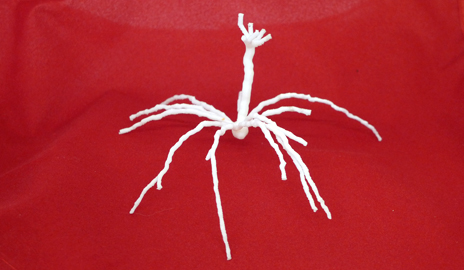
3D-printed model of a neuron (credit: Yale University)

3D-printed model of a neuron (credit: Yale University)

A Yale neuroscientist  has created the first 3D-printed neuron.

Studies released today suggest promising new treatments for nicotine and heroin addiction, and further our understanding of pathological gambling and heroin abuse in those suffering chronic pain. This new knowledge, released at Neuroscience 2013, the annual meeting of the Society for Neuroscience (SFN) and the world’s largest source of emerging news about brain science and health, may one day lead to non-pharmaceutical interventions and therapies to treat addiction. Also presented at SFN, new studies revealing links between social status and specific brain structures and activity, particularly in the context of social stress.

A new study has found that people experiencing a depressive episode process information about themselves differently than people who are not depressed.

To flexibly deal with our ever-changing world, we need to learn from both the negative and positive consequences of our behaviour. In other words, from punishment and reward. Hanneke den Ouden from the Donders Institute in Nijmegen demonstrated that serotonin and dopamine related genes influence how we base our choices on past punishments or rewards. This influence depends on which gene variant you inherited from your parents. These results were published in Neuron on November 20.

Brain scans reveal that people with fibromyalgia are not as able to prepare for pain as healthy people, and they are less likely to respond to the promise of pain relief.

Scientists have used RNA interference (RNAi) technology to reveal dozens of genes which may represent new therapeutic targets for treating Parkinson’s disease. The findings also may be relevant to several diseases caused by damage to mitochondria, the biological power plants found in cells throughout the body.

Playing a fast-paced strategy video games can help the brain to become more agile and improve strategic thinking, according to new research.

While young children sleep, connections between the left and the right hemispheres of their brain strengthen, which may help brain functions mature, according to a new study by the University of Colorado Boulder.  And in another sleep study, a team of sleep researchers  has confirmed the mechanism that enables the brain to consolidate memory and found that a commonly prescribed sleep aid enhances the process. Those discoveries could lead to new sleep therapies that will improve memory for aging adults and those with dementia, Alzheimer’s and schizophrenia.

Weekly Neuroscience Update

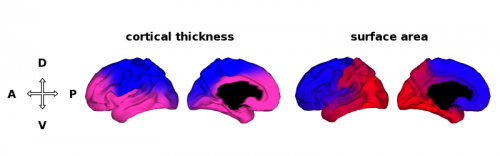
Maps of the brain based on genetic correlation clusters, when only two clusters are specified. This approach solution identified a dorsal-ventral (D-V, i.e., top to bottom) division as the most distinct partition in the genetic patterning of cortical thickness. By contrast, for surface area the two genetic clusters form an anterior-posterior (A-P, i.e., front to back) division. Abbreviations: D, dorsal; V, ventral; A, anterior; P, posterior. Credit: Chi-Hua Chen, Ph.D., UCSD

Maps of the brain based on genetic correlation clusters, when only two clusters are specified. This approach solution identified a dorsal-ventral (D-V, i.e., top to bottom) division as the most distinct partition in the genetic patterning of cortical thickness. By contrast, for surface area the two genetic clusters form an anterior-posterior (A-P, i.e., front to back) division. Abbreviations: D, dorsal; V, ventral; A, anterior; P, posterior. Credit: Chi-Hua Chen, Ph.D., UCSD

An international research team studying the structure and organization of the brain has found that different genetic factors may affect the thickness of different parts of the cortex of the brain.

Johns Hopkins researchers say they have pinpointed a site in a highly developed area of the human brain that plays an important role in the subconscious recognition of which way is straight up and which way is down. The finding, described online in the journal Cerebral Cortex, may help account for some causes of spatial disorientation and dizziness, and offer targets for treating the feelings of unsteadiness and “floating” people experience when the brain fails to properly integrate input from the body’s senses.

The discovery of the first chemical to prevent the death of brain tissue in a neurodegenerative disease has been hailed as the “turning point” in the fight against Alzheimer’s disease.

A bedside scan could reveal an active mind hidden inside an unresponsive body. The method provides another tool for recognising consciousness in people who have been wrongly diagnosed as being in a vegetative state. Tests are also under way to use it to monitor people under general anaesthetic, to make sure they do not regain consciousness during an operation.

The more you want to use your brain – and the more you enjoy doing it – the more likely you are to stay sharp as you age. This is according to findings recently published in the Journals of Gerontology: Psychological Sciences.

A team of scientists have identified neural circuits that modulate REM sleep. 

People who are depressed may have triple the risk of developing Parkinson’s disease, according to a study published in the October 2, 2013, online issue of Neurology

Scientists have discovered a process by which the “power plants” of the brain – tiny mitochondria found inside cells – signal that they are damaged and need to be eliminated. This is according to a study published in the journal Nature Cell Biology.

The hormone vasopressin may play a key role in jet lag, new research suggests.

Researchers have gained new insight into how localized hearing works in the brain. Their research is published in the Oct. 2, 2013 issue of the Journal of Neuroscience.

Weekly Neuroscience Update

Brain and eye combined monitoring breakthrough could lead to fewer road accidents

An eye-tracking, brain monitoring experiment in progress. The infra-red camera is on the small black console on the desk in front of the main PC screen.

Latest advances in capturing data on brain activity and eye movement are being combined to open up a host of ‘mindreading’ possibilities for the future. These include the potential development of a system that can detect when drivers are in danger of falling asleep at the wheel.

Multimodal neuroimaging has confirmed that major depressive disorder is associated with a deregulation of brain regions.

Sensory processing disorders (SPD) are more prevalent in children than autism and as common as attention deficit hyperactivity disorder, yet it receives far less attention partly because it’s never been recognized as a distinct disease. In a groundbreaking new study from UC San Francisco, researchers have found that children affected with SPD have quantifiable differences in brain structure, for the first time showing a biological basis for the disease that sets it apart from other neurodevelopmental disorders.

Neuroscientists have discovered that spontaneously emerging brain activity patterns preserve traces of previous cognitive activity.

When people sing in a choir their heart beats are synchronised, so that the pulse of choir members tends to increase and decrease in unison. This has been shown by a recent study from that examined the health effects for choir members.

Weekly Neuroscience Update

Feeling happy or sad? Researchers have measured brain signals to accurately read emotions in individuals. (Credit: Karim S. Kassam et al PLOS ONE 10.1371/journal.pone.0066032)

For the first time, scientists at Carnegie Mellon University have identified which emotion a person is experiencing based on brain activity.

Pre-treatment scans of brain activity predicted whether depressed patients would best achieve remission with an antidepressant medication or psychotherapy, in a new study.

People who experience any stroke symptoms—but do not have a stroke—may also be more likely to develop problems with memory and thinking, according to new research published in the June 19, 2013, online issue of Neurology®, the medical journal of the American Academy of Neurology.

And finally this week, a study, led by Royal Holloway University researcher Carolyn McGettigan, has identified the brain regions and interactions involved in impersonations and accents.

Weekly Neuroscience Update

medium_3312316471

Scientists have shown that working as a piano tuner may lead to changes in the structure of the memory and navigation areas of the brain. The study, published in the Journal of Neuroscience, shows that these structural differences correlate with the number of years of experience a piano tuner has accumulated.

An unusual kind of circuit fine-tunes the brain’s control over movement and incoming sensory information, and without relying on conventional nerve pathways, according to a study published in the journal Neuron.

The reason we struggle to recall memories from our early childhood is down to high levels of neuron production during the first years of life, say Canadian researchers.

Researchers have identified mutations in several new genes that might be associated with the development of spontaneously occurring cases of the neurodegenerative disease known as amyotrophic lateral sclerosis, or ALS. Also known as Lou Gehrig’s disease, the progressive, fatal condition, in which the motor neurons that control movement and breathing gradually cease to function, has no cure.

The brains of people with depression show a reduced ability to adapt to their environment, a unique study shows.

Researchers at the Stanford University School of Medicine have found that a naturally occurring protein secreted only in discrete areas of the mammalian brain may act as a Valium-like brake on certain types of epileptic seizures.

photo credit: Chandra Marsono via photopin cc

Weekly Neuroscience Update

This image from the study shows changes in degree of connectivity in the feedback group. Increases are shown in red/yellow and decreases in blue/purple. Decreases in connectivity are seen in limbic areas, and increases are seen in prefrontal regions. (Credit: D Scheinost et al./Yale University)

People provided with a real-time readout of activity in specific regions of their brains can learn to control that activity and lessen their anxiety, say Yale researchers.

A new study provides neurobiological evidence for dysfunction in the neural circuitry underlying emotion regulation in people with insomnia, which may have implications for the risk relationship between insomnia and depression.

Different brain areas are activated when we choose for ourselves to suppress an emotion, compared to situations where we are instructed to inhibit an emotion, according to a new study from the UCL Institute of Cognitive Neuroscience and Ghent University.

Migraines and depression can each cause a great deal of suffering, but new research indicates the combination of the two may be linked to something else entirely—a smaller brain.

The epigenetic modifications, which alter the way genes function without changing the underlying DNA sequence, can apparently be detected in the blood of pregnant women during any trimester, potentially providing a simple way to foretell depression in the weeks after giving birth, and an opportunity to intervene before symptoms become debilitating.

A three-year multinational study has tracked and detailed the progression of Huntington’s disease (HD), predicting clinical decline in people carrying the HD gene more than 10 years before the expected onset of symptoms.

Researchers have pinpointed a catalytic trigger for the onset of Alzheimer’s disease – when the fundamental structure of a protein molecule changes to cause a chain reaction that leads to the death of neurons in the brain.

Individuals who learn two languages at an early age seem to switch back and forth between separate “sound systems” for each language, according to new research conducted at the University of Arizona.

Chronic trauma can inflict lasting damage to brain regions associated with fear and anxiety. Previous imaging studies of people with post-traumatic stress disorder, or PTSD, have shown that these brain regions can over-or under-react in response to stressful tasks, such as recalling a traumatic event or reacting to a photo of a threatening face. Now, researchers at NYU School of Medicine have explored for the first time what happens in the brains of combat veterans with PTSD in the absence of external triggers.

And finally this week…

Listening to new music is rewarding for the brain, a study suggests. Using MRI scans, a Canadian team of scientists found that areas in the reward centre of the brain became active when people heard a song for the first time. The more the listener enjoyed what they were hearing, the stronger the connections were in the region of the brain called the nucleus accumbens. The study is published in the journal Science