Weekly Neuroscience Update

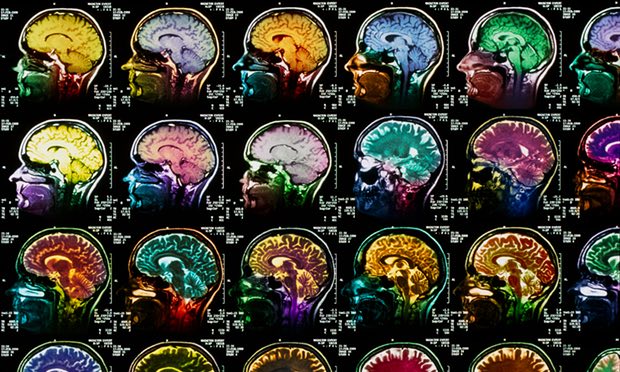
4961.jpg

Scientists have unpicked the regions of the brain involved in dreaming, in a study with significant implications for our understanding of the purpose of dreams and of consciousness itself. What’s more, changes in brain activity have been found to offer clues as to what the dream is about.

A machine learning algorithm shows that during sleep, the brain actively reprocesses information learned the previous day, strengthening the memory.

A new study of obese people suggests that changes in their brains’ reward regions make them more prone to overeating, and that women and men exhibit different brain activity related to overeating.

A plasma membrane protein affects the generation of new neurons in the adult hippocampus, a new study reports.

The brains of youth experiencing elevated depressive symptoms early in adolescence appear to develop differently from those experiencing depression in late adolescence, reports a study in the Journal of the American Academy of Child and Adolescent Psychiatry. Specifically, the MRI study found that cortical surface area was lower in youth with early depressive symptoms compared with those in the other groups.

While some researchers believe oxytocin is released to enhance a romantic relationship, this might not always be the case, a new study reveals.

Researchers have developed a new method to induce visual hallucinations in healthy people. The study could help to develop new treatments to control hallucinations in people with Parkinson’s and other disorders.

Exercise may bolster the brain function and thinking skills of people with dementia, according to a new report.

When prompted to use verbal thinking, people create visual images to accompany their speech, implying visual thinking could be hardwired into our brains, a new study reports.

Researchers report brain network organization changes can influence executive function in young adults.

What happens in the brain when we see other people experiencing a trauma or being subjected to pain? It seems the same regions that are involved when we feel pain ourselves are also activated when we observe other people who appear to be going through some painful experience. This is shown in a study from Karolinska Institutet in Sweden published in Nature Communications.

A new study reports EEG could accurately predict which newborn babies will have neurodevelopmental disorders.

Finally this week, new research, published in Frontiers in Human Neuroscience makes the case against fixed starting times, i.e. a fixed one-size-fits-all approach for students and employees.

Weekly Neuroscience Update


Adobe Spark (81).jpg

Fathers given boosts of the hormone oxytocin show increased activity in brain regions associated with reward and empathy when viewing photos of their toddlers, a new study finds. The journal Hormones and Behavior published the results of the study, the first to look at the influence of both oxytocin and vasopressin – another hormone linked to social bonding – on brain function in human fathers.

A new study looks at the association between tiredness, genetics, environment and health.

A genetic ‘switch’ has been discovered by researchers at the University of Leicester which could help to prevent or delay the symptoms of Parkinson’s disease. In a paper published in the journal Cell Death and Differentiation, the team discovered that a gene called ATF4 plays a key role in Parkinson’s disease, acting as a ‘switch’ for genes that control mitochondrial metabolism for neuron health.

A new study supports olfactory testing as an early method to detect those at risk of develop dementia.

Researchers have experimentally confirmed the hypothesis, whereby comprehension of a word’s meaning involves not only the ‘classic’ language brain centres but also the cortical regions responsible for the control of body muscles, such as hand movements. The resulting brain representations are, therefore, distributed across a network of locations involving both areas specialised for language processing and those responsible for the control of the associated action.

Better quality sleep is linked to improved emotions and fewer stressors the next day, researchers report.

New research shows that patients with mild traumatic brain injury (mTBI), even without evidence of brain lesions, may exhibit changes in brain connectivity detectable at the time of the injury that can aid in diagnosis and predicting the effects on cognitive and behavioural performance at 6 months.

Finally this week, preschool aged children who took naps after learning new verbs better understood the word when tested 24 hours later, a new study reports.

Weekly Neuroscience Update

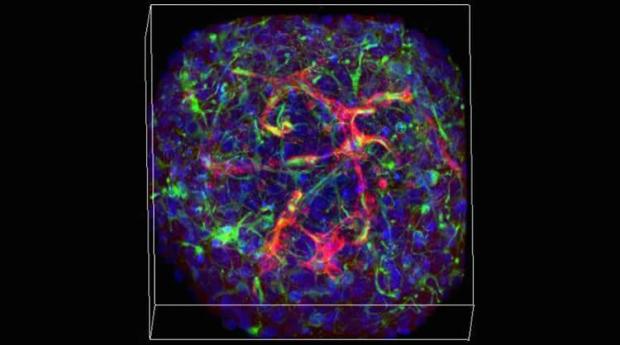
mini-brain-vessicles-neurosciencneews.jpg

Under the microscope, staining highlights a network of vasculature amid the ball of neurons that make up a minibrain. NeuroscienceNews.com image is credited to Hoffman-Kim lab/Brown University

Scientists have recently made a variety of mini-brains — 3-D cultures of neural cells that model basic properties of living brains — but a new finding could add to the field’s growing excitement in an entirely new “vein”: Brown University’s mini-brains now grow blood vessels, too.

A new study reports astrocytes may be a driving force behind a number of neurodegenerative diseases.

While many of us find the sound of a person chewing or breathing heavily annoying, for those with misophonia, such noises are unbearable. Researchers have identified the neural networks and brain changes associated with the disorder.

New research reveals the shape of our brain can provide surprising clues about how we behave and our risk of developing mental health disorders.

A team of investigators have found that exposure to phobic images without conscious awareness is more effective than longer, conscious exposure for reducing fear. The investigators used fMRI to determine that areas of the brain involved in fear processing were much more strongly activated by unconscious exposure. Results of the study will be published in the journal, Human Brain Mapping, on February 6, 2017.

Depression poses a risk for cardiovascular diseases in men that is just as great as that posed by high cholesterol levels and obesity.

In the latest issue of Proceedings of the National Academy of Sciences (PNAS), New York University neuroscientist David Heeger offers a new framework to explain how the brain makes predictions

Researchers have developed new technology that utilises infrared light in order to treat memory loss conditions.

Scientists have discovered a cell in the retina that may cause myopia when it dysfunctions. The dysfunction may be linked to the amount of time a child spends indoors and away from natural light.

A new study pinpoints the brain area responsible for forming direct links between environmental stimuli and enhanced focus.

New sensors that can monitor dopamine secretion in a single neuron could help researchers better understand how dopamine influences brain activity.

Scientists have developed sensor technology for a robotic prosthetic arm that detects signals from nerves in the spinal cord.

People who use sign language have better reaction times in their peripheral vision, a new study from the University of Sheffield has found.

Finally this week, researchers report concussion can accelerate Alzheimer’s symptoms in people with a genetic risk for the disease.


Weekly Neuroscience Update

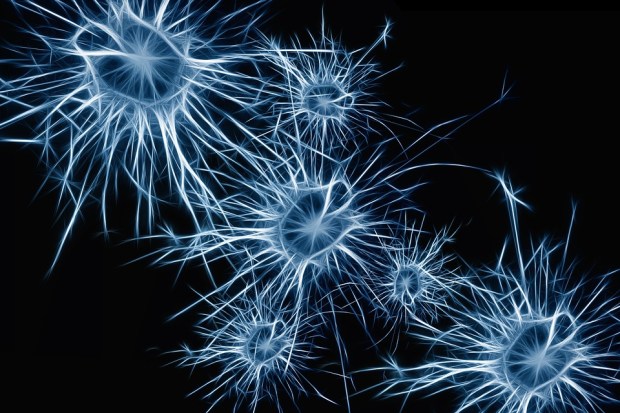
neurons-1773922_960_720.jpg

A new study has identified a novel signaling system controlling neuronal plasticity.

A lack of shrinkage in the area of the brain responsible for memory may be a sign that people with thinking and memory problems may go on to develop dementia with Lewy bodies rather than Alzheimer’s disease, according to a new study published in the November 2, 2016, online issue of Neurology.

A new paper offers an overview as to how neurons ‘communicate’ with one another.

Researchers have confirmed a genetic link between mitochondrial DNA (mtDNA), which is passed on from the mother, and some forms of autism spectrum disorder (ASD).

A new study looks at how the digestive tract communicates with the brain and could help find new treatment options for obesity.

Scientists can now map what happens neurologically when new information influences a person to change his or her mind, a finding that offers more insight into the mechanics of learning.

New studies may help to explain the path from stem cells to dopamine neurons.

Increased muscle strength leads to improved brain function in adults with Mild Cognitive Impairment (MCI), new results from a recent trial led by the University of Sydney has revealed.

Researchers have identified a previously unknown stage of human brain development.

Finally, this  week  a new study finds that subtle, unconscious increases in arousal – indicated by a faster heartbeat and dilated pupils – shape our confidence for visual experiences.


Weekly Neuroscience Update

iphone-1283665_960_720

Sending text messages on a smartphone can change the rhythm of brain waves, according to a new study published in Epilepsy & Behavior.

An international research team has found that our perception is highly sensitised for absorbing social information. The brain is thus trained to pay a great degree of attention to everyday actions. The results are reported in the journal Consciousness and Cognition.

A new study unravels the mechanisms driving excess brain growth that affects as many as 30 percent of people with autism.

Researchers have developed a new technology that could lead to new therapeutics for traumatic brain injuries. The discovery, published in Nature Communications, provides a means of homing drugs or nanoparticles to injured areas of the brain.

Researchers have coupled machine learning with neuroimaging to detect early forms of dementia.

Neuroscientists have come up with a way to observe brain activity during natural reading. It’s the first time researchers have been able to study the brain while reading actual texts, instead of individual words. The research has potential implications for understanding dyslexia and other reading deficits.

A new study links hippocampal inflammation in multiple sclerosis with an increased risk of developing depression.

In a partnership melding neuroscience and electrical engineering, researchers have developed a new technology that will allow neuroscientists to capture images of the brain almost 10 times larger than previously possible – helping them better understand the behavior of neurons in the brain.

Researchers report acquiring new memories can interfere with old ones, making them more likely to be forgotten.

A European study has shown that the dopamine D2 receptor is linked to the long-term episodic memory, which function often reduces with age and due to dementia. This new insight can contribute to the understanding of why some but not others are affected by memory impairment. The results have been published in the journal PNAS.

Finally this week, a new study shows how new linguistic information is integrated into the same brain areas used for your native language.

Weekly Neuroscience News

virtual-partner-emotion-NeuroscienceNews

Researchers have created a ‘virtual partner’ that is able to elicit emotional response from humans in real time.

New research, presented this week at the European Society of Human Genetics conference in Barcelona, Spain, demonstrates that men whose red blood cells lack Y chromosomes are more susceptible to Alzheimer’s disease. The team hopes that, in the future, these findings might help develop an early warning system for Alzheimer’s.

A new study explores the role microtubles play in neurodevelopment.

According to researchers, people with major depressive disorder could have altered purine metabolism.

Researchers report we recognize patterns in music automatically, even with no musical training.

According to a new study, during sensory stimulation, increases of blood flow are not precisely tuned to local neural activity, and this can have implications for fMRI neuroimaging.

New evidence reveals the powerful role of experience in linking language and cognition in infants.

Researchers report microglia may actually protect the brain against Alzheimer’s disease by containing the spread of amyloid plaques.

A new study reports microglia can diminish the adverse changes to neural circuitry bought on by chronic cocaine use.

Researchers report they have solved the puzzle as to how antibodies enter the nervous system to control viral infections.

A new study from the University of Rochester suggests that human intelligence might have evolved in response to the demands of caring for infants.

Researchers have investigated how the human brain implements hierarchical structures in order to design more clever algorithms for machine learning.

new study reports having high blood pressure can raise the risk of developing vascular dementia.

A new study from MIT neuroscientists reveals that a gene mutation associated with autism plays a critical role in the formation and maturation of synapses—the connections that allow neurons to communicate with each other.

Finally this week, a new study reports a number of different areas of childrens’ brains become activated when they hear their mother’s voice. This response predicts a child’s social communication ability.

Weekly Neuroscience Update

barefoot_running_480_18ec9t1-18ec9t4

Running barefoot is better than running with shoes for your working memory, according to a new study.

A new study from King’s College London offers clues as to why chronic pain can persist, even when the injury that caused it has gone. Although still in its infancy, this research could explain how small and seemingly innocuous injuries leave molecular ‘footprints’ which add up to more lasting damage, and ultimately chronic pain.

New findings demonstrate that a five-minute measurement of resting-state brain activity predicted how quickly adults learned a second language.

Danish research is behind a new epoch-making discovery, which may prove decisive to future brain research. The level of salts in the brain plays a critical role in whether we are asleep or awake. This discovery may be of great importance to research on psychiatric diseases such as schizophrenia and convulsive fits from lack of sleep as well as post-anaesthetization confusion.

Research sheds light the neural structure that controls our sleep, eating habits, hormones and more.

A new study has found that Foreign Accent Syndrome, a condition which results in patients to be perceived as non-native speakers of their mother tongue, may be caused by the impaired connections between the language centres in the front part of the brain and the cerebellum.

Symptoms of depression that steadily increase over time in older age could indicate early signs of dementia, according to new research. 

A newly discovered pathway leading to neurodegeneration in Alzheimer’s disease (AD) may unlock the door to new approaches for treating the disease.

Some adults learn a second language better than others, and their secret may involve the rhythms of activity in their brains.

Finally this week, researchers report they have discovered a backup for memory storage that comes into play when the molecular mechanism for primary long term memory storage fails.

Weekly Neuroscience Update

alzheimers-synapse-loss

Researchers show how brain connections, or synapses, are lost early in Alzheimer’s disease and demonstrate that the process starts, and could potentially be halted, before telltale plaques accumulate in the brain.

Older adults who exercise regularly could buy an extra decade of good brain functioning, a new study suggests.

Researchers have identified an area of the brain that helps us to perceive boundaries.

Using a sophisticated MRI technique, researchers have found abnormalities in the brain’s white matter tracts in patients with insomnia. Results of the study were published online in the journal Radiology.

A pioneering new study has revealed how an individual’s movement can give a unique insight into their inherent personality traits.

The fluctuations of your heartbeat may affect your wisdom, according to new research.

Researchers have found that the emotional impact experienced by music listeners depends on the concert hall’s acoustics.

Lysergic acid diethylamide (LSD) use causes changes in the way that people think about time that may help develop drug therapies for people suffering from depression, according to a study published in the Journal of Psychopharmacology.

Repeated minor trauma to the head and other body parts can lead to early dementia, according to a new study.

The risk of schizophrenia in children associated with younger and older maternal age appears to be partly explained by the genetic association between schizophrenia and age at first birth, according to an article published online by JAMA Psychiatry.

A new imaging study shows that intense exercise boosts two critical neurotransmitters — glutamate and gamma-aminobutyric acid (GABA) — resulting in better mental fitness.

Religion and science activate different networks in the brain and each suppresses the other, new research finds.

Sensory neurons in human muscles provide important information used for the perception and control of movement. Learning to move in a novel context also relies on the brain’s independent control of these sensors, not just of muscles, according to a new study published in the journal Current Biology.

Finally this week, women with Alzheimer’s have poorer cognitive abilities than men at the same stage of the disease, according to a new paper published in World Journal of Psychiatry.


Weekly Neuroscience Update

autism-men-neuroimaging

Red regions indicate reduced fractional anisotropy values in autism spectrum disorder (ASD). Credit: The researchers/King’s College London.

Research at King’s College London has revealed subtle brain differences in adult males with autism spectrum disorder (ASD), which may go some way towards explaining why symptoms persist into adulthood in some people with the disorder.

Women who take estrogen supplements from before or at the start of menopause and continue with them for a few years have better preserved brain structure, which may reduce the risk of dementia.

Scientists have taken a significant step toward understanding the cause of schizophrenia, in a landmark study that provides the first rigorously tested insight into the biology behind any common psychiatric disorder.

Stopping disruptions in cellular “trash removal” brought on by errors in molecular marks on DNA may guard against neurodegenerative diseases like Parkinson’s.

Roughly twenty years before the first symptoms of Alzheimer’s disease appear, inflammatory changes in the brain can be seen, according to a new study from Karolinska Institutet published in the medical scientific journal Brain.

In a new study, researchers reveal how brain scans could be used to identify children at high risk for later-life depression – information that could pave the way for early intervention and prevention.

Researchers have shown that graphene can be used to make electrodes that can be implanted in the brain, which could potentially be used to restore sensory functions for amputee or paralysed patients, or for individuals with motor disorders such as Parkinson’s disease.

A new study has linked stress and anxiety to the same neurocircuitry in the brain as depression and dementia.

Different regions of our brain need to work simultaneously in order for us to process emotion. But according to new research, such regions are disconnected among individuals who experience multiple episodes of major depression.

A team of international researchers have announced the discovery of a system in the brain that may underlie the development of involuntary vocalizations (commonly called vocal tics) that often occur in people with Tourette syndrome.

A new study sheds light on multiple sclerosis (MS), specifically damage in the brain caused by the disease that may explain the slow and continuous cognitive decline that many patients experience. The findings, which appear in the Journal of Neuroscience, show that the brain’s immune system is responsible for disrupting communication between nerve cells, even in parts of the brain that are not normally considered to be primary targets of the disease.

Cognitive function and health appear to be genetically linked, according to research published in Molecular Psychiatry. The study was carried out by an international team from the US, the UK and Germany.

Researchers have discovered the mechanics of how dopamine transports into and out of brain cells, a finding that could someday lead to more effective treatment of drug addictions and neurological disorders such as Parkinson’s disease.

The brains of children who are obese function differently from those of children of healthy weight, and exhibit an “imbalance” between food-seeking and food-avoiding behaviors, researchers at Vanderbilt University Medical Center have found.

Finally this week, neuroscientists have now shown that rhythmic brain waves, called theta oscillations, engage and synchronize the brain regions that support the integration of memories. The results were published in the journal Current Biology.

15 ways to stave off dementia

dementia

Evidence suggests that if key risk factors for dementia – such as poor nutrition, lack of exercise and unhealthy lifestyles – were addressed, fewer people would have it. In today’s post I suggest fifteen ways you may be able to stave off dementia.

1 Wear a helmet
Head injury has been linked to early onset of Alzheimer’s later in life.  Some boxers, as well as people who otherwise suffer a head injury, can have a higher risk of contracting Alzheimer’s disease, which constitutes about 70pc of dementia cases. It’s therefore wise to make a point of wearing a helmet if you play sports which can result in a head injury. For the same reason, it’s also a very good idea to always wear your seat-belt in the car.

2 Eat Fish
A diet rich in fish is a diet low in cholesterol. When the medical profession started to treat high cholesterol with cholesterol-lowering medication called statins, they discovered they could also delay the onset of dementia for about seven years. Statins may be helpful to people who show signs of early-onset dementia.

3 Use It or Lose It

Keep your brain active. It’s a case of use it or lose it. The more you challenge the brain, as you do in education, the fitter and healthier it becomes, which means it can withstand attack in older age from problems such as stress, depression or trauma. The more educated you are and the more effective you’ve been in using your brain during your life, the stronger its ability to resist attack. Interestingly, people who are by nature curious tend, on average, to develop Alzheimer’s much later in life than people who are not.

4 Eat less sugar

Scientists now believe there is an association between hypoglycaemia and dementia.Most people with type two diabetes develop the diabetes because they eat so much sugary food and take so little exercise that the body cannot handle the sugar. New research has shown that diabetes, and the rebound hypoglycaemia (low blood sugar) it causes, may exacerbate the risk of developing dementia and Alzheimer’s disease. The brain uses glucose (sugar) as a primary source of energy, and cognitive function becomes impaired when blood glucose drops to low levels. Basically, diabetes impairs the production and regulation of insulin which helps blood cells take up glucose. This means that for diabetics, getting a regular supply of glucose to the brain is more difficult. Scientists now believe that when the brain is starved of energy, neurological problems like dementia and Alzheimer’s are more likely to develop.

5 Lose weight

Scientists now believe there is a link between midlife obesity and a higher risk of developing dementia. Once the body is extremely overweight or obese, t he fat becomes metabolically or chemically unstable and can become inflamed. That inflammation may then spread around the body – including to the brain. Inflammation in the brain is believed to be linked to dementia.

6 Don’t smoke

Smoking obstructs the lungs, and can cause chronic obstructive pulmonary disease. This means the lungs are not able to get as much oxygen as they need and you end up damaging the lungs, and the lung tissue. Insufficient oxygen supplies to the brain lowers the brain’s energy levels, thereby impairing its ability to protect itself. Meanwhile, the nicotine damages blood vessels everywhere in the body, including in the brain. By damaging the blood vessels, nicotine can help cause high blood pressure and damage the nerves in the brain.

7 Treat your depression

It’s now believed that depression can be a factor in the onset of dementia. There is evidence now that depression may be a brain inflammation in the frontal part of the brain – while Alzheimer’s is an inflammation in the hippocampus. If you’re suffering from depression, get it treated,  because inflammation weakens the ability of the brain to fight infection. Depression is also about withdrawal from society so being depressed means you’re less open to doing things and that means you aren’t challenging your brain.

8 Be physically active

If you’re physically inactive, you’re not introducing oxygen to the body – and the brain needs huge amounts of oxygen because it’s so active, even during the night. The brain can use more oxygen in some phases of sleep than when we’re awake during the day.  Depriving the brain of oxygen prevents it from learning, i.e. making new connections and repairing itself – let alone getting on with the normal processes of growth and development.

9 Watch Your Blood Pressure

High blood pressure is a major cause of stroke, which deprives the brain of life-giving oxygen. You can end up with dementia through a series of mini-strokes. These can gradually lead to a change in the person’s character, which eventually, without appropriate treatment, may develop into full-blown dementia. So avoid a lifestyle which can contribute to high blood pressure – reduce your stress levels, make sure you get sufficient, good quality sleep and avoid drugs linked to high blood pressure such as nicotine.

10 Get that ingrown toenail treated!

Seriously – never allow an infection in the body to persist. If you do, it may spread and, over a series of decades, can result in an inflammation which spreads to the brain and may result in dementia. When we develop an infection, the body responds with a series of chemicals which are supposed to fight it. However, if the infection persists, and goes untreated, these ‘warrior’ chemicals can spread throughout the body. They can eventually become indiscriminate in what they fight, so instead of fighting infection, they start to fight the body including the brain.

11 Nutrition

Make sure your diet includes lots of vegetables, particularly green leafy ones, and fruit, herbs like rosemary and sage and plenty of fish oil. Vegetables and fruit are packed with health-giving antioxidants which stop inflammation. Antioxidants are like a fire-blanket on inflammation. Eat the rosemary and sage which are cognitively enhancing because they contain chemicals which replace the main neurotransmitter damaged in dementia – acetycholine – which is involved in high-level thought. Make sure your diet also includes good-quality fish oil – try having sardines on toast once a week, for example.  Fish oil is used by the body to make the chemicals to fight inflammation. And drink coffee.  People who drink it are less predisposed to Alzheimer’s. It’s a psychological stimulant and a cognitive-enhancing drug.

12 Watch TG4!

Brush up on your Irish – there’s evidence to show that having a second language can help protect you from the onset of dementia. It has been discovered that learning a second language exercises the brain so much that it strengthens it and makes it more resistant to fighting the injuries and infection which often result in dementia. A Swiss study carried out in the last few years has showed that bilingualism and multilingualism seems to offer protection again the onset of dementia.”

13 Buy a Smartphone and play video games

Get a smartphone because it’s good for your brain to work out how to use it properly, especially if you’re older.  Play video games with your grandchildren – it will help to keep you mentally on your toes; while playing bridge either with your friends or online is a great way to wake up the brain. Bridge is a game of memory and strategy. It’s very challenging for the brain and is also a highly sociable activity.

14 Try some brain-teasers

Use your non-preferred hand once in a while for activities such as brushing your teeth or hair. This challenges your brain because you are carrying out an unfamiliar activity. Try wearing your wristwatch upside down – this also forces your brain to do some work. It requires the hippocampus (the area of the brain which is the most vulnerable to dementia) to do a mental rotation in order to work out the correct time from the dial.  And try learning to juggle – this is a great exercise in hand-eye coordination because it involves both physical activity and mental concentration. Go buy three oranges now and get on with it. It’s part of a brain-building process which helps your brain fight the injury and infection that may lead to dementia.

15 Get creative! Doodle

Instead of just looking at art or just listening to music, make your own.  Write songs, paint a picture, learn to play an instrument, sing or dance. First of all, it’s physically active, and secondly you’re thinking about what you are doing. Your brain is planning and working instead of simply receiving information. Make a point of regularly reading challenging material and do 30-minute word searches on Google, picking a word, for example ‘starling’, and finding out everything there is to know about these birds.  It’s also good to doodle. Doodling is a healthy mental exercise because it is a creative act. It’s a sign that what you’re currently doing is not sufficiently challenging. Doodling is positive because it’s a creative and focused activity.

Adapted from The Irish Independent