Weekly Neuroscience Update

feet-619399_960_720.jpg

A new study reveals children who are habitually barefoot show significantly different motor skills between the ages of 6-10 than those who are habitually shod. Researchers report those who habitually barefoot have better balance and jumping skills.

New research has found the natural vibrations of cars make people sleepier, affecting concentration and alertness levels just 15 minutes after drivers get behind the wheel.

Scientists have discovered a “Big Bang” of Alzheimer’s disease – the precise point at which a healthy protein becomes toxic but has not yet formed deadly tangles in the brain.

A new study reports people living in areas with more sunlight have lower rates of OCD.

Neuroscientists at the University of California-Berkeley are developing a technique that could give us the ability to fool our brain into thinking that we’d experienced something that never happened by manipulating electrical activity in the brain.

Researchers report boys on the autism spectrum tend to have lower fractal dimension in the right side of the cerebellum than those without autism.

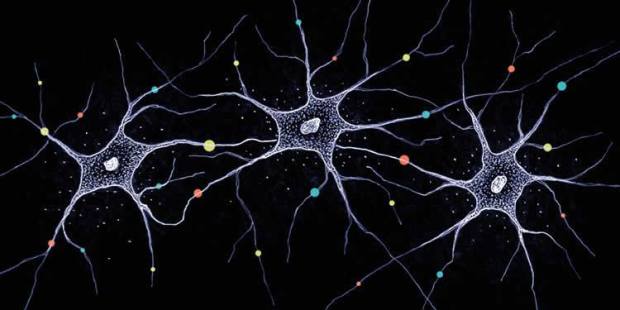
Distinct molecular mechanisms can generate the same features in different neurons, a team of scientists has discovered. Its findings, which appear in the journal Cell, enhance our understanding of brain cell development.

Finally this week, a new study reports a short burst of exercise can dramatically improve long-term retention of new motor skills.


Weekly Neuroscience Update

Adobe Spark.jpg

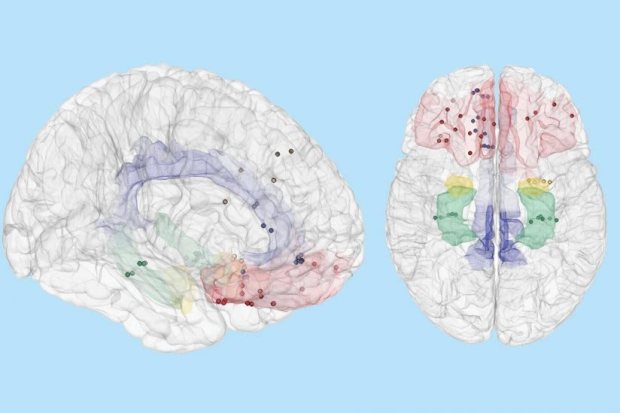
A new research project sheds light on the role played by a specific area of the brain in our moral judgements. The more developed it is, the more understanding we show towards those who have unintentionally caused harm.

A new study could help explain how pain often follows a chemical induced itch.

Researchers at the University of Liverpool have identified the basis for how a single gene mutation can cause a rare neurological movement disorder known as dystonia.

A new sensor could help to reveal the role dopamine plays in learning and emotion.

Researchers have developed a method using MRI to identify when HIV is still present in the brain, despite effective drug treatment.

Pupil dilation is at its largest when people are most uncertain about their situation, a new study reports.

Sleep deprivation increases the number of available A1 adenosine receptors, but restorative sleep helps normalize them again, a new study reports.

Scientists report doxycycline, a common antibiotic, could help to disrupt the formation of negative memories associated with PTSD and in another new study the power of oxytocin in combating PTSD will be tested.

Brain researchers report the anterior cingulate cortex, an area of the brain associated with empathy, activates very weakly in people with autism.

Non-invasive ultrasound improves the delivery to the brain of a therapeutic antibody targeting Alzheimer’s disease, scientists have found.

A new blood test has been developed that could help to identify infants who may be experiencing bleeding in the brain as a result of abusive head trauma.

Researchers at the University of Zurich have identified the brain mechanism that governs decisions between honesty and self-interest. Using non-invasive brain stimulation, they could even increase honest behavior.

Finally this week, a new study reveals acute stress can increase prosocial behavior and empathy.

Weekly Neuroscience Update

taste.jpg

Researchers report the gustatory cortex relies on all the senses to anticipate taste.

A research group has identified an enzyme whose production is turned off in nerve cells of the frontal lobe when alcohol dependence develops. The deficiency in this enzyme leads to continued use of alcohol despite adverse consequences.

Scientists have identified a brain circuit that’s indispensable to the sleep-wake cycle.

Studying brain electrical activity of volunteers, researchers found that language acquisition enhances brain plasticity and capacity for learning. In particular, they note that early language learning plays a significant role in the rapid formation of memory circuits for coding new information.

A new study reports that relaxing flexed muscles in your foot can reduce the ability of your hands to respond to stimulation.

We all know that we can quickly lose cardiovascular endurance if we stop exercising for a few weeks, but what impact does the cessation of exercise have on our brains? New research examined cerebral blood flow in healthy, physically fit older adults (ages 50-80 years) before and after a 10-day period during which they stopped all exercise. Using MRI brain imaging techniques, they found a significant decrease in blood flow to several brain regions, including the hippocampus, after they stopped their exercise routines.

Brain cells grow faster in children with some forms of autism due to distinct changes in core cell signaling patterns, according to new research.

Researchers have identified a brain mechanism that could be a drug target to help prevent tolerance and addiction to opioid pain medication, such as morphine, according to a study by Georgia State University and Emory University. The findings, published in the Nature journal Neuropsychopharmacology in August, show for the first time that morphine tolerance is due to an inflammatory response produced in the brain. This brain inflammation is caused by the release of cytokines, chemical messengers in the body that trigger an immune response, similar to a viral infection.

A new study reports researchers discover a signaling pathway that enables cells to reach their destinations through repulsion.

To remember events in the order they occur, the brain’s neurons function in a coordinated way that is akin to a symphony, a team of New York University scientists has found. Their findings offer new insights into how we recall information and point to factors that may disrupt certain types of memories.

Researchers have mapped out a serotonin-driven anxiety circuit that may explain the side effects of anxiety and fear experienced by some patients taking SSRIs. 

A new study published in the journal Neuron, delves into the anatomy and function of the striatum by employing cutting-edge strategies to comprehensively map one of the brain’s lesser-known forms of organization.

Finally this week, a new paper looks at why some of us are extreme thrill seekers, and others don’t even enjoy a gentle roller coaster ride.


Weekly Neuroscience Update

autism-boys-brain-scan

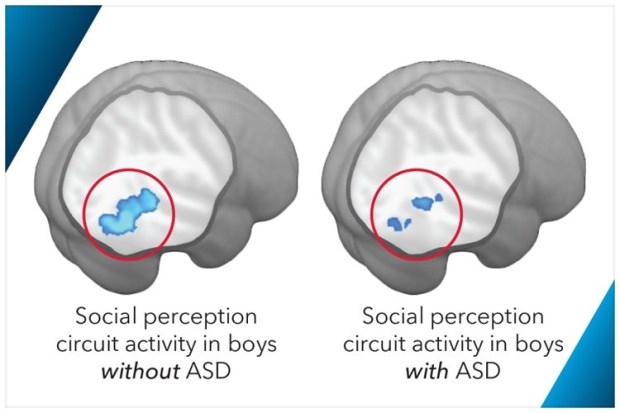
Researchers analyzed a series of 164 images from each of 114 individuals and discovered the brain scans of the social perception circuits indicated ASD only in boys. Credit: The researchers/George Washington University.

Researchers have developed a new method to map and track the function of brain circuits affected by autism spectrum disorder (ASD) in boys using brain imaging, a technique that will provide doctors with a tool that measures the progress of treatments in individual patients.

Scientists have derived a structural model of a transporter at the blood-brain barrier called Mfsd2a. This is the first molecular model of this critical transporter, and could prove important for the development of therapeutic agents that need to be delivered to the brain, across the blood-brain barrier. In future, this could help treat neurological disorders such as glioblastoma.

Research co-led by the University of Glasgow has made a potential breakthrough in the treatment of Alzheimer’s disease.

Frontotemporal dementia (FTD), the second most common cause of dementia in people under 65, may be triggered by a defect in immune cells called microglia that causes them to consume the brain’s synaptic connections, according to new research.

A new study shows that a series of play sessions with music improved 9-month-old babies’ brain processing of both music and new speech sounds.

Researchers at the RIKEN Brain Science Institute (BSI) in Japan have demonstrated that astrocytes help control the strength of connections between neurons. Published in Proceedings of the National Academy of Sciences, the study used cultured cells and brain slices to show that astrocytes in the hippocampus regulate changes in the brain brought on by neural activity.

Finally this week, people with more friends have higher pain tolerance, Oxford University researchers have found.

Weekly Neuroscience Update

short-term-memory-visual-distractions

John Gaspar, an SFU psychology doctoral student, places 128 electrodes into a cap. The electrodes will pick up tiny changes in the wearer’s brain activity. Image is adapted from the SFU press release.

A new study has found that differences in an individual’s working memory capacity correlate with the brain’s ability to actively ignore distraction.

A research team has connected neurons using ultrashort laser pulses. With their study, which was published in Scientific Reports, the team became the first ever to find a way to bond neurons.

Physicians and biomedical engineers from Johns Hopkins report what they believe is the first successful effort to wiggle fingers individually and independently of each other using a mind-controlled artificial “arm” to control the movement.

Researchers have identified a gene which can be used to predict how susceptible a young person is to the mind-altering effects of smoking cannabis.

Young adults with hostile attitudes or those who don’t cope well with stress may be at increased risk for experiencing memory and thinking problems decades later, according to a study published in the March 2, 2016, online issue of Neurology.

Researchers have found how lactate, a waste product of glucose metabolism can protect neurons from damage following acute trauma such as stroke or spinal cord injury.

Neuroscientists have discovered a specific enzyme that plays a critical role in spinal muscular atrophy, and that suppressing this enzyme’s activity, could markedly reduce the disease’s severity and improve patients’ lifestyles.

Birds that migrate the greatest distances have more new neurons in the regions of the brain responsible for navigation and spatial orientation, suggests a new paper published in Scientific Reports.

Scientists have now described the engineering of a bright red fluorescent protein-based voltage indicator, providing pathways to understanding complex neurological disorders.

Children with autism and other similar conditions often have difficulties in several areas of communication. A new doctoral thesis in linguistics from the University of Gothenburg shows that these children can develop speech, gestures and a sense of rhythm and melody by listening to various speech sounds.

Finally this week,  new research suggests that small numbers are processed in the right side of the brain, while large numbers are processed in the left side of the brain.

Weekly Neuroscience Update

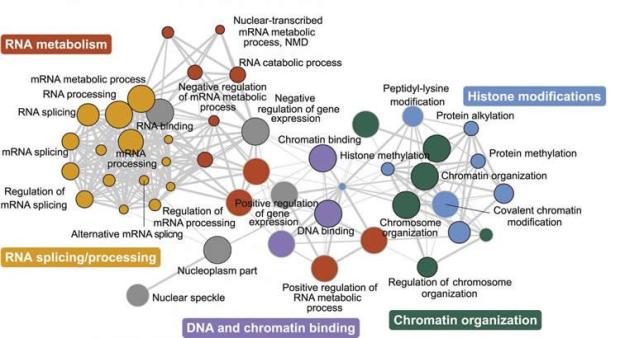
Percentage of known neuron-, astrocyte- and oligodendrocyte-enriched genes in 32 modules, ordered by proportion of neuron-enriched gene membership. (credit: Michael Hawrylycz et al./Nature Neuroscience)

Percentage of known neuron-, astrocyte- and oligodendrocyte-enriched genes in 32 modules, ordered by proportion of neuron-enriched gene membership. (credit: Michael Hawrylycz et al./Nature Neuroscience)

Allen Institute researchers have identified a surprisingly small set of just 32 gene-expression patterns for all 20,000 genes across 132 functionally distinct human brain regions, and these patterns appear to be common to all individuals.

Evidence is mounting that gratitude makes a powerful impact on our bodies, including our immune and cardiovascular health. But how does gratitude work in the brain? A team at the University of Southern California has shed light on the neural nuts and bolts of gratitude in a new study, offering insights into the complexity of this social emotion and how it relates to other cognitive processes.

Subjective memory complaints (SMCs) are associated with cognitive impairment nearly two decades later among older women, a prospective study of aging has demonstrated.

Older adults that improved their fitness through a moderate intensity exercise program increased the thickness of their brain’s cortex, the outer layer of the brain that typically atrophies with Alzheimer’s disease, according to a new study. These effects were found in both healthy older adults and those diagnosed with mild cognitive impairment (MCI), an early stage of Alzheimer’s disease.

When it comes to the brain, “more is better” seems like an obvious assumption. But in the case of synapses, which are the connections between brain cells, too many or too few can both disrupt brain function. Research, recently published in the Journal of Neuroscience, reports  that an immune-system protein called MHCI, or major histocompatibility complex class I, moonlights in the nervous system to help regulate the number of synapses, which transmit chemical and electrical signals between neurons. MHCI could play an unexpected role in conditions such as Alzheimer’s disease, type II diabetes and autism.

Researchers have developed a simple technique to measure an individual’s visual processing speed–the speed at which an individual can comprehend visual information–in order to identify whether or not they may have cognitive issues.

Sleep is usually considered an all-or-nothing state: The brain is either entirely awake or entirely asleep. However, MIT neuroscientists have discovered a brain circuit that can trigger small regions of the brain to fall asleep or become less alert, while the rest of the brain remains awake.

Weekly Neuroscience Update

Axon initial segments (blue) and the synapses that form along them (red and green) are shown. Image credit: Winnie Wefelmeyer/MRC Centre for Developmental Neurobiology.

Axon initial segments (blue) and the synapses that form along them (red and green) are shown. Image credit: Winnie Wefelmeyer/MRC Centre for Developmental Neurobiology.

A new study characterises a novel way in which neurons remain electrically stable when confronted with chronic increases in neuronal activity.

Lithium chloride which is used as a mood stabiliser in the treatment of mental health problems, mainly bipolar disorder, could be used to treat arthritis according to a new study.

New research indicates that adults born very premature are more likely to be socially withdrawn and display signs of autism.

Scientists have found that existing anti-malaria drugs could be a potential treatment for Parkinson’s disease.

A number of studies presented at the Alzheimer’s Association International Conference, showed that regular supervised exercise sessions could help to improve symptoms in people with memory problems and dementia.

Brain scans of war veterans with posttraumatic stress disorder have led researchers to an area of the prefrontal cortex that appears to be a good predictor of response to treatment with SSRIs–the first-line drug treatment for PTSD.

New research findings show that body fat can send a signal that affects the way the brain deals with stress and metabolism.

Increasing the levels of a signaling molecule found in the brain can positively alter response to stress, revealing a potential new therapeutic target for treatment of depression.

Music training, begun as late as high school, may help improve the teenage brain’s responses to sound and sharpen hearing and language skills, suggests a new study.

Researchers have, for the first time, determined the rate at which the developing brain eliminates unneeded connections between neurons during early childhood.

Scientists have identified a critical function of what they believe to be schizophrenia’s “Rosetta Stone” gene that could hold the key to decoding the function of all genes involved in the disease.

Researchers have discovered a link between autism and genetic changes in some segments of DNA that are responsible for switching on genes in the brain.

Infants can use their expectations about the world to rapidly shape their developing brains, researchers have found.

Finally this week, there’s new evidence suggesting that women’s brains are especially vulnerable to Alzheimer’s disease and other problems with memory and thinking.

Weekly Neuroscience Update

The human brain using colors and shapes to show neurological differences between two people. Credit Arthur Toga, University of California, Los Angeles via NIGMS.

The human brain using colors and shapes to show neurological differences between two people. Credit Arthur Toga, University of California, Los Angeles via NIGMS.

While many different combinations of genetic traits can cause autism, brains affected by autism share a pattern of ramped-up immune responses, an analysis of data from autopsied human brains reveals. The study, published online in the journal Nature Communications, included data from 72 autism and control brains.

Teenagers who have suffered a traumatic brain injury are twice as likely to drink alcohol or use drugs when compared with whose who have never experienced a similar blow or trauma to the head.

Activating the brain’s amygdala, an almond-shaped mass that processes emotions, can create an addictive, intense desire for sugary foods, a new study found. Rewards such as sweet, tasty food or even addictive drugs like alcohol or cocaine can be extremely attractive when this brain structure is triggered. And another study, led by researchers at University of California, San Diego School of Medicine, revealed that the brains of obese children literally light up differently when tasting sugar.

Scientists have discovered a link between sleep loss and cell injury. Results of a new study find sleep deprivation causes the damage to cells, especially in the liver, lung, and small intestine. Recovery sleep following deprivation heals the damage.

Neural circuits that activate when we daydream run in the opposite direction to how we process reality, a new study finds.

Yale researchers using a new brain imaging analysis method have confirmed that smoking cigarettes activates a dopamine-driven pleasure and satisfaction response differently in men compared to women.

Whether we’re paying attention to something we see can be discerned by monitoring the firings of specific groups of brain cells. Now, new work from Johns Hopkins shows that the same holds true for the sense of touch.

Serious, long-term stress can have dire consequences for your brain. That’s because the immune system and the brain are intimately related, say researchers at the Ruhr University Bochum, Germany.

In the current issue of Psychotherapy and Psychosomatics a new study identifies biological characteristics who may predict who is going to respond to psychotherapy.

Some high school football players exhibit measurable brain changes after a single season of play even in the absence of concussion, according to a study presented at the annual meeting of the Radiological Society of North America. Meanwhile, as debate increases about whether female lacrosse players should wear headgear, a new study reports measurements of the accelerations that stick blows deliver to the head. The study also measured the dampening effect of various kinds of headgear.

Quitting smoking sets off a series of changes in the brain that researchers say may better identify smokers who will start smoking again.

Everyday events are easy to forget, but unpleasant ones can remain engraved in the brain. A new study published in the Proceedings of the National Academy of Sciences identifies a neural mechanism through which unpleasant experiences are translated into signals that trigger fear memories by changing neural connections in a part of the brain called the amygdala. The findings show that a long-standing theory on how the brain forms memories, called Hebbian plasticity, is partially correct, but not as simple as was originally proposed.

Inside The See-Through Brain


Scientists have come up with a way to make whole brains transparent, so they can be labelled with molecular markers and imaged using a light microscope. The technique, called CLARITY, enabled its creators to produce the detailed 3D visualisations you see in this video which takes a look into the brain of a 7-year-old boy who had autism.