15 ways to stave off dementia

dementia

Evidence suggests that if key risk factors for dementia – such as poor nutrition, lack of exercise and unhealthy lifestyles – were addressed, fewer people would have it. In today’s post I suggest fifteen ways you may be able to stave off dementia.

1 Wear a helmet
Head injury has been linked to early onset of Alzheimer’s later in life.  Some boxers, as well as people who otherwise suffer a head injury, can have a higher risk of contracting Alzheimer’s disease, which constitutes about 70pc of dementia cases. It’s therefore wise to make a point of wearing a helmet if you play sports which can result in a head injury. For the same reason, it’s also a very good idea to always wear your seat-belt in the car.

2 Eat Fish
A diet rich in fish is a diet low in cholesterol. When the medical profession started to treat high cholesterol with cholesterol-lowering medication called statins, they discovered they could also delay the onset of dementia for about seven years. Statins may be helpful to people who show signs of early-onset dementia.

3 Use It or Lose It

Keep your brain active. It’s a case of use it or lose it. The more you challenge the brain, as you do in education, the fitter and healthier it becomes, which means it can withstand attack in older age from problems such as stress, depression or trauma. The more educated you are and the more effective you’ve been in using your brain during your life, the stronger its ability to resist attack. Interestingly, people who are by nature curious tend, on average, to develop Alzheimer’s much later in life than people who are not.

4 Eat less sugar

Scientists now believe there is an association between hypoglycaemia and dementia.Most people with type two diabetes develop the diabetes because they eat so much sugary food and take so little exercise that the body cannot handle the sugar. New research has shown that diabetes, and the rebound hypoglycaemia (low blood sugar) it causes, may exacerbate the risk of developing dementia and Alzheimer’s disease. The brain uses glucose (sugar) as a primary source of energy, and cognitive function becomes impaired when blood glucose drops to low levels. Basically, diabetes impairs the production and regulation of insulin which helps blood cells take up glucose. This means that for diabetics, getting a regular supply of glucose to the brain is more difficult. Scientists now believe that when the brain is starved of energy, neurological problems like dementia and Alzheimer’s are more likely to develop.

5 Lose weight

Scientists now believe there is a link between midlife obesity and a higher risk of developing dementia. Once the body is extremely overweight or obese, t he fat becomes metabolically or chemically unstable and can become inflamed. That inflammation may then spread around the body – including to the brain. Inflammation in the brain is believed to be linked to dementia.

6 Don’t smoke

Smoking obstructs the lungs, and can cause chronic obstructive pulmonary disease. This means the lungs are not able to get as much oxygen as they need and you end up damaging the lungs, and the lung tissue. Insufficient oxygen supplies to the brain lowers the brain’s energy levels, thereby impairing its ability to protect itself. Meanwhile, the nicotine damages blood vessels everywhere in the body, including in the brain. By damaging the blood vessels, nicotine can help cause high blood pressure and damage the nerves in the brain.

7 Treat your depression

It’s now believed that depression can be a factor in the onset of dementia. There is evidence now that depression may be a brain inflammation in the frontal part of the brain – while Alzheimer’s is an inflammation in the hippocampus. If you’re suffering from depression, get it treated,  because inflammation weakens the ability of the brain to fight infection. Depression is also about withdrawal from society so being depressed means you’re less open to doing things and that means you aren’t challenging your brain.

8 Be physically active

If you’re physically inactive, you’re not introducing oxygen to the body – and the brain needs huge amounts of oxygen because it’s so active, even during the night. The brain can use more oxygen in some phases of sleep than when we’re awake during the day.  Depriving the brain of oxygen prevents it from learning, i.e. making new connections and repairing itself – let alone getting on with the normal processes of growth and development.

9 Watch Your Blood Pressure

High blood pressure is a major cause of stroke, which deprives the brain of life-giving oxygen. You can end up with dementia through a series of mini-strokes. These can gradually lead to a change in the person’s character, which eventually, without appropriate treatment, may develop into full-blown dementia. So avoid a lifestyle which can contribute to high blood pressure – reduce your stress levels, make sure you get sufficient, good quality sleep and avoid drugs linked to high blood pressure such as nicotine.

10 Get that ingrown toenail treated!

Seriously – never allow an infection in the body to persist. If you do, it may spread and, over a series of decades, can result in an inflammation which spreads to the brain and may result in dementia. When we develop an infection, the body responds with a series of chemicals which are supposed to fight it. However, if the infection persists, and goes untreated, these ‘warrior’ chemicals can spread throughout the body. They can eventually become indiscriminate in what they fight, so instead of fighting infection, they start to fight the body including the brain.

11 Nutrition

Make sure your diet includes lots of vegetables, particularly green leafy ones, and fruit, herbs like rosemary and sage and plenty of fish oil. Vegetables and fruit are packed with health-giving antioxidants which stop inflammation. Antioxidants are like a fire-blanket on inflammation. Eat the rosemary and sage which are cognitively enhancing because they contain chemicals which replace the main neurotransmitter damaged in dementia – acetycholine – which is involved in high-level thought. Make sure your diet also includes good-quality fish oil – try having sardines on toast once a week, for example.  Fish oil is used by the body to make the chemicals to fight inflammation. And drink coffee.  People who drink it are less predisposed to Alzheimer’s. It’s a psychological stimulant and a cognitive-enhancing drug.

12 Watch TG4!

Brush up on your Irish – there’s evidence to show that having a second language can help protect you from the onset of dementia. It has been discovered that learning a second language exercises the brain so much that it strengthens it and makes it more resistant to fighting the injuries and infection which often result in dementia. A Swiss study carried out in the last few years has showed that bilingualism and multilingualism seems to offer protection again the onset of dementia.”

13 Buy a Smartphone and play video games

Get a smartphone because it’s good for your brain to work out how to use it properly, especially if you’re older.  Play video games with your grandchildren – it will help to keep you mentally on your toes; while playing bridge either with your friends or online is a great way to wake up the brain. Bridge is a game of memory and strategy. It’s very challenging for the brain and is also a highly sociable activity.

14 Try some brain-teasers

Use your non-preferred hand once in a while for activities such as brushing your teeth or hair. This challenges your brain because you are carrying out an unfamiliar activity. Try wearing your wristwatch upside down – this also forces your brain to do some work. It requires the hippocampus (the area of the brain which is the most vulnerable to dementia) to do a mental rotation in order to work out the correct time from the dial.  And try learning to juggle – this is a great exercise in hand-eye coordination because it involves both physical activity and mental concentration. Go buy three oranges now and get on with it. It’s part of a brain-building process which helps your brain fight the injury and infection that may lead to dementia.

15 Get creative! Doodle

Instead of just looking at art or just listening to music, make your own.  Write songs, paint a picture, learn to play an instrument, sing or dance. First of all, it’s physically active, and secondly you’re thinking about what you are doing. Your brain is planning and working instead of simply receiving information. Make a point of regularly reading challenging material and do 30-minute word searches on Google, picking a word, for example ‘starling’, and finding out everything there is to know about these birds.  It’s also good to doodle. Doodling is a healthy mental exercise because it is a creative act. It’s a sign that what you’re currently doing is not sufficiently challenging. Doodling is positive because it’s a creative and focused activity.

Adapted from The Irish Independent

Weekly Neuroscience Update

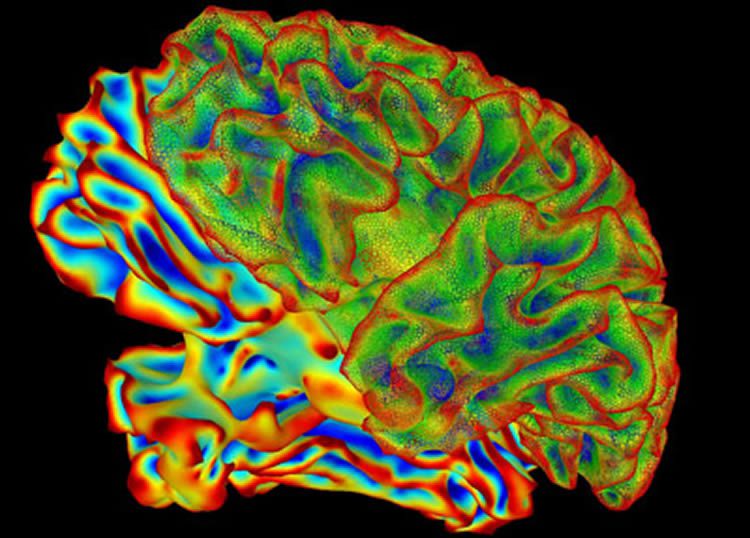
The stage when a brain is actively engaged in a new experience can be described as “online” activity. On the flip side of this neurological process, “offline” activity, or neural replay, is the process by which the brain rehearses what has been learned in order to strengthen the most important memories. The image is for illustrative purposes only. Image credit: NIH.

The stage when a brain is actively engaged in a new experience can be described as “online” activity. On the flip side of this neurological process, “offline” activity, or neural replay, is the process by which the brain rehearses what has been learned in order to strengthen the most important memories. The image is for illustrative purposes only. Image credit: NIH.

The permanence of memories has long thought to be mediated solely by the production of new proteins. However, new research has shown that the electrical activity of the brain may be a more primary factor in memory solidification.

Sleeping not only protects memories from being forgotten, it also makes them easier to access, according to new research. The findings suggest  that after sleep we are more likely to recall facts which we could not remember while still awake.

The tendency of more intelligent people to live longer has been shown, for the first time, to be mainly down to their genes by new research published in the International Journal of Epidemiology.

Dogs have a specialized region in their brains for processing faces, a new study finds.

The first ever genetic analysis of people with extremely high intelligence has revealed small but important genetic differences between some of the brightest people in the United States and the general population.

A new study, published in the Journal of the American Medical Association Neurology, found a strong association between insulin resistance and memory function decline, increasing the risk for Alzheimer’s disease. Insulin resistance is common in people who are obese, pre-diabetic or have Type 2 diabetes.

New brain research has mapped a key trouble spot likely to contribute to intellectual disability in Down syndrome.

Fundamental differences between how the brain forms during adolescence have been discovered in children with schizophrenia and their siblings, a new study shows. The study opens up new avenues for researchers to explore when developing treatment for the illness, which can be hugely debilitating for children.

Weekly Neuroscience Update

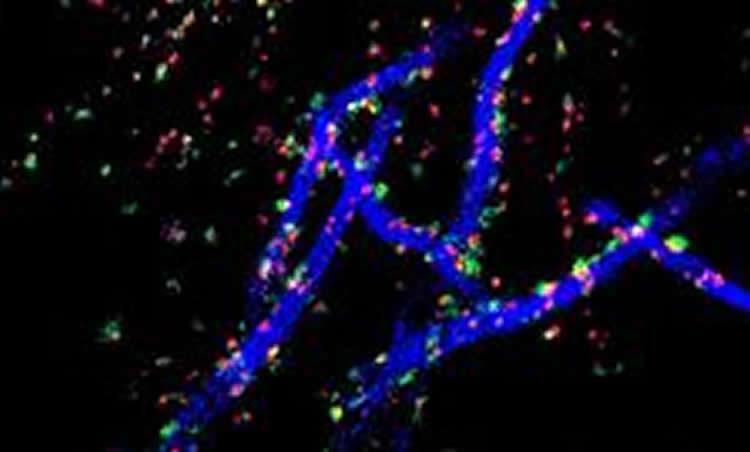
Axon initial segments (blue) and the synapses that form along them (red and green) are shown. Image credit: Winnie Wefelmeyer/MRC Centre for Developmental Neurobiology.

Axon initial segments (blue) and the synapses that form along them (red and green) are shown. Image credit: Winnie Wefelmeyer/MRC Centre for Developmental Neurobiology.

A new study characterises a novel way in which neurons remain electrically stable when confronted with chronic increases in neuronal activity.

Lithium chloride which is used as a mood stabiliser in the treatment of mental health problems, mainly bipolar disorder, could be used to treat arthritis according to a new study.

New research indicates that adults born very premature are more likely to be socially withdrawn and display signs of autism.

Scientists have found that existing anti-malaria drugs could be a potential treatment for Parkinson’s disease.

A number of studies presented at the Alzheimer’s Association International Conference, showed that regular supervised exercise sessions could help to improve symptoms in people with memory problems and dementia.

Brain scans of war veterans with posttraumatic stress disorder have led researchers to an area of the prefrontal cortex that appears to be a good predictor of response to treatment with SSRIs–the first-line drug treatment for PTSD.

New research findings show that body fat can send a signal that affects the way the brain deals with stress and metabolism.

Increasing the levels of a signaling molecule found in the brain can positively alter response to stress, revealing a potential new therapeutic target for treatment of depression.

Music training, begun as late as high school, may help improve the teenage brain’s responses to sound and sharpen hearing and language skills, suggests a new study.

Researchers have, for the first time, determined the rate at which the developing brain eliminates unneeded connections between neurons during early childhood.

Scientists have identified a critical function of what they believe to be schizophrenia’s “Rosetta Stone” gene that could hold the key to decoding the function of all genes involved in the disease.

Researchers have discovered a link between autism and genetic changes in some segments of DNA that are responsible for switching on genes in the brain.

Infants can use their expectations about the world to rapidly shape their developing brains, researchers have found.

Finally this week, there’s new evidence suggesting that women’s brains are especially vulnerable to Alzheimer’s disease and other problems with memory and thinking.

Weekly Neuroscience Update

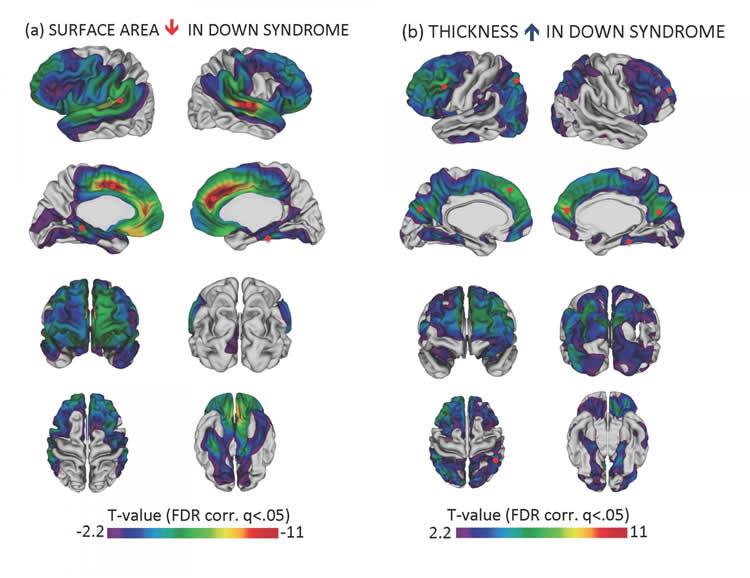
Reductions in cortical surface area and increases in cortical thickness in Down syndrome relative to typical controls. Panel A shows that the cortex surface area is lower in Down syndrome; panel B shows that the cortex is thicker in Down syndrome brains. Small red circles indicate the approximate locations where cortical surface area and thickness were most different between brains of participants with Down syndrome and brains of typically developing participants. Image credit: Lee et al., National Institute of Mental Health

Reductions in cortical surface area and increases in cortical thickness in Down syndrome relative to typical controls. Panel A shows that the cortex surface area is lower in Down syndrome; panel B shows that the cortex is thicker in Down syndrome brains. Small red circles indicate the approximate locations where cortical surface area and thickness were most different between brains of participants with Down syndrome and brains of typically developing participants. Image credit: Lee et al., National Institute of Mental Health

The thickness of the brain’s cerebral cortex could be a key to unlocking answers about intellectual development in youth with Down Syndrome. It could also provide new insights to why individuals with this genetic neurodevelopmental disorder are highly susceptible to early onset Alzheimer’s Disease later in life.

In a study published in The Journal of Experimental Medicine, researchers report a surprising finding that challenges current anatomy and histology textbook knowledge: Lymphatic vessels are found in the central nervous system where they were not known to exist.

Changes in the vaginal microbiome are associated with effects on offspring gut microbiota and on the developing brain, according to a new study published in Endocrinology, a journal of the Endocrine Society.

Researchers discover that a protein called Taranis could hold the key to a good night’s sleep.

A team of researchers has now been able to demonstrate in a study that the bonding hormone oxytocin inhibits the fear center in the brain and allows fear stimuli to subside more easily. This basic research could also usher in a new era in the treatment of anxiety disorders.

Early life stress affects cognitive functioning in low-income children.

Researchers at Monash University have found physical differences in the brains of people who respond emotionally to others’ feelings, compared to those who respond more rationally, in a study published in the journal NeuroImage.

Having a stroke ages a person’s brain function by almost eight years, new research finds — robbing them of memory and thinking speed as measured on cognitive tests. In another pilot study, women who experience more hot flashes, particularly while sleeping, during the menopause transition are more likely to have brain changes reflecting a higher risk for cerebrovascular disease, such as stroke and other brain blood flow problems.

Researchers discover the anatomic reasons for the persistence of musical memory in Alzheimer patients.

A new study on successful ageing has linked better memory performance in older age with patterns of neural compensation. The research sheds light on how memory can remain efficient in spite of common age-related neural decline.

There are more boys than girls diagnosed with autism spectrum disorder (ASD). Now, a study shows that behaviors relevant to autism are more frequently observed in boys than in girls, whether they’re at risk of autism or not. Meanwhile an early intervention program for toddlers with autism spectrum disorder improves their intellectual abilities and reduces autism symptoms – and those results persist years after the children originally received treatment, according to a recent study. And in another study, using functional magnetic resonance imaging, a team of  researchers has shown for the first time that children with autism spectrum disorder who are overly sensitive to sensory stimuli have brains that react differently than those with the disorder who don’t respond so severely to noises, visual stimulation and physical contact.

The stress hormone cortisol strengthens memories of scary experiences. 

Finally, this week, researchers have found that people who speak more than one language have twice as much brain damage as unilingual people before they exhibit symptoms of Alzheimer’s disease. It’s the first physical evidence that bilingualism delays the onset of the disease.


Weekly Neuroscience Update

RSR_Fig1_20140627

Carnegie Mellon University neuroscientists have identified a new pathway by which several brain areas communicate within the brain’s striatum.

An over-active habit system may be at the root of many psychological problems involving repetitive behaviours like OCD, alcoholism and binge eating, new research suggests. The neuroimaging study, which is published in the American Journal of Psychiatry, found that people with Obsessive-Compulsive Disorder (OCD) had difficulty controlling their habits.

A new study suggests that the right hemisphere of the brain may be able to assist a damaged left hemisphere in protecting visual attention after a stroke.

Computer based ‘brain training’ can boost memory and thinking skills in older adults, but many programs promoted by the $1 billion brain training industry are ineffective, reveals new research by the University of Sydney.

Researchers have found that navigational brain cells that help sense direction are as electrically active during deep sleep as they are during wake time—and have visual and vestibular cues to guide them. Such information could be useful in treating navigational problems, among the first major symptoms of Alzheimer’s disease and other neurological disorders.

New technology could help researchers advance blood biomarker capabilities that show changes in low concentrations of specific proteins present following a neurological injury.

Our brains generate a constant hum of activity: As neurons fire, they produce brain waves that oscillate at different frequencies. Long thought to be merely a byproduct of neuron activity, recent studies suggest that these waves may play a critical role in communication between different parts of the brain.

Thousands of genetic “dimmer” switches, regions of DNA known as regulatory elements, were turned up high during human evolution in the developing cerebral cortex, according to new research from the Yale School of Medicine.

People with anorexia nervosa and with body dysmorphic disorder have similar abnormalities in their brains that affect their ability to process visual information, a new study reveals.

Finally this week, overall fluid intelligence — the ability to analyze information, engage in critical thinking, and solve problems — is thought to peak in early adulthood, but a new study suggests that different aspects of fluid intelligence peak at different ages.


Weekly Neuroscience Update

eeg-childhood-generosity

Children were monitored with EEGs while watching animated characters perform prosocial and antisocial behaviors, and later participated in a task measuring generosity. Credit Jean Decety/University of Chicago.

University of Chicago developmental neuroscientists have found specific brain markers that predict generosity in children. Those neural markers appear to be linked to both social and moral evaluation processes.

Researchers at The University of Western Australia have found that brain stimulation may help retrain unhelpful cognitive habits associated with anxiety and depression. The paper was published this week in the international journal Biological Psychiatry.

Methamphetamine users are three times more at risk for getting Parkinson’s disease than non-illicit drug users, new research shows.

Researchers have developed new technology that can assess the location and impact of a brain injury merely by tracking the eye movements of patients as they watch music videos for less than four minutes, according to a study published in the Journal of Neurosurgery.

Spending less time in slow-wave or deep sleep is linked to the loss of brain cells that can lead to dementia, a new study finds.

Scientists have discovered a new signal pathway in the brain that plays an important role in learning and the processing of sensory input.

New UCLA research indicates that lost memories can be restored. The findings offer some hope for patients in the early stages of Alzheimer’s disease.

Weekly Neuroscience Update

Nerve cells communicate with each other via intricate projections. In brain diseases such as Alzheimer’s and Parkinson’s these extensions atrophy, thereby causing connectivity problems. Credit DZNE/Detlef Friedrichs.

Nerve cells communicate with each other via intricate projections. In brain diseases such as Alzheimer’s and Parkinson’s these extensions atrophy, thereby causing connectivity problems. Credit DZNE/Detlef Friedrichs.

A new study shows the interdependency between the structure and function of neurons.

Neuroscientists have discovered an unexpected benefit of getting older – a more nuanced understanding of social signals, such as the age of others.

Children with autism show different patterns of brain activity during everyday gestures and movements than controls do, suggest unpublished results presented at the 2014 Society for Neuroscience annual meeting.

Researchers have gained fresh insights into how ‘local’ body clocks control waking and sleeping.

People with bipolar disorder who are being treated with the drug lithium are at risk of acute kidney damage and need careful monitoring, according to new research.

Age-related Macular Degeneration (AMD) is the major cause of blindness in the western world, affecting around 50 million people. Now scientists at The University of Manchester have identified an important new factor behind its causes, which they hope could lead to new treatments.

A team of researchers has identified an enzyme key to the survival and spread of glioblastoma cancer cells that is not present in healthy brain cells, making the enzyme a promising therapeutic target.

It is claimed one in five students have taken the ‘smart’ drug Modafinil to boost their ability to study and improve their chances of exam success. But new research into the effects of Modafinil has shown that healthy students could find their performance impaired by the drug.

Researchers have developed new insight into a rare but deadly brain infection, called progressive multifocal leukoencephalopathy (PML). This disease – which is caused by the JC virus – is most frequently found in people with suppressed immune systems and, until now, scientists have had no effective way to study it or test new treatments.

New research offers insight into short-term effects of maternal caregiving on a developing brain.

A team of researchers  has now been able to demonstrate in a study that the bonding hormone oxytocin inhibits the fear center in the brain and allows fear stimuli to subside more easily. This basic research could also usher in a new era in the treatment of anxiety disorders.

Blocking a key receptor in brain cells that is used by oxygen free radicals could play a major role in neutralizing the biological consequences of Alzheimer’s disease, according to new research.

Finally this week, brain scientists have long believed that older people have less of the neural flexibility (plasticity) required to learn new things. A new study shows that older people learned a visual task just as well as younger ones, but the seniors who showed a strong degree of learning exhibited plasticity in a different part of the brain than younger learners did.


Weekly Neuroscience Update

Earlier research showed that progranulin levels were elevated near plaques in the brains of patients with Alzheimer’s disease, but it was unknown whether this effect counteracted or exacerbated neurodegeneration. This image is for illustrative purposes only. Credit NIH.

Earlier research showed that progranulin levels were elevated near plaques in the brains of patients with Alzheimer’s disease, but it was unknown whether this effect counteracted or exacerbated neurodegeneration. This image is for illustrative purposes only. Credit NIH.

Low levels of the naturally occurring protein progranulin exacerbate cellular and cognitive dysfunction, while raising levels can prevent abnormalities in an Alzheimer model.

Teenagers who said they had a traumatic brain injury in their lifetime, especially girls, also reported significantly higher rates of harmful behavior, according to new research.

A new University of Iowa study further supports an inescapable message: caregivers have a profound influence – good or bad – on the emotional state of individuals with Alzheimer’s disease. Patients may not remember a recent visit by a loved one or having been neglected by staff at a nursing home, but those actions can have a lasting impact on how they feel. The findings of this study are published in the September 2014 issue of the journal Cognitive and Behavioral Neurology.

A new study reveals individual neurons in the human brain are triggered by the subject’s conscious perception, rather than by the visual stimulus.

A chemical in the brain plays a vital role in controlling the involuntary movements and vocal tics associated with Tourette Syndrome (TS), a new study has shown.

Researchers discover how the brain works during meditation.

Finally, this week, teenagers who regularly do not get enough sleep are more likely to struggle academically, the results of a new study show. Swedish researchers looked at over 20,000 teenagers aged between 12 and 19 and found that those who regularly slept for less than seven hours per night were more likely to fail in school. Details of these findings are published in the journal, Sleep Medicine.

.


Weekly Neuroscience Update

For the study, researchers recruited twenty skilled pianists from Lyon, France. The group was asked to learn simple melodies by either hearing them several times or performing them several times on a piano. Pianists then heard all of the melodies they had learned, some of which contained wrong notes, while their brain electric signals were measured using electroencephalography (EEG). Credit: Caroline Palmer/Brian Mathias

For the study, researchers recruited twenty skilled pianists from Lyon, France. The group was asked to learn simple melodies by either hearing them several times or performing them several times on a piano. Pianists then heard all of the melodies they had learned, some of which contained wrong notes, while their brain electric signals were measured using electroencephalography (EEG). Credit: Caroline Palmer/Brian Mathias

Research from McGill University reveals that the brain’s motor network helps people remember and recognize music that they have performed in the past better than music they have only heard. 

Veterans who have been exposed to nearby explosions, but who lack clear symptoms of traumatic brain injury (TBI) may still have damage to the brain’s white matter similar to veterans with TBI, according to new research at Duke Medicine and the U.S. Department of Veterans Affairs.

University of Adelaide researchers say new insights into how the human brain responds to chronic pain could eventually lead to improved treatments for patients. And also at the University of Adelaide, studies show that a gene linked to intellectual disability is critical to the earliest stages of the development of human brains. Known as USP9X, the gene has been investigated by Adelaide researchers for more than a decade, but in recent years scientists have begun to understand its particular importance to brain development.

In order to function properly, the human brain requires the ability not only to store but also to forget. Through memory loss, unnecessary information is deleted and the nervous system retains its plasticity. A disruption of this process can lead to serious mental disorders. Scientists have now discovered a molecular mechanism that actively regulates the process of forgetting. The journal Cell has published their results.

Brain imaging using radioactive dye can detect early evidence of Alzheimer’s disease that may predict future cognitive decline.

Scientists have identified a new group of compounds that may protect brain cells from inflammation linked to seizures and neurodegenerative diseases.

Your brain’s ability to instantly link what you see with what you do is down to a dedicated information ‘highway’, suggests new research.

There has been a great deal of research on changes among different brain states during sleep, but  new findings, reported in the March 13 issue of Cell, provide a compelling example of a change in state in the awake brain.

Finally, this week, using a new method to determine whether individuals met the criteria for a clinical diagnosis of bipolar disorder, researchers from UCLA tried a new approach by combining results from brain imaging, cognitive tests, and an array of temperament and behavioral measures. In an attempt to better understand the genes that cause the disorder, a collaborative research team identified about 50 brain and behavioral measures that are both under strong genetic control and associated with bipolar disorder, creating the potential to pinpoint the specific genes that contribute to the illness.

Weekly Neuroscience Update

Temporo-parietal jonction (TPJ) © Perrine Ruby / Inserm

Temporo-parietal jonction (TPJ) © Perrine Ruby / Inserm

Some people recall a dream every morning, whereas others rarely recall one. A research team has studied the brain activity of these two types of dreamers in order to understand the differences between them. In a study published in the journal Neuropsychopharmacology, the researchers show that the temporo-parietal junction, an information-processing hub in the brain, is more active in high dream recallers. Increased activity in this brain region might facilitate attention orienting toward external stimuli and promote intrasleep wakefulness, thereby facilitating the encoding of dreams in memory.

Many psychiatric disorders are accompanied by memory deficits. Basel scientists have now identified a network of genes that controls fundamental properties of neurons and is important for human brain activity, memory and the development of schizophrenia. 

Researchers have taken a major step toward identifying the specific genes that contribute to bipolar disorder.

A recent study conducted by Johns Hopkins University and the National Institute of Aging found that aging adults with hearing loss are at higher risk for accelerated brain-tissue loss.

Brain cell regeneration has been discovered in a new location in human brains. The finding raises hopes that these cells could be used to help people recover after a stroke, or to treat other brain diseases.

Finally this week, researchers are hoping that the world’s largest simulated brain — known as Spaun — will be used to test new drugs that lead to breakthrough treatments for neurological disorders such as Parkinson’s, Huntington’s, and Alzheimer’s disease.