Weekly Neuroscience Update

kaufmann_sleep_fmri

Missing out on a night’s sleep causes “robust alterations” in the functional connectivity of the brain, according to a new paper in Neuroimage.

Two genetic variants previously linked to Alzheimer’s disease have been more specifically tied to brain atrophy that is characteristic of the disease.

Researchers have identified the specific brain circuit that wakes us from sleep, and it could have great implications for the future of sleep disorder therapies.

Researchers have measured intriguing differences in the brain connectivity of individuals with internet gaming disorder.

New findings show that the brain devotes more processing resources to social situations that signal threat than those that are benign.

Researchers have discovered how to diagnose Alzheimer’s disease with more than 82 per cent accuracy by evaluating the interplay between four linguistic factors; and developing automated technology to detect these impairments.

Cumulative exposure to stress hormones affects the regulation of genes associated with aging and age-related diseases.

Weekly Neuroscience Update

The research revealed that sounds that came from the left were processed in the right inferior colliculus and thalamus and vice versa. Image is for illustrative purposes only. Credit: AxelBoldt.

The research revealed that sounds that came from the left were processed in the right inferior colliculus and thalamus and vice versa. Image is for illustrative purposes only. Credit: AxelBoldt.

Some parts of our brain that process sound have a subsequent spot for each pitch, just like the keyboard on a piano. One part – the auditory part of the thalamus – even processes each sound on two ‘keyboards’ next to each other. That is one of the discoveries brain researcher Michelle Moerel of Maastricht University made while carrying out measurements into human sound processing at the Center for Magnetic Resonance Research (CMRR) in Minneapolis (USA) with Rubicon funding from NWO Social Sciences.

A new scientific model that incorporates the myriad drivers of depression could lead to more precise treatment for an illness that affects 350 million worldwide.

Targeted magnetic pulses to the brain were shown to reduce craving and substance use in cocaine-addicted patients, report scientists. The results of this pilot study suggest that this may become an effective medical treatment for patients with cocaine addiction, although a larger trial is needed to confirm the initial findings.

A gene which slows the onset of Alzheimer’s disease by 17 years has been discovered by scientists leading to hopes that its effects could be mimicked with drugs to delay the devastating condition.

A new study finds that a component of aspirin binds to an enzyme called GAPDH, which is believed to play a major role in neurodegenerative diseases, including Alzheimer’s, Parkinson’s and Huntington’s diseases.

Learning, memory, and brain repair depend on the ability of our neurons to change with experience. Now, researchers reporting in the Cell Press journal Current Biology on December 7 have evidence from a small study in people that exercise may enhance this essential plasticity of the adult brain.

Concentrating attention on a visual task can render you momentarily ‘deaf’ to sounds at normal levels, reports a new UCL study funded by the Wellcome Trust.

Finally, this week young people with behavioural problems, such as antisocial and aggressive behaviour, show reduced grey matter volume in a number of areas of the brain, according to a new study published in JAMA Psychiatry.


Weekly Neuroscience Update

Percentage of known neuron-, astrocyte- and oligodendrocyte-enriched genes in 32 modules, ordered by proportion of neuron-enriched gene membership. (credit: Michael Hawrylycz et al./Nature Neuroscience)

Percentage of known neuron-, astrocyte- and oligodendrocyte-enriched genes in 32 modules, ordered by proportion of neuron-enriched gene membership. (credit: Michael Hawrylycz et al./Nature Neuroscience)

Allen Institute researchers have identified a surprisingly small set of just 32 gene-expression patterns for all 20,000 genes across 132 functionally distinct human brain regions, and these patterns appear to be common to all individuals.

Evidence is mounting that gratitude makes a powerful impact on our bodies, including our immune and cardiovascular health. But how does gratitude work in the brain? A team at the University of Southern California has shed light on the neural nuts and bolts of gratitude in a new study, offering insights into the complexity of this social emotion and how it relates to other cognitive processes.

Subjective memory complaints (SMCs) are associated with cognitive impairment nearly two decades later among older women, a prospective study of aging has demonstrated.

Older adults that improved their fitness through a moderate intensity exercise program increased the thickness of their brain’s cortex, the outer layer of the brain that typically atrophies with Alzheimer’s disease, according to a new study. These effects were found in both healthy older adults and those diagnosed with mild cognitive impairment (MCI), an early stage of Alzheimer’s disease.

When it comes to the brain, “more is better” seems like an obvious assumption. But in the case of synapses, which are the connections between brain cells, too many or too few can both disrupt brain function. Research, recently published in the Journal of Neuroscience, reports  that an immune-system protein called MHCI, or major histocompatibility complex class I, moonlights in the nervous system to help regulate the number of synapses, which transmit chemical and electrical signals between neurons. MHCI could play an unexpected role in conditions such as Alzheimer’s disease, type II diabetes and autism.

Researchers have developed a simple technique to measure an individual’s visual processing speed–the speed at which an individual can comprehend visual information–in order to identify whether or not they may have cognitive issues.

Sleep is usually considered an all-or-nothing state: The brain is either entirely awake or entirely asleep. However, MIT neuroscientists have discovered a brain circuit that can trigger small regions of the brain to fall asleep or become less alert, while the rest of the brain remains awake.

Weekly Neuroscience Update

The link between vision problems and schizophrenia is well established, with as many as 62 percent of adult patients with schizophrenia experience visual distortions involving form, motion, or color. Image is for illustrative purposes only. Credit: University of Bristol.

The link between vision problems and schizophrenia is well established, with as many as 62 percent of adult patients with schizophrenia experience visual distortions involving form, motion, or color. Image is for illustrative purposes only. Credit: University of Bristol.

New research has identified the mechanisms that trigger disruption in the brain’s communication channels linked to symptoms in psychiatric disorders including schizophrenia. The study, published in the Proceedings of National Academy of Sciences, could have important implications for treating symptoms of brain disorders.

Genetic analysis of human patients has shown that mutations in genes involved in synaptic communication can drive neuropsychiatric and neurological diseases such as autism spectrum disorder and Alzheimer’s disease.

Researchers have discovered a way to predict human emotions based on brain activity.

Working 55 hours or more per week is linked to a 33% greater risk of stroke compared with working a standard 35 to 40 hour week, according to the largest study in this field so far,  published in The Lancet.

The permanence of memories has long thought to be mediated solely by the production of new proteins. However, new research has shown that the electrical activity of the brain may be a more primary factor in memory solidification.

The hippocampus in the brain’s temporal lobe is responsible for more than just long-term memory. Researchers have for the first time demonstrated that it is also involved in quick and successful conflict resolution

A brief period of postnatal visual deprivation, when early in life, drives a rewiring of the brain areas involved in visual processing, even if the visual restoration is completed well before the baby reaches one year of age, researchers revealed in Current Biology.

New research published in the British Journal of Psychiatry suggests that serious disorders of mood such as bipolar disorder may be the price that human beings have had to pay for more adaptive traits such as intelligence, creativity and verbal proficiency.

Finally this week, people with psychopathic characteristics are less likely to be affected by “contagious yawning” than those who are empathetic, according to a Baylor University psychology study.

15 ways to stave off dementia

dementia

Evidence suggests that if key risk factors for dementia – such as poor nutrition, lack of exercise and unhealthy lifestyles – were addressed, fewer people would have it. In today’s post I suggest fifteen ways you may be able to stave off dementia.

1 Wear a helmet
Head injury has been linked to early onset of Alzheimer’s later in life.  Some boxers, as well as people who otherwise suffer a head injury, can have a higher risk of contracting Alzheimer’s disease, which constitutes about 70pc of dementia cases. It’s therefore wise to make a point of wearing a helmet if you play sports which can result in a head injury. For the same reason, it’s also a very good idea to always wear your seat-belt in the car.

2 Eat Fish
A diet rich in fish is a diet low in cholesterol. When the medical profession started to treat high cholesterol with cholesterol-lowering medication called statins, they discovered they could also delay the onset of dementia for about seven years. Statins may be helpful to people who show signs of early-onset dementia.

3 Use It or Lose It

Keep your brain active. It’s a case of use it or lose it. The more you challenge the brain, as you do in education, the fitter and healthier it becomes, which means it can withstand attack in older age from problems such as stress, depression or trauma. The more educated you are and the more effective you’ve been in using your brain during your life, the stronger its ability to resist attack. Interestingly, people who are by nature curious tend, on average, to develop Alzheimer’s much later in life than people who are not.

4 Eat less sugar

Scientists now believe there is an association between hypoglycaemia and dementia.Most people with type two diabetes develop the diabetes because they eat so much sugary food and take so little exercise that the body cannot handle the sugar. New research has shown that diabetes, and the rebound hypoglycaemia (low blood sugar) it causes, may exacerbate the risk of developing dementia and Alzheimer’s disease. The brain uses glucose (sugar) as a primary source of energy, and cognitive function becomes impaired when blood glucose drops to low levels. Basically, diabetes impairs the production and regulation of insulin which helps blood cells take up glucose. This means that for diabetics, getting a regular supply of glucose to the brain is more difficult. Scientists now believe that when the brain is starved of energy, neurological problems like dementia and Alzheimer’s are more likely to develop.

5 Lose weight

Scientists now believe there is a link between midlife obesity and a higher risk of developing dementia. Once the body is extremely overweight or obese, t he fat becomes metabolically or chemically unstable and can become inflamed. That inflammation may then spread around the body – including to the brain. Inflammation in the brain is believed to be linked to dementia.

6 Don’t smoke

Smoking obstructs the lungs, and can cause chronic obstructive pulmonary disease. This means the lungs are not able to get as much oxygen as they need and you end up damaging the lungs, and the lung tissue. Insufficient oxygen supplies to the brain lowers the brain’s energy levels, thereby impairing its ability to protect itself. Meanwhile, the nicotine damages blood vessels everywhere in the body, including in the brain. By damaging the blood vessels, nicotine can help cause high blood pressure and damage the nerves in the brain.

7 Treat your depression

It’s now believed that depression can be a factor in the onset of dementia. There is evidence now that depression may be a brain inflammation in the frontal part of the brain – while Alzheimer’s is an inflammation in the hippocampus. If you’re suffering from depression, get it treated,  because inflammation weakens the ability of the brain to fight infection. Depression is also about withdrawal from society so being depressed means you’re less open to doing things and that means you aren’t challenging your brain.

8 Be physically active

If you’re physically inactive, you’re not introducing oxygen to the body – and the brain needs huge amounts of oxygen because it’s so active, even during the night. The brain can use more oxygen in some phases of sleep than when we’re awake during the day.  Depriving the brain of oxygen prevents it from learning, i.e. making new connections and repairing itself – let alone getting on with the normal processes of growth and development.

9 Watch Your Blood Pressure

High blood pressure is a major cause of stroke, which deprives the brain of life-giving oxygen. You can end up with dementia through a series of mini-strokes. These can gradually lead to a change in the person’s character, which eventually, without appropriate treatment, may develop into full-blown dementia. So avoid a lifestyle which can contribute to high blood pressure – reduce your stress levels, make sure you get sufficient, good quality sleep and avoid drugs linked to high blood pressure such as nicotine.

10 Get that ingrown toenail treated!

Seriously – never allow an infection in the body to persist. If you do, it may spread and, over a series of decades, can result in an inflammation which spreads to the brain and may result in dementia. When we develop an infection, the body responds with a series of chemicals which are supposed to fight it. However, if the infection persists, and goes untreated, these ‘warrior’ chemicals can spread throughout the body. They can eventually become indiscriminate in what they fight, so instead of fighting infection, they start to fight the body including the brain.

11 Nutrition

Make sure your diet includes lots of vegetables, particularly green leafy ones, and fruit, herbs like rosemary and sage and plenty of fish oil. Vegetables and fruit are packed with health-giving antioxidants which stop inflammation. Antioxidants are like a fire-blanket on inflammation. Eat the rosemary and sage which are cognitively enhancing because they contain chemicals which replace the main neurotransmitter damaged in dementia – acetycholine – which is involved in high-level thought. Make sure your diet also includes good-quality fish oil – try having sardines on toast once a week, for example.  Fish oil is used by the body to make the chemicals to fight inflammation. And drink coffee.  People who drink it are less predisposed to Alzheimer’s. It’s a psychological stimulant and a cognitive-enhancing drug.

12 Watch TG4!

Brush up on your Irish – there’s evidence to show that having a second language can help protect you from the onset of dementia. It has been discovered that learning a second language exercises the brain so much that it strengthens it and makes it more resistant to fighting the injuries and infection which often result in dementia. A Swiss study carried out in the last few years has showed that bilingualism and multilingualism seems to offer protection again the onset of dementia.”

13 Buy a Smartphone and play video games

Get a smartphone because it’s good for your brain to work out how to use it properly, especially if you’re older.  Play video games with your grandchildren – it will help to keep you mentally on your toes; while playing bridge either with your friends or online is a great way to wake up the brain. Bridge is a game of memory and strategy. It’s very challenging for the brain and is also a highly sociable activity.

14 Try some brain-teasers

Use your non-preferred hand once in a while for activities such as brushing your teeth or hair. This challenges your brain because you are carrying out an unfamiliar activity. Try wearing your wristwatch upside down – this also forces your brain to do some work. It requires the hippocampus (the area of the brain which is the most vulnerable to dementia) to do a mental rotation in order to work out the correct time from the dial.  And try learning to juggle – this is a great exercise in hand-eye coordination because it involves both physical activity and mental concentration. Go buy three oranges now and get on with it. It’s part of a brain-building process which helps your brain fight the injury and infection that may lead to dementia.

15 Get creative! Doodle

Instead of just looking at art or just listening to music, make your own.  Write songs, paint a picture, learn to play an instrument, sing or dance. First of all, it’s physically active, and secondly you’re thinking about what you are doing. Your brain is planning and working instead of simply receiving information. Make a point of regularly reading challenging material and do 30-minute word searches on Google, picking a word, for example ‘starling’, and finding out everything there is to know about these birds.  It’s also good to doodle. Doodling is a healthy mental exercise because it is a creative act. It’s a sign that what you’re currently doing is not sufficiently challenging. Doodling is positive because it’s a creative and focused activity.

Adapted from The Irish Independent

Weekly Neuroscience Update

The stage when a brain is actively engaged in a new experience can be described as “online” activity. On the flip side of this neurological process, “offline” activity, or neural replay, is the process by which the brain rehearses what has been learned in order to strengthen the most important memories. The image is for illustrative purposes only. Image credit: NIH.

The stage when a brain is actively engaged in a new experience can be described as “online” activity. On the flip side of this neurological process, “offline” activity, or neural replay, is the process by which the brain rehearses what has been learned in order to strengthen the most important memories. The image is for illustrative purposes only. Image credit: NIH.

The permanence of memories has long thought to be mediated solely by the production of new proteins. However, new research has shown that the electrical activity of the brain may be a more primary factor in memory solidification.

Sleeping not only protects memories from being forgotten, it also makes them easier to access, according to new research. The findings suggest  that after sleep we are more likely to recall facts which we could not remember while still awake.

The tendency of more intelligent people to live longer has been shown, for the first time, to be mainly down to their genes by new research published in the International Journal of Epidemiology.

Dogs have a specialized region in their brains for processing faces, a new study finds.

The first ever genetic analysis of people with extremely high intelligence has revealed small but important genetic differences between some of the brightest people in the United States and the general population.

A new study, published in the Journal of the American Medical Association Neurology, found a strong association between insulin resistance and memory function decline, increasing the risk for Alzheimer’s disease. Insulin resistance is common in people who are obese, pre-diabetic or have Type 2 diabetes.

New brain research has mapped a key trouble spot likely to contribute to intellectual disability in Down syndrome.

Fundamental differences between how the brain forms during adolescence have been discovered in children with schizophrenia and their siblings, a new study shows. The study opens up new avenues for researchers to explore when developing treatment for the illness, which can be hugely debilitating for children.

Weekly Neuroscience Update

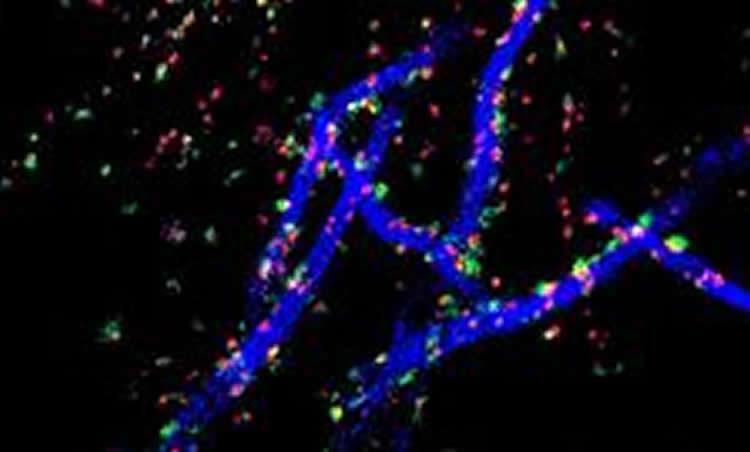
Axon initial segments (blue) and the synapses that form along them (red and green) are shown. Image credit: Winnie Wefelmeyer/MRC Centre for Developmental Neurobiology.

Axon initial segments (blue) and the synapses that form along them (red and green) are shown. Image credit: Winnie Wefelmeyer/MRC Centre for Developmental Neurobiology.

A new study characterises a novel way in which neurons remain electrically stable when confronted with chronic increases in neuronal activity.

Lithium chloride which is used as a mood stabiliser in the treatment of mental health problems, mainly bipolar disorder, could be used to treat arthritis according to a new study.

New research indicates that adults born very premature are more likely to be socially withdrawn and display signs of autism.

Scientists have found that existing anti-malaria drugs could be a potential treatment for Parkinson’s disease.

A number of studies presented at the Alzheimer’s Association International Conference, showed that regular supervised exercise sessions could help to improve symptoms in people with memory problems and dementia.

Brain scans of war veterans with posttraumatic stress disorder have led researchers to an area of the prefrontal cortex that appears to be a good predictor of response to treatment with SSRIs–the first-line drug treatment for PTSD.

New research findings show that body fat can send a signal that affects the way the brain deals with stress and metabolism.

Increasing the levels of a signaling molecule found in the brain can positively alter response to stress, revealing a potential new therapeutic target for treatment of depression.

Music training, begun as late as high school, may help improve the teenage brain’s responses to sound and sharpen hearing and language skills, suggests a new study.

Researchers have, for the first time, determined the rate at which the developing brain eliminates unneeded connections between neurons during early childhood.

Scientists have identified a critical function of what they believe to be schizophrenia’s “Rosetta Stone” gene that could hold the key to decoding the function of all genes involved in the disease.

Researchers have discovered a link between autism and genetic changes in some segments of DNA that are responsible for switching on genes in the brain.

Infants can use their expectations about the world to rapidly shape their developing brains, researchers have found.

Finally this week, there’s new evidence suggesting that women’s brains are especially vulnerable to Alzheimer’s disease and other problems with memory and thinking.

Weekly Neuroscience Update

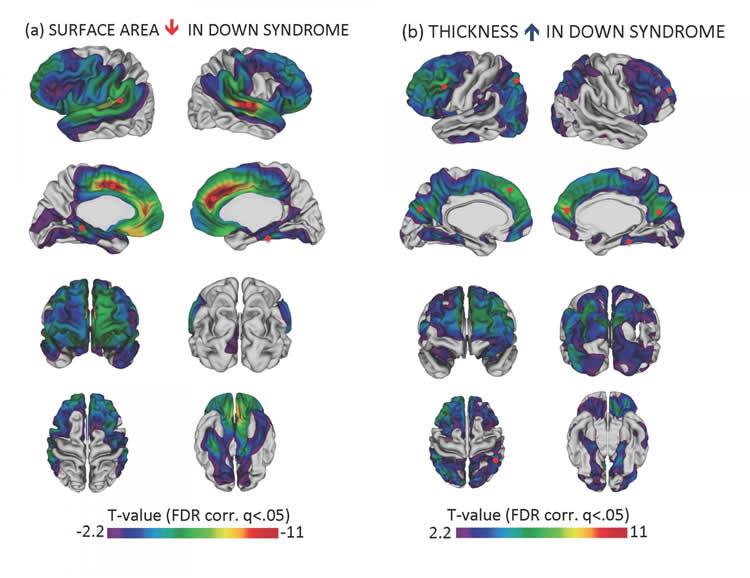
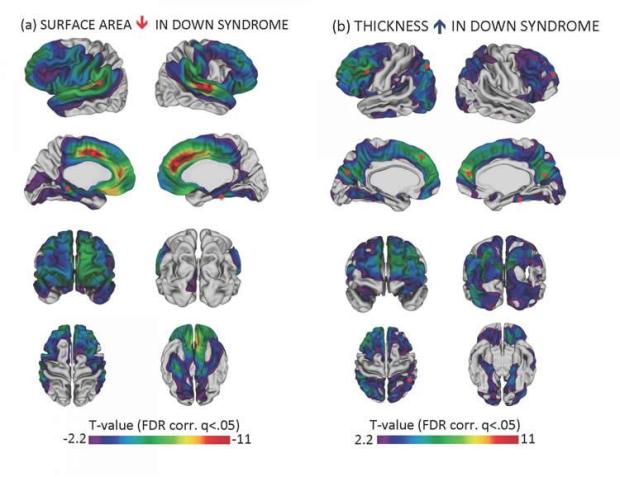
Reductions in cortical surface area and increases in cortical thickness in Down syndrome relative to typical controls. Panel A shows that the cortex surface area is lower in Down syndrome; panel B shows that the cortex is thicker in Down syndrome brains. Small red circles indicate the approximate locations where cortical surface area and thickness were most different between brains of participants with Down syndrome and brains of typically developing participants. Image credit: Lee et al., National Institute of Mental Health

Reductions in cortical surface area and increases in cortical thickness in Down syndrome relative to typical controls. Panel A shows that the cortex surface area is lower in Down syndrome; panel B shows that the cortex is thicker in Down syndrome brains. Small red circles indicate the approximate locations where cortical surface area and thickness were most different between brains of participants with Down syndrome and brains of typically developing participants. Image credit: Lee et al., National Institute of Mental Health

The thickness of the brain’s cerebral cortex could be a key to unlocking answers about intellectual development in youth with Down Syndrome. It could also provide new insights to why individuals with this genetic neurodevelopmental disorder are highly susceptible to early onset Alzheimer’s Disease later in life.

In a study published in The Journal of Experimental Medicine, researchers report a surprising finding that challenges current anatomy and histology textbook knowledge: Lymphatic vessels are found in the central nervous system where they were not known to exist.

Changes in the vaginal microbiome are associated with effects on offspring gut microbiota and on the developing brain, according to a new study published in Endocrinology, a journal of the Endocrine Society.

Researchers discover that a protein called Taranis could hold the key to a good night’s sleep.

A team of researchers has now been able to demonstrate in a study that the bonding hormone oxytocin inhibits the fear center in the brain and allows fear stimuli to subside more easily. This basic research could also usher in a new era in the treatment of anxiety disorders.

Early life stress affects cognitive functioning in low-income children.

Researchers at Monash University have found physical differences in the brains of people who respond emotionally to others’ feelings, compared to those who respond more rationally, in a study published in the journal NeuroImage.

Having a stroke ages a person’s brain function by almost eight years, new research finds — robbing them of memory and thinking speed as measured on cognitive tests. In another pilot study, women who experience more hot flashes, particularly while sleeping, during the menopause transition are more likely to have brain changes reflecting a higher risk for cerebrovascular disease, such as stroke and other brain blood flow problems.

Researchers discover the anatomic reasons for the persistence of musical memory in Alzheimer patients.

A new study on successful ageing has linked better memory performance in older age with patterns of neural compensation. The research sheds light on how memory can remain efficient in spite of common age-related neural decline.

There are more boys than girls diagnosed with autism spectrum disorder (ASD). Now, a study shows that behaviors relevant to autism are more frequently observed in boys than in girls, whether they’re at risk of autism or not. Meanwhile an early intervention program for toddlers with autism spectrum disorder improves their intellectual abilities and reduces autism symptoms – and those results persist years after the children originally received treatment, according to a recent study. And in another study, using functional magnetic resonance imaging, a team of  researchers has shown for the first time that children with autism spectrum disorder who are overly sensitive to sensory stimuli have brains that react differently than those with the disorder who don’t respond so severely to noises, visual stimulation and physical contact.

The stress hormone cortisol strengthens memories of scary experiences. 

Finally, this week, researchers have found that people who speak more than one language have twice as much brain damage as unilingual people before they exhibit symptoms of Alzheimer’s disease. It’s the first physical evidence that bilingualism delays the onset of the disease.


Weekly Neuroscience Update

RSR_Fig1_20140627

Carnegie Mellon University neuroscientists have identified a new pathway by which several brain areas communicate within the brain’s striatum.

An over-active habit system may be at the root of many psychological problems involving repetitive behaviours like OCD, alcoholism and binge eating, new research suggests. The neuroimaging study, which is published in the American Journal of Psychiatry, found that people with Obsessive-Compulsive Disorder (OCD) had difficulty controlling their habits.

A new study suggests that the right hemisphere of the brain may be able to assist a damaged left hemisphere in protecting visual attention after a stroke.

Computer based ‘brain training’ can boost memory and thinking skills in older adults, but many programs promoted by the $1 billion brain training industry are ineffective, reveals new research by the University of Sydney.

Researchers have found that navigational brain cells that help sense direction are as electrically active during deep sleep as they are during wake time—and have visual and vestibular cues to guide them. Such information could be useful in treating navigational problems, among the first major symptoms of Alzheimer’s disease and other neurological disorders.

New technology could help researchers advance blood biomarker capabilities that show changes in low concentrations of specific proteins present following a neurological injury.

Our brains generate a constant hum of activity: As neurons fire, they produce brain waves that oscillate at different frequencies. Long thought to be merely a byproduct of neuron activity, recent studies suggest that these waves may play a critical role in communication between different parts of the brain.

Thousands of genetic “dimmer” switches, regions of DNA known as regulatory elements, were turned up high during human evolution in the developing cerebral cortex, according to new research from the Yale School of Medicine.

People with anorexia nervosa and with body dysmorphic disorder have similar abnormalities in their brains that affect their ability to process visual information, a new study reveals.

Finally this week, overall fluid intelligence — the ability to analyze information, engage in critical thinking, and solve problems — is thought to peak in early adulthood, but a new study suggests that different aspects of fluid intelligence peak at different ages.


Weekly Neuroscience Update

eeg-childhood-generosity

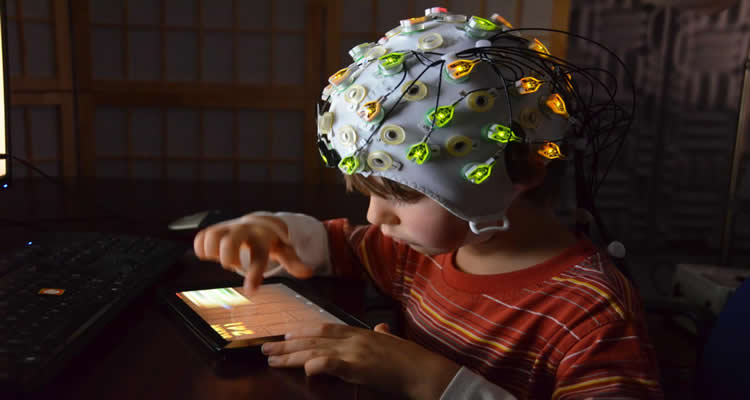
Children were monitored with EEGs while watching animated characters perform prosocial and antisocial behaviors, and later participated in a task measuring generosity. Credit Jean Decety/University of Chicago.

University of Chicago developmental neuroscientists have found specific brain markers that predict generosity in children. Those neural markers appear to be linked to both social and moral evaluation processes.

Researchers at The University of Western Australia have found that brain stimulation may help retrain unhelpful cognitive habits associated with anxiety and depression. The paper was published this week in the international journal Biological Psychiatry.

Methamphetamine users are three times more at risk for getting Parkinson’s disease than non-illicit drug users, new research shows.

Researchers have developed new technology that can assess the location and impact of a brain injury merely by tracking the eye movements of patients as they watch music videos for less than four minutes, according to a study published in the Journal of Neurosurgery.

Spending less time in slow-wave or deep sleep is linked to the loss of brain cells that can lead to dementia, a new study finds.

Scientists have discovered a new signal pathway in the brain that plays an important role in learning and the processing of sensory input.

New UCLA research indicates that lost memories can be restored. The findings offer some hope for patients in the early stages of Alzheimer’s disease.