Empathy, Engagement And The Brain

The failure to understand one’s own emotions and to recognize their impact on others is a source of much personal and intra-personal conflict. In contrast, the understanding of one’s own emotions allows for self-regulation of disruptive emotions and impulses and helps in adapting to changing circumstances.

Empathy is a particularly important emotion in considering other people’s feelings especially when making decisions and is therefore a basic component of all helpful human relationships including effective, therapeutic interventions.

The best healthcare providers know this; yet empathy is often lacking in professional practice as frequently reported by patients.

Weekly Neuroscience Update

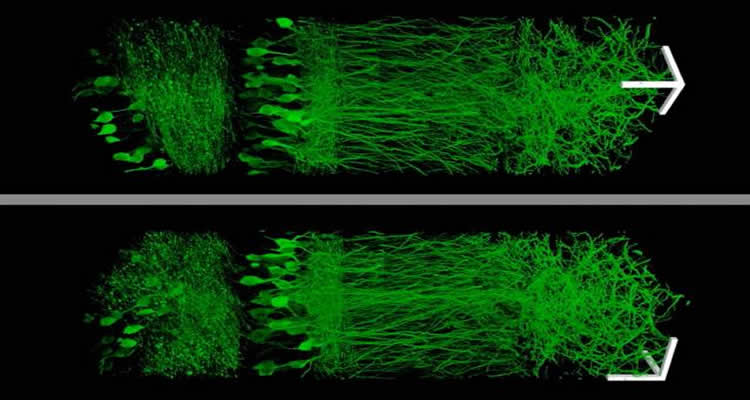
Using a new technique that allows them to enlarge brain tissue, MIT scientists created these images of neurons in the hippocampus. Image credit: Fei Chen and Paul Tillberg

Using a new technique that allows them to enlarge brain tissue, MIT scientists created these images of neurons in the hippocampus. Image credit: Fei Chen and Paul Tillberg

A team of researchers has taken a novel approach to gaining high-resolution images; they have discovered a method that enlarges tissue samples by embedding them in a polymer that swells when water is added. This allows specimens to be physically magnified, and then imaged at a much higher resolution.

Scientists have captured the exact point and time when information is exchanged between brain cells, a breakthrough that could explain how and why neurological conditions like schizophrenia or epilepsy occur. And rather than being a single condition, new research published in the American Journal of Psychiatry suggests that schizophrenia may be a group of eight genetically different diseases – each with their own symptoms.

Research from the Center for Vital Longevity at The University of Texas at Dallas has shed new light on which cognitive processes tend to be preserved with age and which ones decline.

The brains of some Iraq and Afghanistan combat veterans who survived blasts from improvised explosive devices (IEDs) and died later of other causes show a distinctive honeycomb pattern of broken and swollen nerve fibers throughout critical brain regions, including those that control executive function. The pattern is different from brain damage caused by car crashes, drug overdoses or collision sports, and may be the never-before-reported signature of blast injuries suffered by soldiers as far back as World War I.

Our brains can be electrically “tuned” to enable us to find what we’re looking for, even in a crowded and distracting scene, new research indicates.

Finally this week, higher cognitive skills are found in the children of mothers who are consistently able to support the development of their baby’s sense of autonomy, according to a study led by researchers at the University of Montreal.


Remembering Who I Am: A stroke rehabilitation project using dance and movement

In 2013, The Place dance studio in collaboration with Rosetta Life (which aims to change the way we perceive the frail and disabled who live with life limiting illnesses) set up a series of movement workshops for stroke patients in rehabilitation at the UK National Hospital for Neurological Surgery. This video documents the experiences of the patients and the staff involved in the project.

Weekly Neuroscience Update

Prefrontal-cortex-by-NIMH

Abnormalities in the prefrontal cortex and related brain areas are observed in adolescents who have attempted suicide, according to a report at the American College of Neuropsychopharmacology annual meeting in Phoenix Arizona. The study suggests that deficits in frontal systems may be associated with risk for suicide attempts in youths with mood disorders.

A new study of twins suggests that insomnia in childhood and adolescence is partially explained by genetic factors.

Smartphones are changing us, at least according to researchers at the Institute of Neuroinformatics of the University of Zurich. It seems that as we moved from phones with buttons – Blackberrys and even feature phones – the parts of our brain associated with the thumbs are changing thanks to increased screen typing activity.

A new study has found that people who have sleep apnea or spend less time in deep sleep may be more likely to have changes in the brain associated with dementia.

The tics seen in Tourette syndrome may be caused by the loss of specific neurons in the brain, a Yale University study has demonstrated.

A study, recently published in the journal Proceedings of the National Academy of Science, confirmed longstanding speculations regarding how painful memories are internally processed in the brain.

Employing a measure rarely used in sleep apnea studies, researchers at the UCLA School of Nursing have uncovered evidence of what may be damaging the brain in people with the sleep disorder — weaker brain blood flow.

Human language draws on a complex set of cognitive skills; some of which are also found in songbirds.

Scientists have identified a time-dependent interplay between two brain regions that contributes to the recovery of motor function after focal brain damage, such as a stroke.

Finally this week, according to a new study some of the ways in which music affects us are the same worldwide, regardless of cultural diversities.

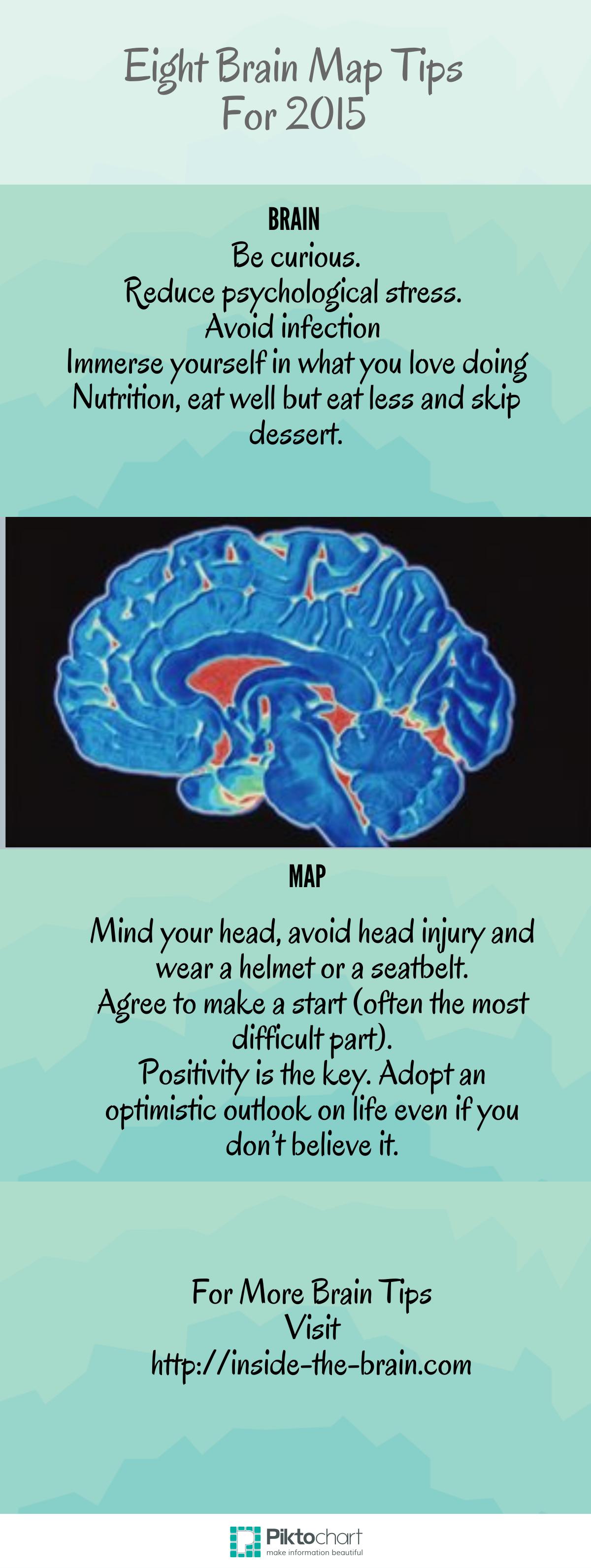
Eight BRAIN MAP tips for 2015 (Infographic)

Brain Map

1. Be curious, engage your brain – watch/listen to the News in another language, wear

you watch upside down, use your non-preferred hand to brush your teeth/hair, try

spelling words backwards, when driving – switch off the Sat Nav and take different

routes into town/work.

2. Reduce psychological stress. Combine exercise with sensory stimulation by walking

through the local village/town/city on your way to/from work and focus your

attention by noticing things. Frequent meditation will also help focus attention

thereby preventing distraction by random fears/worries.

3. Avoid infection and deal with it vigorously when it happens.

4. Immerse yourself in what you love doing until it generates flow and watch time fly.

5. Nutrition, eat well but eat less and skip desert. Coffee/tea can help focus attention.


6. Mind your head, avoid head injury and wear a helmet or a seatbelt.

7. Agree to make a start (often the most difficult part).

8. Positivity is the key. Adopt an optimistic outlook on life even if you don’t believe it.


..and finally, when it comes to your brain –

you either use it or lose it.

Weekly Neuroscience Update

eeg-childhood-generosity

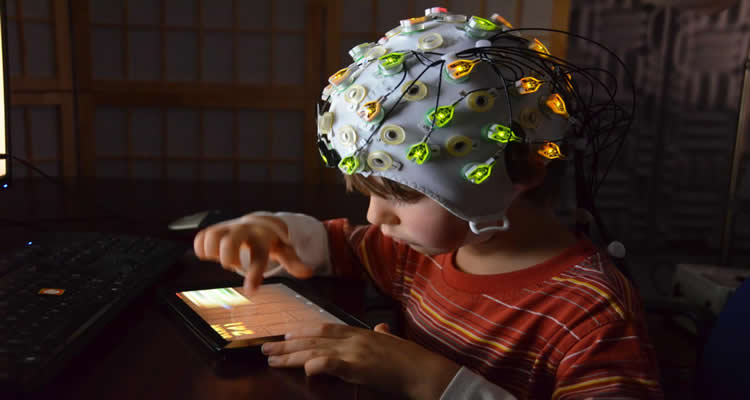
Children were monitored with EEGs while watching animated characters perform prosocial and antisocial behaviors, and later participated in a task measuring generosity. Credit Jean Decety/University of Chicago.

University of Chicago developmental neuroscientists have found specific brain markers that predict generosity in children. Those neural markers appear to be linked to both social and moral evaluation processes.

Researchers at The University of Western Australia have found that brain stimulation may help retrain unhelpful cognitive habits associated with anxiety and depression. The paper was published this week in the international journal Biological Psychiatry.

Methamphetamine users are three times more at risk for getting Parkinson’s disease than non-illicit drug users, new research shows.

Researchers have developed new technology that can assess the location and impact of a brain injury merely by tracking the eye movements of patients as they watch music videos for less than four minutes, according to a study published in the Journal of Neurosurgery.

Spending less time in slow-wave or deep sleep is linked to the loss of brain cells that can lead to dementia, a new study finds.

Scientists have discovered a new signal pathway in the brain that plays an important role in learning and the processing of sensory input.

New UCLA research indicates that lost memories can be restored. The findings offer some hope for patients in the early stages of Alzheimer’s disease.

Weekly Neuroscience Update

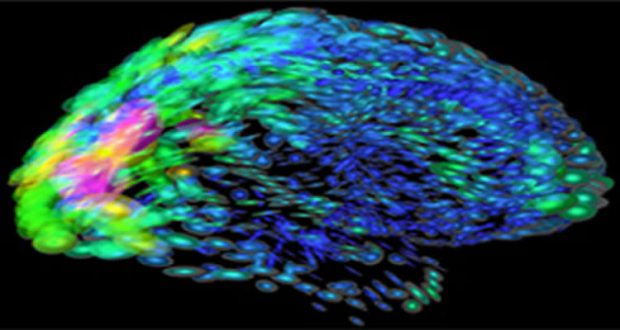
The human brain using colors and shapes to show neurological differences between two people. Credit Arthur Toga, University of California, Los Angeles via NIGMS.

The human brain using colors and shapes to show neurological differences between two people. Credit Arthur Toga, University of California, Los Angeles via NIGMS.

While many different combinations of genetic traits can cause autism, brains affected by autism share a pattern of ramped-up immune responses, an analysis of data from autopsied human brains reveals. The study, published online in the journal Nature Communications, included data from 72 autism and control brains.

Teenagers who have suffered a traumatic brain injury are twice as likely to drink alcohol or use drugs when compared with whose who have never experienced a similar blow or trauma to the head.

Activating the brain’s amygdala, an almond-shaped mass that processes emotions, can create an addictive, intense desire for sugary foods, a new study found. Rewards such as sweet, tasty food or even addictive drugs like alcohol or cocaine can be extremely attractive when this brain structure is triggered. And another study, led by researchers at University of California, San Diego School of Medicine, revealed that the brains of obese children literally light up differently when tasting sugar.

Scientists have discovered a link between sleep loss and cell injury. Results of a new study find sleep deprivation causes the damage to cells, especially in the liver, lung, and small intestine. Recovery sleep following deprivation heals the damage.

Neural circuits that activate when we daydream run in the opposite direction to how we process reality, a new study finds.

Yale researchers using a new brain imaging analysis method have confirmed that smoking cigarettes activates a dopamine-driven pleasure and satisfaction response differently in men compared to women.

Whether we’re paying attention to something we see can be discerned by monitoring the firings of specific groups of brain cells. Now, new work from Johns Hopkins shows that the same holds true for the sense of touch.

Serious, long-term stress can have dire consequences for your brain. That’s because the immune system and the brain are intimately related, say researchers at the Ruhr University Bochum, Germany.

In the current issue of Psychotherapy and Psychosomatics a new study identifies biological characteristics who may predict who is going to respond to psychotherapy.

Some high school football players exhibit measurable brain changes after a single season of play even in the absence of concussion, according to a study presented at the annual meeting of the Radiological Society of North America. Meanwhile, as debate increases about whether female lacrosse players should wear headgear, a new study reports measurements of the accelerations that stick blows deliver to the head. The study also measured the dampening effect of various kinds of headgear.

Quitting smoking sets off a series of changes in the brain that researchers say may better identify smokers who will start smoking again.

Everyday events are easy to forget, but unpleasant ones can remain engraved in the brain. A new study published in the Proceedings of the National Academy of Sciences identifies a neural mechanism through which unpleasant experiences are translated into signals that trigger fear memories by changing neural connections in a part of the brain called the amygdala. The findings show that a long-standing theory on how the brain forms memories, called Hebbian plasticity, is partially correct, but not as simple as was originally proposed.