Weekly Neuroscience Update

neuron-information-group-neurosciencneews-public.jpg

A new study reports the neurons that focus on coarse visual details could change to prefer finer details under different conditions. The findings shed new light on the neural mechanism that helps shape our perception of the world.

The most comprehensive genomic analysis of the human brain ever undertaken has revealed new insights into the changes it undergoes through development, how it varies among individuals and the roots of neuropsychiatric illnesses such as autism spectrum disorders and schizophrenia.

Researchers have identified a new role for the cerebellum. Rather than just helping to control muscle activity, the cerebellum may also play a critical role in cognitive functions.

When parents play with their child, their brains show similar bursts of brain activity. The activity is linked to their baby’s attention patterns, and not their own, researchers report.

We know a good meal can stimulate the release of the feel-good hormone dopamine, and now a study from the Max Planck Institute for Metabolism Research in Germany suggests that dopamine release in the brain occurs at two different times: at the time the food is first ingested and another once the food reaches the stomach.

A new multi-site brain imaging study shows that sub-groups of people use their brains differently when imitating emotional faces – a task that reflects their ability to interact socially.

Finally, this week, according to researchers, Botulinum toxin, or Botox, injections can help to reduce the frequency of chronic migraines.


Weekly Neuroscience Update

neural-network-communication-neurosciencneews.jpg

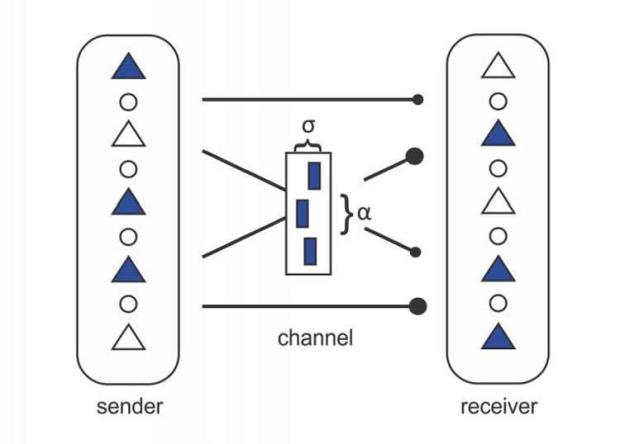
How do neural networks in different brain areas communicate with each other? The Bernstein Center Freiburg proposes a new model.

Researchers propose a new model to help explain how the level of activity in neural networks influences the flow of information.

A neurofeedback system enables Parkinson’s disease patients to voluntarily control brainwaves associated with symptoms of the disorder, according to new research published in eNeuro.

One night of sleep loss can increase the desirability of junk foods, finds a study of healthy weight young men published in Journal of Neuroscience.

When two events occur within a brief window of time they become linked in memory, such that calling forth the memory of one helps retrieve memory for the other event, according to research published in Psychological Science. This happens even when temporal proximity is the only feature that the two events share.

Researchers have identified specific diffusible molecules that are essential for boundary formation in the brain.

Scientists report that neuron loss in Alzheimer’s disease may not be such a bad thing. The study reveals the loss of neurons may be the result of a cell quality control mechanism attempting to protect the brain from the accumulation of malfunctioning neurons.

A new study reveals passive exposure to foreign speech sounds over the course of several consecutive days helps enhance language learning.

People with Huntington’s disease who participated in intellectually stimulating activities had less brain atrophy than those with the disease who did not take up such activities.

Finally this week, boys with good motor skills are better problem-solvers than their less skillful peers, a new study from Finland shows. 

Weekly Neuroscience Update

2-discoveryofn.jpg

Image Credit: Guillaume Sandoz, CNRS

Researchers at CNRS, Université Côte d’Azur and Inserm have demonstrated a new mechanism related to the onset of migraine. In fact, they found how a mutation, causes dysfunction in a protein which inhibits neuronal electrical activity, induces migraines. These results, published in Neuron on Dec. 17, 2018, open a new path for the development of anti-migraine medicines.

Scientists using eye tracking software, report what we look at helps guide our decisions when faced with two visible choices.

A new study reports children and teens who face chronic bullying have altered brain structure, as well as problems with anxiety and depression. Researchers found those who were bullies had structural changes to the putamen and caudate, contributing to the development of anxiety related behaviors and emotional processing.

Researchers have identified specific neurons in the medial prefrontal cortex, called self-monitoring error neurons, that fire immediately after people make a mistake.

New findings show how alcohol influences dopaminergic and inhibitory neurons in the ventral tegmental area. The findings could help develop new treatments for alcohol dependence.

A diet of fast food, cakes and processed meat increases your risk of depression, according to a new study.

Scientists who recently identified the molecular start of Alzheimer’s disease have used that finding to determine that it should be possible to forecast which type of dementia will develop over time – a form of personalized medicine for neurodegenerative diseases.

A new study reports lightly stroking an infant, at a speed of 3 centimeters per second, can help to provide pain relief prior to medical procedures.

Researchers have identified cognitive subgroups related to genetic differences in Alzheimer’s patients. The findings could open the door for more personalized treatments of the neurodegenerative disease.

A previously unknown brain mechanism that regulates anxiety has come to light. It allows a gene-altering protein to enter the nucleus of brain cells.

Finally this week, researchers discovered activity in brain regions involved in reward response from dopamine was higher in subjects injected with the hormone ghrelin, but only when responding to images associated with food smells. The study reports ghrelin controls the extent to which the brain associates reward with food odors.


Weekly Neuroscience Update

boy-3360415_960_720.jpg

Researchers have found “different patterns” in brain scans among children who record heavy smart device and video game use, according to initial data from a major ongoing US study.

A new study reports the combination of a toxic herbicide and lectins may trigger Parkinsonism after the toxins travel from the stomach to the brain.

Later-born siblings of children with autism spectrum disorder (ASD) or attention-deficit/hyperactivity disorder (ADHD) are at elevated risk for both disorders, a new study has concluded. The study suggests that families who already have a child diagnosed with ASD or ADHD may wish to monitor younger siblings for symptoms of both conditions.

Researchers have shed light on the dual nature of dopamine, as a neurotransmitter that makes us seek pleasure and also reinforces avoidance of pain.

A new neuroimaging study reveals imagination may help people with fear or anxiety disorders overcome them. The study reports imagining a threat can alter the way it is represented in the brain.

Stimulating the lateral orbitofrontal cortex improves mood in those suffering from depression, a new study reveals.

Scientists report low levels of GABA producing bacteria is associated with brain signatures of depression. They believe it may be possible to treat clinical depression by increasing GABA producing bacteria.

Finally, this week, using machine learning to analyze fMRI brain scans of grieving people, researchers shed light on how unconscious suppression occurs.

Weekly Neuroscience Update

kindle-1867751_960_720.jpg

Researchers have uncovered how specific retinal cells respond to the artificial light generated by cell phone and tablets. The study reveals how retinal ganglion cells process ambient light and reset our circadian clocks, leading to sleep disruptions.

Stimulating the lateral orbitofrontal cortex improves mood in those suffering from depression, a new study reveals.

New research has discovered that a type of adult stem cell found in a variety of tissues can be manipulated to enhance tissue regeneration and potentially treat inflammatory diseases.

A new study reports obesity can significantly increase the risk of depression, even in the absence of other health problems.

Researchers have made a breakthrough in understanding the development of attention deficit hyperactivity disorder. In a new study, the researchers reveal they have identified specific gene variants which increase the risk of ADHD.

A new study combines hundreds of brain scans of patients with OCD and pinpoints problems with error processing in the brain that leads to repetitive behaviors.

Researchers say a new discovery about the pathways associated with consciousness contradicts conventional belief. The study reports the thalamus is not a critical part of the brain’s pathway involved in wakefulness and consciousness, a finding that could help develop better methods for treating comas.

A new study reveals how the brain processes sound and how quickly neurons transition from processing the sound of speech to the language based words.

With a finding that will “rewrite neuroanatomy textbooks,” scientists have shown that the thalamus is not a critical part of the brain pathway involved in keeping humans awake and conscious.

Finally this week, older adults who take up drawing could enhance their memory, according to a new study.


Weekly Neuroscience Update

paralysis-tablet-bci-neurosciencenews.jpg

Two participants in the BrainGate clinical trial directly control a tablet computer through a brain-computer interface to chat with each other online. The research, published in PLOS ONE, is a step toward restoring the ability of people with paralysis to use everyday technologies.

New research from the BrainGate consortium shows that a brain-computer interface (BCI) can enable people with paralysis to directly operate an off-the-shelf tablet device just by thinking about making cursor movements and clicks.

A new study reports those exposed to the highest levels of noise pollution caused by traffic are at an increased risk of obesity.

Researchers have pinpointed a part of the human brain responsible for “on-the-fly” decision-making. According to the findings published in JNeurosci, the anterior cingulate cortex integrates disparate information about the desirability and amount of an option to inform choice.

MRI brain scans perform better than common clinical tests at predicting which people will go on to develop Alzheimer’s disease, according to a new study.

A team of researchers has found that the brain works for a while after the heart has stopped. The research is reported in a journal paper titled, ‘AWARE—AWAreness during REsuscitation—A prospective study.’ The scientists looked at patients with cardiac arrests in Europe and the US. They noted that those of the patients who were successfully resuscitated after their heart had stopped beating could recall the conversations around them between the healthcare personnel and were aware of their surroundings.

Researchers have identified a mechanism by which immune system problems can cause commensal dysbiosis, which promotes age-related pathologies.

According to a new study, exploring objects through touch can generate detailed, lasting memories of the object, even when people don’t intend to memorize the details of the object.

A single season of high school football may be enough to cause microscopic changes in the structure of the brain, according to researchers.

Finally this week, researchers using functional MRI (fMRI) have found differences in the brains of men and women who are addicted to online gaming, according to a new study presented at the annual meeting of the Radiological Society of North America.


Alzheimer’s Researchers Detect Genetic Recombination in the Brain

For the first time, scientists have identified gene recombination, or “mixing and matching” of DNA, in the brain.

New technology revealed DNA in neurons is recombined, producing thousands of previously unknown gene variations—and identifying a potential near-term treatment for Alzheimer’s disease.

The study, published in Nature and authored by Jerold Chun, M.D., Ph.D., professor and senior vice president of Neuroscience Drug Discovery at SBP, focused on the Alzheimer’s-linked gene, APP, and discovered it is recombined by using the same type of enzyme found in HIV. This finding indicates existing FDA-approved antiretroviral therapies for HIV that block reverse transcriptase might also be able to halt the recombination process—and could be explored as a new treatment for Alzheimer’s disease.

Weekly Neuroscience Update

neuroimaging-asd-model-neuroscineneews.jpg

A new study reports short distance connectivity abnormalities may be involved in social cognitive deficits in those with autism spectrum disorders.

Capitalizing on recent advances in neuroimaging and genetic biomarker research, scientists have been able to identify specific pathways by which tau and beta-amyloid, two proteins that are hallmarks of Alzheimer’s disease, accumulate in the brain over time.

A new study reports people who experience migraines with visual auras are at increased risk of atrial fibrillation.

Researchers report there are two distinct ways in which we make temporal predictions, and these rely on different parts of the brain. The findings offer a new perspective on how humans calculate when to make a move.

A 15-minute scan could help diagnose brain damage in babies up to two years earlier than current methods.

A newborn baby’s brain responds to being touched on the face, according to new research. Babies use this sense of touch — facial somatosensation — to find and latch onto their mother’s nipple, and should have this ability from birth. Premature babies often have difficulty feeding, and underdevelopment of their facial sensitivity may be one of the main causes.

MRI brain scans perform better than common clinical tests at predicting which people will go on to develop Alzheimer’s disease, according to a study.

Researchers at the University of Queensland have discovered that the thickness of the brain’s outer layer influences how individual neurons process information. The findings, published in the journal, Neuron, challenge the understanding of how brain circuits function throughout the brain.

Finally, this week, new research published in the Journal of Physiology presents a breakthrough in the treatment of Restless Legs Syndrome (RLS).