Weekly Neuroscience Update

boy-3360415_960_720.jpg

Researchers have found “different patterns” in brain scans among children who record heavy smart device and video game use, according to initial data from a major ongoing US study.

A new study reports the combination of a toxic herbicide and lectins may trigger Parkinsonism after the toxins travel from the stomach to the brain.

Later-born siblings of children with autism spectrum disorder (ASD) or attention-deficit/hyperactivity disorder (ADHD) are at elevated risk for both disorders, a new study has concluded. The study suggests that families who already have a child diagnosed with ASD or ADHD may wish to monitor younger siblings for symptoms of both conditions.

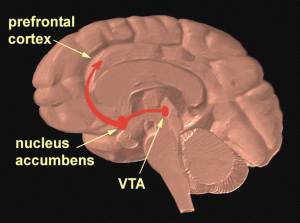
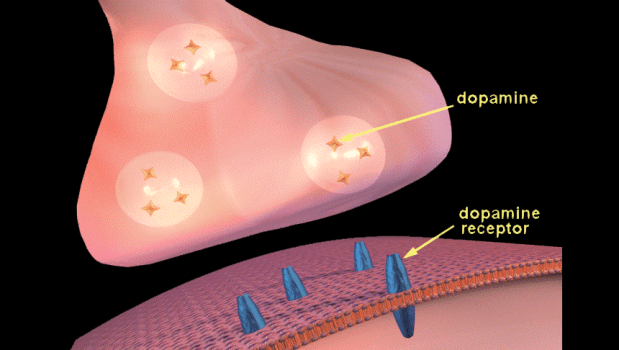
Researchers have shed light on the dual nature of dopamine, as a neurotransmitter that makes us seek pleasure and also reinforces avoidance of pain.

A new neuroimaging study reveals imagination may help people with fear or anxiety disorders overcome them. The study reports imagining a threat can alter the way it is represented in the brain.

Stimulating the lateral orbitofrontal cortex improves mood in those suffering from depression, a new study reveals.

Scientists report low levels of GABA producing bacteria is associated with brain signatures of depression. They believe it may be possible to treat clinical depression by increasing GABA producing bacteria.

Finally, this week, using machine learning to analyze fMRI brain scans of grieving people, researchers shed light on how unconscious suppression occurs.

Weekly Neuroscience Update

kindle-1867751_960_720.jpg

Researchers have uncovered how specific retinal cells respond to the artificial light generated by cell phone and tablets. The study reveals how retinal ganglion cells process ambient light and reset our circadian clocks, leading to sleep disruptions.

Stimulating the lateral orbitofrontal cortex improves mood in those suffering from depression, a new study reveals.

New research has discovered that a type of adult stem cell found in a variety of tissues can be manipulated to enhance tissue regeneration and potentially treat inflammatory diseases.

A new study reports obesity can significantly increase the risk of depression, even in the absence of other health problems.

Researchers have made a breakthrough in understanding the development of attention deficit hyperactivity disorder. In a new study, the researchers reveal they have identified specific gene variants which increase the risk of ADHD.

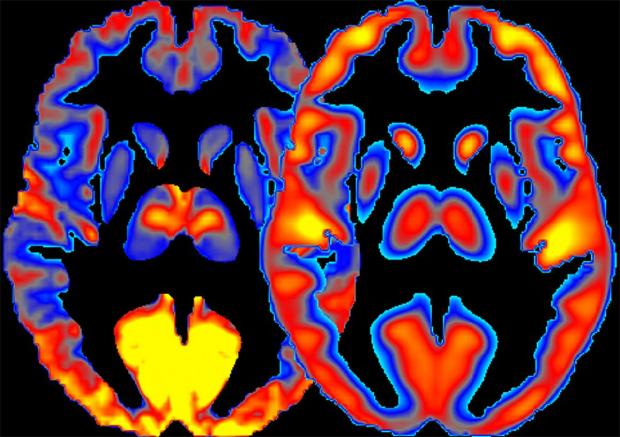
A new study combines hundreds of brain scans of patients with OCD and pinpoints problems with error processing in the brain that leads to repetitive behaviors.

Researchers say a new discovery about the pathways associated with consciousness contradicts conventional belief. The study reports the thalamus is not a critical part of the brain’s pathway involved in wakefulness and consciousness, a finding that could help develop better methods for treating comas.

A new study reveals how the brain processes sound and how quickly neurons transition from processing the sound of speech to the language based words.

With a finding that will “rewrite neuroanatomy textbooks,” scientists have shown that the thalamus is not a critical part of the brain pathway involved in keeping humans awake and conscious.

Finally this week, older adults who take up drawing could enhance their memory, according to a new study.


Weekly Neuroscience Update

paralysis-tablet-bci-neurosciencenews.jpg

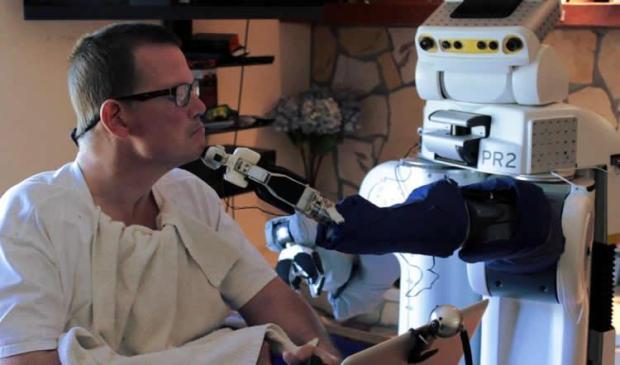
Two participants in the BrainGate clinical trial directly control a tablet computer through a brain-computer interface to chat with each other online. The research, published in PLOS ONE, is a step toward restoring the ability of people with paralysis to use everyday technologies.

New research from the BrainGate consortium shows that a brain-computer interface (BCI) can enable people with paralysis to directly operate an off-the-shelf tablet device just by thinking about making cursor movements and clicks.

A new study reports those exposed to the highest levels of noise pollution caused by traffic are at an increased risk of obesity.

Researchers have pinpointed a part of the human brain responsible for “on-the-fly” decision-making. According to the findings published in JNeurosci, the anterior cingulate cortex integrates disparate information about the desirability and amount of an option to inform choice.

MRI brain scans perform better than common clinical tests at predicting which people will go on to develop Alzheimer’s disease, according to a new study.

A team of researchers has found that the brain works for a while after the heart has stopped. The research is reported in a journal paper titled, ‘AWARE—AWAreness during REsuscitation—A prospective study.’ The scientists looked at patients with cardiac arrests in Europe and the US. They noted that those of the patients who were successfully resuscitated after their heart had stopped beating could recall the conversations around them between the healthcare personnel and were aware of their surroundings.

Researchers have identified a mechanism by which immune system problems can cause commensal dysbiosis, which promotes age-related pathologies.

According to a new study, exploring objects through touch can generate detailed, lasting memories of the object, even when people don’t intend to memorize the details of the object.

A single season of high school football may be enough to cause microscopic changes in the structure of the brain, according to researchers.

Finally this week, researchers using functional MRI (fMRI) have found differences in the brains of men and women who are addicted to online gaming, according to a new study presented at the annual meeting of the Radiological Society of North America.


Alzheimer’s Researchers Detect Genetic Recombination in the Brain

For the first time, scientists have identified gene recombination, or “mixing and matching” of DNA, in the brain.

New technology revealed DNA in neurons is recombined, producing thousands of previously unknown gene variations—and identifying a potential near-term treatment for Alzheimer’s disease.

The study, published in Nature and authored by Jerold Chun, M.D., Ph.D., professor and senior vice president of Neuroscience Drug Discovery at SBP, focused on the Alzheimer’s-linked gene, APP, and discovered it is recombined by using the same type of enzyme found in HIV. This finding indicates existing FDA-approved antiretroviral therapies for HIV that block reverse transcriptase might also be able to halt the recombination process—and could be explored as a new treatment for Alzheimer’s disease.

Weekly Neuroscience Update

neuroimaging-asd-model-neuroscineneews.jpg

A new study reports short distance connectivity abnormalities may be involved in social cognitive deficits in those with autism spectrum disorders.

Capitalizing on recent advances in neuroimaging and genetic biomarker research, scientists have been able to identify specific pathways by which tau and beta-amyloid, two proteins that are hallmarks of Alzheimer’s disease, accumulate in the brain over time.

A new study reports people who experience migraines with visual auras are at increased risk of atrial fibrillation.

Researchers report there are two distinct ways in which we make temporal predictions, and these rely on different parts of the brain. The findings offer a new perspective on how humans calculate when to make a move.

A 15-minute scan could help diagnose brain damage in babies up to two years earlier than current methods.

A newborn baby’s brain responds to being touched on the face, according to new research. Babies use this sense of touch — facial somatosensation — to find and latch onto their mother’s nipple, and should have this ability from birth. Premature babies often have difficulty feeding, and underdevelopment of their facial sensitivity may be one of the main causes.

MRI brain scans perform better than common clinical tests at predicting which people will go on to develop Alzheimer’s disease, according to a study.

Researchers at the University of Queensland have discovered that the thickness of the brain’s outer layer influences how individual neurons process information. The findings, published in the journal, Neuron, challenge the understanding of how brain circuits function throughout the brain.

Finally, this week, new research published in the Journal of Physiology presents a breakthrough in the treatment of Restless Legs Syndrome (RLS).


This Is Your Brain On Gratitude

do what you love

“Thank you” doesn’t just bring light to people’s faces. It also lights up different parts of the brain.

In honor of Thanksgiving, I’d like to share this article with you from UC Berkeley’s Greater Good Science Center.

Evidence is mounting that gratitude makes a powerful impact on our bodies, including our immune and cardiovascular health. But how does gratitude work in the brain?

A team at the University of Southern California has shed light on the neural nuts and bolts of gratitude in a new study, offering insights into the complexity of this social emotion and how it relates to other cognitive processes.

There seems to be a thread that runs through subtle acts of gratitude, such as holding a door for someone, all the way up to the big powerful stuff like when someone gives you a kidney,” says Glenn Fox, a postdoctoral researcher at USC and lead author of the study. “I designed this experiment to see what aspects of brain function are common to both these small feelings of appreciation and large feelings of gratitude.

In their experiment, Fox and his team planned to scan participants’ brains while they were feeling grateful to see where gratitude showed up.

The researchers found that grateful brains showed enhanced activity in two primary regions: the anterior cingulate cortex (ACC) and the medial prefrontal cortex (mPFC). These areas have been previously associated with emotional processing, interpersonal bonding and rewarding social interactions, moral judgment, and the ability to understand the mental states of others.

A lot of people conflate gratitude with the simple emotion of receiving a nice thing. What we found was something a little more interesting,” says Fox. “The pattern of [brain]activity we see shows that gratitude is a complex social emotion that is really built around how others seek to benefit us.

In other words, gratitude isn’t merely about reward—and doesn’t just show up in the brain’s reward center. It involves morality, connecting with others, and taking their perspective.

In further studies, Fox hopes to investigate what’s going on in the body as gratitude improves our health and well-being.

It’s really great to see all the benefits that gratitude can have, but we are not done yet. We still need to see exactly how it works, when it works, and what are the best ways to bring it out more,” he says. “Enhancing our knowledge of gratitude pulls us closer to our own human dignity and what we can do to benefit each other.

You might also like to read When You Are Grateful, Your Brain Becomes More Charitable

Weekly Neuroscience Update

genetics-autism-neurosciencenews.jpg

A network of more than 200 genes encoding proteins with diverse cellular roles was revealed in a non-biased CRISPR screen for regulators of microexon splicing. Many of the genes have previously been linked to autism. Image is credited to Thomas Gonatopoulos-Pournatzis.

Using CRISPR techniques, researchers have uncovered a genetic network linked to autism.

Researchers find evidence of cognitive issues and miRNA biomarkers, indicating brain injuries from concussions or head-to-head contact, in college football players. The findings indicated lasting damage caused by sports-related concussions occur earlier than expected.

A new method for studying the mircobiome has allowed researchers to identify a connection between metabolism in gut bacteria and the development of diabetes.

A new study has identified unique functional brain networks associated with characteristic behaviors of autism spectrum disorder (ASD) in 12- and 24-month old children at risk for developing ASD. The study is published in Biological Psychiatry: Cognitive Neuroscience and Neuroimaging.

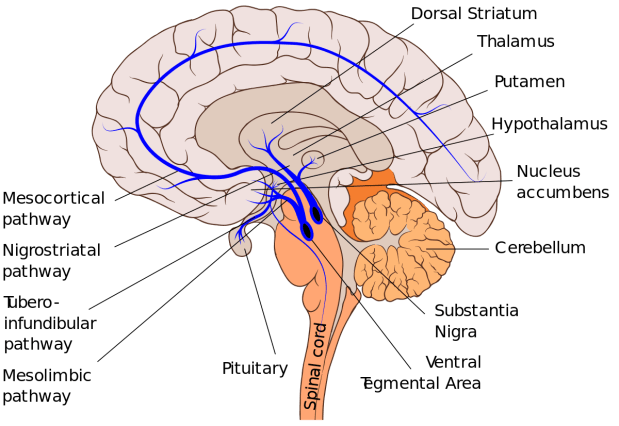
Researchers have identified a brain network that may control the diversion of attention to focus on potential threats. Dopamine, they report, is key to the process.

New research has found preliminary evidence that high-intensity interval exercise temporarily impairs reward learning mechanisms in the brain. The research, which was published in Physiology & Behavior, indicates that this type of exercise does not improve all aspects of cognitive function.

A new study reports aerobic exercise can have antidepressant effects for patients with major depressive disorder.

Researchers propose a new theory of human thinking, suggesting our brain’s navigation system is key to thinking. This may explain why our knowledge seems to be organized in spatial fashion.

Scientists have solved a 125-year-old mystery of the brain, and, in the process, uncovered a potential treatment for acquired epilepsy.

A new neuroimaging study reveals the brains of teenage girls who self-harm show similar features to adults with borderline personality disorder.

Researchers were able to distinguish between children with or without ASD diagnosis, thanks to a new saliva-based biomarker panel. Researchers report the test can be used in children as young as 18 month, assisting in early diagnosis of autism.

Finally this week, a new study reveals common brain activity patterns associated with depressive moods.


Weekly Neuroscience Update

serotonin-receptor-activation-neuroscieneews.jpg

Serotonin-induced activation of serotonin (3A) receptors. NeuroscienceNews.com image is credited to Case Western Reserve University School of Medicine.

Using cryo-electron microscopy, researchers have successfully imaged serotonin attaching to the receptor and twisting open the channel, allowing sodium molecules to travel through.

Researchers report adults who sleep six hours per night, as opposed to the recommended eight, have higher chances of waking up dehydrated.

A new study reports some genetic factors that increase obesity work to lower metabolic risk. 14 genetic variations, researchers report, are linked to higher BMI but lower diabetes risk.

A new method for studying the mircobiome has allowed researchers to identify a connection between metabolism in gut bacteria and the development of diabetes.

Researchers have discovered how the nature of T cells help protect the brain from viruses. The findings shed light on the role the immune system plays in a number of neurodegenerative disorders.

A new study has identified a brain network that may control the diversion of attention to focus on potential threats. Dopamine, they report, is key to the process.

As the adage goes “neurons that fire together, wire together,” but a new paper published today in Neuron demonstrates that, in addition to response similarity, projection target also constrains local connectivity.

A new study reveals common brain activity patterns associated with depressive moods.

Engaging in regular exercise can help preserve the motor and non-motor function of Parkinson’s disease patients, most likely as a result of an increased release of dopamine in the brain, a small study suggests.

Researchers have identified abnormalities in specific neural networks that may be a biomarker to predict the risk of developing schizophrenia.

Researchers find evidence of cognitive issues and miRNA biomarkers, indicating brain injuries from concussions or head-to-head contact, in college football players. The findings indicated lasting damage caused by sports-related concussions occur earlier than expected.