Weekly Neuroscience Update

This cross-section of the hippocampus shows island cells (green) projecting to the CA1 region of the hippocampus. (Credit: Takashi Kitamura)

This cross-section of the hippocampus shows island cells (green) projecting to the CA1 region of the hippocampus. (Credit: Takashi Kitamura)

Neuroscientists have discovered how two neural circuits in the brain work together to control the formation of time-linked memories. This is a critical ability that helps the brain to determine when it needs to take action to defend against a potential threat.

Survivors of traumatic brain injuries (TBI) are three times more likely to die prematurely, often from suicide or fatal injuries, according to a study from Oxford University.

An international team of researchers has found that the cause of schizophrenia is even more complex than already believed, with rare gene mutations contributing to the disorder. In two studies published in the journal Nature, they show that schizophrenia arises from the combined effects of many genes.

Scientists have found that, to allow us to concentrate, we synchronize different regions of our brains in a process that the researchers describe as “roughly akin to tuning multiple walkie-talkies to the same frequency.”

Researchers have identified a protein in the brain that plays a critical role in the memory loss seen in Alzheimer’s patients, according to a study to be published in the journal Nature Neuroscience.

Using a simple study of eye movements, scientists report evidence that people who are less patient tend to move their eyes with greater speed. The findings, the researchers say, suggest that the weight people give to the passage of time may be a trait consistently used throughout their brains, affecting the speed with which they make movements, as well as the way they make certain decisions.

Researchers have found that epileptic activity can spread through a part of the brain in a new way, suggesting a possible novel target for seizure-blocking medicines.

Weekly Neuroscience Update

Neuronal activity during exposure to various images reveals distinct spatial groupings. The red region, for example, responds well to face stimuli. Credit by Takayuki Sato/RIKEN Brain Science Institute.

Neuronal activity during exposure to various images reveals distinct spatial groupings. The red region, for example, responds well to face stimuli. Credit by Takayuki Sato/RIKEN Brain Science Institute.

A brain region that responds to a particular category of objects is found to consist of small clusters of neurons encoding visual features of these objects.

Scientists have discovered that by deactivating a major switch in the brain that is linked to learning and memory, memories become jumbled, like “hitting random notes on a keyboard,” and lose their sense of association.

Newcastle University scientists have discovered that as the brain re-organizes connections throughout our life, the process begins earlier in girls which may explain why they mature faster during the teenage years.

Learning requires constant reconfiguration of the connections between nerve cells. Two new studies now yield new insights into the molecular mechanisms that underlie the learning process.

In the first study of its kind, two researchers have used popular music to help severely brain-injured patients recall personal memories. Amee Baird and Séverine Samson outline the results and conclusions of their pioneering research in the recent issue of the journal Neuropsychological Rehabilitation.

Neuroscientists have successfully demonstrated a technique to enhance a form of self-control through a novel form of brain stimulation.

Finally this week, scientists have discovered that as the brain re-organizes connections throughout our life, the process begins earlier in girls which may explain why they mature faster during the teenage years.

Weekly Neuroscience Update

scientists develop video game for stroke

Scientists have developed a therapeutic at-home 3D gaming programme to help stroke patients overcome motor weakness, which affects 80 per cent of survivors.

Using a video game in which people navigate through a virtual town delivering objects to specific locations, a team of neuroscientists has discovered how brain cells that encode spatial information form “geotags” for specific memories and are activated immediately before those memories are recalled.

Establishing links between genes, the brain and human behavior is a central issue in cognitive neuroscience research, but studying how genes influence cognitive abilities and behavior as the brain develops from childhood to adulthood has proven difficult. Now, an international team of scientists has made inroads to understanding how genes influence brain structure and cognitive abilities and how neural circuits produce language.

Stanford University School of Medicine neuroscientists have discovered a new role played by a common but mysterious class of brain cells.

A new study using brain imaging has shown the effect of the chronic pain drug pregalbin on the brain, giving researchers new insight on the treatment of fibromyalgia and other chronic pain disorders.

A study published recently in the Journal of Neuroscience points, for the first time, to the gene trkC as a factor in susceptibility to panic disorder. The researchers define the specific mechanism for the formation of fear memories which will help in the development of new pharmacological and cognitive treatments.

Finally, in the largest study on the topic to date, research shows that speaking a second language may delay the onset of three types of dementias.  The study found that people who spoke two languages developed dementia four and a half years later than people who only spoke one language.


Weekly Neuroscience Update

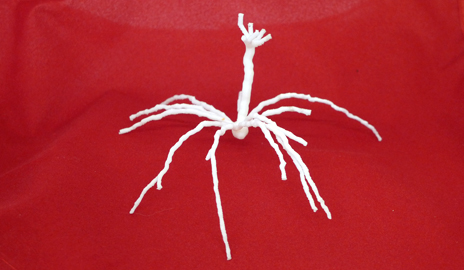
3D-printed model of a neuron (credit: Yale University)

3D-printed model of a neuron (credit: Yale University)

A Yale neuroscientist  has created the first 3D-printed neuron.

Studies released today suggest promising new treatments for nicotine and heroin addiction, and further our understanding of pathological gambling and heroin abuse in those suffering chronic pain. This new knowledge, released at Neuroscience 2013, the annual meeting of the Society for Neuroscience (SFN) and the world’s largest source of emerging news about brain science and health, may one day lead to non-pharmaceutical interventions and therapies to treat addiction. Also presented at SFN, new studies revealing links between social status and specific brain structures and activity, particularly in the context of social stress.

A new study has found that people experiencing a depressive episode process information about themselves differently than people who are not depressed.

To flexibly deal with our ever-changing world, we need to learn from both the negative and positive consequences of our behaviour. In other words, from punishment and reward. Hanneke den Ouden from the Donders Institute in Nijmegen demonstrated that serotonin and dopamine related genes influence how we base our choices on past punishments or rewards. This influence depends on which gene variant you inherited from your parents. These results were published in Neuron on November 20.

Brain scans reveal that people with fibromyalgia are not as able to prepare for pain as healthy people, and they are less likely to respond to the promise of pain relief.

Scientists have used RNA interference (RNAi) technology to reveal dozens of genes which may represent new therapeutic targets for treating Parkinson’s disease. The findings also may be relevant to several diseases caused by damage to mitochondria, the biological power plants found in cells throughout the body.

Playing a fast-paced strategy video games can help the brain to become more agile and improve strategic thinking, according to new research.

While young children sleep, connections between the left and the right hemispheres of their brain strengthen, which may help brain functions mature, according to a new study by the University of Colorado Boulder.  And in another sleep study, a team of sleep researchers  has confirmed the mechanism that enables the brain to consolidate memory and found that a commonly prescribed sleep aid enhances the process. Those discoveries could lead to new sleep therapies that will improve memory for aging adults and those with dementia, Alzheimer’s and schizophrenia.

Weekly Neuroscience Update

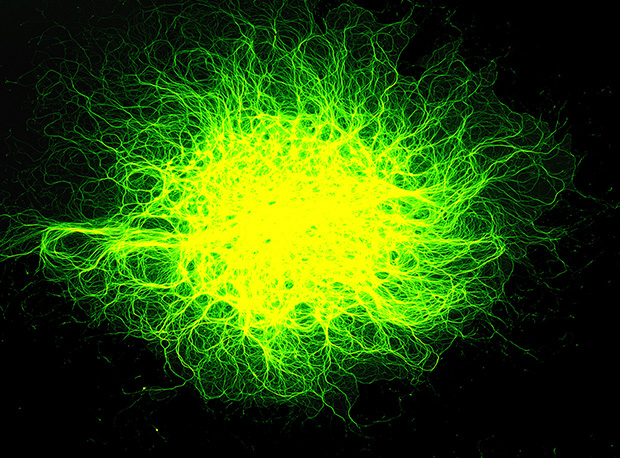
To study how nerve cells respond to injuries in their branches, Washington University researcher Valeria Cavalli grows them in “spots” like the one shown above. Cavalli recently identified a chain reaction that enables repair of these branches when they are cut. Credit Yongcheol Cho/Washington University at St. Louis.

To study how nerve cells respond to injuries in their branches, Washington University researcher Valeria Cavalli grows them in “spots” like the one shown above. Cavalli recently identified a chain reaction that enables repair of these branches when they are cut. Credit Yongcheol Cho/Washington University at St. Louis.

Researchers have identified a chain reaction that triggers the regrowth of some damaged nerve cell branches, a discovery that one day may help improve treatments for nerve injuries that can cause loss of sensation or paralysis.

Groundbreaking research nearly two decades ago linking a mother’s educational background to her children’s literacy and cognitive abilities stands out among decades of social science studies demonstrating the adverse effects of poverty. Now new research has taken that finding in a neuroscientific direction: linking poor processing of auditory information in the adolescent brain to a lower maternal educational background.

A review of new research says there is growing evidence to support the idea that the brain plays a key role in normal glucose regulation and the development of type 2 diabetes.

University of Queensland (UQ) scientists have made a fundamental breakthrough into how the brain decodes the visual world.

Cocaine addicts may become trapped in drug binges not because they are always seeking euphoric highs but rather to avoid emotional lows, says a study in Psychopharmacology.

Researchers have developed a therapeutic at-home gaming program for stroke patients who experience motor weakness affecting 80 percent of survivors.

Learning a musical instrument as a child gives the brain a boost that lasts long into adult life, say scientists.

The birth of new neurons depend upon activation of an important molecular pathway in stem cells, a new Yale School of Medicine study shows.

Researchers have taken a major step towards understanding the causes of Alzheimer’s disease with the largest study yet into the genetics of the disorder.

Light enhances brain activity during a cognitive task even in some people who are totally blind, according to a new study.

Scientists have discovered biological mechanisms that may link Parkinson’s disease to Alzheimer’s disease, according to a study published in the journal Acta Neuropathologica.


Weekly Neuroscience Update

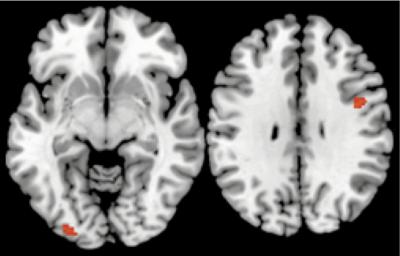
Childhood poverty impacted how much the two regions of the prefrontal cortex (as shown in orange circles) were engaged during emotion regulation. (Credit: University of Illinois at Chicago College of Medicine)

Childhood poverty impacted how much the two regions of the prefrontal cortex (as shown in orange circles) were engaged during emotion regulation. (Credit: University of Illinois at Chicago College of Medicine)

Childhood poverty and chronic stress may lead to problems regulating emotions as an adult, according to research published online in the Proceedings of the National Academy of Sciences.

New research shows that one of the brain’s fundamental self-protection mechanisms depends on coordinated, finely calibrated teamwork among neurons and non-neural cells knows as glial cells, which until fairly recently were thought to be mere support cells for neurons. The study, which has implications for understanding neurodegenerative diseases, stroke, and other nervous system disorders, adds to a growing body of evidence that glial cells are integral to brain function.

Researchers at higher education institutions have identified six proteins in spinal fluid that can be used as markers for Alzheimer’s disease. And another study suggests that older adults who don’t sleep well have more of the brain plaques that are hallmarks of Alzheimer’s.

Researchers from the Centre for Functional Resonance Imaging of the Brain (FMRIB) at the University of Oxford in the UK, say through monitoring patients’ brain waves while under anesthetic, they were able to pinpoint degrees of consciousness dependent on the doses of anesthetic administered.

Finally, this week, a new study from the UCLA School of Nursing shows that the body’s autonomic responses — the controls that impact such functions as blood pressure, heart rate and sweating — are weaker in people with obstructive sleep apnea but are even more diminished in women.

Weekly Neuroscience Update

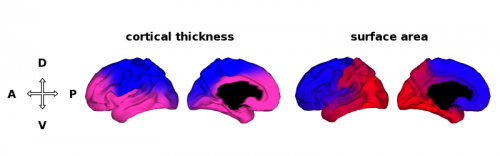
Maps of the brain based on genetic correlation clusters, when only two clusters are specified. This approach solution identified a dorsal-ventral (D-V, i.e., top to bottom) division as the most distinct partition in the genetic patterning of cortical thickness. By contrast, for surface area the two genetic clusters form an anterior-posterior (A-P, i.e., front to back) division. Abbreviations: D, dorsal; V, ventral; A, anterior; P, posterior. Credit: Chi-Hua Chen, Ph.D., UCSD

Maps of the brain based on genetic correlation clusters, when only two clusters are specified. This approach solution identified a dorsal-ventral (D-V, i.e., top to bottom) division as the most distinct partition in the genetic patterning of cortical thickness. By contrast, for surface area the two genetic clusters form an anterior-posterior (A-P, i.e., front to back) division. Abbreviations: D, dorsal; V, ventral; A, anterior; P, posterior. Credit: Chi-Hua Chen, Ph.D., UCSD

An international research team studying the structure and organization of the brain has found that different genetic factors may affect the thickness of different parts of the cortex of the brain.

Johns Hopkins researchers say they have pinpointed a site in a highly developed area of the human brain that plays an important role in the subconscious recognition of which way is straight up and which way is down. The finding, described online in the journal Cerebral Cortex, may help account for some causes of spatial disorientation and dizziness, and offer targets for treating the feelings of unsteadiness and “floating” people experience when the brain fails to properly integrate input from the body’s senses.

The discovery of the first chemical to prevent the death of brain tissue in a neurodegenerative disease has been hailed as the “turning point” in the fight against Alzheimer’s disease.

A bedside scan could reveal an active mind hidden inside an unresponsive body. The method provides another tool for recognising consciousness in people who have been wrongly diagnosed as being in a vegetative state. Tests are also under way to use it to monitor people under general anaesthetic, to make sure they do not regain consciousness during an operation.

The more you want to use your brain – and the more you enjoy doing it – the more likely you are to stay sharp as you age. This is according to findings recently published in the Journals of Gerontology: Psychological Sciences.

A team of scientists have identified neural circuits that modulate REM sleep. 

People who are depressed may have triple the risk of developing Parkinson’s disease, according to a study published in the October 2, 2013, online issue of Neurology

Scientists have discovered a process by which the “power plants” of the brain – tiny mitochondria found inside cells – signal that they are damaged and need to be eliminated. This is according to a study published in the journal Nature Cell Biology.

The hormone vasopressin may play a key role in jet lag, new research suggests.

Researchers have gained new insight into how localized hearing works in the brain. Their research is published in the Oct. 2, 2013 issue of the Journal of Neuroscience.

Weekly Neuroscience Update

Drumming

People who are better able to move to a beat show more consistent brain responses to speech than those with less rhythm, according to a study published in the September 18 issue of The Journal of Neuroscience. The findings suggest that musical training could possibly sharpen the brain’s response to language.

Concussions are connected with substance abuse and suicidal thoughts in adolescents, according to new research presented at a conference on sports-related brain injuries.

The structure of the brain may predict whether a person will suffer chronic low back pain, according to researchers who used brain scans. The results, published in the journal Pain, support the growing idea that the brain plays a critical role in chronic pain, a concept that may lead to changes in the way doctors treat patients.

A drug commonly used for treating diabetes may reverse symptoms of late-stage Alzheimer’s disease and is now in the process of entering a major clinical trial.

Scientists have found a new link between early-onset Parkinson’s disease and a piece of DNA missing from chromosome 22. The findings help shed new light on the molecular changes that lead to Parkinson’s disease.

The pain and itching associated with shingles and herpes may be due to the virus causing a “short circuit” in the nerve cells that reach the skin, researchers have found.

In a new study looking at toddlers and preschoolers with autism, researchers have found that children with better motor skills were more adept at socializing and communicating. This study adds to growing evidence of the important link between autism and motor skill deficits. Motor skills and muscle memory are held in the cerebellum.

Scientists have discovered differences in the brain structure of ballet dancers that may help them avoid feeling dizzy when they perform pirouettes.

New research could offer solutions into slowing down the progression of motor neurone disease (MND).

Playing first person action games can enhance your perception of movement – but only when you’re walking backwards. This is one of the findings of a new paper by University of Leicester psychologists, published in the journal Perception, which examines the effect of playing video games on motion perception.

Two new studies investigate the relationship between self-control and reward processing for chronic dieters and people who would like to control their food intake.

Scientists say they have discovered the specific brain circuitry that causes overeating, according to a study published in the journal Science.

Bad experiences enhance memory formation about places, scientists at The University of Queensland have found.

Finally this week, a new study from MIT reveals a gene that is critical to the process of memory extinction. Enhancing the activity of this gene, known as Tet1, might benefit people with posttraumatic stress disorder (PTSD) by making it easier to replace fearful memories with more positive associations,

Weekly Neuroscience Update

yusi

Yusnier Viera

A new study of the brain of a maths supremo supports Darwin’s belief that intellectual excellence is largely due to “zeal and hard work” rather than inherent ability. University of Sussex neuroscientists took fMRI scans of champion ‘mental calculator’ Yusnier Viera during arithmetical tasks that were either familiar or unfamiliar to him and found that his brain did not behave in an extraordinary or unusual ways.

A fear memory was reduced in people by exposing them to the memory over and over again while they slept. It’s the first time that emotional memory has been manipulated in humans during sleep, report Northwestern Medicine scientists.

Massachusetts General Hospital (MGH) researchers have identified and validated two rare gene mutations that appear to cause the common form of Alzheimer’s disease (AD) that strikes after the age of 60.

Moderate reductions in body temperature can improve outcomes after a person suffers a traumatic brain injury (TBI).

When individuals with psychopathy imagine others in pain, brain areas necessary for feeling empathy and concern for others fail to become active and be connected to other important regions involved in affective processing and decision-making, reports a study published in the open-access journal Frontiers in Human Neuroscience.

Research from Virginia Tech suggests that with advances in neurofeedback techniques, the signal-to-noise ratio of the brain activity underlying our thoughts can be “remastered.”

In a landmark discovery, the final piece in the puzzle of understanding how the brain circuitry vital to normal fertility in humans and other mammals operates has been put together by researchers at New Zealand’s University of Otago.

Brain regions associated with memory shrink as adults age, and this size decrease is more pronounced in those who go on to develop neurodegenerative disease, reports a new study published Sept. 18 in the Journal of Neuroscience . The volume reduction is linked with an overall decline in cognitive ability and with increased genetic risk for Alzheimer’s disease, the authors say.

Scientists say that people who have a certain abnormality in their brain structure are more likely to develop chronic pain following a lower back injury, according to a study published in the journal Pain.

The development of fine motor control – the ability to use your fingertips to manipulate objects – takes longer than previously believed, and isn’t entirely the result of brain development, according to a pair of complementary studies.

Weekly Neuroscience Update

brain imaging research fr

New brain imaging research from Carnegie Mellon University provides some of the first evidence showing how the brain unconsciously processes decision information in ways that lead to improved decision making. Credit: Carnegie Mellon University

When faced with a difficult decision, it is often suggested to “sleep on it” or take a break from thinking about the decision in order to gain clarity. But new brain imaging research from Carnegie Mellon University, published in the journal “Social Cognitive and Affective Neuroscience,” finds that the brain regions responsible for making decisions continue to be active even when the conscious brain is distracted with a different task. The research provides some of the first evidence showing how the brain unconsciously processes decision information in ways that lead to improved decision-making.

A study from Karolinska Institutet in Sweden has shown that neurons in our brain ‘mirror’ the space near others, just as if this was the space near ourselves. The study, published in the scientific journal Current Biology, sheds new light on a question that has long preoccupied psychologists and neuroscientists regarding the way in which the brain represents other people and the events that happens to those people.

New drugs which may have the potential to stop faulty brain cells dying and slow down the progression of Parkinson’s, have been identified by scientists in a pioneering study which is the first of its kind.

Neuroscientists have discovered that a virtual-reality hand, which is synchronized to “pulse” in time to an individual’s heartbeat, creates the illusion in the brain of “body ownership” – with the brain believing the hand is part of its own body.

Cornell researchers have developed a reliable method to distinguish memory declines associated with healthy aging from the more-serious memory disorders years before obvious symptoms emerge. The method also allows research to accurately predict who is more likely to develop cognitive impairment without expensive tests or invasive procedures.

People who suffer from the common gastrointestinal disorder irritable bowel syndrome (IBS) have more stress-related memory problems than others, according to a new study. The researchers also found that levels of the stress hormone cortisol were related to poor memory performance. While stress has long been known to affect gut symptoms, this is the first study showing that stress also impacts on cognition in IBS.

In a new study using functional magnetic resonance imaging (fMRI), researchers have found that the same brain networks that are activated when you’re burned by hot coffee also light up when you think about a lover who has spurned you.