Source: www.factslides.com/s-Your-Body
Category: Uncategorized
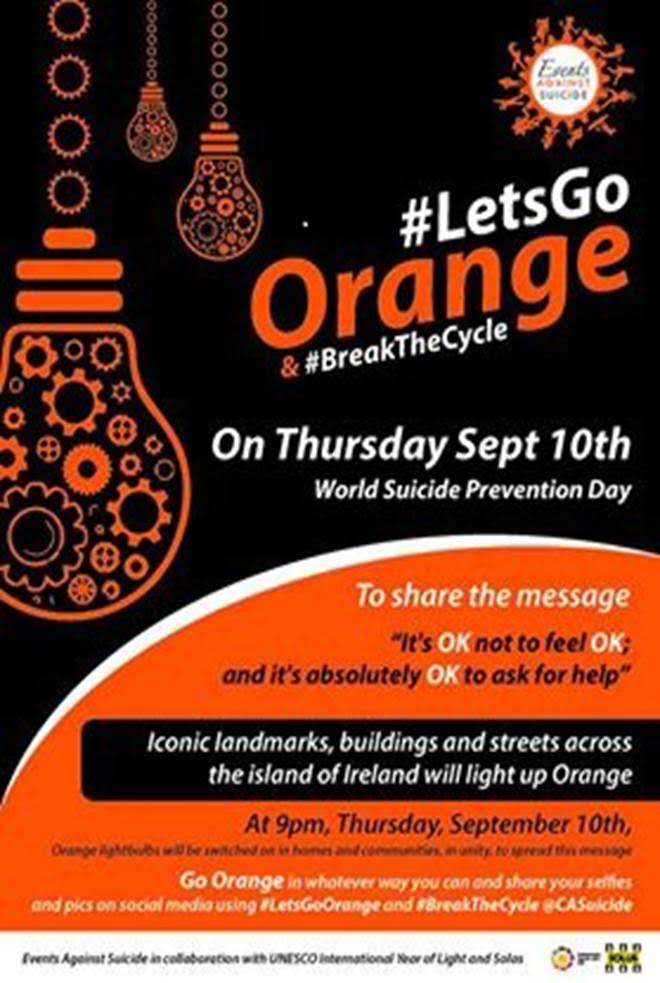
World Suicide Prevention Day
The Day I Met Oliver Sacks
Oliver Sacks died yesterday, Sunday, August 30th.
He was eighty two years old. Sacks was the author of several books about unusual medical conditions, including Awakenings (1973) which was based on his work with patients he came across in 1966 while working as a consulting neurologist in a chronic care public hospital in the Bronx, New York.
Forgotten
Many of these patients had already spent decades in strange, frozen states, like human statues and were forgotten. Sacks recognised them as survivors of the encephalitis epidemic that had swept the world from 1916 to 1927, and treated them with a then-experimental drug called L-dopa that woke them up after years in a catatonic (sleep-like) state. These patients then became the subjects of Awakenings – a deeply moving commentary on the human condition.
Santa Claus
I was fortunate to meet Oliver Sacks 25 years ago in early 1990 while attending a week-long workshop on brain research at Rockefeller University in Manhattan when one morning Sacks suddenly turned-up at the meeting. A big, tall, burly, bear of a man with a bushy white beard, he was the closest thing I’d ever seen to Santa Claus.
Awakenings – the movie
He looked tired so at the coffee break I asked him if he was busy writing another book. He told me that he had just come directly from the set of a movie (later called Awakenings) which was filming at the then still functioning Kingsboro Psychiatric Centre across the east river in Brooklyn and that a local Manhattan actor called ‘Bobby’ de Niro was playing the part of a patient called Leonard – a key character in the book and the movie.
Academy awards
Having already read and enjoyed the book I was intrigued to hear Sacks tell me that it was his first experience of being on a movie set and he was concerned, exhausted even observing the intensity with which De Niro was preparing for this role, so-much-so that when he (Sacks) once invited De Niro to join him for lunch during a brief break in filming, De Niro continued to remain in-character making any dinner conversation between the two impossible. Sacks was no doubt relieved to learn later that de Niro received an Oscar for one of his best performances and the film received two more Oscars for best picture and best screenplay.
Keep learning and don’t conform
Sacks led a rich and varied life which epitomised the principle; keep learning and don’t conform. In this regard, he was interested in patients with unusual and unexplained medical conditions and his writings brought an enlightened understanding to their suffering. His books provide consolation to the outcast, the underdog and the misunderstood and they will be cherished for many years to come. I look forward to developing this principle in greater detail in future posts, but in the meantime, my deepest sympathy goes to Oliver’s loved ones at this difficult time.
Does Exercise Enhance Creativity?
In this short video, neuroscientist Wendy Suzuki talks about how exercise can stimulate creativity.
Preventing addiction relapse by erasing drug-associated memories
Recovering addicts often grapple with the ghosts of their addiction–memories that tempt them to relapse even after rehabilitation and months, or even years, of drug-free living. Now, scientists from the Florida campus of The Scripps Research Institute (TSRI) have made a discovery that brings them closer to a new therapy based on selectively erasing these dangerous and tenacious drug-associated memories.
View original post 399 more words
How To Hack Your Brain’s Default Mode with Meditation
In this video, Dan Harris, a TV news correspondent, explains the neuroscience behind meditation. Harris discovered the benefits of meditation after a live, on-air panic attack.
How To Control Your Genes (Infographic)
I am impressed with how the complexity of epigenetics are conveyed simply and effectively in this infographic from Vitality TV.

How to Control Your Genes [Infographic] by the team at Vitality TV
Watch a Person with #Dementia Use a #MindMap to Communicate (Time Lapse Video)
Why did the Edge walk off the edge? The answer might surprise you
The music world was shaken briefly this week when lead guitarist with rock band U2, Dave ‘the Edge’ Evans, literally walked off the edge of the stage during a sell-out performance in Vancouver. Fortunately Dave survived the fall intact enough to joke about it later. It got me wondering what may have led to the fall? One possible explanation is a scientific one.
First a definition
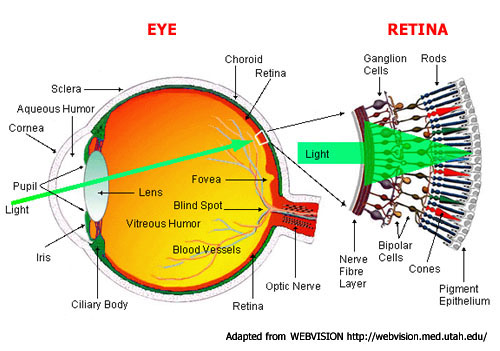
Rod cells (or rods) – photoreceptor cells concentrated at the outer edges of the retina at the back of the eyeball which are sensitive to dim light and are almost entirely responsible for peripheral vision and/or night vision.
The human eye is built differently in men and women
The eye is an extension of the brain. The retina at the back of each eyeball contains about ninety million rod-shaped cells to handle vision in dim light including peripheral vision and/or night vision. It may surprise you but most men have less peripheral vision than most women. This is because men have less rod cells than women in the back of their eye balls. In fact, women are so sensitive to dim light that they find strong light stressful – painful even. That is why more women than men wear sunglasses. In contrast, most men are comfortable in bright light as it eliminates the need for them to rely on their weak peripheral vision.
Do women have eyes in the back of their head?
You’ve no doubt heard that women have eyes in the back of their heads. You may have grown up believing this was true of your Mother who seemed to know what you were doing, even when her back was turned. Most women’s peripheral vision is effective up to almost 180 degrees. It is weak or absent in most men. A man’s eyes are larger than a woman’s and his brain configures them for a type of long distance tunnel vision, which means he can see clearly and accurately directly in front of him and over great distances – almost like binoculars. This allows a man to focus clearly on a distant target while women can monitor everything going on around her. This is part of the reason why women can cook dinner and watch the kids at the same time – a recipe for disaster with many men.
Men stare – women don’t
The number of men injured or killed on our roads is more than double that of women. Not only will men will take more risks crossing the road than women, but as they get older their poorer peripheral vision increases their injury rate. Men tend to stare i.e. they concentrate on getting somewhere or something across the street and just don’t see the car coming. Car insurance statistics show that female drivers are less likely to be hit on the side than are male drivers. The lack of peripheral vision in men obstructs their ability to see traffic approaching from the side. Socks, shoes, car keys, wallets and even kerbs they’re all there, but men just can’t see them as well as women can – unless of course they stare. In fact, far from being bad manners, staring is a man’s way to compensate for their lack of peripheral vision.
Back to the edge
Chances are that the Edge simply walked off the edge because like most men of his age he just did not see it, due in part to the steady deterioration in a male’s already weak peripheral vision. I am happy to hear that Dave survived with only a few scratches.
Those whom we love live on in our memory
“The life of the dead is placed in the memory of the living” ~ Marcus Tullius Cicero
My father died this week. He was ninety-one years old.
My father was an entrepreneur with an uncanny ability to engage people and was a master of the art of conversation. He loved his job as a shopkeeper, and it was a job for which he was ideally suited.
During his brief illness I noticed how memories of him suddenly came flooding back and I literally became his child again, re-living my childhood trips with him to football matches, working with him in his shop and listening to his conversations with customers – so much so that sometimes the customers forgot what it was they came into the shop to buy. I could go on and on.
We are our memories
We literally are our memories; they define us and no better man than my father to instil my own childhood memories. In this way he helped to define who I am today and my brain is literally packed full of memories of him. Although the loss of my father is heart breaking, my memories of him are of some consolation and they will be cherished.
Childhood bereavement
While bereavement at any age is difficult, childhood bereavement can be particularly traumatic possibly because of the scarcity of those memories from which to derive any identity or consolation. Click below for valuable resources in helping children understand bereavement – Consolation for Life’s Darkest Hours: 7 Unusual and Wonderful Books that Help Children Grieve and Make Sense of Death
I will develop this theme of the brain and bereavement in greater detail including coping strategies in future posts. In the meantime my memories, dreams and reflections go to my father at this time.
May his soul be on God’s right hand.
Ar dheas Dé go raibh a anam. (Old Gaelic blessing)