Weekly Neuroscience Update

hearing-loss-frontal-cortex-neurosciencenews

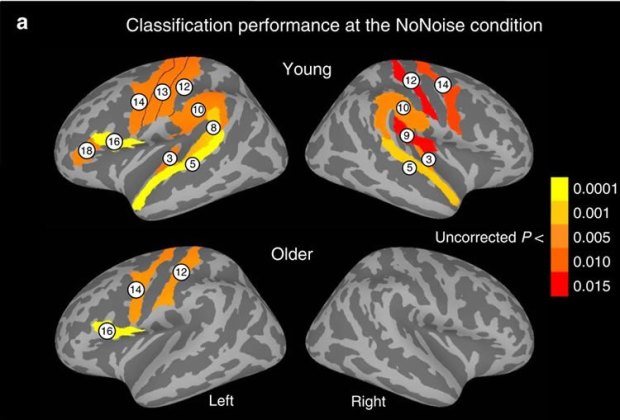
Regions with significant phoneme classification at the NoNoise condition for each group. NeuroscienceNews.com image is credited to the researchers/Nature Communications.

Researchers have pinpointed the specific part of the brain that older adults rely on to differentiate speech sounds in background noise, which could revolutionise the treatment of hearing loss.

New research has identified how cells protect themselves against ‘protein clumps’ known to be the cause of neurodegenerative diseases including Alzheimer’s, Parkinson’s and Huntington’s disease.

Transcranial alternating current stimulation may help to improve memory when targeted to a specific kind of brain activity achieved during sleep.

Researchers in the US and Australia have made a breakthrough discovery in the international quest to discover a new and potentially effective vaccine targeting the pathological proteins associated with Alzheimer’s disease.

A new study identifies different brain regions that become active when a strategy of categorisation is applied.

Researchers have developed a new machine learning system that analyses the entire human genome to predict which genes may cause autism spectrum disorder, raising the number of genes that could be linked to the disorder from 65 to 2,500.

Results from a study published in the online publication Nature Genetics finds 15 genomic regions that are significantly associated with a diagnosis of depression.

According to researchers, age related changes in the organization of neural networks when performing short term memory tasks may help to compensate for other aspects of brain aging.

Researchers report smoking related deficits in dopamine return to normal three months after quitting.

Genetic changes associated with Parkinson’s disease have been found in liver, fat, immune and developmental cells, a new study reports.

Brain imaging, twin studies and transcriptome data reveal genetic relationships between lobes.

Finally this week, a new study suggests regular physical activity may lead to greater hippocampal volume and could stave off dementia, especially in older people.


Weekly Neuroscience Update

sleep

Sleep disturbances and long sleep duration are both associated with an increased risk for inflammation, a new study reports.

Abnormalities in brain regions involved in forming insight may help explain why some people with anorexia nervosa have trouble recognising their dangerous, dysfunctional eating habits.

A new study identifies different brain regions that become active when a strategy of categorisation is applied.

Researchers have identified – and shown that it may be possible to control – the mechanism that leads to the rapid build-up of the disease-causing ‘plaques’ that are characteristic of Alzheimer’s disease.

Using data from the largest ever genetic study of schizophrenia, researchers have shed light on the role of the immune system.

Using data from the Human Connectome Project, researchers have created a multimodal map of the human cortex that combines data from cortical architecture, function, connectivity, and topography. The map, detailed today (July 20) in Nature, identifies 180 brain areas, 97 of which are new to neuroscience.

A new study reports on how sensory neurons work together to transmit itch signals from the skin, via the spinal cord and to the brain.

A combination of transcranial magnetic stimulation and peripheral nerve stimulation may help in the rehabilitation of people with spinal cord injury, according to a new patient study conducted at the BioMag laboratory at the Helsinki University Hospital.

Researchers have discovered an interaction in neurons that contributes to Parkinson’s disease.

In a new study published in JAMA Neurology, researchers find stronger reason to be concerned about the long term effects of head injuries, particularly when it comes to Parkinson’s disease, which recently contributed to the death of Muhammad Ali.

Finally this week, researchers have identified how different parts of the brain interact with each other at different times in order to discover how intellect works.


Weekly Neuroscience Update

cheese

Cheese contains a chemical found in addictive drugs, scientists have found.

Chronic marijuana use disrupts the brain’s natural reward processes, according to researchers at the Center for BrainHealth at The University of Texas at Dallas.

Understanding the relation of dopamine to network activity could improve schizophrenia treatment.

Using MRI brain scans, researchers have determined there is an association between the extent of disruption to the blood-brain barrier and the severity of bleeding following a stroke.

Researchers have proposed a computational model that could help explain multisensory integration in humans.

Scientists have developed a blood test that could identify which people with depression will respond to treatment so that patients can avoid spending months taking antidepressants that do not help them.

Researchers have discovered a unique pattern of scarring in the brains of those who were exposed to blast brain injuries that differs from those exposed to other types of head injury.

Intensive physical exercise four hours after learning is the key to remembering information learnt, say Dutch researchers.

Scientists have discovered a new cause of Parkinson’s disease – mutations in a gene called TMEM230. This appears to be only the third gene definitively linked to confirmed cases of Parkinson’s disease.

Finally this week, a protein called Scribble appears to orchestrate the intracellular signaling process for forgetting, a new study reports.


Was dopamine the secret to Muhammad Ali’s greatness?

Ali

I was saddened this week to read of the death of Muhammad Ali. The 74 year old whose outrageous talent in the ring was matched by his political significance and cultural impact, struggled with Parkinson’s disease which began during his boxing career in the late 1970’s. He was hospitalised several times in recent years and died of respiratory problems related to his disease. I have spent over 30 years investigating the effects of Parkinson’s disease on the brain and I am happy to report that during this period I have seen great strides in our understanding and treatment of this illness.

What is Parkinson’s disease?

Over 4 million people worldwide suffer from Parkinson’s disease; a so-called hypokinetic disorder (Greek; hypo = lack of; kinetic = movement). It is a progressive disease – the symptoms start out small and get progressively worse but it is rarely fatal. With Parkinson’s disease one minute you are working away in the garden and the next you are literally stuck to the spot – totally unable to move. In these situations daily life can become a challenge that can be difficult to endure.

Causes of Parkinson’s disease

Parkinson’s disease can be genetic but it can also be triggered by what happens to you as you live your life such as prolonged exposure to chemicals like insecticides, weed killers and some drugs. Significantly in the case of Muhammad Ali, the disease can also be triggered by brain injury. However in most cases Parkinson’s disease arises ‘out of the blue’ as the so-called idiopathic Parkinson’s disease.

The core defect

The ‘core defect’ in Parkinson’s disease is a loss of a chemical in the brain called dopamine. Dopamine acts like hydraulic oil which lubricates those nerve circuits in the brain that are involved in executing a movement. In Parkinson’s disease the supply of dopamine dries-up and, like a car out of oil the engine seizes-up and movement grinds to a halt.

The Muhammad Ali we all remember was dopamine in action

We need dopamine to survive. Dopamine allows us to talk, socialise, be brave, improvise and take risks. When dopamine flows we don’t see things as being limited by circumstance. We have boundless energy and literally anything is possible! One only needed to watch Muhammad Ali’s awesome talent at the height of his career to see dopamine in action as his brain effortlessly converted his thoughts into the mesmerising performances inside and outside the ring that made him so loved by a generation. Ali’s ability to ‘float like a butterfly, sting like a bee’ was all down to the dopamine in his brain.

Superman

As a child in the 1960s I thought this 6’ 3’’ giant was the closest thing to Superman. Later I watched him take on the establishment over the political and cultural discrimination against his African American heritage knowing full-well that they were going to make him pay for it. It was then that I realised that Muhammad Ali was not just a gifted athlete but also a courageous human being – that he was in fact, a real, live Superman. Again, Ali’s deeply-held convictions and his bravery in standing by them was another expression of the dopamine in his brain.

Was boxing to blame?

Since Muhammad Ali’s death some media have reported that it is a pity that his illness had to overshadow what he achieved during his amazing life. Without dopamine Ali must have felt trapped and disconnected at times. While neurologists cannot definitively say whether Ali’s symptoms were a result of his boxing career, what is known for certain is that head trauma increases the risk of getting Parkinson’s disease.

Boxing and brain injury – a potentially lethal mix

Probably the most important lesson to be taken from Ali’s illness is that we need to open up a debate on how we as a society deal with traumatic brain injury and its causes. Even a minor concussion is dangerous because repeat concussions have cumulative effects on the brain, resulting in brain swelling, permanent brain injury, and long-term disability including Parkinson’s disease, personality change, epilepsy or even death.

By its very nature, a concussion is unexpected, so it is difficult to prevent. Here are three common-sense precautions you can take to lessen the possibility of traumatic brain injury.

1. Wear protective head gear. Participation in high-contact, high-risk sports such as all types of boxing, football, hurling and hockey can increase the likelihood of a concussion. Skateboarding, snowboarding, horseback riding, cycling and roller-blading are also a threat to your brain health. Wearing headgear, padding, and mouth and eye guards can help safeguard against traumatic head injuries. Wearing a bike helmet can lower the risk of traumatic head injury by 85%. Ensure that the equipment is properly fitted, well maintained, and worn consistently.

2. Drive smart. Always wear a seatbelt even as a passenger in a back seat, obey posted speed limits, and don’t use drugs or alcohol when driving, because they can impair reaction time.

3. Don’t fight. Concussions are often sustained during a punch-up, and more males than females report traumatic head injuries.

Funding for research into illness of mind and brain

We also need to highlight the realisation that a deeper understanding of the brain IS the difference between a good and a bad quality of life for the sufferers of brain illnesses such as Parkinson’s disease.

I hope that Muhammad Ali’s loved ones will take hope from the on-going research into Parkinson’s disease by teams of dedicated scientists worldwide.

Click on this link to hear Professor Billy O’Connor talk about Parkinson’s disease on Mind Matters – a science program on Irish National radio (RTE).


You might also like to read:

Emotions are habits so pick a good one

World Mental Health Day

Why Parkinson’s Disease robbed Linda Ronstadt of her singing voice


Weekly Neuroscience Update


facial-expression-emotion

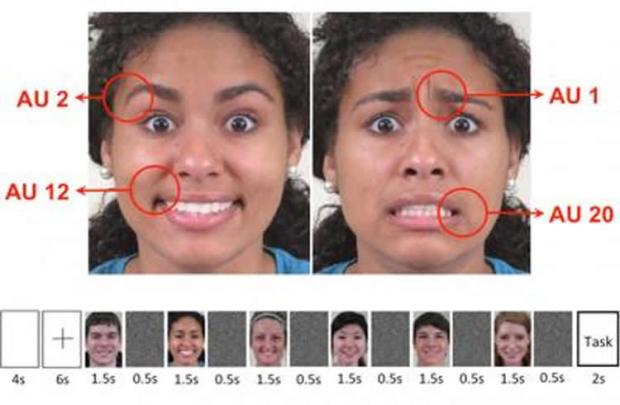
Test subjects in an Ohio State University study were shown a series of photographs of different facial expressions. Researchers pinpointed an area of the brain that is specifically attuned to picking up key muscle movements (here, labeled AU for ‘action units’) that combine to express emotion. Credit: Ohio State University.

New machine learning algorithm can identify the facial expression a person is looking at based on neural activity.

After a stroke, there is inflammation in the damaged part of the brain. Until now, the inflammation has been seen as a negative consequence that needs to be abolished as soon as possible. But, as it turns out, there are also some positive sides to the inflammation, and it can actually help the brain to self-repair.

A new study reports hungry fish sense objects differently and take more risks when hunting than well fed fish.

In a study exploring the relationship between memory for specific past experiences and recovery from strong negative emotions, research psychologists report that episodic memory may be more important in helping midlife and older adults recover from a negative event than it is for younger adults.

New research reports one brain hemisphere remains more awake than the other when sleeping somewhere new. 

Long before Alzheimer’s disease can be diagnosed clinically, increasing difficulties building cognitive maps of new surroundings may herald the eventual clinical onset of the disorder, according to new research.

New research suggests actin filaments that control the shape of neuron cells may also be the key to the molecular machinery that forms and stores long-term memories.

Scientists have elucidated for the first time how a notoriously elusive serotonin receptor functions with atom-level detail. The receptor transmits electrical signals in neurons and is involved in various disorders, meaning that the discovery opens the way for new treatments.

Researchers have mapped out a circuit of neurons that is responsible for motor impairment–such as difficulty walking–in patients with Parkinson’s disease.

Brain waves that spread through the hippocampus are initiated by a method not seen before–a possible step toward understanding and treating epilepsy, according to researchers at Case Western Reserve University.

Researchers have conducted a study examining the effect ecstasy has on different parts of the brain.

Finally this week researchers have found that drawing pictures of information that needs to be remembered is a strong and reliable strategy to enhance memory.

Weekly Neuroscience Update

Early-diagnosis-staging-of-Alzheimers-disease-seen-in-PET-scans

Dr. William Jagust explains how tau and beta amyloid, two proteins associated with Alzheimer’s disease, develop in the aging brain, which his research team has visualized using positron emission tomography, or PET, scans. Photo by Stephen McNally/University of California Berkeley

Researchers have visualized the development of Alzheimer’s disease in the brain in living people using positron emission tomography, or PET scans, which they say will aid with its diagnosis and treatment. 

Researchers have  also identified a drug that targets the first step in the toxic chain reaction leading to the death of brain cells, suggesting that treatments could be developed to protect against Alzheimer’s disease, in a similar way to how statins are able to reduce the risk of developing heart disease.

new study shows that a variety of physical activities from walking to gardening and dancing can improve brain volume and cut the risk of Alzheimer’s disease by 50%.

In another study jointly led by King’s College London and the University of Southampton has found a link between gum disease and greater rates of cognitive decline in people with early stages of Alzheimer’s Disease.

Women may have a better memory for words than men despite evidence of similar levels of shrinkage in areas of the brain that show the earliest signs of Alzheimer’s disease, according to a study published in Neurology.

Refugees face a substantially higher risk of psychotic disorders, including schizophrenia, compared to non-refugee migrants from the same regions of origin, finds a study published in The BMJ

Research on decision-making bias found that interactive training exercises using video games improved participants’ general decision-making abilities when used alongside other traditional training methods.

Reducing a person’s calorie intake can protect against the development of neurodegenerative diseases such as Parkinson’s Disease.  Meanwhile, researchers may be closer to unraveling the underlying causes of Parkinson’s disease, after identifying the point at which alpha-synuclein – a protein believed to play a key role in the condition – becomes toxic to the brain.

Scientists have developed a 3D micro-scaffold technology that promotes reprogramming of stem cells into neurons, and supports growth of neuronal connections capable of transmitting electrical signals.

Finally this week, researchers in Japan have found that repetitive movements in slow-learning stages can alter an area of the brain responsible for movement, and help individuals retain these motor skills.

Weekly Neuroscience Update

hypothalamus-genetics-obesity

Credit: BruceBlaus

Scientists have discovered a new genetic syndrome of obesity, over-eating, mental and behavioural problems in six families, from across the world. The study represents an important step in our understanding of how the hypothalamus and oxytocin control appetite and behaviour. 

A new study published in Biological Psychiatry suggests that a brain reward centre, the striatum, may be directly affected by inflammation and that striatal change is related to the emergence of illness behaviors.

By studying stroke patients who have lost the ability to spell, researchers have pinpointed the parts of the brain that control how we write words.

A study has shown for the first time that the structure of the brain circuitry known as the corticolimbic system is more likely to be passed down from mothers to daughters than from mothers to sons or from fathers to children of either gender. The corticolimbic system governs emotional regulation and processing and plays a role in mood disorders, including depression.

New research proves that suffering repeated traumatic experiences throughout infancy and adolescence multiplies by 7 the risk of suffering psychosis during adulthood.

Researchers are using a mathematical tool to help determine which concussion patients will go on to suffer migraine headaches, according to a new study published online in the journal Radiology.

Some of the earliest nerve cells to develop in the womb shape brain circuits that process sights and sounds, but then give way to mature networks that convert this sensory information into thoughts. This is the finding of a study led by researchers at NYU Langone Medical Center and published in the February 3 edition of Neuron.

Scientists have demonstrated for the first time that it is possible to specifically modify gene expression in diseased upper motor neurons, brain cells that break down in ALS.

New research indicates that the location of receptors that transmit pain signals IS important in how big or small a pain signal will be and how effectively drugs can block those signals.

A new way of using MRI scanners to look for evidence of multiple sclerosis in the brain has been successfully tested by researchers.

A team of European researchers has found evidence that suggests that human consciousness is a state where the neural network that makes up the brain operates at an optimal degree of connectedness. In their paper published in Journal of the Royal Society Interface, the team describes their study of the human brain using volunteers undergoing fMRI scans while succumbing to the effects of an anesthetic that caused them to lose consciousness, and what was revealed in reviewing the scan data.

Researchers have determined that testing a portion of a person’s submandibular gland may be a way to diagnose early Parkinson’s disease.

Finally this week, researchers of a new study published in the current issue of Biological Psychiatry report successful reduction of depressive symptoms in patients using a novel non-invasive method of vagus nerve stimulation, or VNS.

Weekly Neuroscience Update

Total correct score on the Eyes test for each individual is plotted as a dot, coloured according to group, to illustrate the distribution of performance by group. Mean score for each group is shown by a black dot, and the error bars indicate the 95% confidence interval of the mean score. Credit: Baron-Cohen et al./PLOS ONE.

Total correct score on the Eyes test for each individual is plotted as a dot, coloured according to group, to illustrate the distribution of performance by group. Mean score for each group is shown by a black dot, and the error bars indicate the 95% confidence interval of the mean score. Credit: Baron-Cohen et al./PLOS ONE.

New results published by researchers at the Autism Research Centre (ARC) show both men and women with autism show an extreme of the typical male pattern on the ‘Reading the Mind in the Eyes’ test.

Researchers at Mayo clinic completed analysis of a 4 year prospective study comparing detailed neurologic examination versus magnetic resonance imaging (MRI) of the brain to localize neurologic dysfunction. The findings, demonstrated MRI’s superior performance to the clinical exam.

Researchers at the University of Oslo have tested a new device for delivering hormone treatments for mental illness through the nose. This method was found to deliver medicine to the brain with few side effects.

Researchers have performed the first focused ultrasound treatments in the United States for dyskinesia associated with Parkinson’s disease.

A computer-based brain-training game could improve the daily lives of people with schizophrenia, say University of Cambridge researchers.

A gene linked in previous research, appears to predict more severe post-traumatic stress disorder (PTSD) symptoms as well as a thinner cortex in regions of the brain critical for regulating strong emotions and coping with stressful experiences. This study is believed to be the first to show that the spindle and kinetochore-associated complex subunit 2 (SKA2) gene may play a role in the development of PTSD.

Midday naps are associated with reduced blood pressure levels and prescription of fewer antihypertensive medications, according to new research.

A ‘gene signature’ that could be used to predict the onset of diseases, such as Alzheimer’s, years in advance has been developed in research published in the open access journal Genome Biology.

Could your brain repair itself?

Imagine the brain could reboot, updating its damaged cells with new, improved units. That may sound like science fiction — but it’s a potential reality scientists are investigating right now. Ralitsa Petrova details the science behind neurogenesis and explains how we might harness it to reverse diseases like Alzheimer’s and Parkinson’s.

Weekly Neuroscience Update

A new study has found that while stereotypic shapes exist for this structure, individuals with a broader hippocampus tend to perform better on various tests that assess memory. The image is for illustrative purposes only. Image credit: Camillo Golgi.

A new study has found that while stereotypic shapes exist for this structure, individuals with a broader hippocampus tend to perform better on various tests that assess memory. The image is for illustrative purposes only. Image credit: Camillo Golgi.

New research challenges the long-held belief that a larger hippocampus is directly linked to improved memory function.

Premature birth can alter the connectivity between key areas of the brain, according to a new study led by King’s College London. The findings should help researchers to better understand why premature birth is linked to a greater risk of neurodevelopmental problems, including autistic spectrum disorders and attention deficit disorders.

Scientists have uncovered mathematical equations behind the way the brain forms – and even loses – memories.

New scanning methods which map the wiring of the brain could provide a valuable new tool to predict people at risk of schizophrenia, according to a new study.

People with depression may be more likely to develop Parkinson’s disease, according to a large study published in Neurology.

Medical researchers have known for several years that there is some sort of link between long-term depression and an increased risk of stroke. But now scientists are finding that even after such depression eases, the risk of stroke can remain high.

A new study from the University of Cambridge has identified one of the oldest fossil brains ever discovered – more than 500 million years old – and used it to help determine how heads first evolved in early animals.

Researchers have succeeded in reconstructing the neuronal networks that interconnect the elementary units of sensory cortex — cortical columns. The scientists say that this study marks a major step forward to advance the understanding of the organizational principles of the neocortex and sets the stage for future studies that will provide extraordinary insight into how sensory information is represented, processed and encoded within the cortical circuitry.

Smokers who are able to quit might actually be hard-wired for success, according to a study from Duke Medicine.

Scientists are attempting to mimic the memory and learning functions of neurons found in the human brain. To do so, they investigated the electronic equivalent of the synapse, the bridge, making it possible for neurons to communicate with each other.

Finally this week, in a study using functional magnetic resonance imaging, scientists found that our inherent risk-taking preferences affect how we view and act on information from other people.