Weekly Neuroscience Update

brain-waves-sleep-memory-neurosciencenews.jpg

As we age, slow brain waves during non-REM sleep fail to time contact with sleep spindles efficiently, leading to a lessened ability to form new memories correctly, a new study reports.

Researchers report children are more attentive and have improved memory when they exercise at their own pace, rather than embark on exhaustive exercise.

Inflammation in the blood plays a key role in “chemo-brain,” according to a published pilot study that provides evidence for what scientists have long believed.

A new study sheds light on the neurons tasks glial cells perform to insure brain activity is optimized.

According to researchers, children who eat fish at least once a week score four points higher on IQ tests and sleep better than those who consume fish less frequently, or not at all.

A new study looks how it may be possible to help reduce trauma associated with bad memories while we sleep.

Researchers reveal even after one short, ten minute, burst of exercise, cognitive processing and attention improve temporarily.

Finally this week, a new study supports the hypothesis that people with focal epilepsy are more susceptible to mood disorders, such as depression and anxiety.

Weekly Neuroscience Update


loopster-3010073_960_720.jpg

A new guideline for medical practitioners says they should recommend twice-weekly exercise to people with mild cognitive impairment to improve memory and thinking.

Researchers reveal Parkinson’s patients have more copies of mitochondrial DNA in the brain stem, leading to increased cell death within that area.

Musical training may enhance the ability to process speech in noisy settings, a new study shows.

A new study reveals the piriform cortex is able to archive long term memory, but requires instruction from the orbiotfrontal cortex to indicate the event is to be stored as a long-term memory.

Greater muscle strength is associated with better cognitive function in ageing men and women, according to a new Finnish study

Researchers have discovered a new biomarker that can help diagnose Huntington’s disease. They note the findings could result in the development of treatments to postpone neuron death in those who carry the Huntington’s gene mutation, but who do not currently show symptoms of the disease.

A new study reveals the superior temporal gyrus appears to be critical for voice recognition.

Researchers have identified several new genes responsible for Alzheimer’s disease (AD) including those leading to functional and structural changes in the brain and elevated levels of AD proteins in cerebrospinal fluid (CSF).

Finally this week, a new study adds to evidence that current clinical tools can fail to capture autism presentations in females.


Weekly Neuroscience Update

tired-brain-cells-mental-lapses-neurosciencenews.jpg

Sleep-deprived brain cells react more slowly and fire more weakly, and their signals are more drawn out. NeuroscienceNews.com image is credited to UCLA.

A Japanese research group has revealed that elderly people with mild cognitive impairment (MCI) have a particularly weakened ability to memorize human faces in the short term when compared to healthy elderly people. MCI patients also had a different gaze behavior when trying to memorize a face. This research may lead to the early detection of dementia.

Researchers provide new insight into human consciousness, reporting we don’t consciously choose our feelings or thoughts; we simply become aware of them.

If a mother’s immune system is activated by infection during pregnancy, it could result in critical cognitive deficits linked to schizophrenia in her offspring, a new study has revealed.

People on the autism spectrum appear to have different reactions to subliminal social odors, researchers report.

Information from brain MRIs can help identify people with attention deficit hyperactivity disorder (ADHD) and distinguish among subtypes of the condition, according to a study appearing online in the journal Radiology.

Migraine triggers can increase oxidative stress, a new study reports. Targeting oxidative stress may help to prevent migraines.

A new study reveals how the mechanism for storing olfactory memories differs slightly from erasing unnecessary memories. Understanding how the brain gets rid of unimportant memories could help unlock new avenues of research to better understand memory loss in aging, researchers say.

Finally this week, researchers report a developmental abnormality more prevalent in premature and male babies, may contribute to SIDS risk, in conjunction to the sleep position.


Weekly Neuroscience Update

gettyimages-176426057_wide-c6d79c47986bd46b88ffe656b1ca09afd3b7e7b3-s800-c85.jpg

Getty Images

People who played action video games that involve first-person shooters experienced shrinkage in a brain region called the hippocampus, according to a study published in Molecular Psychiatry. That part of the brain is associated with spatial navigation, stress regulation and memory. Playing Super Mario games, in which the plumber strives to rescue a princess, had the opposite effect on the hippocampus, causing growth in it.

Researchers have revealed a helpful strategy to help those with cognitive problems to improve their memory.

The part of the brain that helps control emotion may be larger in people who develop post-traumatic stress disorder (PTSD) after brain injury compared to those with a brain injury without PTSD, according to a new study.

A new study reports cognitive abilities mutually assist each other during development. This results in improved cognitive skills and general intelligence over time.

A sleeping brain can form fresh memories, according to a team of neuroscientists. The researchers played complex sounds to people while they were sleeping, and afterward the sleepers could recognize those sounds when they were awake.

Researchers report social norms together with increasing oxytocin can counter xenophobia by enhancing altruistic behaviors.

A new Johns Hopkins University study adds further evidence to the link between serotonin and dementia. According to researchers, lower serotonin levels may play a key role in memory decline and drive the progression of Alzheimer’s.

Researchers have devised a new odor identification test that could help doctors predict those at risk of Alzheimer’s and track the progression of the disease.

Finally this week, a new study reveals a neurobiological reason behind why we feel happy when we are being generous. Researchers discovered the connectivity between the temporal parietal junction and ventral striatum, an area of the brain associated with happiness, was enhanced in people who committed to generosity.


Weekly Neuroscience Update

aging-sharpness-neuroscinencew.jpg

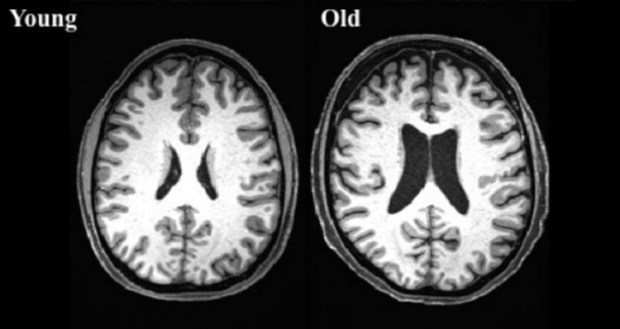
Brain scans from a 38-year-old, left, and a 73-year-old. 

Researchers are embarking on a new study to answer how some people are able to stay sharper than others as they age.

Neurons in the brain that produce the pleasure-signaling neurotransmitter dopamine also directly control the brain’s circadian center, or “body clock” – the area that regulates eating cycles, metabolism and waking/resting cycles – a key link that possibly affects the body’s ability to adapt to jet lag and rotating shift work, a new study has demonstrated.

A molecule produced by insulating glial cells facilitates the functional wiring of brain cells involved in motor coordination.

Using the latest MRI scanning procedures, a team of researchers has shown how certain disorders of the hippocampus can initiate a drug resistant epilepsy. The team has discovered biomarkers that – if used for screening – could massively improve treatment options for epilepsy. The researchers have published their results in the online journal eLife.

A new study reveals the role circular RNA plays in brain function, including synaptic transmission and sensorimotor gating.

Depression has been shown to alter the structure of the brain’s white matter, which contains the circuitry that allows brain cells to communicate with each other, and which underpins brain function.

According to a new Nature study, in order for our taste system to work, the connection between neurons and taste bud cells have to rewire correctly each time.

A new optogenetic method called Optobow is helping researchers to discover specific and individual components of functional neural networks in the living brain. A Nature Communications report states this new method can help provide more detailed insights into both brain function and structure.

A neuroimaging study reveals people who report widespread pain have increased gray matter and functional connectivity in sensory and motor areas of the brain.

Finally this week, a large scale SPECT imaging study reveals women’s brains are significantly more active in more regions than males, including the prefronal cortex and limbic areas. Visual and areas associated with coordination were more active in males, researchers noted.

Weekly Neuroscience Update

optogenetics-living-brain-neurosciencenews.jpgA new optogenetic method called Optobow is helping researchers to discover specific and individual components of functional neural networks in the living brain. A Nature Communications report states this new method can help provide more detailed insights into both brain function and structure.

A new Translational Psychiatry report suggests physical exercise may help protect neurons and reduce symptoms of dementia in older people.

Researchers have developed a software tool that analyzes functional magnetic resonance imaging (fMRI) scans of patient brains and with 74% accuracy diagnoses schizophrenia. Moreover, the software’s algorithms were also able to reasonably estimate how bad the symptoms of the disease were in individual patients.

A new study reveals a drug currently used to treat dementia may be helpful in the treatment of traumatic brain injury.

Individual differences in the pattern of release of the hormone cortisol in response to a stressful experience reveal how stressed a person actually feels, suggests a study of healthy women published in The Journal of Neuroscience. This approach could help to better identify and treat individuals more susceptible to the negative feelings associated with the physiological stress response.

A new study has found that a gene variant, thought to be carried by nearly 25 percent of the population, increases the odds of developing depression.

Just as athletes cross-train to improve physical skills, those wanting to enhance cognitive skills can benefit from multiple ways of exercising the brain, according to a comprehensive new research.

A small patch of neurons fires in complex ways to encode movement of much of the body according to new research.

Using cryo-electron microscopy, researchers have been able to capture how glutamate opens glutamate receptor ion channels. The Nature study provides significant insight into how receptors can mediate brain function.

Finally this week, a team at the University of Wollongong, Australia, has used a 3D printer to create nerve cells found in the brain.


Weekly Neuroscience Update

girl-1990347_960_720.jpgA new report reveals how the development of music is so closely tied to our own evolution.

Even a single bout of physical activity can have significant positive effects on people’s mood and cognitive functions, according to a new study in Brain Plasticity.

A new study reports on the complex brain connections employed during word retrieval.

New research provides an unprecedented level of resolution and insight into disturbances in cortical GABAergic microcircuits, which are thought to underlie cognitive impairments in schizophrenia.

A sign language study helps researchers better understand how the brain processes language.

Researchers say the goal of memory is not to transmit the most accurate information over time, but to optimize intelligent decision making by holding on to valuable information.

A new study reports microglia may play a role in a diverse array of neurodegenerative and psychiatric illnesses.

A new brain imaging study shows for the first time that brain inflammation is significantly elevated – more than 30 per cent higher – in people with obsessive-compulsive disorder (OCD) than in people without the condition.

A research team has studied two structurally-similar proteins in the adult brain and have found that they play distinct roles in the development of dementia. 

Neurons found to be abnormal in psychosis play an important role in our ability to distinguish between what is real and what is perceived, researchers say.

A new study sheds light on the neural mechanism behind why some people with autism are unable to make eye contact with others.

While researchers report the risk of developing psychosis from cannabis use is relatively small, those who use the drug and already suffer from schizophrenia may notice their condition worsen.

Finally this week, researchers have discovered a mechanism of glucose sensing by muscles that contribute to the regulation of blood sugar levels in the body.

Weekly Neuroscience Update

4121A56E00000578-4574260-image-a-57_1496767085907.jpgElectrically stimulating the dorsolateral prefrontal cortex can enhance our ability to ‘think outside the box’, a new study reports.

An international team of researchers has found, for the first time, seven risk genes for insomnia. With this finding the researchers have taken an important step towards the unravelling of the biological mechanisms that cause insomnia. In addition, the finding proves that insomnia is not, as is often claimed, a purely psychological condition.

Researchers have developed a neural network based AI system that can decode and predict what a person is seeing or imagining.

A new study reports artificial intelligence used by the military to help shoot down fighter planes can accurately predict treatment outcomes for people with bipolar disorder.

New research sheds light on how the brain codes navigation behaviour at larger scales.

The visual cortex, the human brain’s vision-processing center that was previously thought to mature and stabilize in the first few years of life, actually continues to develop until sometime in the late 30s or early 40s, a neuroscientist and her colleagues have found.

Clusters of a sticky protein — amyloid plaque — found in the brain signal mental decline years before symptoms appear, a new study finds.

According to researchers, brain signals in specific brain areas change during a lifespan in ways that could be vital for maintaining flexibility.

Two new studies shed light on how the brain encodes and recalls memories.

People with voice disorders may have a problem with correctly utilizing auditory feedback to control their voices.

A new study reveals the role the motor system plays in the perception of language. 

According to researchers, bilingual children perform better at voice recognition and processing than monolingual children.

Fascination with faces is nature, not nurture, suggests a new study of third-trimester fetuses.

Finally this week, the mystery of how human eyes compute the direction of moving light has been made clearer by scientists at The University of Queensland.

Weekly Neuroscience Update

runner-888016_960_720.jpgAccording to researchers, endurance runners appear to have greater functional connectivity in their brains that those who don’t exercise as much.

New research reveals that children begin using olfactory information to help guide their responses to emotionally-expressive faces at about five years of age. The findings advance understanding of how children integrate different types of sensory information to direct their social behaviour.

A new study explores how neurons adapt their function to respond to stimuli quickly.

A distinctive neural signature found in the brains of people with dyslexia may explain why these individuals have difficulty learning to read, according to a new study from MIT neuroscientists.

Brain connections that play a key role in complex thinking skills show the poorest health with advancing age, new research suggests.

Researchers have identified immune cells in the membranes around the brain that could be a ‘missing link’ in the gut-brain axis. The immune cells also appear to have a positive impact on recovery following spinal cord injury.

Therapeutic hypothermia following a Traumatic Brain Injury (TBI) significantly improves survival rate, a new study reports.

An enzyme found in the fluid around the brain and spine is giving researchers a snapshot of what happens inside the minds of Alzheimer’s patients and how that relates to cognitive decline.

Finally this week,a new study looks at the way in which noise sensitivity is manifested due to changes in the way in which the brain processes auditory information.


Weekly Neuroscience Update

art.jpg

Being told an image is a work of art changes people’s responses on both a neural and behavioural level, a new study reports.

Loneliness is linked to poor physical and mental health, and is an even more accurate predictor of early death than obesity. To better understand who is at risk, researchers conducted the first genome-wide association study for loneliness — as a life-long trait, not a temporary state. They discovered that risk for feeling lonely is partially due to genetics, but environment plays a bigger role. The study of more than 10,000 people, published September 15 by Neuropsychopharmacology, also found that genetic risk for loneliness is associated with neuroticism and depressive symptoms.

Researchers report that better education and standards of living may lower the risk of developing dementia than previously thought.

By applying an algorithm to functional magnetic resonance imaging, scientists have been able to see emotions at work in the human brain. The findings – recently published in the journal PLOS Biology – could enable better assessment of emotional states, which may help individuals who struggle to convey their feelings.

Bilingual people may have a cognitive advantage when it comes to maintaining attention and focus, a new study reports.

Both heredity and environmental factors influence our risk of cardiovascular disease. A new study shows now that the memory of a heart attack can be stored in our genes through epigenetic changes.

Researchers have developed a new theory that outlines how the brain separates relevant from irrelevant information.

Scientists are developing an early diagnosis system, based on virtual reality,  for neurodegenerative disorders. The system is intended to such diseases as multiple sclerosis, Parkinson’s disease and others.

A new study supports the role of intrinsic reward in maintaining exercise as a long-term habit.

Recent advances in imaging have revealed that false memories can be held by the very same cells that hold accurate ones, but we don’t have much information about how false memories get there in the first place. A recent study published in PNAS provides some insight into this issue, finding that false memories may arise from similarities among the items being remembered.

Researchers have discovered a unique epigenetic footprint in specific immune cells that can identify people with HIV who have impaired cognitive function.

Engaging in fantasy play could benefit creative thinking in children suggests a study presented at the British Psychological Society’s Developmental Psychology Section annual conference.

A new study looks at the role glutamate plays in neuromuscular development.

People who suffer from synethesia are also more sensitive to the association between the sound of words and visual shapes, researchers report.

A pioneering new study shows that life story work has the potential to help people with dementia.

A study published in Biological Psychiatry found that training the brain using auditory or visual signals could guide people to regulate their brain activity after traumatic stress.

Researchers have identified the specific synaptic and post-synaptic characteristics that allow auditory neurons to compute with temporal precision.

Finally this week, a news study shows the anxiety response is not only seen in areas associated with emotion, but also in brain areas associated with movement.