Weekly Neuroscience Update

An international team of researchers has published a digital atlas showing how the normative maturation of the fetal brain occurs between 14 – 31 weeks’ gestation, a critical developmental period.

New findings suggest that measuring changes in how pupils react to light could help predict recovery from depression and personalize transcranial magnetic stimulation (TMS) treatment of major depressive disorder.

A new study has found the influence of language on human thinking could be stronger than previously assumed. 

Scientists at Imperial College London are leading the development and testing of a new method of stimulating the brain, which could provide an alternative treatment for brain diseases such as Alzheimer’s, and its associated memory loss.

Researchers report neural signaling during online exchanges is considerably reduced compared to face-to-face conversation.

Two different regions of the brain are critical to integrating semantic information while reading, which could shed more light on why people with aphasia have difficulty with semantics, according to new research.

Finally this week, researchers in Canada have examined what type of music helps to dampen pain perception.

Weekly Neuroscience Update

Schematic of preprocessing and model training

Researchers have, for the first time ever, used AI to develop an algorithm they term “HistoAge” which predicts age at death based on the cellular composition of human brain tissue specimens with an average accuracy of within 5.45 years. This powerful tool can also identify neuroanatomical regions vulnerable to age-related changes, an indicator of potential cognitive diseases.

Scientists have uncovered why night shift work is associated with changes in appetite. The findings could help the millions of people who work through the night and struggle with weight gain.

The brain circuitry disrupted in Alzheimer’s disease appears to influence memory through a type of brain wave known as theta oscillation, a team of researchers report. The findings, published in Nature Communications, could help researchers design and evaluate new treatments for Alzheimer’s, a condition that affects millions of people around the globe and has no cure.

A new study suggests that a healthy heart may help prevent Alzheimer’s—and this gives hope for new treatments.

Researchers have shown the potential of a new gene therapy approach to silence human sensory neurons (nerve cells) as a means of treating persistent pain. Many current drugs for chronic pain are highly addictive, which makes it important to discover new alternatives.

Scientists have developed new tools, based on AI language models, that can characterize subtle signatures in the speech of patients diagnosed with schizophrenia.

Can plant-derived nutrients alter gut bacteria to affect brain function? A team of scientists investigated this question in a study of overweight adults. Their findings, published in the journal Gut, suggest that dietary fiber can exert influence on both the composition of gut bacteria and the reward signals in the brain and associated food decision-making.

New guidance has been issued for clinicians on the determination of brain death, also known as death by neurologic criteria

Researchers have shown it is possible to detect tell-tale signs of Parkinson’s disease 20–30 years before symptoms appear. Their work opens the door to screening programs and preventative treatments long before irreversible damage is done.

Finally this week, there is evidence that some form of conscious experience is present by birth, and perhaps even in late pregnancy, an international team of researchers has found.

Weekly Neuroscience Update

Credit: Psychological Bulletin (2023)

A new study has provided the first clear picture of where language processes are located in the brain. The findings may be useful in clinical trials involving language recovery after brain injury.

Researchers have developed a model for studying one type of familial epilepsy, opening the door to understanding—and eventually targeting—the mechanisms that lead to the disorder and its associated fatalities.

A new study published in Nature Medicine sheds light on how biological sex influences brain function and its impact on the risk of various brain-related diseases.

A breakthrough technique developed by University of Oxford researchers could one day provide tailored repairs for those who suffer brain injuries. The researchers have demonstrated for the first time that neural cells can be 3D-printed to mimic the architecture of the cerebral cortex.

A research team has identified new potential treatments for children with rare genetic conditions of blood vessels, which cause severe, symptoms like seizures and impaired development.

Scientists have discovered new insights into how our brain stores episodic memories—a type of long-term, conscious memory of a previous experience—that could be critical to the development of new neuroprosthetic devices to help patients with memory problems, like Alzheimer’s disease and dementia.

A global blood test for concussion could be a step closer after a new study discovered specific proteins or biomarkers that can help diagnose concussions relatively quickly and accurately.

The brain circuitry that is disrupted in Alzheimer’s disease appears to influence memory through a type of brain wave known as theta oscillation, a team led by UT Southwestern Medical Center researchers report. The findings, published in Nature Communications, could help researchers design and evaluate new treatments for Alzheimer’s, a condition that affects millions of people around the globe and has no cure.

Finally this week, a new study reveals the role of vascular system cells—pericytes—in the formation of long-term memories of life events—memories that are lost in diseases such as Alzheimer’s disease. 

Weekly Neuroscience Update

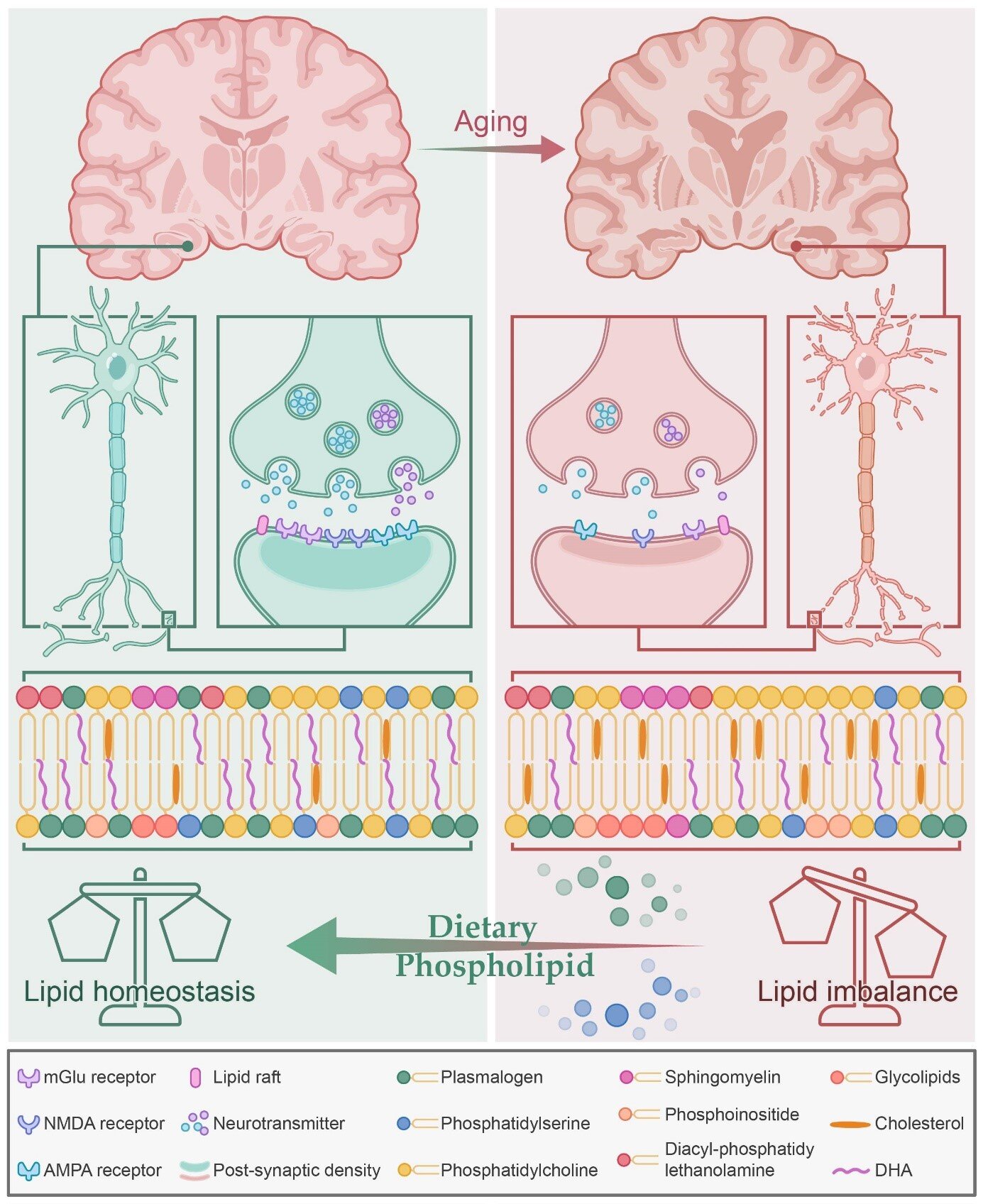
Dietary phospholipid intervention could prevent brain aging by maintaining lipid homeostasis and enhancing synaptic plasticity. Credit: Wei Xiong et al.

A new review highlights the significant role of dietary lipids in preventing brain aging and cognitive decline. As the global burden of aging-related brain diseases, particularly dementia, continues to rise, this research offers promising insights into potential nutritional interventions that could improve brain function during aging.

Cerebrospinal fluid (CSF) leaks may be one of the mechanisms that link traumatic brain injury (TBI) with dementia, according to a new hypothesis.

Short-term exposure to air pollution may be linked to an increased risk of stroke, according to a meta-analysis published in Neurology. Short-term exposure was defined as occurring within five days of the stroke.

People with a higher cumulative estrogen exposure throughout their life may have a lower risk of cerebral small vessel disease, according to a new study.

New research is painting a clearer picture of the early signs of multiple sclerosis (MS), showing that people are nearly twice as likely to experience mental illness in the years leading up to the onset of the disease.

Increased TV/DVD screen time at 1 and 2 years of age negatively affects developmental performance at 2 and 3 years of age, according to a study published in JAMA Pediatrics.

Whether you are an early bird or a night owl, your internal clock plays a critical role in maximizing your mental performance, according to a recent study. This effect is so strong that it can significantly impact academic performance for adolescent students and the results of brain health assessments for older adults.

Researchers are using ultra-high field 7 Tesla MRI to provide a better understanding of how sleep is regulated.

A new study suggests a common brain network exists among people with substance use disorder. By evaluating data from across more than 144 studies of addiction, the team found abnormalities across substance use disorders mapped to a common brain network across substances and lesion locations, suggesting a potential brain circuit to target with neurostimulation therapies.

Finally this week, people differ significantly in their memory performance and researchers have now discovered that certain brain signals are related to these differences.

Weekly Neuroscience Update

 Credit: Institute for Basic Science

In a groundbreaking review paper published in Nature Reviews Neuroscience, scientists have shed new light on the role of GABA, a key signaling molecule in the brain.

Maternal structured lifestyle interventions during pregnancy based on a Mediterranean diet or mindfulness-based stress reduction (MBSR) improve child neurodevelopmental outcomes at age 2 years, according to a study.

A new study supports widespread use of brain research probes in epilepsy patients.

Researchers who previously developed the first 3D human cell culture models of Alzheimer’s disease (AD) that displays two major hallmarks of the condition—the generation of amyloid beta deposits followed by tau tangles—have now used their model to investigate whether the exercise-induced muscle hormone irisin affects amyloid beta pathology.

Among people with benign recurrent vertigo (BRV), Meniere disease (MD), or vestibular migraine (VM) who have persistent vertigo attacks, there is no change in attack frequency over time, according to a new study.

Researchers have developed a molecular test to identify the presence of brain tumors by measuring abnormal genetic material shed by tumors and circulating in cerebrospinal fluid (CSF). 

A study of twins shows that having a concussion early in life is tied to having lower scores on tests of thinking and memory skills decades later as well as having a more rapid decline in those scores than twins who did not have a concussion, or traumatic brain injury (TBI). 

Scientists have detailed how the activity of tactile neurons in the fingertip in response to an applied force is influenced by the fingertip’s mechanical memory of previous forces.

A paper published in Nature Communications shows that when neurons are given information about the changing world around them (task-related sensory input) it changes how they behave, putting them on edge so that tiny inputs can then set off “avalanches” of brain activity, supporting a theory known as the critical brain hypothesis.

Finally, this week, a new finding published in the journal JAMA Pediatrics, shows that the amount of screen time spent by one-year-olds is associated with developmental delays.

Weekly Neuroscience Update

Credit: Nature (2023)

A new study has identified the link between memory and appetite.

Scientists have made a ‘paradigm shifting’ discovery on the mechanisms required for learning and memory that could lead to new therapies for Alzheimer’s disease and potentially Down syndrome.

Researchers have analyzed which physiological indicators recorded when watching a movie can predict the audience’s assessment. It turned out that the activity of zygomaticus major (the “smiling muscle”), heart rate variability and EEG indicators can tell us most about the viewer’s impression of the movie.

The largest genetic study of its kind has discovered specific changes in our DNA that increase the risk of developing epilepsy.

Researchers found that the skin, not pre-existing genetic programming, instructs nerve cells on how to mature for specific sensory tasks. The findings showcase that skin cues determine whether nerve endings develop to detect sensations in hairy or hairless skin. If corroborated by further research, this discovery could pave the way for therapies to mend damaged nerves or better comprehend congenital neuropathies.

A new study has explored the link between infant birthweight, gestational age and future cognitive problems.

Researchers have successfully developed temporary, organic electrodes that can be seamlessly integrated into biological systems. The method opens up a future where bioelectronics can be implanted in and removed from the body without surgery.

New research shows wildfire smoke impacts on the brain.

A new study has found that, among a sample of 152 young athletes exposed to repetitive head impacts (RHI) who were under age 30 at the time of death, 41.4% (63) had neuropathological evidence of CTE, a degenerative brain disease caused by RHI.

New research supports the idea that the brains of older adults who maintain physical fitness by engaging in regular strenuous exercise more closely resemble those of younger adults.

Researchers have succeeded in transforming brain signals into audible speech. By decoding signals from the brain through a combination of implants and AI, they were able to predict the words people wanted to say with an accuracy of 92 to 100%. Their findings are published in the Journal of Neural Engineering.

Finally this week, a virtual reality study has revealed a link between a sense of presence and cognitive abilities.

Weekly Neuroscience Update

A new study reveals that individuals with stronger ‘mindreading’ abilities, or the capacity to understand others’ feelings and intentions, are more successful in cooperative tasks. This trait, also known as ‘theory of mind,’ is not directly tied to intelligence and can potentially be improved through training programs.

Researchers have identified proteomic changes associated with forms of Alzheimer’s disease.

People in their eighties who can recall everyday events and life experiences as well as someone 20 to 30 years younger—known as superagers—are also more likely to have greater movement speed than typical older adults. They also have lower rates of anxiety and depression, according to a new study published in The Lancet Healthy Longevity journal.

A research team has developed a tool that counts brain lesions in seconds.

A new study has found that the frequency and duration of naps in infants are an indication of their cognitive needs. According to the research, infants with smaller vocabularies and poorer cognitive abilities tend to nap more frequently.

Researchers have discovered that myo-inositol, a small cyclic sugar molecule found in breast milk, plays a crucial role in promoting neuronal connections in infants’ brains.

Neuroscientists have proposed a fresh perspective on systems consolidation, the process by which certain memories are moved from the hippocampus to the neocortex for long-term storage. Their theory, backed by a mathematical neural network model, posits that the consolidation of memories depends on their generalizability, not age. This theory suggests a new memory, which is a generalization of previous memories, is created during consolidation.

Researchers have utilized artificial intelligence to uncover the promising potential of extra virgin olive oil (EVOO) in combating Alzheimer’s disease (AD).

New research heightened light sensitivity in Alzheimer’s patients to “sundowning,” a worsening of symptoms late in the day, and sleep disruptions that may advance the disease. This fresh understanding of biological clock disruptions in Alzheimer’s could aid the creation of treatments and symptom management. Light therapy could potentially regulate erratic sleep patterns caused by altered circadian rhythms.

Finally this week, scientists have identified a group of nerve cells in the midbrain, which, when stimulated, can suspend all movement, akin to setting a film on pause.

Weekly Neuroscience Update

Artificial Intelligence (AI), specifically GPT-4, was found to match the top 1% of human thinkers on a standard creativity test. The AI application ChatGPT, developed using GPT-4, excelled in fluency and originality in the Torrance Tests of Creative Thinking, a widely recognized tool for assessing creativity. This breakthrough finding indicates that AI may be developing creative ability on par with or even surpassing human capabilities. 

Researchers have identified a small structure in the brain, the anterior precuneus or aPCu, as a crucial component in establishing our physical self or “I”.

Taking good care of your teeth may be linked to better brain health, according to a study published in Neurology. The study found that gum disease and tooth loss were linked to brain shrinkage in the hippocampus, which plays a role in memory and Alzheimer’s disease. The study does not prove that gum disease or tooth loss causes Alzheimer’s disease; it only shows an association.

A new study has demonstrated for the first time that the diagnosis of multiple sclerosis (MS) can be significantly improved by additionally measuring the thickness of retinal layers in the eye.

Distinct, though neighbouring, areas of the brain are activated when processing music and language, with specific sub-regions engaged for simple melodies versus complex melodies, and for simple versus complex sentences, according to researchers.

New findings suggest that depression after traumatic brain injury (TBI) could be a clinically distinct disorder rather than traditional major depressive disorder, with implications for patient treatment.

If you’re sleep deprived, you will likely have a harder time remembering things than if you’re well-rested. But if you have good cardiorespiratory fitness, your memory may be less affected by the effects of sleep deprivation than others, according to a recent McGill study published in the journal Medicine & Science in Sports & Exercise.

Finally this week, even during sleep, the sounds that infants are exposed to can play a big role in language development, especially for babies at risk of language delays.

Weekly Neuroscience Update

A new study sheds light on gender differences in risk-taking behavior. The research reveals women are more averse to risk than men due to heightened sensitivity to potential losses. Conversely, men, exhibiting greater optimism, are more willing to engage in risk-taking.

Researchers have identified specific brain network connections associated with anosognosia, a condition where patients are unaware of their neurological or psychiatric deficits.

Scientists have discovered children’s ability to process emotional cues is largely established by the time they start school. Analyzing brain scans from children aged five to 15, the study revealed that such brain activity becomes increasingly similar to their peers as they reach adolescence. The research emphasizes the importance of early intervention to address issues related to understanding emotional cues.

Recent neuroscience studies underscore the profound impact of sleep and sleep disorders on memory.

In a paper published in Science Advances, an international team reveal the discovery of sequence variants in the gene ABCC9 that influence the pitch of voices. The scientists found that ABCC9 variants associate with higher voice pitch in both men and women. The same sequence variants are also linked to higher pulse pressure, a cardiovascular risk factor, highlighting links between voice pitch and health-related traits.

Researchers have discovered a promising new avenue for treating glioblastoma, a deadly brain cancer.

Research led by the University of Texas Health Science Center, San Antonio, Texas, has looked into premature brain aging in individuals with type 1 diabetes. The findings of this study show an increase in brain aging among individuals with type 1 diabetes without any early signs of AD-related neurodegeneration. These increases were associated with reduced cognitive performance, but according to the authors, the abnormal patterns observed in the samples were modest.

Finally this week, intricate links between breathing and memory recall have been unraveled by recent scientific research, painting a more complex picture of our cognitive processes.

Weekly Neuroscience Update

Credit: Cell Metabolism (2023). DOI: 10.1016/j.cmet.2023.02.017

Researchers have found a previously unknown mechanism linking gut bacteria, estradiol, and depression in women. The study, “Gut-microbiome-expressed 3b-hydroxysteroid dehydrogenase degrades estradiol and is linked to depression in premenopausal females,” is published in the journal Cell Metabolism.

Researchers at the Max Planck Institute for Metabolism Research in Cologne, in collaboration with Yale University, have shown that foods with high fat and sugar content change our brain.

Children with autism spectrum disorder (ASD) may benefit from early screening and intervention for cardiometabolic conditions according to a meta-analysis of the association between ASD and cardiometabolic conditions in children. Researchers analyzed data from 10 studies and found that children with ASD have a higher risk of developing cardiometabolic conditions such as obesity, hypertension, and dyslipidemia.

Researchers have developed a new wearable technology that records the activity of neurons in the brain as a human walks or moves.

New research published in Human Brain Mapping reveals sex differences and developmental changes in the brain’s white matter in healthy developing infants and 5-year-olds.These findings could help improve our understanding of brain development and potentially inform interventions to support healthy development in children and young adults.

Criteria used by neurologists to assess for multiple sclerosis in adults may fail to identify the illness in children with imaging suspicious for the disease, an oversight that could delay treatment of the disease at its earliest stages.

Elite male soccer players were 1.5 times more likely to develop neurodegenerative disease than population controls, according to an observational study published in The Lancet Public Health journal. The researchers believe that the repeated heading of the ball during practice and games may be a contributing factor to the increased risk of dementia. The findings raise concerns about the long-term health consequences of playing soccer and highlight the need for further research into ways to reduce the risk of dementia in professional athletes.

Using artificial intelligence, researchers have discovered how to screen for genetic mutations in cancerous brain tumors in under 90 seconds.

A common genetic signature has been linked to an increased risk of substance use disorders from smoking addiction to addiction to narcotics. The findings could pave the way to the development of new therapies for substance use disorder and may help diagnose those at risk of multiple substance use disorders.

Finally this week, listening to music may help boost the beneficial effects of medicine while helping to reduce some of the side effects.