Weekly Neuroscience Update

A new study reveals that individuals with stronger ‘mindreading’ abilities, or the capacity to understand others’ feelings and intentions, are more successful in cooperative tasks. This trait, also known as ‘theory of mind,’ is not directly tied to intelligence and can potentially be improved through training programs.

Researchers have identified proteomic changes associated with forms of Alzheimer’s disease.

People in their eighties who can recall everyday events and life experiences as well as someone 20 to 30 years younger—known as superagers—are also more likely to have greater movement speed than typical older adults. They also have lower rates of anxiety and depression, according to a new study published in The Lancet Healthy Longevity journal.

A research team has developed a tool that counts brain lesions in seconds.

A new study has found that the frequency and duration of naps in infants are an indication of their cognitive needs. According to the research, infants with smaller vocabularies and poorer cognitive abilities tend to nap more frequently.

Researchers have discovered that myo-inositol, a small cyclic sugar molecule found in breast milk, plays a crucial role in promoting neuronal connections in infants’ brains.

Neuroscientists have proposed a fresh perspective on systems consolidation, the process by which certain memories are moved from the hippocampus to the neocortex for long-term storage. Their theory, backed by a mathematical neural network model, posits that the consolidation of memories depends on their generalizability, not age. This theory suggests a new memory, which is a generalization of previous memories, is created during consolidation.

Researchers have utilized artificial intelligence to uncover the promising potential of extra virgin olive oil (EVOO) in combating Alzheimer’s disease (AD).

New research heightened light sensitivity in Alzheimer’s patients to “sundowning,” a worsening of symptoms late in the day, and sleep disruptions that may advance the disease. This fresh understanding of biological clock disruptions in Alzheimer’s could aid the creation of treatments and symptom management. Light therapy could potentially regulate erratic sleep patterns caused by altered circadian rhythms.

Finally this week, scientists have identified a group of nerve cells in the midbrain, which, when stimulated, can suspend all movement, akin to setting a film on pause.

Weekly Neuroscience Update

Artificial Intelligence (AI), specifically GPT-4, was found to match the top 1% of human thinkers on a standard creativity test. The AI application ChatGPT, developed using GPT-4, excelled in fluency and originality in the Torrance Tests of Creative Thinking, a widely recognized tool for assessing creativity. This breakthrough finding indicates that AI may be developing creative ability on par with or even surpassing human capabilities. 

Researchers have identified a small structure in the brain, the anterior precuneus or aPCu, as a crucial component in establishing our physical self or “I”.

Taking good care of your teeth may be linked to better brain health, according to a study published in Neurology. The study found that gum disease and tooth loss were linked to brain shrinkage in the hippocampus, which plays a role in memory and Alzheimer’s disease. The study does not prove that gum disease or tooth loss causes Alzheimer’s disease; it only shows an association.

A new study has demonstrated for the first time that the diagnosis of multiple sclerosis (MS) can be significantly improved by additionally measuring the thickness of retinal layers in the eye.

Distinct, though neighbouring, areas of the brain are activated when processing music and language, with specific sub-regions engaged for simple melodies versus complex melodies, and for simple versus complex sentences, according to researchers.

New findings suggest that depression after traumatic brain injury (TBI) could be a clinically distinct disorder rather than traditional major depressive disorder, with implications for patient treatment.

If you’re sleep deprived, you will likely have a harder time remembering things than if you’re well-rested. But if you have good cardiorespiratory fitness, your memory may be less affected by the effects of sleep deprivation than others, according to a recent McGill study published in the journal Medicine & Science in Sports & Exercise.

Finally this week, even during sleep, the sounds that infants are exposed to can play a big role in language development, especially for babies at risk of language delays.

Weekly Neuroscience Update

A new study sheds light on gender differences in risk-taking behavior. The research reveals women are more averse to risk than men due to heightened sensitivity to potential losses. Conversely, men, exhibiting greater optimism, are more willing to engage in risk-taking.

Researchers have identified specific brain network connections associated with anosognosia, a condition where patients are unaware of their neurological or psychiatric deficits.

Scientists have discovered children’s ability to process emotional cues is largely established by the time they start school. Analyzing brain scans from children aged five to 15, the study revealed that such brain activity becomes increasingly similar to their peers as they reach adolescence. The research emphasizes the importance of early intervention to address issues related to understanding emotional cues.

Recent neuroscience studies underscore the profound impact of sleep and sleep disorders on memory.

In a paper published in Science Advances, an international team reveal the discovery of sequence variants in the gene ABCC9 that influence the pitch of voices. The scientists found that ABCC9 variants associate with higher voice pitch in both men and women. The same sequence variants are also linked to higher pulse pressure, a cardiovascular risk factor, highlighting links between voice pitch and health-related traits.

Researchers have discovered a promising new avenue for treating glioblastoma, a deadly brain cancer.

Research led by the University of Texas Health Science Center, San Antonio, Texas, has looked into premature brain aging in individuals with type 1 diabetes. The findings of this study show an increase in brain aging among individuals with type 1 diabetes without any early signs of AD-related neurodegeneration. These increases were associated with reduced cognitive performance, but according to the authors, the abnormal patterns observed in the samples were modest.

Finally this week, intricate links between breathing and memory recall have been unraveled by recent scientific research, painting a more complex picture of our cognitive processes.

Weekly Neuroscience Update

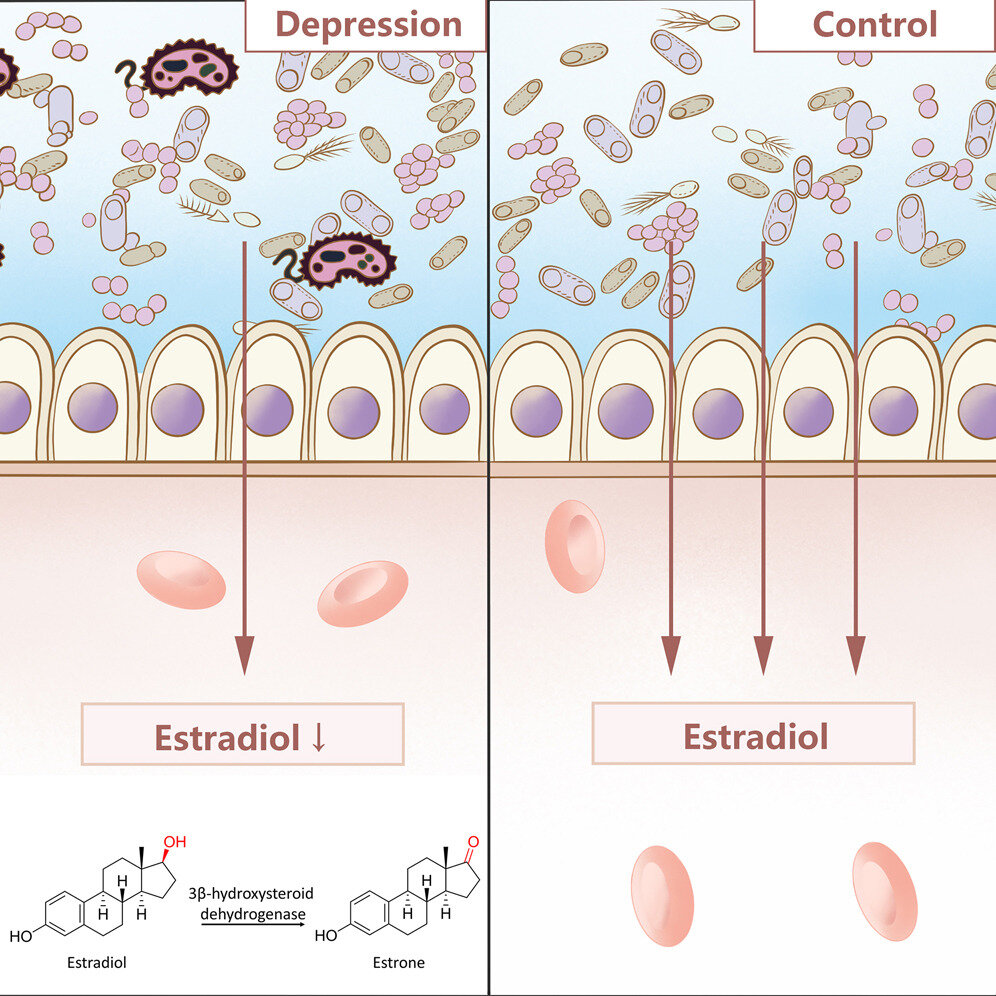
Credit: Cell Metabolism (2023). DOI: 10.1016/j.cmet.2023.02.017

Researchers have found a previously unknown mechanism linking gut bacteria, estradiol, and depression in women. The study, “Gut-microbiome-expressed 3b-hydroxysteroid dehydrogenase degrades estradiol and is linked to depression in premenopausal females,” is published in the journal Cell Metabolism.

Researchers at the Max Planck Institute for Metabolism Research in Cologne, in collaboration with Yale University, have shown that foods with high fat and sugar content change our brain.

Children with autism spectrum disorder (ASD) may benefit from early screening and intervention for cardiometabolic conditions according to a meta-analysis of the association between ASD and cardiometabolic conditions in children. Researchers analyzed data from 10 studies and found that children with ASD have a higher risk of developing cardiometabolic conditions such as obesity, hypertension, and dyslipidemia.

Researchers have developed a new wearable technology that records the activity of neurons in the brain as a human walks or moves.

New research published in Human Brain Mapping reveals sex differences and developmental changes in the brain’s white matter in healthy developing infants and 5-year-olds.These findings could help improve our understanding of brain development and potentially inform interventions to support healthy development in children and young adults.

Criteria used by neurologists to assess for multiple sclerosis in adults may fail to identify the illness in children with imaging suspicious for the disease, an oversight that could delay treatment of the disease at its earliest stages.

Elite male soccer players were 1.5 times more likely to develop neurodegenerative disease than population controls, according to an observational study published in The Lancet Public Health journal. The researchers believe that the repeated heading of the ball during practice and games may be a contributing factor to the increased risk of dementia. The findings raise concerns about the long-term health consequences of playing soccer and highlight the need for further research into ways to reduce the risk of dementia in professional athletes.

Using artificial intelligence, researchers have discovered how to screen for genetic mutations in cancerous brain tumors in under 90 seconds.

A common genetic signature has been linked to an increased risk of substance use disorders from smoking addiction to addiction to narcotics. The findings could pave the way to the development of new therapies for substance use disorder and may help diagnose those at risk of multiple substance use disorders.

Finally this week, listening to music may help boost the beneficial effects of medicine while helping to reduce some of the side effects. 

Weekly Neuroscience Update

Graphical summary of the methodological framework of the study. Credit: Nature Medicine (2023)

The most common type of brain cyst (arachnoid) has no known cause. New research investigating patients with these cysts has found something unexpected—a potential genetic link.

As we age, most of us tend to stop paying attention to new music and stick with the songs from our past. Researchers explored why we narrow our horizons for exploring new music as we age and say listening to new tracks can help create new memory bonds and experience new pleasures.

Adding to the growing body of evidence on sleep disturbances and cognitive impairment, new research finds significant links between three measures of sleep disturbance and the risk for developing dementia over a 10-year period.

A new study confirms that brain development in people with autism differs from those with typical neurodevelopment. According to the study published in PNAS, these differences are linked to genes involved in inflammation, immunity response and neural transmissions. They begin in childhood and evolve across the lifespan.

New research that focused on nutrition and mental health of adolescent athletes found an association between high protein consumption and a decrease in symptoms of depression.

Infants who are born preterm do not habituate to repeated pain the same way in which full-term babies or adults do. Researchers believe this is because preterm infants have not yet developed the mechanism that enables people to adapt to moderate pain, which is thought to develop during the third trimester of pregnancy.

Finally this week, a new study that focused on the nutrition and mental health of adolescent athletes found an association between high protein consumption and a decrease in symptoms of depression.

Weekly Neuroscience Update

Exercise can improve your cognitive and mental health — but not all forms and intensities of exercise affect the brain equally. The effects of exercise are much more nuanced, as specific intensities of exercise over a long period of time are associated with different aspects of memory and mental health, according to a new study.

A research team has shown for the first time that non-invasive stimulation of the vagus nerve at the ear can strengthen the communication between stomach and brain within minutes.

A mutation in a newly discovered small protein is connected to a significant increase in the risk for Alzheimer’s disease, expanding the known gene targets for the disease and presenting a new potential avenue for treatment, according to a new study.

A new report highlights the advances and challenges in prevention, clinical care, and research in traumatic brain injury, a leading cause of injury-related death and disability worldwide.

Neurons in an area of the brain responsible for memory (known as the entorhinal cortex) are significantly larger in SuperAgers compared to cognitively average peers, individuals with early-stage Alzheimer’s disease, and even individuals 20 to 30 years younger than SuperAgers — who are aged 80 years and older, reports a new study.

Children who were infected with COVID-19 show a substantially higher risk of developing type 1 diabetes (T1D), according to new research.

Researchers have discovered a biological mechanism that increases the strength with which fear memories are stored in the brain. The study provides new knowledge on the mechanisms behind anxiety-related disorders, and identifies shared mechanisms behind anxiety and alcohol dependence.

Finally this week, a new study demonstrates how an AI algorithm can estimate biological age with high accuracy based on brain scan images.

Weekly Neuroscience Update

Researchers have presented new findings which found after one session of aerobic exercise people showed reduced cravings for alcohol, lower levels of stress, and improvements in mood.

When our eyes move during REM sleep, we’re gazing at things in the dream world our brains have created, according to a new study. The findings shed light not only into how we dream, but also into how our imaginations work.

Measuring how the eyes’ pupils change in response to light—known as the pupillary light reflex—could potentially be used to screen for autism in young children, according to a new study.

Researchers have made an important discovery about the way our brains process the sensations of sound and touch. They found that sensory systems in the brain are closely interconnected, with regions that respond to touch also involved when we listen to specific sounds connected to touching certain objects.

A study into the effect of surprise on our memory has inadvertently discovered a method that might help us to perform better in exams.

Scientists have uncovered how dopamine connects subregions of the striatum essential for habit formation, findings that may change the overall understanding of how habits are formed—and could be broken.

New research finds the brains of people playing online video games synchronize, even when there is a physical distance between the players.

By estimating people’s brain age from MRI scans using machine learning, a team of researchers has identified multiple risk factors for a prematurely aging brain. They found that worse cardiovascular health at age 36 predicted a higher brain age later in life, while men also tended to have older brains than women of the same age, as they report in The Lancet Healthy Longevity.

Young people with 22q11.2 Deletion Syndrome have distinct and marked EEG differences in brain activity during sleep, which could influence psychiatric symptoms.

Tight control of blood sugar in teens with Type 1 diabetes may help reduce the disease’s damaging effects on the brain, effects which have been shown even in younger children, according to a study published in Nature Communications.

Tests of the brain’s electrical activity have revealed fentanyl’s effects over time and indicated that the drug stops people’s breathing before other noticeable changes and before they lose consciousness.

A newly developed artificial intelligence model can detect Parkinson’s disease by reading a person’s breathing patterns. The algorithm can also discern the severity of Parkinson’s disease and track progression over time.

A new study reveals how a molecule produced by astrocytes interferes with normal neuron development in a range of neurodevelopmental disorders.

People with an obsessive urge to constantly check the news are more likely to suffer from stress, anxiety, as well as physical ill health, finds a new study published in the peer-reviewed journal Health Communication.

Finally this week, the impact of breathing diesel exhaust fumes may be more severe for females than males, according to new research.

Weekly Neuroscience Update

For the first time, a team of international scientists has studied the development of the main immune cell population residing in the human brain, called microglia, on human tissue.

Scientists have uncovered a molecular pathway that distills threatening sights, sounds and smells into a single message: Be afraid. A molecule called CGRP enables neurons in two separate areas of the brain to bundle threatening sensory cues into a unified signal, tag it as negative and convey it to the amygdala, which translates the signal into fear. The research, published in Cell Reports on August 16, 2022, may lead to new therapies for fear-related disorders such as post-traumatic stress disorder (PTSD) or hypersensitivity disorders such as autism, migraines and fibromyalgia.

Researchers have identified a new type of retinal ganglion cell, the neurons in the retina that encode the visual environment and transmit information back to the brain.

Children who sleep less than 9 hours per night have significant differences in brain regions associated with memory, intelligence, and well-being compared to their peers who sleep 9 or more hours per night. Less sleep in children was also associated with increased risks of depression, anxiety, and impulsive behaviors.

A new study finds that Alzheimer’s disease disrupts at least one form of visual memory by degrading a newly identified circuit that connects the vision processing centers of each brain hemisphere.

Leisure activities, such as reading a book, doing yoga and spending time with family and friends may help lower the risk of dementia, according to a new meta-analysis published in the August 10, 2022, online issue of Neurology.

Finally this week, a novel study reports the dynamics of consciousness may be understood by a newly developed conceptual and mathematical framework.

Weekly Neuroscience Update

Researchers from the UMH-CSIC Neurosciences Institute have developed an innovative strategy that allows imaging of microglial and astrocyte activation in the gray matter of the brain using diffusion-weighted magnetic resonance imaging (dw-MRI). Credit: IN-CSIC-UMH

Research has made it possible to visualize for the first time and in great detail brain inflammation using diffusion-weighted Magnetic Resonance Imaging. This detailed “X-ray” of inflammation cannot be obtained with conventional MRI, but requires data acquisition sequences and special mathematical models. Once the method was developed, the researchers were able to quantify the alterations in the morphology of the different cell populations involved in the inflammatory process in the brain.

A new study conducted at 38 schools in Barcelona suggests that traffic noise at schools has a detrimental effect on the development of working memory and attention in primary-school students.

People who can frequently recall their dreams tend to be more creative and exhibit increased functional connectivity in a key brain network, according to new research published in the journal Nature and Science of Sleep. The findings provide new insights into the neurophysiological correlates of dreaming.

Researchers have identified elevated levels of a biomarker in the blood that persists for months in long COVID patients who experience neuropsychiatric symptoms.

Plenty of people claim they can’t function without their morning coffee, but is there a neurological basis to it? A study published in Scientific Reports suggests that coffee does have beneficial effects on cognitive function, and it may do this by reorganizing brain functional connectivity.

Low exposure to gonadal hormones during early gestation and infancy predicts higher recalled childhood gender nonconformity in men, according to new research.

Researchers at Carnegie Mellon University have explored the regions of the brain where concrete and abstract concepts materialize. A new study now explores if people who grow up in different cultures and speak different languages form these concepts in the same regions of the brain.

Finally this week, new research will explore how psilocybin affects specific brain pathways in autistic adults and is the first-ever mechanistic study of psilocybin in autistic adults.

Is Social Media Damaging Your Brain?

Last month, I contributed to an Irish Times article on the question of how, or indeed if, the internet is damaging our brain.

It’s an interesting question.

I view the answer not in terms of damage, but of manipulation. What most people want is not truth but validation.

What the internet companies do is take advantage of our need for nurturing – our need to be liked and to like others.

This manipulation can be disorientating as the human brain was never designed to cater for 10,000 likes from 10,000 individuals, especially not [for] a 13-year-old.

We are not designed for this avalanche of nurturing that comes through social media – this attention.

The dopamine is always on call, and you can be elated or let down at any minute depending on what the latest news is.

Neurogeneticist, Kevin Mitchell, an active Twitter user, is of a similar mind when it comes to framing the question in terms of damage.

“I don’t think we should say that our ‘brains have been rewired’, but our habits and modes of thinking and conceptual metaphors have certainly changed, ” he says. “I think social media, with its very different dynamics and rules, has changed the way we interact with other people, and the way we define our selves, through interactions with others.”

Mitchell believes that our ways of thinking have changed, but this is probably not a new thing. “Our ways of thinking have probably been continually changing over time, with every new technological development – think of Plato decrying the invention of writing and what it would do to young minds.”

I would certainly agree with this.

Brain plasticity is a defining feature of the brain. There is no point in your life when your brain is settled as ‘you’.

This question of personal identity feeds into a long-running philosophical debate about where exactly consciousness lies.

Under the ‘extended mind theory’, consciousness does not reside exclusively in the brain but rather straddles it and the environment.

Philosophers supporting this hypothesis have suggested that the tools which we use to upload information – a notebook, for example, or a search engine – are indistinguishable from the mind itself.

If the extended mind theory is true then it would mean our minds are literally being altered each time Facebook or Google change their algorithm.

But is it true?

Or does it just feel like it’s true because our heads are in such a tizzy from staring at our smartphones?

Before the advent of modern neuroscience, the idea that minds can exist independently from the body was not so farfetched. That belief opened up a niche for people to market all kinds of beliefs about unobservable entities including Gods, messiahs, spirits, souls, angels, devils and so on. These beliefs are for the most part benign if they do not involve making sacrifices that are ultimately irrational or being manipulated by others.

The idea of the mind being separate from the body goes back to Aristotle, but the body and the mind are one and the same thing.

As for theories that place the mind – or part of the mind – outside the brain, supernatural philosophy can be neither proved nor disproved.

Whatever about the internet literally colonising our minds, there’s no denying Big Tech has a profound influence on our thinking.

And if you think about it, there are only two industries that call their customers users: the illegal drugs industry and the software industry.

It’s too simple to say that we love the way social media connects us to the wider world, because it can isolate us too.  It offers us freedom, but only within a closed garden where Big Tech holds the key. To reconcile this contradiction we have to look into ourselves. We need to stop and ask ourselves what we are doing when we buy into social media and what is the full nature of this magical and intimate transaction.