Weekly Neuroscience Update

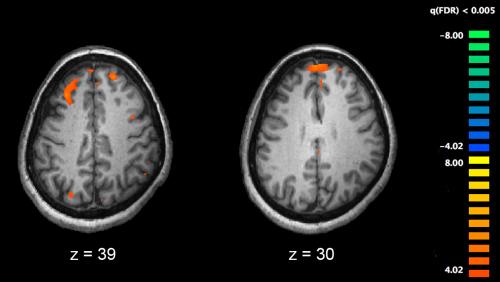
Functional magnetic resonance imaging (fMRI) and other brain imaging technologies allow for the study of differences in brain activity in people diagnosed with schizophrenia. The image shows two levels of the brain, with areas that were more active in healthy controls than in schizophrenia patients shown in orange, during an fMRI study of working memory. Credit: Kim J, Matthews NL, Park S./PLoS One.

Functional magnetic resonance imaging (fMRI) and other brain imaging technologies allow for the study of differences in brain activity in people diagnosed with schizophrenia. The image shows two levels of the brain, with areas that were more active in healthy controls than in schizophrenia patients shown in orange, during an fMRI study of working memory. Credit: Kim J, Matthews NL, Park S./PLoS One.

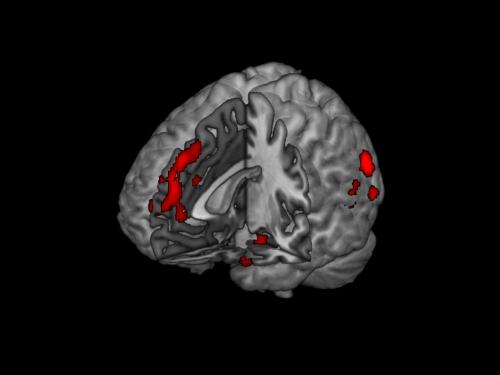
Researchers from the Broad Institute and several partnering institutions have taken a closer look at the human genome to learn more about the genetic underpinnings of schizophrenia. In two studies published in Nature, scientists analyzed the exomes, or protein-coding regions, of people with schizophrenia and their healthy counterparts, pinpointing the sites of mutations and identifying patterns that reveal clues about the biology underlying the disorder.

A new brain region that appears to help humans identify whether they have made bad decisions has been discovered by researchers.

New research finds that the brains of autistic children generate more information at rest – a 42% increase on average. The study offers a scientific explanation for the most typical characteristic of autism – withdrawal into one’s own inner world. The excess production of information may explain a child’s detachment from their environment.

The brain appears to synchronize the activity of different brain regions to make it possible for a person to pay attention or concentrate on a task, scientists have learned.

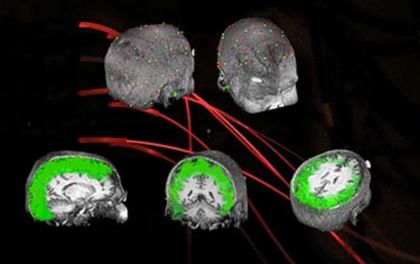
Researchers at the Albert Einstein College of Medicine are investigating the effects of repeated combat-related blast exposures on the brains of veterans. Mild traumatic brain injuries can cause problems with cognition, concentration, memory and emotional control. Scientists are using advanced MRI technology and psychological tests to investigate the structural and biological impact of repeated head injury and to assess how these injuries affect cognitive functions. Final results of the study have not yet been published, but researchers hope it will lead to more scientifically valid diagnostic techniques that could potentially allow for detection of both the underlying brain injury and its severity.

Study reveals senses of sight and sound separated in children with autism

Like watching a foreign movie that was badly dubbed, children with autism spectrum disorders (ASD) have trouble integrating simultaneous information from their eyes and their ears, according to a Vanderbilt study. The study, led by Mark Wallace, Ph.D., director of the Vanderbilt Brain Institute, is the first to illustrate the link and strongly suggests that deficits in the sensory building blocks for language and communication can ultimately hamper social and communication skills in children with autism.

To learn more about this research visit:

http://news.vanderbilt.edu/2014/01/senses-of-sight-and-sound-separated-in-children-with-autism/

Weekly Neuroscience Update

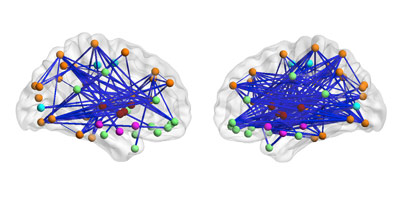
Overly connected: Many pairs of brain regions — including those involved in sensory processing, emotion and motivation — are more tightly synchronized in children with autism (right) than in controls (left).

Overly connected: Many pairs of brain regions — including those involved in sensory processing, emotion and motivation — are more tightly synchronized in children with autism (right) than in controls (left).

Three studies published over the past two months have found significant evidence that children and adolescents with autism have brains that are overly connected compared with the brains of controls. The findings complicate the theory that autism is fundamentally characterized by weakly connected brain regions. Meanwhile new findings suggest the oxytocin receptor, a gene known to influence mother-infant bonding and pair bonding in monogamous species, also plays a special role in the ability to remember faces. This research has important implications for disorders in which social information processing is disrupted, including autism spectrum disorder. In addition, the finding may lead to new strategies for improving social cognition in several psychiatric disorders.

Researchers are gaining a better understanding of the neurochemical basis of addiction with a new technology called optogenetics.

We know that getting even a measly extra hour of sleep a night can have major benefits for us–like more memories, less anxiety, and happier genes. But scientists have tested another hypothesis for why we need to spend so much time horizontal: Sleep cleans our brains.

Scientists have pinpointed a specific part of the brain where Alzheimer’s begins and traced how the disease spreads.

Scientists have zapped an electrical current to people’s brains to erase distressing memories, part of an ambitious quest to better treat ailments such as mental trauma, psychiatric disorders and drug addiction.

Finally this week, many people can recall reading at least one cherished story that they say changed their life. Now researchers at Emory University have detected what may be biological traces related to this feeling: Actual changes in the brain that linger, at least for a few days, after reading a novel.

Weekly Neuroscience Update

How Would It Be to Have the Body of a Child Again? Changes in Perception and Behaviors Demonstrated When Embodying a Child Avatar

A research, recently published on the journal Proceedings of the National Academy of Sciences, suggests that a correlate of a body-ownership illusion is that the virtual type of body carries with it a set of temporary changes in perception and behaviours that are appropriate to that type of body.

A new study, published in the New England Journal of Medicine, examined whether or not higher glucose levels without diabetes was a risk factor for dementia.  Diabetes is already a known risk factor for dementia, but this study aimed to determine if the risk factor for diabetes is a risk factor for dementia.  Studying 2,067 participants without dementia, 232 of which already had diabetes, the researchers collected follow-up data after approximately seven years.  They found a significantly higher risk of dementia in individuals with higher than average blood glucose even if they did not have diabetes. Meanwhile, a study by researchers at Umeå University in Sweden suggests nine different factors that can increase the risk of developing dementia before age 65. The results have been published by the journal JAMA Internal Medicine.

Meditating before lectures can lead to better grades according to a new experimental study by George Mason University professor Robert Youmans and University of Illinois doctoral student Jared Ramsburg.

Researchers at Johns Hopkins have uncovered a protein switch that can either increase or decrease memory-building activity in brain cells, depending on the signals it detects. Its dual role means the protein is key to understanding the complex network of signals that shapes our brain’s circuitry, the researchers say.

Different parts of the brain are affected in women with autism than in men with autism, according to a new study.

Ending a 30-year search by scientists, researchers at Boston Children’s Hospital have identified two proteins in the inner ear that are critical for hearing, which, when damaged by genetic mutations, cause a form of delayed, progressive hearing loss.

Researchers have found human brains ‘divide and conquer’ when people learn to navigate around new environments. The research by UQ’s Queensland Brain Institute (QBI) could provide hope for people with spatial memory impairments.

Researchers have discovered how genetic mutations linked to Parkinson’s disease might play a key role in the death of brain cells, potentially paving the way for the development of more effective drug treatments.

The largest genome-wide study of its kind has determined how much five major mental illnesses are traceable to the same common inherited genetic variations. Researchers funded in part by the National Institutes of Health found that the overlap was highest between schizophrenia and bipolar disorder; moderate for bipolar disorder and depression and for ADHD and depression; and low between schizophrenia and autism. Overall, common genetic variation accounted for 17-28 percent of risk for the illnesses.

Weekly Neuroscience Update

FASD impacts brain development throughout childhood and adolescence not just at birth

Highlighted areas are some of the white matter tracts the research group studied. Credit: U of A

Medical researchers at the University of Alberta recently published findings showing that brain development is delayed throughout childhood and adolescence for people born with Fetal Alcohol Spectrum Disorder (FASD).

Whenever we have to acquire new knowledge under stress, the brain deploys unconscious rather than conscious learning processes. Neuroscientists at the Ruhr-Universität Bochum have discovered that this switch from conscious to unconscious learning systems is triggered by the intact function of mineralocorticoid receptors.

Researchers have reverse-engineered the outlines of a disrupted prenatal gene network in schizophrenia, by tracing spontaneous mutations to where and when they likely cause damage in the brain. Some people with the brain disorder may suffer from impaired birth of new neurons, or neurogenesis, in the front of their brain during prenatal development, suggests the study.

Autism is marked by several core features — impairments in social functioning, difficulty communicating, and a restriction of interests. Though researchers have attempted to pinpoint factors that might account for all three of these characteristics, the underlying causes are still unclear. Now, a new study suggests that two key attentional abilities — moving attention fluidly and orienting to social information — can be checked off the list, as neither seems to account for the diversity of symptoms we find in people with autism.

Anemia, or low levels of red blood cells, may increase the risk of dementia, according to a study published in the July 31, 2013, online issue of Neurology, the medical journal of the American Academy of Neurology

Physicists and neuroscientists from The University of Nottingham and University of Birmingham have unlocked one of the mysteries of the human brain, thanks to new research using Functional Magnetic Resonance Imaging (fMRI) and electroencephalography (EEG). The work will enable neuroscientists to map a kind of brain function that up to now could not be studied, allowing a more accurate exploration of how both healthy and diseased brains work.

Weekly Neuroscience Update

A novel screening method makes it easier to diagnose and treat children with autism

A child with autism discovers how to evoke the onscreen video he likes best. Credit: Rutgers Sensory-Motor Integration Lab

Researchers have developed a new screening method to diagnose autism, which unlike current methods does not rely on subjective criteria. These results are published in a series of studies in the open-access journal Frontiers in Neuroscience.

Going to bed at different times every night throughout early childhood seems to curb children’s brain power, according to a large, long term study.

A computational vision scientist at the University of South Australia has just published new research describing a key advance in our understanding of how the brain perceives the physical world.

Oxytocin has long been known as the warm, fuzzy hormone that promotes feelings of love, social bonding and well-being. It’s even being tested as an anti-anxiety drug. But new research shows oxytocin also can cause emotional pain, an entirely new, darker identity for the hormone.

Ultrasound waves sent to specific brain regions can alter a person’s mood, according to a new study published in the journal Brain Stimulation.

A gene related to neural tube defects in dogs has for the first time been identified by researchers.

UCLA chemists and molecular biologists have for the first time used a “structure-based” approach to drug design to identify compounds with the potential to delay or treat Alzheimer’s disease, and possibly Parkinson’s, Lou Gehrig’s disease and other degenerative disorders.

Weekly Neuroscience Update

Brain and eye combined monitoring breakthrough could lead to fewer road accidents

An eye-tracking, brain monitoring experiment in progress. The infra-red camera is on the small black console on the desk in front of the main PC screen.

Latest advances in capturing data on brain activity and eye movement are being combined to open up a host of ‘mindreading’ possibilities for the future. These include the potential development of a system that can detect when drivers are in danger of falling asleep at the wheel.

Multimodal neuroimaging has confirmed that major depressive disorder is associated with a deregulation of brain regions.

Sensory processing disorders (SPD) are more prevalent in children than autism and as common as attention deficit hyperactivity disorder, yet it receives far less attention partly because it’s never been recognized as a distinct disease. In a groundbreaking new study from UC San Francisco, researchers have found that children affected with SPD have quantifiable differences in brain structure, for the first time showing a biological basis for the disease that sets it apart from other neurodevelopmental disorders.

Neuroscientists have discovered that spontaneously emerging brain activity patterns preserve traces of previous cognitive activity.

When people sing in a choir their heart beats are synchronised, so that the pulse of choir members tends to increase and decrease in unison. This has been shown by a recent study from that examined the health effects for choir members.

Weekly Neuroscience Update

reading

Keeping mentally active by reading books or writing letters helps protect the brain in old age, a study suggests.

The rate and extent of damage to the spinal cord and brain following spinal cord injury have long been a mystery. Now new research has found evidence that patients already have irreversible tissue loss in the spinal cord within 40 days of injury. The study, published in the journal Lancet Neurology, used a new imaging , developed at the Wellcome Trust Centre for Neuroimaging (UCL). This enables the impact of therapeutic treatments and rehabilitative interventions to be determined more quickly and directly.

UCSF neuroscientists have found that by training on attention tests, people young and old can improve brain performance and multitasking skills.

Researchers are striving to understand the different genetic structures that underlie at least a subset of autism spectrum disorders. In cases where the genetic code is in error, did that happen anew in the patient, perhaps through mutation or copying error, or was it inherited? A new study in the American Journal of Human Genetics finds evidence that there may often be a recessive, inherited genetic contribution in autism with significant intellectual disability.

A specific brain disruption is present both in individuals diagnosed with schizophrenia and those with bipolar disorder, adding to evidence that many mental illnesses have biological similarities.

Weekly Neuroscience Update

Brain scan

The researchers monitored brain activity while playing volunteers new music

Listening to new music is rewarding for the brain, a study suggests. Using MRI scans, a Canadian team of scientists found that areas in the reward centre of the brain became active when people heard a song for the first time. The more the listener enjoyed what they were hearing, the stronger the connections were in the region of the brain called the nucleus accumbens. The study is published in the journal Science.

Meanwhile, an imaging study by Stanford University School of Medicine scientists reveals that the brains of different people listening to the same piece of music actually respond in the same way –  which may in part explain why music plays such a big role in our social existence.

Researchers have identified an important therapeutic target for alleviating the symptoms of Lou Gehrig’s disease, also known as amyotrophic lateral sclerosis (ALS), and other related neurodegenerative disorders such as Alzheimer’s disease, Parkinson’s disease and Huntington’s disease.

In a study published in the online version of Neurobiology of Disease, the team both confirmed the importance of this new target as well as a series of compounds that can be used to attenuate the dysregulation of one of the important cellular processes that lead to and ultimately to .

Neuroscientists have developed a method of analyzing brain activity to detect autism in children. Their findings appear in the online journal PLOS ONE.

Slow oscillations in brain activity, which occur during so-called slow-wave sleep, are critical for retaining memories. Researchers reporting online in the Cell Press journal Neuron have found that playing sounds synchronized to the rhythm of the slow brain oscillations of people who are sleeping enhances these oscillations and boosts their memory. This demonstrates an easy and noninvasive way to influence human brain activity to improve sleep and enhance memory.

Where Is Your Brain Taking You (Part II) ?

http://whyriskit.files.wordpress.com/2012/11/2012-10-23-karen-bee.jpgWhat is the point about living our lives?

Today  I want to expand on a previous post – Is there an end point to us becoming more human or the fulfilment of its potential? As a neuroscientist who has studied the origins of learning and memory it has become obvious to me that the more we learn and remember the better we can predict the future.

This question can be now be answered in the context that every single human being on
the planet is unique because they posses a uniquely complex brain. In fact, the brain is so
complex that in all of human history no two brains were the same. Furthermore, this unique
combination of about 100 trillion tiny connections grows and changes through life – a work in progress from conception to death. In this way we each evolve as we journey through life.

Neurodiversity is the key to our success

The term ‘neurodiversity’ has been coined to extend the finding that every single human being is neurologically different, to view those with attention deficit hyperactivity disorder, autism spectrum disorder, Asperger syndrome, dyscalculia, dyslexia, dyspraxia, Tourette syndrome, and others as just another variation of human brain wiring, rather than a disease – and that these differences in brain wiring are authentic forms of communication, self-
expression and being.

Vive la différence!

Rather than focus on the need for a ‘cure’ what we actually need to do is to promote support- systems that allow those who are neurologically different to live their lives as they are, rather than attempting to conform to some clinical ideal – because it is these very individuals that give the rest of us unique insights and solutions by viewing the world in a different way. Take for example Albert Einstein – considered by many to have had Asperger syndrome – who single-handedly worked out the relationship between space and time and went on to model the structure of the universe as a whole.

To bee or not to bee

The advantages of neurodiversity can be seen elsewhere in nature for instance in the thermoregulation in honey bee nests. The temperature in the nest ranges between 32 and 36 degrees. If it is getting warmer the bees ventilate with their wings until the set point is reached again. However in genetically uniform colonies the bees tend to start with ventilation about the same time – causing even greater instability by producing more temperature fluctuations, whereas the nest temperature in genetically diverse colonies is more stable.

Who is in the spotlight?

Despite what some like to think – humankind is not the centre of the world but rather a very actively growing branch of the evolutionary tree. We are not destined to ‘lift ourselves above nature’ – but rather to dramatically raise the intelligence and complexity of this thing we call ‘life’ through our intellectual and spiritual evolution.

So what’s the answer?

The evolution of the human race is not going to proceed by trying to transcend it – rather we will move forward as a race by making room for each and every individual to express their personalities to the full. In this way the evolution of the human race has everything to do with our own personal development.

In short, personality equals evolution.